Multiple Sleep Latency Test: How Doctors Diagnose Excessive Daytime Sleepiness

The Multiple Sleep Latency Test is usually done the day after an overnight sleep study. It measures daytime sleepiness by tracking how fast a person falls asleep during several nap opportunities.
Key Takeaways
- The Multiple Sleep Latency Test is usually done the day after an overnight sleep study.
- It measures daytime sleepiness by tracking how fast a person falls asleep during several nap opportunities.
- MSLT results can help doctors diagnose narcolepsy and distinguish it from other causes of sleepiness.
- Preparation matters, including stable sleep habits and reviewing medicines that may affect results.
- The test is painless, noninvasive, and interpreted together with symptoms and medical history.
A Multiple Sleep Latency Test, or MSLT, is a daytime sleep study that helps doctors understand unusual sleepiness. It measures how quickly a person falls asleep during several scheduled naps and can support the diagnosis of narcolepsy and other sleep-related conditions.
Overview
The Multiple Sleep Latency Test (MSLT) is a specialized daytime test used in sleep medicine to evaluate excessive daytime sleepiness. It is most often recommended for people who feel unusually sleepy during the day despite what seems to be enough time in bed, or for those whose symptoms raise concern for narcolepsy.
During the test, a person is given several scheduled chances to nap, usually every two hours. Sensors record brain waves, eye movements, muscle activity, and heart rhythm to show whether the person falls asleep and how quickly sleep begins. Doctors are especially interested in the average time it takes to fall asleep, called sleep latency, and whether rapid eye movement (REM) sleep begins unusually early.
The MSLT is not a stand-alone diagnosis by itself. Sleep specialists interpret it together with the person’s symptoms, sleep history, overnight sleep study findings, and overall health. This helps create a more complete picture of why daytime sleepiness is happening.
Why doctors order an MSLT
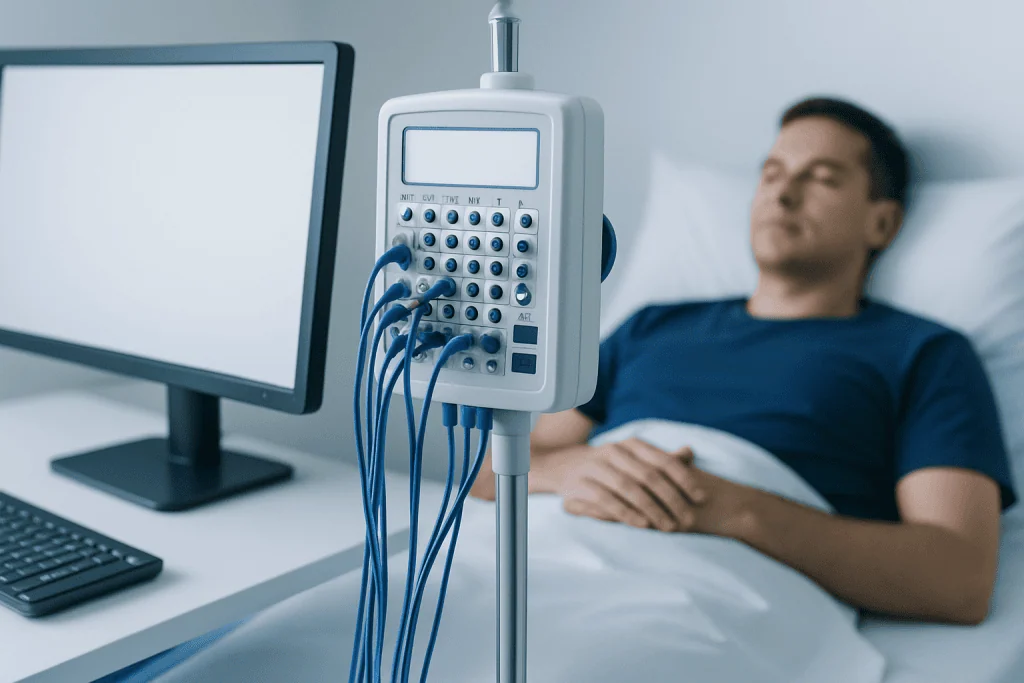
The main reason to order an MSLT is to investigate persistent excessive daytime sleepiness. Many conditions can make a person feel tired or drowsy during the day, including poor sleep habits, obstructive sleep apnea, circadian rhythm disorders, medication effects, depression, and neurologic sleep disorders. The test helps clarify whether the sleepiness is unusually severe and whether there are patterns that suggest narcolepsy.
MSLT is especially useful when a person reports falling asleep unintentionally, needing frequent naps, or having symptoms such as vivid dream-like experiences when falling asleep or waking up, temporary muscle weakness triggered by emotions, or sleep paralysis. These symptoms can occur with narcolepsy, but they are not always present in every case.
Doctors may also use the test to help evaluate idiopathic hypersomnia, a condition marked by significant daytime sleepiness without the classic REM-related features of narcolepsy. In some situations, the MSLT helps distinguish a neurologic sleep disorder from sleepiness caused by other medical or lifestyle factors.
How the test works

The MSLT is usually performed in a sleep laboratory during the day, often immediately after an overnight sleep study called polysomnography. The overnight study is important because it confirms how the person slept the night before and checks for problems such as sleep apnea that could affect daytime sleepiness and the interpretation of the MSLT.
On the test day, the person is asked to try to nap at set times, typically four or five times across the day. Each nap period usually lasts about 20 minutes if the person stays awake, or a little longer after sleep begins so the team can see whether REM sleep appears. Between nap trials, the person stays awake and is usually asked to avoid caffeine, nicotine, vigorous activity, and other factors that may interfere with results.
The test is painless and noninvasive. Small sensors are placed on the scalp, face, and body with adhesive or gentle paste. These monitor electrical activity in the brain and muscles as well as eye movements, which are needed to determine whether the person falls asleep and which stage of sleep occurs.
- Average sleep latency shows how sleepy a person is during the day.
- Early REM sleep during naps may support a diagnosis of narcolepsy in the right clinical setting.
- Results are interpreted along with the overnight sleep study and symptom history.
How to prepare for a Multiple Sleep Latency Test
Preparation is an important part of getting reliable results. Before the test, the sleep specialist may ask the person to keep a regular sleep schedule for one to two weeks and may request a sleep diary or wearable activity monitor. This helps confirm that sleep deprivation or irregular sleep timing is not the main reason for daytime sleepiness.
Medicines and substances can strongly influence MSLT results. Stimulants, sedatives, some antidepressants, caffeine, alcohol, and other drugs may change how quickly a person falls asleep or whether REM sleep appears. Because of this, the care team reviews all prescription drugs, over-the-counter medicines, supplements, and substances beforehand and gives individualized instructions about what should or should not be stopped. Medicines should never be discontinued without medical guidance.
On the day of testing, the person is usually advised to avoid caffeine and follow the laboratory’s instructions about meals, smoking, and usual morning routines. Comfortable clothing can be helpful, as the day includes several hours in the sleep center between nap sessions.
Understanding the results
MSLT results focus on two main findings: the average time it takes to fall asleep across the nap opportunities, and whether REM sleep begins soon after sleep onset during two or more naps. In general, shorter sleep latency means greater daytime sleepiness. Early REM sleep can be an important clue in the evaluation of narcolepsy.
Even so, interpretation is not always simple. A short sleep latency does not automatically mean narcolepsy, and a normal or borderline result does not always rule out a sleep disorder. Inadequate sleep before the study, shift work, untreated sleep apnea, medication effects, and circadian rhythm problems can all influence what the test shows.
For this reason, specialists combine the MSLT with the person’s history, physical examination, and other testing when needed. Depending on the situation, the doctor may also recommend further evaluation such as electroencephalography (EEG) or broader neurologic assessment if another condition is being considered.
What conditions can it help diagnose?
The MSLT is best known for helping diagnose narcolepsy, particularly when symptoms strongly suggest this condition. Narcolepsy can cause profound daytime sleepiness and may also involve cataplexy, sleep paralysis, and vivid hallucination-like experiences at sleep onset or upon waking. The test helps document objective evidence of abnormal sleepiness and REM sleep patterns.
It may also support the evaluation of idiopathic hypersomnia, a disorder in which people feel very sleepy during the day even after adequate sleep. Unlike narcolepsy, idiopathic hypersomnia does not usually show the same REM-related findings on MSLT, so the test can help distinguish between the two, although diagnosis still depends on the full clinical picture.
In some cases, the test helps rule out other explanations rather than confirming a single diagnosis. For example, sleepiness from untreated sleep apnea, chronic sleep deprivation, depression, medication effects, or shift work may need to be addressed before the doctor can confidently interpret the MSLT.
Limitations, treatment planning, and follow-up
Like any medical test, the MSLT has limitations. Results can vary based on recent sleep habits, anxiety, interruptions, medications, and other health conditions. That is why sleep specialists use strict testing standards and often rely on an overnight sleep study first. If conditions were not ideal, a repeat evaluation may sometimes be considered.
If the test supports a diagnosis such as narcolepsy or another hypersomnia disorder, treatment is tailored to the cause and the person’s daily needs. Management may include sleep schedule adjustments, planned naps, treatment of any coexisting sleep disorder, and medications prescribed by a specialist. In some cases, doctors may recommend additional care pathways such as sleep disorder treatment through a multidisciplinary team.
For international patients who need evaluation of persistent daytime sleepiness, Acibadem International’s multidisciplinary specialists and JCI-accredited hospitals diagnose and treat sleep-related conditions with coordinated testing and follow-up. The goal is not only to label the problem correctly, but also to improve daytime function, safety, and quality of life.
When to see a doctor
A person should consider seeing a doctor if daytime sleepiness is frequent, unexplained, or begins to affect work, school, driving, or daily activities. Persistent drowsiness is not simply a sign of being busy or stressed in every case; sometimes it points to a treatable sleep disorder or another medical problem.
Medical advice is especially important when sleepiness is accompanied by sudden sleep attacks, loss of muscle control during strong emotions, loud snoring, witnessed pauses in breathing during sleep, morning headaches, or trouble staying awake while driving. These symptoms can suggest a sleep disorder that deserves timely evaluation.
The first step is often to speak with a primary care doctor or a sleep specialist. They may review sleep habits, medical history, medicines, and mental health, and if needed arrange an overnight sleep study and MSLT to better understand the cause.
Frequently asked questions
What is a Multiple Sleep Latency Test used for?
A Multiple Sleep Latency Test is used to measure how sleepy a person is during the day in an objective way. It is commonly used to help diagnose narcolepsy and evaluate other causes of excessive daytime sleepiness, such as idiopathic hypersomnia.
Is the MSLT the same as an overnight sleep study?
No. The MSLT is a daytime nap test, while an overnight sleep study monitors sleep during the night. The two tests are often done back-to-back because the overnight study helps make sure the daytime results are interpreted accurately.
How long does a Multiple Sleep Latency Test take?
The test usually lasts most of the day. It includes several scheduled nap opportunities spaced about two hours apart, so patients generally stay in the sleep center from morning until late afternoon.
Can medications affect MSLT results?
Yes. Many medications and substances can change how quickly a person falls asleep or whether REM sleep appears during naps. That is why the sleep team carefully reviews medicines, supplements, caffeine, alcohol, and nicotine before the test and gives individual instructions.
Is the test uncomfortable or painful?
The MSLT is not painful. Sensors are placed on the skin to record sleep-related signals, which may feel unusual at first but are generally well tolerated.
What happens if the MSLT is normal but symptoms continue?
A normal result does not always end the evaluation. The doctor may review sleep habits again, look for other causes of sleepiness, treat any coexisting sleep problems, or consider repeating testing if the original conditions may have affected the results.
References
- American Academy of Sleep Medicine
- National Institute of Neurological Disorders and Stroke
- National Heart, Lung, and Blood Institute
- MedlinePlus
- Mayo Clinic
This article is for general information only and is not a substitute for professional medical advice. Please consult a qualified doctor about your individual situation.
Explore treatments in Turkey — costs, top hospitals & a free quote
JCI-accredited · board-certified surgeons · reply within 24h
Add us as a Preferred Source to see more of our trusted health content across Google Search, AI Overviews and Discover.