N.peroneus: What Patients Need to Know

The n.peroneus, or common peroneal nerve, controls foot lifting and sensation over parts of the lower leg and foot. Compression near the knee is a common cause of peroneal nerve symptoms, especially after leg crossing, weight loss, casts, or prolonged bed rest.
Key Takeaways
- The n.peroneus, or common peroneal nerve, controls foot lifting and sensation over parts of the lower leg and foot.
- Compression near the knee is a common cause of peroneal nerve symptoms, especially after leg crossing, weight loss, casts, or prolonged bed rest.
- Typical symptoms include foot drop, tripping, numbness on the top of the foot, and weakness when lifting the ankle or toes.
- Diagnosis often combines a physical exam with nerve tests and imaging when needed.
- Treatment depends on the cause and may include relieving pressure, physical therapy, braces, medication for nerve pain, or surgery in selected cases.
n.peroneus is another name commonly used for the common peroneal nerve, a nerve near the outside of the knee that helps lift the foot and provides sensation to part of the lower leg and foot. When this nerve is compressed or injured, it may lead to foot drop, weakness, tingling, or numbness, and timely evaluation can help guide treatment and recovery.
What n.peroneus means
n.peroneus usually refers to the common peroneal nerve, also called the common fibular nerve. It branches from the sciatic nerve and travels around the outer side of the knee, close to the head of the fibula, before dividing into smaller branches that help move the foot and provide feeling to parts of the leg and foot.
This nerve has an important role in everyday walking. It helps lift the front of the foot and toes and supports turning the foot outward. It also carries sensation from the upper outer lower leg and much of the top of the foot. Because the nerve lies relatively close to the skin near the knee, it is more vulnerable to pressure and injury than some deeper nerves.
When people search for n.peroneus, they are often looking for an explanation of symptoms such as foot drop, numbness, or weakness. In many cases, these symptoms are related to pressure on the nerve around the knee, but they can also come from trauma, nerve disorders, or problems higher up in the spine. Understanding where the nerve is and what it does can make symptoms easier to recognize and discuss with a doctor.
Symptoms patients may notice
The best-known sign of a peroneal nerve problem is foot drop. This means the person has trouble lifting the front part of the foot, so the toes may drag while walking. To avoid tripping, some people begin lifting the knee higher than usual, creating a steppage gait. This can affect balance, walking speed, and confidence during daily activities.
Sensory symptoms are also common. A person may feel numbness, tingling, burning, or reduced sensation on the top of the foot or along the outer part of the lower leg. Some people describe a patch of skin that feels “asleep” or unusually sensitive. Symptoms may come on suddenly after an injury or gradually if the nerve is being compressed over time.
Weakness may involve more than foot lifting alone. Depending on which branch of the nerve is affected, a person may have difficulty lifting the toes, turning the foot outward, or moving the ankle in a controlled way. Symptoms can affect one leg or, less commonly, both. Because foot drop can also be seen in conditions affecting the spine or brain, a proper evaluation is important rather than assuming the cause.
- Difficulty lifting the foot or toes
- Tripping or catching the toes when walking
- Numbness on the top of the foot
- Tingling or burning along the outer lower leg
- Weakness around the ankle
Common causes and risk factors

The common peroneal nerve is especially prone to compression where it wraps around the fibular head near the knee. This can happen from frequent leg crossing, prolonged squatting, wearing a tight cast or brace, or lying in one position for long periods during illness or recovery. Rapid or significant weight loss may also reduce the natural padding around the nerve, making pressure-related injury more likely.
Trauma is another important cause. A knee injury, fibula fracture, dislocation, or direct blow to the outside of the knee can stretch or damage the nerve. Surgical procedures around the hip, knee, or lower leg may sometimes affect it as well. In some cases, the problem develops from repetitive strain or from a mass such as a cyst pressing on the nerve.
Not all symptoms begin at the knee. A pinched nerve in the lower back, especially involving the L5 nerve root, can mimic peroneal nerve dysfunction. Nerve disorders related to diabetes, inflammatory neuropathies, or other systemic conditions may also contribute. This is why a doctor may consider both local nerve injury and broader neurologic causes, including sciatica or a herniated disc, when evaluating foot drop or sensory changes.
How doctors diagnose a peroneal nerve problem
Diagnosis begins with a detailed history and physical examination. The doctor asks when symptoms started, whether there was an injury, recent surgery, prolonged pressure on the leg, or back pain. During the exam, they assess walking pattern, ankle and toe strength, reflexes, and areas of reduced sensation. They may gently tap over the nerve near the knee to see whether this reproduces tingling.
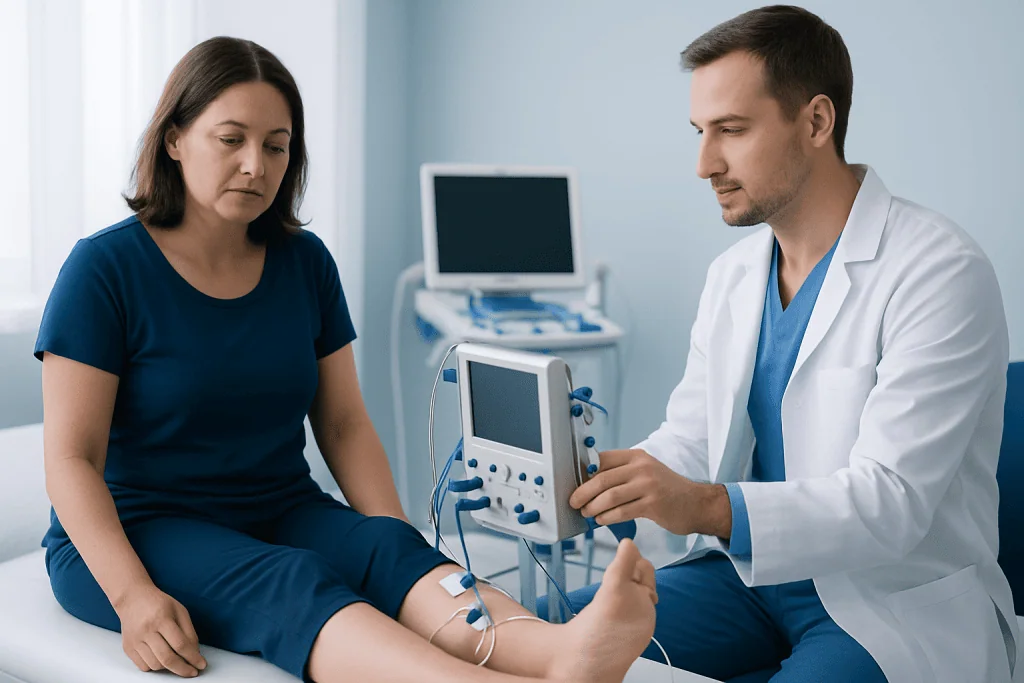
Because several conditions can cause similar symptoms, additional testing may be recommended. Nerve conduction studies and electromyography help show whether the nerve is functioning normally and where the problem is located. These tests can help distinguish a common peroneal neuropathy from a nerve root problem in the spine or a more widespread neuropathy.
Imaging is used selectively. Ultrasound or MRI around the knee may identify compression by a cyst, scar tissue, or other structural issue. If the symptoms suggest a spinal cause, the doctor may recommend MRI of the lower back or another relevant area. In some situations, blood tests are used to look for underlying conditions such as diabetes or inflammatory disorders that may affect the nerves.
Treatment options and recovery
Treatment depends on the cause, severity, and duration of symptoms. If the problem is due to pressure on the nerve, the first step is to remove that pressure whenever possible. This may mean avoiding leg crossing, adjusting a cast or brace, changing positions often, or addressing prolonged pressure during recovery from illness. Mild cases can improve when the source of compression is corrected early.
Physical therapy is often central to care. Targeted exercises can maintain ankle range of motion, strengthen muscles that still function, and improve gait mechanics. Some people benefit from an ankle-foot orthosis, a brace that helps hold the foot in a safer position while walking. If a person’s symptoms are related to the spine or surrounding joints, their doctor may recommend rehabilitation or further evaluation, sometimes including physical therapy and rehabilitation.
Medicines may be used for nerve-related pain or discomfort, although they do not directly repair the nerve. If there is a structural compression, severe weakness, or poor recovery over time, surgery may be considered. Surgical approaches vary and may involve nerve decompression or repair in selected cases. Patients with suspected nerve entrapment or injury may also be evaluated by specialists in neurosurgery or orthopedics when appropriate.
Recovery can take time because nerves heal slowly. Some people improve over weeks to months, while others need longer rehabilitation. The outlook is often better when the cause is identified early and the nerve has not been severely damaged. Regular follow-up helps track return of strength and sensation and supports adjustments in treatment if needed.
Self-care and prevention in daily life
Many cases of peroneal nerve compression are linked to body position, so practical daily habits can help. Avoid sitting with the legs crossed for long periods, and try not to kneel or squat for extended times without breaks. If mobility is limited because of illness, surgery, or travel, changing position regularly can reduce prolonged pressure on the nerve near the knee.
People using casts, splints, or braces should let their care team know if they notice new numbness, tingling, or weakness. Good shoe support and fall-prevention measures are also important, especially if foot drop is present. Clearing clutter, using handrails, and wearing stable footwear can lower the risk of trips and injuries.
General nerve health matters too. Managing diabetes carefully, maintaining balanced nutrition, and discussing unexplained weight loss with a doctor may all be helpful. It is also important not to ignore new weakness or persistent numbness. Early attention gives the best chance to protect function and begin supportive treatment before symptoms become more limiting.
When to seek medical care
Medical evaluation is important if there is new foot drop, sudden weakness in the foot or ankle, or numbness that does not improve. A person should also seek care after a knee injury, fracture, surgery, or cast placement if symptoms begin soon afterward. These situations may point to a nerve problem that needs timely assessment.
Urgent medical care is needed if weakness comes on suddenly, if walking becomes unsafe, or if symptoms are accompanied by severe back pain, bowel or bladder changes, or weakness elsewhere in the body. These features can suggest a more serious neurologic problem and should not be delayed.
If symptoms are mild but ongoing, a doctor can help identify whether the cause is local nerve compression, a spine-related issue, or another condition. In complex cases, assessment by neurology, orthopedics, rehabilitation, or spine specialists may be helpful. At Acibadem International, multidisciplinary specialists in JCI-accredited hospitals evaluate nerve, spine, and mobility-related symptoms for international patients and coordinate diagnosis and treatment when needed.
Frequently asked questions
Is n.peroneus the same as the common peroneal nerve?
Yes. n.peroneus is a shortened anatomical term commonly used to refer to the common peroneal nerve, also called the common fibular nerve. It is a nerve near the outer side of the knee that helps move the foot and carries sensation from parts of the lower leg and foot.
Can a peroneal nerve problem heal on its own?
Some mild cases improve when the cause of pressure or irritation is removed, especially if symptoms are recognized early. Recovery depends on why the nerve was affected and how severe the injury is. Ongoing weakness or foot drop should still be evaluated by a doctor.
What does foot drop feel like?
Foot drop usually feels like difficulty lifting the front of the foot or the toes. A person may notice tripping, slapping the foot on the ground, or needing to lift the knee higher while walking. It can happen with peroneal nerve problems but also with other neurologic conditions.
How is peroneal nerve damage different from sciatica?
Peroneal nerve damage often causes symptoms focused around the outer knee, lower leg, and top of the foot, especially weakness in lifting the foot. Sciatica typically involves pain radiating from the lower back into the buttock and leg. Because symptoms can overlap, testing may be needed to tell them apart.
Do all patients with peroneal nerve problems need surgery?
No. Many patients are treated without surgery using pressure relief, physical therapy, bracing, and monitoring. Surgery is usually considered when there is a clear structural compression, significant injury, or poor improvement over time.
Which doctor treats n.peroneus problems?
Treatment may involve a neurologist, orthopedic specialist, physical medicine and rehabilitation physician, or neurosurgeon, depending on the cause. Some patients need a team approach, especially if symptoms could be coming from the knee, the nerve itself, or the lower spine.
References
- National Institute of Neurological Disorders and Stroke
- Mayo Clinic
- American Academy of Orthopaedic Surgeons
- Merck Manual Consumer Version
- National Institute of Arthritis and Musculoskeletal and Skin Diseases
This article is for general information only and is not a substitute for professional medical advice. Please consult a qualified doctor about your individual situation.
Joint and spine care in Turkey — expert assessment & treatment
JCI-accredited · board-certified surgeons · reply within 24h
Add us as a Preferred Source to see more of our trusted health content across Google Search, AI Overviews and Discover.