Nail Fungus Fingernails Treatment: Diagnosis, Outlook, and Modern Treatment Approaches

Fingernail fungal infection should be confirmed with testing before treatment whenever possible. Treatment depends on how many nails are affected, how severe the changes are, and the person’s overall health.
Key Takeaways
- Fingernail fungal infection should be confirmed with testing before treatment whenever possible.
- Treatment depends on how many nails are affected, how severe the changes are, and the person’s overall health.
- Topical medicines can help mild disease, while oral antifungals are often more effective for deeper or more extensive infection.
- Healthy new nail growth takes time, so improvement may be gradual even when treatment is working.
- Recurrence is possible, especially if athlete’s foot, wet work, diabetes, or nail trauma are not addressed.
Nail fungus fingernails treatment usually starts with confirming that a fungal infection is truly present, because several nail disorders can look similar. Effective care may include topical or oral antifungal medicines, nail thinning or removal in selected cases, and practical steps that support healthy nail regrowth and reduce recurrence.
Overview: what nail fungus in fingernails treatment involves
Nail fungus fingernails treatment focuses on two goals: clearing the infection and helping a healthier nail grow in over time. In many people, this means first confirming the diagnosis, then choosing treatment based on severity, the number of nails involved, and whether the infection affects the nail surface or deeper parts of the nail.
Fungal infection of the nail is called onychomycosis. Although it is more common in toenails, fingernails can also be affected, especially in people whose hands are often wet, exposed to irritants, or repeatedly traumatized. A fingernail may become thickened, discolored, brittle, rough, or lifted from the nail bed.
Because psoriasis, eczema, trauma, bacterial infection, and other nail conditions can resemble fungal disease, self-diagnosis is not always reliable. For that reason, a clinician may recommend testing before starting medicines, particularly if oral antifungal treatment is being considered. This can help avoid unnecessary treatment and guide the best next step.
Most cases are not dangerous, but they can be persistent and cosmetically distressing. With appropriate care, many people improve, though treatment often requires patience because fingernails need time to grow out and replace damaged areas.
How fingernail fungus looks and feels
Fingernail fungus does not always cause pain. In early stages, the nail may simply look different. Common changes include yellow, white, brown, or cloudy discoloration; crumbly edges; a dull or rough surface; thickening; or distortion of the nail shape. Sometimes the nail begins to separate from the skin underneath.
Some people notice debris collecting under the nail or find that the nail breaks more easily. If the surrounding skin is irritated, there may be redness, tenderness, or swelling around the nail fold. These features can interfere with grooming and daily tasks, especially if several nails are involved.
Symptoms vary depending on the type of fungus and the pattern of infection. A superficial infection may appear as white patches on the nail surface, while a deeper infection can change the color and structure of the entire nail. In certain cases, yeast such as Candida may be involved, particularly when chronic moisture exposure affects the hands.
Although many fungal nail infections are mainly cosmetic, worsening pain, spreading redness, drainage, or sudden inflammation suggest that another problem may also be present. That is one reason persistent nail changes are worth medical evaluation rather than repeated trial-and-error home treatment.
Causes, triggers, and who is more likely to get it

Fingernail fungal infection develops when fungi enter the nail through tiny breaks in the nail plate or surrounding skin. Dermatophytes are a common cause, but yeasts and non-dermatophyte molds may also infect fingernails. Moisture, repeated hand washing, detergents, and nail trauma can weaken the normal barrier and make infection easier.
Risk rises in people whose hands are frequently wet because of work or household tasks. Nail biting, picking, aggressive manicures, artificial nails, and repeated minor injury can also create an entry point for organisms. Existing skin conditions, including eczema or chronic paronychia, may further increase vulnerability.
Some health conditions make fungal infection more likely or harder to clear. These include diabetes, poor circulation, immune suppression, and increasing age. A person who also has athlete’s foot may repeatedly reintroduce fungi to the nails from skin surfaces, shoes, or grooming tools. If a doctor suspects related skin infection, they may also evaluate for nail fungus elsewhere.
Not every abnormal fingernail is caused by fungus. Psoriasis, lichen planus, trauma, and bacterial infection can all mimic onychomycosis. Distinguishing among these conditions is important because treatment differs, and using the wrong medicine may delay improvement.
How doctors diagnose fingernail fungal infection
Diagnosis usually begins with a close examination of the nails, surrounding skin, and sometimes the feet. A doctor will ask how long the problem has been present, whether it affects daily activities, and whether there is a history of trauma, artificial nails, skin disease, diabetes, or repeated water exposure. This history helps narrow the likely cause.
Whenever possible, laboratory confirmation is helpful before long courses of treatment. The clinician may trim or scrape a small sample from the nail for microscopy, fungal culture, or other laboratory testing. These tests help confirm whether fungus is present and may identify the type of organism involved.
Testing matters because several look-alike conditions can produce thick, brittle, or discolored nails. If fungal infection is not found, the doctor may consider inflammatory skin disease or nail injury instead. In some cases, referral to a skin specialist may be appropriate, especially when the diagnosis remains uncertain or the condition is recurring. This is where assessment in a dermatology clinic can be especially useful.
Before prescribing oral antifungal medicines, a clinician may review other medical conditions and current medications. Depending on the person’s health profile, blood tests may be used to support safe treatment planning and monitoring.
Modern treatment approaches for fingernail fungus
Nail fungus fingernails treatment is tailored to the person and the nail findings. Mild or superficial infection may be managed with topical antifungal treatment, especially when only a small part of one or two nails is involved. These medicines are applied regularly over a period of months and work best when the infected portion of nail is limited and the person can follow the application routine consistently.
Oral antifungal medicines are often more effective when infection is more extensive, involves several nails, affects deeper layers, or has not improved with topical care. A doctor will decide whether this option is suitable based on the person’s health status, possible medicine interactions, and the need for monitoring. Even with effective treatment, visible improvement takes time because the damaged area must grow out as new nail forms.
Mechanical nail care may be used alongside medication. Trimming, filing, or professional thinning of a thickened nail can reduce discomfort and help topical treatment reach the affected area more effectively. In selected situations, a doctor may discuss partial or complete nail removal if the nail is severely damaged, painful, or repeatedly infected, though this is not needed for most people. Broader planning may involve medical dermatology and, if another nail condition is suspected, review for disorders such as psoriasis.
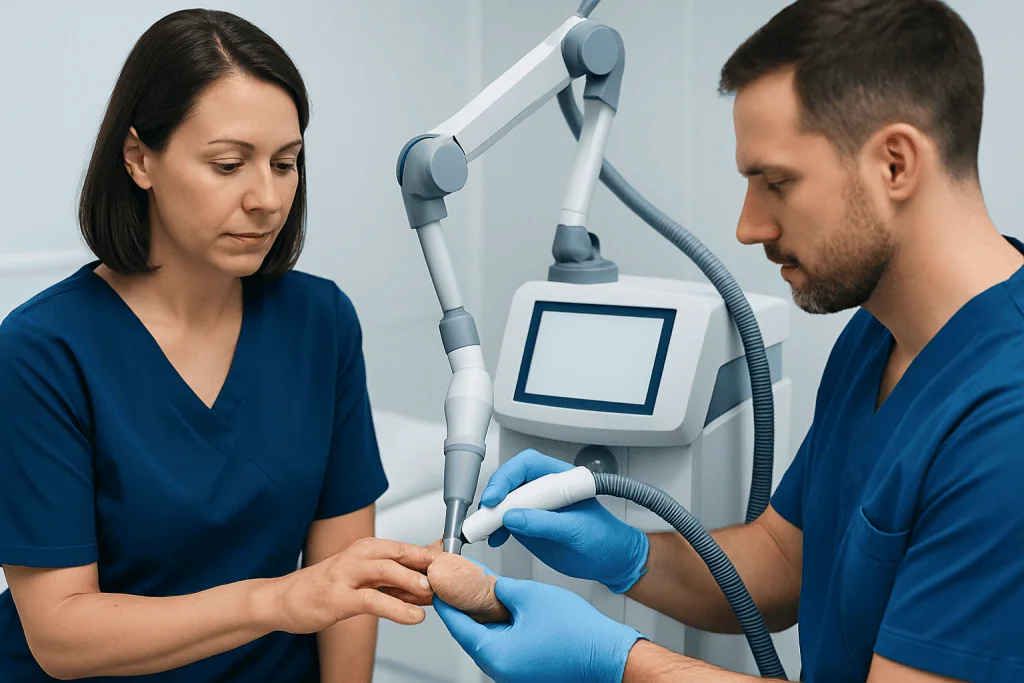
People often ask about lasers and other newer options. These approaches are still being evaluated, and availability, results, and evidence can vary. For that reason, they are usually considered only after a clear diagnosis and a discussion of standard therapies. A specialist in skin and dermatology can explain which options are appropriate in a specific case.
Outlook, nail regrowth, and what to expect during recovery
The outlook is generally good, but fingernails recover slowly. Even after the fungus has been controlled, the old damaged nail does not instantly return to normal. Instead, improvement appears as healthier nail gradually grows from the base and pushes the affected part forward over time.
Because regrowth is gradual, early treatment success may be subtle. The nail may look clearer near the cuticle first, while the outer portion remains discolored until it grows out and is trimmed away. If progress seems slow, it does not necessarily mean treatment has failed. Follow-up visits can help determine whether the medicine is working or whether the diagnosis should be reconsidered.
Recurrence can happen, especially if the original risk factors continue. Ongoing wet work, unrecognized athlete’s foot, nail trauma, smoking, diabetes, or immune problems can all make recurrence more likely. Preventive habits are therefore an important part of long-term success, not just an optional extra.
When patients need specialized evaluation, Acibadem International’s multidisciplinary specialists in JCI-accredited hospitals diagnose and treat nail and skin conditions for international patients. The emphasis remains on confirming the cause, selecting appropriate evidence-based treatment, and supporting safe follow-up.
Self-care and prevention that support treatment
Self-care cannot replace medical treatment in every case, but it can make treatment more effective and reduce the chance of the infection returning. The main aim is to keep nails and surrounding skin as healthy, dry, and protected as possible while avoiding repeated trauma.
Helpful habits include keeping nails trimmed straight and not too short, drying hands well after washing, and using gloves for prolonged wet work or cleaning products. People who use occlusive gloves for long periods may benefit from changing gloves regularly and allowing the hands to dry between tasks. Nail tools should be cleaned and not shared with others.
If there is athlete’s foot, treating it matters because fungal organisms can spread between skin and nails. Artificial nails and harsh manicures are best avoided until the nail has recovered. Picking at the cuticle or the nail edge can worsen damage and make reinfection easier.
- Keep nails clean, dry, and gently trimmed.
- Wear protective gloves for dishwashing, cleaning, or other wet tasks.
- Avoid sharing nail clippers, files, or manicure tools.
- Do not cover an actively infected nail with artificial nails.
- Ask a doctor before using over-the-counter products for long periods without a confirmed diagnosis.
When to seek medical care
Medical care is appropriate if a fingernail becomes persistently discolored, thickened, crumbly, lifted, or distorted, especially if the change does not improve as the nail grows. A professional assessment is also helpful when home care has not worked, when several nails are involved, or when the diagnosis is uncertain.
Prompt evaluation is especially important if there is pain, pus, spreading redness, fever, or rapid swelling around the nail, because these features may suggest bacterial infection or significant inflammation rather than simple fungal disease. People with diabetes, circulation problems, or a weakened immune system should not delay assessment of a suspected nail infection.
A doctor should also review any nail change that starts after injury but does not settle, or any dark streak, persistent deformity, or recurring problem around the same nail. These situations do not always mean fungus and may require different care.
Seeking advice early can reduce unnecessary treatments and help protect the nail from long-term damage. A clinician can confirm the cause, discuss the most suitable therapy, and explain how to monitor progress safely over time.
Frequently asked questions
What is the best nail fungus fingernails treatment?
The best treatment depends on whether the infection is mild or extensive and whether fungus has been confirmed by testing. Topical medicine may be enough for limited disease, while oral antifungal treatment is often more effective for deeper or multiple-nail infection. A doctor can help choose the safest and most suitable option.
Can fingernail fungus go away on its own?
It usually does not clear completely without treatment, especially once the infection is established inside the nail. Some mild surface changes may remain stable for a time, but many cases persist or slowly worsen. Proper diagnosis is important because not every abnormal nail is caused by fungus.
How long does treatment take to work?
Treatment may begin controlling the infection before the nail looks normal again. Visible improvement often takes months because the damaged nail must grow out and be replaced by healthy new nail. Fingernails generally improve faster than toenails, but progress is still gradual.
Are oral antifungal medicines safe?
They can be very effective, but they are not right for everyone. A doctor will consider liver health, other medications, pregnancy status, and overall medical history before prescribing them. Monitoring may be recommended in some cases to support safe use.
Can I use nail polish or artificial nails during treatment?
A doctor may advise limiting or avoiding these products, especially artificial nails, because they can trap moisture and make it harder to monitor improvement. Some topical medicines also work better on a clean, uncovered nail. If cosmetic covering is important, it is best discussed during the treatment plan.
Is fingernail fungus contagious?
It can spread through shared nail tools, close skin contact, or contaminated surfaces, although it does not spread in every household. Good hand hygiene, not sharing manicure equipment, and treating any related athlete’s foot can lower the risk. Keeping the nail area dry and avoiding trauma also helps.
References
- American Academy of Dermatology
- Centers for Disease Control and Prevention
- National Health Service
- Merck Manual Consumer Version
- Mayo Clinic
This article is for general information only and is not a substitute for professional medical advice. Please consult a qualified doctor about your individual situation.
Explore treatments in Turkey — costs, top hospitals & a free quote
JCI-accredited · board-certified surgeons · reply within 24h
Add us as a Preferred Source to see more of our trusted health content across Google Search, AI Overviews and Discover.

More from the Health Library



Related Specialists

Dr. Zühre Esra Kıvanç
Inpatient Clinic Physicians Clinical Service
Dr. Seda Aras Gürcan
Pediatrics
Prof. Dr. Ercüment Yılmaz
Cardiology
Dilem Kadıoğlu
Physical Medicine & Rehabilitation