Nanoparticle Therapy: How It Works, Results and What to Expect

Nanoparticle therapy is a drug-delivery approach, not one single treatment or diagnosis. Some nanoparticle-based medicines are established in routine care, while others are available only through clinical trials.
Key Takeaways
- Nanoparticle therapy is a drug-delivery approach, not one single treatment or diagnosis.
- Some nanoparticle-based medicines are established in routine care, while others are available only through clinical trials.
- The goal is often to improve how a medicine travels, dissolves, reaches tissues, or stays in circulation.
- Suitability depends on the condition, the available approved product or trial, prior treatment, and overall health.
- Benefits and side effects vary by the medicine inside the nanoparticle, not only by the nanoparticle platform.
Nanoparticle therapy uses particles measured in billionths of a meter to carry medicines, imaging agents, or other therapeutic materials through the body. It is already used in selected approved treatments, especially some cancer medicines and vaccines, while many newer nanoparticle approaches remain under clinical study.
Overview: What Is Nanoparticle Therapy?
Nanoparticle therapy is a medical approach that packages a medicine or biologically active substance inside, on, or alongside extremely small particles called nanoparticles. These particles are far smaller than a cell and can be designed to protect a treatment, change how it circulates in the bloodstream, or help it enter particular tissues. In practical terms, nanoparticle therapy aims to improve drug delivery rather than replace the medicine itself.
Some nanoparticle-based therapies are already approved and used in clinical care. Examples include certain lipid-based formulations of chemotherapy, iron replacement products, vaccines that use lipid nanoparticles to carry genetic instructions, and other specialized medicines. However, many widely discussed uses—such as nanoparticles that precisely seek and destroy every cancer cell—are still being researched and should not be assumed to be standard care.
In cancer care, nanoparticle formulations may be considered as part of cancer treatment when an approved medicine is appropriate for a person’s cancer type and treatment plan. The expected results depend on the underlying disease, the active drug being delivered, and the individual response to treatment.
How Nanoparticle Therapy Works
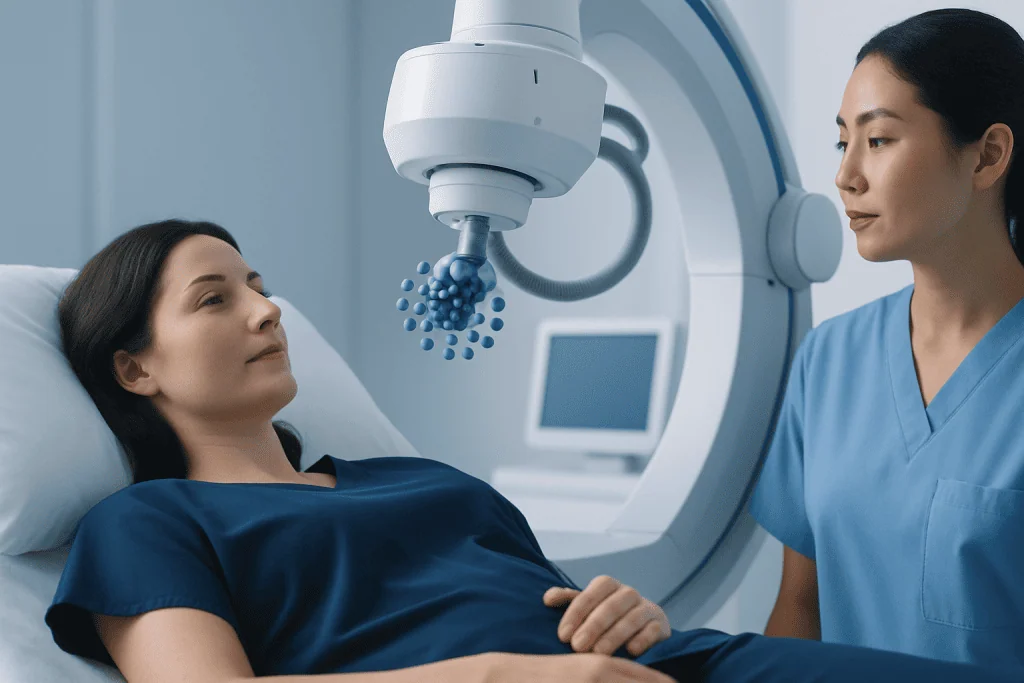
Nanoparticles can be made from lipids (fat-like materials), polymers, proteins, minerals, or other biocompatible substances. Their design influences where a treatment travels, how quickly it releases its contents, and how the body clears it. A familiar example is a liposome: a tiny lipid sphere that can carry a drug within its structure.
Traditional medicines may break down quickly, dissolve poorly, or affect healthy tissues as well as diseased ones. Encapsulating a medicine in nanoparticles can sometimes improve its stability or alter its distribution in the body. In certain situations, this may increase exposure of diseased tissue to the medicine or reduce exposure to specific healthy tissues. These effects are not identical for every nanoparticle product.
Some investigational platforms add molecules to the particle surface that may bind to features found more commonly on certain cells. This is often described as targeted delivery. Targeting can be useful, but it is not a guarantee that all treatment reaches only diseased cells. Nanoparticles also interact with blood proteins, immune cells, organs, and biological barriers, which is why careful testing is essential.
- Carrier: holds or protects the active medicine.
- Release profile: may allow medicine to be released over time or after reaching a particular environment.
- Distribution: can change how much medicine reaches blood, tissues, or organs.
- Active treatment: remains the key determinant of treatment effect and side effects.
Who May Be a Candidate?

Candidacy for nanoparticle therapy is based on the medical condition and on whether an approved nanoparticle formulation has a recognized role in treatment. In oncology, an oncologist considers the cancer type, stage, tumor biology when relevant, prior therapies, treatment goals, kidney and liver function, heart health, blood counts, and a person’s preferences.
Not every person with cancer or another condition will benefit from a nanoparticle-based drug. A nanoparticle formulation may be selected because it is effective for a particular indication, because its side-effect profile is preferable in a specific situation, or because it fits a broader treatment plan. It may also be offered through a clinical trial, where eligibility criteria are usually strict and may include disease characteristics and previous treatments.
People should tell their care team about previous drug reactions, allergies, pregnancy or breastfeeding, autoimmune disease, ongoing infections, and all medicines or supplements they use. These details can affect treatment safety. For people considering a trial, it is important to understand the purpose of the research, alternative standard options, visits and tests required, and the right to decline or withdraw from participation.
What Happens During Treatment?
The exact procedure depends on the product being used. Many nanoparticle therapies are given by intravenous infusion in an outpatient treatment unit, while others may be injected, taken by another route, or administered as part of a vaccine program. The care team explains the route, schedule, preparation, and monitoring needed for the individual medicine.
Before treatment, clinicians may review symptoms, perform an examination, and order blood tests or imaging when appropriate. Some treatments require medicines beforehand to reduce the risk of nausea, allergic-type reactions, or other predictable side effects. An intravenous line or implanted venous access device may be used for repeated infusions.
During an infusion, nurses monitor for symptoms such as rash, itching, flushing, fever, chills, shortness of breath, dizziness, chest discomfort, or pain near the infusion site. Many people complete treatment without a serious immediate reaction, but the infusion can be slowed, paused, or stopped if symptoms occur. Afterward, the team provides written guidance about medications, hydration, activity, and symptoms that need urgent attention.
When nanoparticle therapy is being studied rather than routinely used, the process may involve additional scans, blood samples, questionnaires, or follow-up visits. These research procedures help clinicians understand safety, how the therapy behaves in the body, and whether it is effective.
Potential Benefits, Limits and Risks
The potential benefit of nanoparticle therapy is more controlled delivery of an established or emerging treatment. Depending on the formulation, this may improve a medicine’s solubility, help it remain in circulation longer, permit delivery of substances that would otherwise degrade quickly, or change the pattern of side effects. For some approved medicines, these properties provide a meaningful clinical advantage in the right setting.
However, nanoparticle therapy is not automatically safer or more effective than conventional treatment. A formulation may still reach healthy organs, and it may cause adverse effects related to the active drug, the carrier material, or the immune system’s response. Results vary widely between individuals and between diseases.
Possible risks can include infusion reactions, fatigue, fever, nausea, vomiting, diarrhea or constipation, skin reactions, changes in blood counts, and effects on organs such as the liver, kidneys, lungs, or heart. The exact risks depend on the product. Certain cancer drugs, including some formulations carried in nanoparticles, can have important long-term or dose-related toxicities that require monitoring.
Doctors balance expected benefit against these risks and discuss alternatives, including conventional drug formulations, surgery, radiation therapy, immunotherapy, observation, supportive care, or a clinical trial. Shared decision-making is particularly important when evidence for a newer approach is still evolving.
Recovery, Monitoring and Expected Results
Recovery after nanoparticle therapy is usually determined by the medicine being delivered and the way it is administered. After a short outpatient infusion, many people can return home the same day. Some feel well enough for usual light activities, while others need rest because of fatigue, nausea, or other treatment effects. The care team can advise about driving, work, exercise, food, and infection precautions.
Side effects may begin during treatment, within hours or days, or later in a treatment course. Blood tests are often repeated to check blood cells and organ function. In cancer care, scans and clinical assessments are scheduled at intervals to determine whether treatment is shrinking, controlling, or not affecting the cancer as hoped. A response cannot be predicted from nanoparticle technology alone.
It is helpful to keep a record of symptoms, temperature when advised, medications, food intake, and any changes in daily functioning. Patients should attend scheduled follow-up appointments even when they feel well, as monitoring can identify side effects before they become more troublesome.
Acibadem International’s multidisciplinary specialists and JCI-accredited hospitals support international patients who need evaluation and treatment planning for complex conditions, including access to appropriate evidence-based cancer care.
When to Seek Medical Care
Anyone receiving nanoparticle therapy should follow the specific contact instructions supplied by their treatment team. Prompt medical advice is important for new or worsening symptoms, especially when they arise soon after an infusion or during a period of lowered immunity.
Urgent assessment is needed for trouble breathing, swelling of the face or throat, widespread hives, severe chest pain, fainting, confusion, uncontrolled vomiting, severe diarrhea, heavy bleeding, or a high fever according to the threshold given by the oncology or treatment team. These symptoms may have causes unrelated to the therapy, but they should not be managed alone.
People with cancer should also contact their clinician for persistent fever, chills, painful urination, a worsening cough, unusual bruising, severe weakness, dehydration, or signs of infection. Early communication allows the team to determine whether tests, supportive care, a treatment adjustment, or emergency care is needed.
For people who are exploring nanoparticle therapy before starting treatment, an appointment with a qualified specialist can clarify whether an approved option or a suitable clinical trial exists. Decisions should be based on the diagnosis and current evidence rather than online claims about experimental treatments.
Frequently asked questions
Is nanoparticle therapy the same as chemotherapy?
No. Nanoparticle therapy describes how a medicine or therapeutic material is carried and delivered. Some nanoparticle products contain chemotherapy drugs, but others may contain vaccines, imaging materials, iron, genetic medicines, or different treatments.
Can nanoparticle therapy cure cancer?
Nanoparticle therapy is not a single cancer cure. Some nanoparticle-based medicines are effective components of treatment for particular cancers, while many newer approaches are still being studied. Expected outcomes depend on the cancer type, stage, treatment goal, and the specific medicine used.
Is nanoparticle therapy safe?
Approved nanoparticle-based medicines have undergone safety and effectiveness evaluation for their authorized uses. They can still cause side effects, including reactions related to the active drug or the carrier. A clinician should explain the expected risks for the exact treatment being considered.
How is nanoparticle therapy given?
Many nanoparticle therapies are given through an intravenous infusion, often in an outpatient setting. Other products may be injected or administered by a different route. The schedule and monitoring depend on the medicine and the condition being treated.
Are targeted nanoparticles available for everyone with cancer?
No. Highly targeted nanoparticle systems are an active area of research, but many are not standard treatments. Availability depends on approved indications or enrollment in an appropriate clinical trial.
What questions should patients ask before nanoparticle therapy?
Patients may ask what medicine the nanoparticle carries, why that formulation is recommended, what alternatives exist, and what side effects require urgent contact. It is also reasonable to ask whether the treatment is standard care or part of a clinical trial, and how response will be monitored.
References
- National Cancer Institute
- U.S. Food and Drug Administration
- National Institutes of Health
- European Medicines Agency
- World Health Organization
This article is for general information only and is not a substitute for professional medical advice. Please consult a qualified doctor about your individual situation.
Oncology care in Turkey — second opinion and treatment plan
JCI-accredited · board-certified surgeons · reply within 24h
Add us as a Preferred Source to see more of our trusted health content across Google Search, AI Overviews and Discover.