Narcolepsy Diagnosis: Which Sleep and Neurology Tests Are Used?

Narcolepsy cannot usually be diagnosed by symptoms alone. The main tests are overnight polysomnography and the multiple sleep latency test.
Key Takeaways
- Narcolepsy cannot usually be diagnosed by symptoms alone.
- The main tests are overnight polysomnography and the multiple sleep latency test.
- Doctors also look for cataplexy, sleep paralysis, hallucinations, and disrupted nighttime sleep.
- Other causes of sleepiness, such as sleep apnea, insufficient sleep, medications, and circadian rhythm disorders, must be excluded.
- In selected cases, actigraphy, sleep logs, HLA testing, or cerebrospinal fluid hypocretin testing may be used.
Narcolepsy diagnosis usually involves a careful symptom review, overnight sleep testing, and daytime nap testing. The goal is to confirm narcolepsy, identify its type, and rule out other conditions that can also cause severe daytime sleepiness.
Overview: How Narcolepsy Is Diagnosed
Narcolepsy is a long-term sleep-wake disorder that affects the brain’s ability to regulate sleep properly. People with narcolepsy often feel overwhelming daytime sleepiness and may fall asleep unexpectedly, even after what seems like a full night’s rest. Some also experience cataplexy, which is a sudden brief loss of muscle tone triggered by emotions such as laughter or surprise.
Because many symptoms can overlap with other sleep or neurological conditions, narcolepsy diagnosis usually requires more than one step. A sleep specialist or neurologist begins with a detailed medical history and symptom review, then uses specific sleep tests to confirm the diagnosis. These tests help show how quickly a person falls asleep, how often they enter rapid eye movement (REM) sleep, and whether another disorder may better explain the symptoms.
The diagnosis process also helps distinguish between narcolepsy type 1 and type 2. Type 1 includes cataplexy or evidence of very low hypocretin levels, while type 2 does not involve cataplexy and has a different diagnostic pattern. Identifying the correct type matters because it guides long-term management and supports a more personalized treatment plan.
Symptoms That Lead to Testing
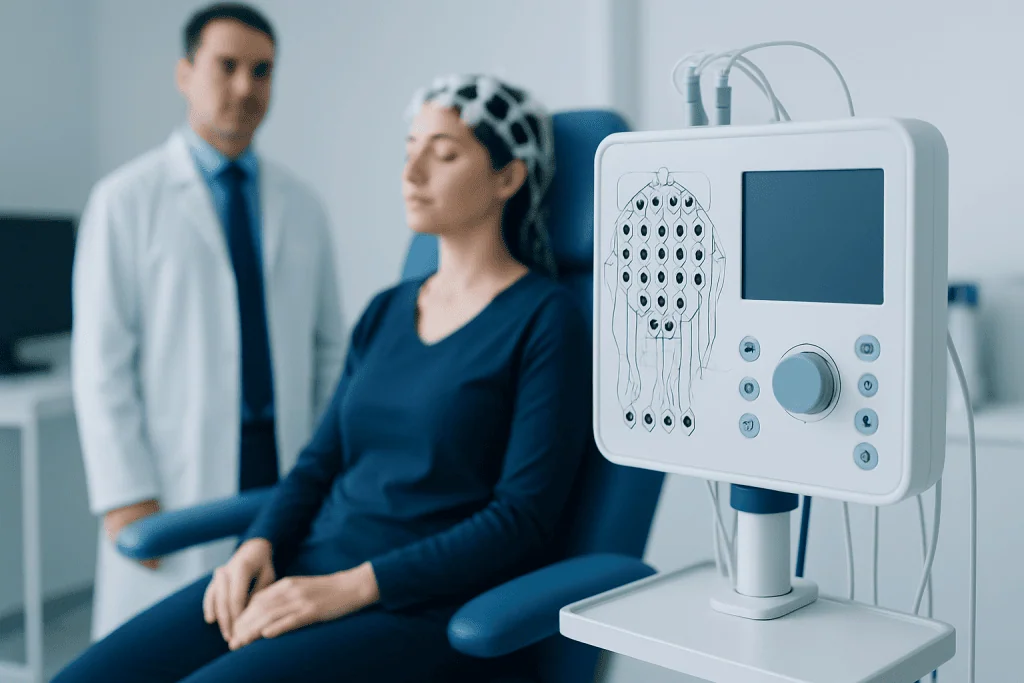
The most common reason people seek evaluation is excessive daytime sleepiness that continues for months and interferes with work, school, driving, or daily life. This sleepiness is often deeper than ordinary tiredness. People may feel an almost irresistible need to sleep and may have short naps that seem refreshing but do not solve the problem.
Doctors also ask about other classic narcolepsy symptoms. These include cataplexy, sleep paralysis, vivid dream-like hallucinations while falling asleep or waking up, and fragmented nighttime sleep. Not everyone has all of these features, and symptoms can develop gradually, which is one reason diagnosis is sometimes delayed.
A careful symptom history is essential because several other conditions can look similar. Obstructive sleep apnea, chronic sleep deprivation, shift work, depression, medication side effects, and other hypersomnia disorders may all cause daytime sleepiness. In some people, the question is not only whether narcolepsy is present, but also whether another disorder such as sleep apnea is contributing to symptoms.
- Persistent daytime sleepiness
- Sudden sleep attacks
- Cataplexy triggered by emotions
- Sleep paralysis
- Vivid hallucinations at sleep onset or awakening
- Broken or restless nighttime sleep
Medical History, Sleep Diary, and Initial Evaluation

The first part of narcolepsy diagnosis is a structured clinical evaluation. The doctor reviews when symptoms began, how often they occur, and whether there are triggers or safety concerns. Questions often cover work schedules, average sleep time, snoring, breathing pauses during sleep, medications, caffeine or alcohol use, mood symptoms, and family history of sleep disorders.
Patients are often asked to keep a sleep diary for one to two weeks before formal testing. This record tracks bedtimes, wake times, naps, and how alert the person feels during the day. A sleep diary helps show whether the person is getting enough sleep and whether their sleep pattern is regular enough for accurate test interpretation.
In some cases, actigraphy may also be used. This usually involves wearing a small watch-like device that measures movement over several days or weeks. Actigraphy can help estimate sleep-wake patterns at home and is especially useful when the doctor needs to rule out insufficient sleep or a circadian rhythm problem before performing laboratory testing.
The neurologic examination is often normal in narcolepsy, but it is still important. It helps the doctor look for signs that may point to another neurological or medical cause of sleepiness. If needed, the specialist may also consider whether symptoms overlap with other sleep disorders such as restless legs syndrome or central disorders of hypersomnolence.
Polysomnography: The Overnight Sleep Study
The first major test used in narcolepsy diagnosis is overnight polysomnography, often called a sleep study. This test is performed in a sleep laboratory and records brain waves, eye movements, muscle activity, heart rhythm, breathing, oxygen levels, and leg movements during sleep. It gives a detailed picture of how a person sleeps across the night.
Overnight polysomnography is important because it helps rule out other conditions that can cause severe daytime sleepiness. For example, if a person has frequent breathing interruptions, low oxygen levels, or repeated arousals from sleep, the main problem may be obstructive sleep apnea rather than narcolepsy. A sleep study can also identify periodic limb movements or unusual behaviors during sleep.
For narcolepsy evaluation, the overnight study also helps ensure that the person had enough opportunity to sleep before the daytime nap test performed the next day. Without adequate sleep the night before, daytime test results may be misleading. This is why specialists usually advise patients to follow a regular sleep schedule and avoid sleep deprivation before testing.
At centers that evaluate a broad range of sleep disorders, an overnight assessment may be part of comprehensive sleep disorder treatment planning. The information from this test forms the foundation for interpreting the next and often most specific narcolepsy test: the multiple sleep latency test.
Multiple Sleep Latency Test (MSLT): The Key Daytime Test
The multiple sleep latency test, or MSLT, is the main daytime test used to confirm narcolepsy after the overnight sleep study. It measures how quickly a person falls asleep during several scheduled nap opportunities, usually spaced two hours apart. The test also shows whether REM sleep begins unusually quickly during these naps.
In narcolepsy, people often fall asleep much faster than expected and may enter REM sleep soon after falling asleep. This is important because REM sleep normally occurs later in the sleep cycle. A pattern of excessive sleepiness together with sleep-onset REM periods strongly supports the diagnosis when it fits the clinical history.
The MSLT must be interpreted carefully. Certain medications, irregular sleep schedules, untreated sleep apnea, substance use, or recent sleep deprivation can change the results. That is why doctors may ask patients to stop some medicines under medical supervision before testing and to keep a stable sleep schedule in the days leading up to the study.
Although the MSLT is highly useful, it is only one part of the diagnosis. Specialists combine the results with symptoms, sleep logs, the overnight study, and the presence or absence of cataplexy. This full-picture approach helps avoid overdiagnosis and supports accurate classification of the disorder.
Other Tests: Hypocretin, Genetics, and Additional Neurology Evaluation
Some people need more testing when the diagnosis remains unclear. In selected cases, doctors may measure hypocretin, also called orexin, in the cerebrospinal fluid. Hypocretin is a brain chemical involved in wakefulness, and very low levels strongly support narcolepsy type 1. This test is generally reserved for specific situations, such as when cataplexy is suspected but sleep test results are inconclusive.
Genetic testing for HLA markers may also be discussed, but it does not diagnose narcolepsy by itself. Certain HLA types are more common in people with narcolepsy, especially type 1, yet many healthy people also carry these markers. For that reason, HLA testing is considered supportive rather than definitive.
A neurologist may order additional tests if symptoms suggest another brain, nerve, or medical condition. These might include blood tests or imaging in carefully selected patients, especially when symptoms are atypical or began suddenly after another illness. The goal is not to prove narcolepsy directly, but to rule out other causes of excessive sleepiness or weakness episodes.
When treatment planning is needed after diagnosis, care may involve specialists in neurology as well as sleep medicine. A multidisciplinary approach can be especially helpful for people whose symptoms affect education, employment, driving, mood, or overall quality of life.
How Doctors Differentiate Narcolepsy From Other Conditions
A major part of narcolepsy diagnosis is excluding other conditions that can mimic it. Obstructive sleep apnea, insufficient sleep, circadian rhythm disorders, idiopathic hypersomnia, depression, medication effects, and some neurological illnesses can all produce prominent daytime sleepiness. Without careful evaluation, these disorders may be confused with narcolepsy.
Cataplexy is especially helpful diagnostically because it is strongly linked to narcolepsy type 1. However, people may describe cataplexy in different ways, such as knees buckling, jaw dropping, head nodding, or sudden hand weakness during laughter. Doctors look for episodes in which the person remains conscious but briefly loses muscle control.
Idiopathic hypersomnia can be particularly challenging to distinguish from narcolepsy type 2. Both conditions may involve severe daytime sleepiness, but idiopathic hypersomnia does not show the same pattern of sleep-onset REM periods and usually lacks cataplexy. This is one reason why formal sleep testing and expert interpretation are so important.
In some cases, another sleep disorder may coexist with narcolepsy. For example, a person might have both narcolepsy and sleep-disordered breathing, and each condition may need separate management. If breathing-related sleep problems are found, treatment such as sleep apnea treatment may be part of the overall care plan.
After Diagnosis: Next Steps and When to Seek Medical Care
Once narcolepsy is diagnosed, the next step is building a practical treatment plan. This usually includes education about the disorder, regular sleep habits, scheduled naps for some patients, and medications chosen by a qualified physician based on symptoms and daily needs. Treatment is aimed at improving alertness, reducing cataplexy if present, and supporting safety in work, school, and driving.
People should seek medical evaluation if they have ongoing daytime sleepiness, unplanned sleep episodes, sudden weakness triggered by emotions, or sleep-related hallucinations or paralysis. These symptoms do not always mean narcolepsy, but they are a good reason to see a sleep specialist or neurologist. Prompt assessment may help reduce the impact on daily life and identify any other treatable cause.
It is also important to discuss safety concerns. Someone who struggles to stay awake while driving, using machinery, or supervising children should seek advice as soon as possible. A doctor can help decide what precautions are needed while testing is underway.
For international patients who need assessment and ongoing care, Acibadem International’s multidisciplinary specialists and JCI-accredited hospitals diagnose and treat narcolepsy and related sleep disorders with coordinated neurology and sleep medicine services.
Frequently asked questions
What test confirms narcolepsy?
There is usually not a single test used alone. Doctors typically combine an overnight sleep study with a multiple sleep latency test, along with a detailed symptom history. In selected cases, cerebrospinal fluid hypocretin testing can provide additional confirmation.
Why is an overnight sleep study needed before the nap test?
The overnight study helps make sure the person had enough chance to sleep and checks for other disorders that can cause daytime sleepiness, especially sleep apnea. This makes the daytime nap test more reliable. Without it, the results may be harder to interpret.
Can narcolepsy be diagnosed from symptoms alone?
Symptoms are very important, but they are usually not enough on their own. Many conditions can cause similar daytime sleepiness or disrupted sleep. Formal testing helps confirm narcolepsy and rule out other explanations.
What is cataplexy, and why does it matter in diagnosis?
Cataplexy is a sudden, brief loss of muscle tone triggered by strong emotions such as laughter, excitement, or surprise. A person stays conscious during the episode. Its presence strongly supports narcolepsy type 1 and can guide further testing.
How should someone prepare for narcolepsy testing?
Doctors often recommend keeping a regular sleep schedule and recording sleep in a diary before the study. Some medicines may need to be adjusted, but only under medical supervision. Avoiding sleep deprivation before testing is especially important.
Can children and teenagers be tested for narcolepsy?
Yes, but the evaluation should be guided by clinicians experienced in pediatric sleep disorders. Symptoms can look different in younger people and may overlap with attention, behavior, or school-performance problems. A careful history and properly timed sleep testing are essential.
References
- American Academy of Sleep Medicine
- National Institute of Neurological Disorders and Stroke
- National Heart, Lung, and Blood Institute
- MedlinePlus
- Mayo Clinic
This article is for general information only and is not a substitute for professional medical advice. Please consult a qualified doctor about your individual situation.
Narcolepsy in Turkey — costs, top hospitals & a free quote
JCI-accredited · board-certified surgeons · reply within 24h
Add us as a Preferred Source to see more of our trusted health content across Google Search, AI Overviews and Discover.