Nasal Vestibulitis: Early Signs, Risk Factors, and How It Is Treated

Nasal vestibulitis affects the skin at the entrance of the nose, not the deeper nasal passages. Common early signs include tenderness, redness, crusting, small sores, and pain when touching the nostril.
Key Takeaways
- Nasal vestibulitis affects the skin at the entrance of the nose, not the deeper nasal passages.
- Common early signs include tenderness, redness, crusting, small sores, and pain when touching the nostril.
- Frequent nose picking, hair plucking, blowing the nose often, and recent colds can raise the risk.
- Many cases improve with topical antibiotic treatment and gentle skin care, but spreading redness, swelling, fever, or worsening pain need medical attention.
- People with diabetes, weakened immunity, or repeated infections may need closer evaluation.
- Trying to squeeze or pop a nasal sore can worsen the infection and should be avoided.
Nasal vestibulitis is inflammation and usually a mild bacterial infection of the skin just inside the nostrils. It commonly causes tenderness, redness, crusting, or a pimple-like sore near the nasal opening and is usually treated with local care, topical medicines, and avoiding further irritation.
What nasal vestibulitis is
Nasal vestibulitis is inflammation of the nasal vestibule, the small area just inside the nostrils where skin and tiny hairs are found. In many cases, it happens when this delicate skin becomes irritated and then infected by bacteria that normally live on the skin, especially Staphylococcus aureus. Although the symptoms can be uncomfortable, the condition is often localized and treatable.
People often notice nasal vestibulitis as a sore, tender spot right at the rim of the nostril or just inside it. Unlike sinus problems, which affect deeper spaces in the face, nasal vestibulitis is usually limited to the front part of the nose. This distinction matters because the symptoms, treatment, and urgency can differ.
The condition may start after minor trauma, such as repeated rubbing, nose picking, forceful nose blowing, trimming or plucking nose hairs, or irritation from a runny nose. The skin barrier breaks, bacteria enter, and the area becomes inflamed. Some people develop a crusted sore or a small boil-like bump called a furuncle.
Early signs and common symptoms
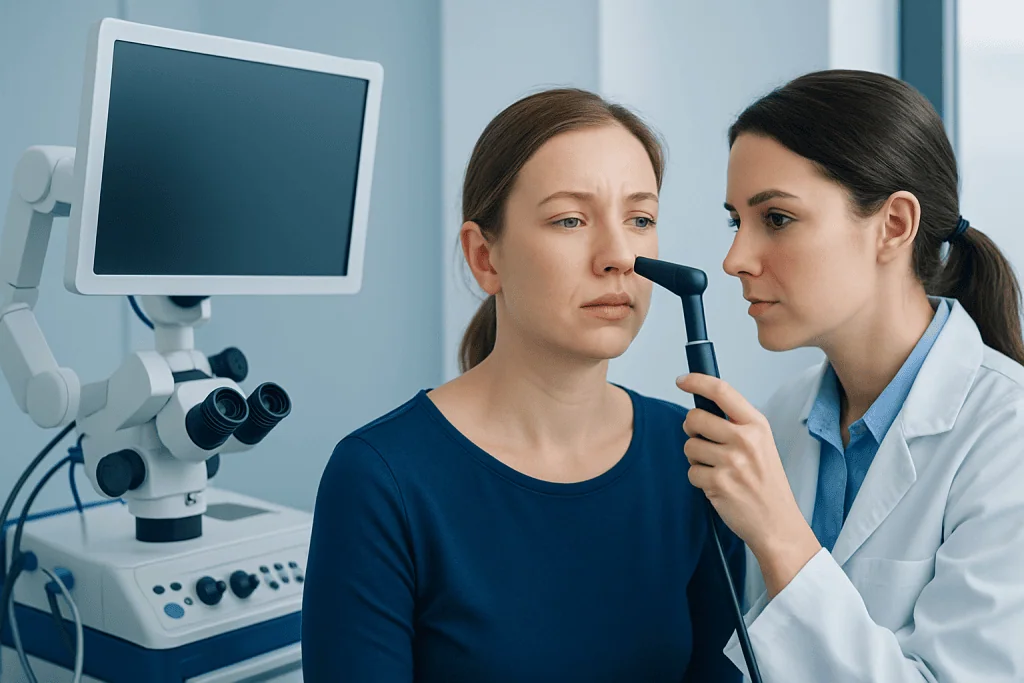
Early nasal vestibulitis can feel like mild irritation at first. A person may notice tenderness when touching the nostril, a feeling of dryness, or a small painful spot near the entrance of the nose. Because the area is sensitive, even a minor infection can feel more bothersome than it looks.
As the inflammation becomes more noticeable, symptoms may include redness, swelling, crusting, and soreness inside one or both nostrils. Some people see a pimple-like bump, a scab, or yellowish crust. There may also be burning, itching, or discomfort when smiling, wiping the nose, or blowing it.
Symptoms can vary from mild to more painful forms. Common features include:
- Tenderness or pain at the front of the nostril
- Redness and swelling of the nostril rim
- Crusting, scabbing, or dried discharge
- A small sore, fissure, or pimple-like lesion
- Occasional minor bleeding after irritation
If infection spreads into nearby skin, the nose may become more swollen, warm, or visibly red. That pattern needs prompt assessment because deeper skin infection can require different treatment.
Why it happens: causes and risk factors

The most common underlying cause of nasal vestibulitis is irritation followed by bacterial infection. The nasal vestibule is exposed to frequent touching, tissue use, dry air, and mucus. Even tiny breaks in the skin can allow bacteria to enter. For many people, the trigger is simple and mechanical rather than a serious illness.
Several habits and situations make nasal vestibulitis more likely. These include frequent nose picking, pulling nose hairs, aggressive trimming, repeated blowing during a cold, and rubbing the nose because of allergies. Dryness from indoor heating, some oxygen devices, or harsh topical products may also injure the skin barrier.
Risk can be higher in people who are more prone to skin infection or delayed healing. Important risk factors include:
- Recent cold, flu, sinus symptoms, or chronic runny nose
- Allergies that cause frequent wiping or rubbing
- Nose picking or repeated touching of the nostrils
- Plucking nasal hairs rather than carefully trimming them
- Skin conditions such as eczema or dermatitis
- Diabetes or a weakened immune system
- Use of devices or treatments that dry or irritate the inside of the nose
In some cases, recurrent episodes may be linked to persistent bacterial colonization, meaning the bacteria continue to live in the nose and return after temporary improvement. If symptoms come back often, a doctor may look for contributing issues such as sinusitis, chronic skin irritation, or underlying health conditions.
How doctors diagnose it
Nasal vestibulitis is usually diagnosed with a clinical exam. A doctor will ask about symptoms, how long they have been present, and whether there has been recent nose picking, illness, allergies, or trauma. The inside of the nostril is then examined for redness, crusting, fissures, swelling, or a localized boil.
Most people do not need complex testing. The appearance and location of the sore are often enough to make the diagnosis. The doctor may also check whether the infection has spread to nearby skin or whether another cause, such as contact dermatitis, acne-like lesions, cold sores, or a nonhealing wound, could be involved.
If infections are severe, recurrent, or not improving as expected, a swab may be taken to identify the bacteria and help guide treatment. Additional evaluation may also be considered for people with frequent skin infections, poor wound healing, or medical conditions that affect immunity. When symptoms involve persistent blockage, nosebleeds, or unusual growths, ENT assessment may be useful to rule out other nasal disorders.
Sometimes nasal vestibulitis appears alongside broader nasal or sinus complaints. In that setting, doctors may also evaluate for problems such as a deviated septum or chronic irritation that keeps the area inflamed.
Treatment options and what recovery looks like
Treatment depends on how mild or advanced the infection is. Many uncomplicated cases are managed with gentle local care and a prescription topical antibiotic applied to the affected area. Patients are usually advised to stop picking, rubbing, squeezing, or plucking the area while it heals, because continued trauma can delay recovery.
Warm compresses may help soften crusts and reduce discomfort. If there is significant inflammation, a painful boil, or signs that the infection is spreading into the surrounding skin, a doctor may prescribe oral antibiotics. Trying to pop or drain a lesion at home is not recommended, as this can worsen the infection or push bacteria deeper into nearby tissue.
Supportive care is also important. Helpful measures may include:
- Cleaning the area gently as directed by a clinician
- Applying prescribed topical antibiotic ointment exactly as instructed
- Using a humidifier or saline-based moisture support if dryness is a trigger
- Avoiding harsh nasal products unless a doctor recommends them
- Managing allergies or frequent nasal discharge that keeps the skin irritated
When there is concern about a deeper abscess, severe swelling, or repeated ENT-related symptoms, specialist review may be needed. Depending on the broader cause, clinicians may coordinate care through ENT evaluation or, if symptoms overlap with ongoing nasal obstruction and recurrent infections, sinusitis treatment. Most people improve within days to a couple of weeks once the infection is treated and irritation stops.
Self-care, prevention, and avoiding recurrence
Preventing nasal vestibulitis largely means protecting the skin at the entrance of the nose. The most effective step is avoiding trauma. That includes not picking the nose, not squeezing painful bumps, and not plucking nose hairs. If hair grooming is needed, careful trimming is generally less irritating than plucking.
Reducing dryness can also help. Staying well hydrated, using a humidifier in very dry environments, and discussing safe nasal moisturizing options with a clinician may support healing. For people with allergies or frequent colds, controlling excess nasal discharge can reduce repeated wiping and friction at the nostril rim.
Good hand hygiene matters because the nose is touched often without much thought. If there is a habit of rubbing or picking during stress or while sleeping, behavioral strategies may help prevent recurrent injury. People who regularly use tissues should blot gently rather than rubbing the skin.
Those with recurring episodes may benefit from a broader medical review. A doctor may look for chronic skin disease, persistent bacterial colonization, diabetes, or structural nasal issues. In selected cases, patients with repeated inflammation may be referred for evaluation related to septoplasty if anatomy is contributing to chronic irritation or poor airflow.
When to seek medical care
Medical care is a good idea if a sore inside the nose is painful, crusted, or not improving after a few days of gentle care. A clinician can confirm whether it is nasal vestibulitis and decide if prescription treatment is needed. Early treatment may help prevent the infection from worsening or recurring.
Prompt assessment is especially important if there is increasing redness, swelling of the nose or face, fever, pus, severe pain, or a boil-like lump. These signs can suggest a more significant infection. People with diabetes, cancer treatment, long-term steroid use, or other causes of reduced immunity should seek advice sooner rather than later.
A nonhealing lesion should also be checked, particularly if it bleeds easily or keeps returning in the same spot. While most cases are straightforward, persistent symptoms deserve evaluation to rule out other skin or nasal conditions. Near the end of the care pathway, some patients may be seen by multidisciplinary specialists; Acibadem International’s JCI-accredited hospitals also diagnose and treat nasal and sinus conditions for international patients.
Frequently asked questions
Is nasal vestibulitis serious?
Nasal vestibulitis is often a mild, localized infection or irritation at the entrance of the nose. It is usually treatable, but it should not be ignored if pain, swelling, fever, or spreading redness develops.
Can nasal vestibulitis go away on its own?
Very mild irritation may improve if the area is left alone and the trigger stops. However, many cases involve bacterial infection and improve more reliably with medical treatment such as a prescribed topical antibiotic.
What does nasal vestibulitis look like?
It often appears as redness, crusting, a small sore, a crack in the skin, or a pimple-like bump just inside the nostril. The area may look swollen and can be quite tender to the touch.
What is the difference between nasal vestibulitis and a sinus infection?
Nasal vestibulitis affects the skin at the front of the nostrils, while a sinus infection involves the deeper air-filled spaces around the nose. Nasal vestibulitis usually causes a localized sore or crusting rather than facial pressure and widespread congestion alone.
Should a person put antibiotic ointment in the nose without medical advice?
It is best to avoid self-treating with prescription antibiotic ointments unless a clinician recommends them. Not every sore inside the nose is an infection, and the right treatment depends on the cause and severity.
Can nose picking or plucking nose hairs cause nasal vestibulitis?
Yes. Both habits can create small breaks in the skin, which allows irritation and bacteria to trigger inflammation or infection. Avoiding these behaviors is an important part of both treatment and prevention.
References
- American Academy of Otolaryngology–Head and Neck Surgery
- Merck Manual Professional Edition
- National Health Service
- Mayo Clinic
This article is for general information only and is not a substitute for professional medical advice. Please consult a qualified doctor about your individual situation.
Hair transplant in Turkey — costs, graft counts & a free assessment
JCI-accredited · board-certified surgeons · reply within 24h
Add us as a Preferred Source to see more of our trusted health content across Google Search, AI Overviews and Discover.