Neck Massager — Explained by Medical Evidence, Not Myths

A neck massager may ease temporary muscle tension, stiffness, and stress-related discomfort. It is less likely to help pain caused by nerve compression, injury, arthritis, infection, or other underlying conditions.
Key Takeaways
- A neck massager may ease temporary muscle tension, stiffness, and stress-related discomfort.
- It is less likely to help pain caused by nerve compression, injury, arthritis, infection, or other underlying conditions.
- Safe use matters: start gently, avoid prolonged sessions, and stop if symptoms worsen.
- People with certain medical conditions, recent trauma, or neurological symptoms should seek medical advice before using one.
- Persistent, severe, or radiating neck pain should be assessed by a qualified doctor.
A neck massager may help some people with short-term muscle tightness and stress-related discomfort, but it is not a cure for every type of neck pain. Medical evidence supports cautious, limited use for simple muscle tension, while warning signs and certain health conditions need professional evaluation instead of self-treatment.
What a neck massager can and cannot do
A neck massager can be helpful for mild, everyday neck discomfort related to muscle tightness, posture strain, or stress. In those situations, massage-like pressure, vibration, kneading, or warmth may briefly relax muscles, improve comfort, and make movement feel easier. For many people, the main benefit is symptom relief rather than treatment of the underlying cause.
What a neck massager cannot do is diagnose neck pain or reliably treat every reason it happens. Neck pain may come from muscle overuse, but it can also result from joint problems, nerve irritation, disc disease, headache disorders, inflammatory conditions, or injury. If the cause is something more than simple muscle tension, a device used at home may do little or could delay proper care.
Medical evidence on massage and related devices suggests that some people experience short-term improvement in pain and stiffness, especially when neck symptoms are mild and mechanical. However, research does not support exaggerated claims that these devices can “realign” the spine, reverse disc problems, or replace clinical treatment. A balanced view is best: a neck massager may be one supportive tool, but it is not a cure-all.
How neck massagers work
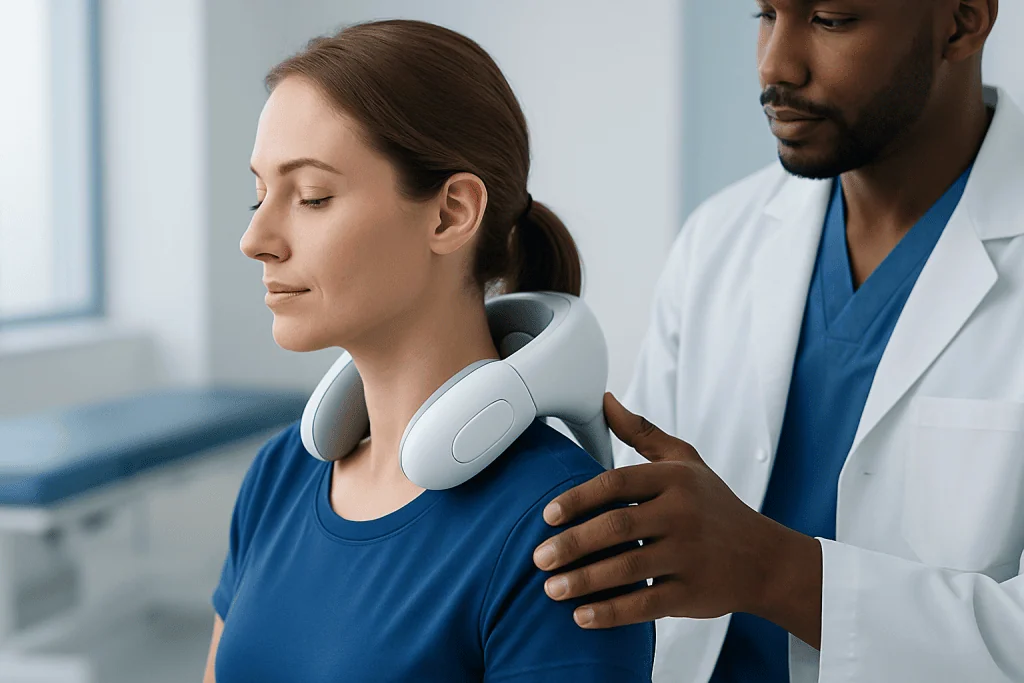
Neck massagers come in several forms, including handheld devices, wraparound models, massage pillows, percussion tools, and heated units. They work by applying pressure, vibration, rolling, kneading, or heat to the muscles around the neck and shoulders. These sensations may reduce the feeling of tightness and help some people relax.
The likely mechanisms are fairly simple. Gentle massage can temporarily change how pain is perceived, increase local blood flow in superficial tissues, and reduce muscle guarding. Heat may also improve comfort by loosening stiff soft tissues and making stretching feel easier. These effects can be useful after long desk work, travel, or stress-related muscle tension.
Still, the neck is a sensitive area with muscles, joints, nerves, and blood vessels in close proximity. Strong force is not necessarily better. Devices marketed as deep tissue tools may be too intense for the front or sides of the neck, where delicate structures are located. Safer use usually means keeping pressure moderate and focusing mainly on the back of the neck and upper shoulders unless a clinician has advised otherwise.
What the evidence says about benefits
Evidence for massage in general shows that it may provide short-term relief for some cases of neck pain, especially when symptoms are linked to muscle tension and poor posture. This does not mean every device works equally well, because products vary widely in pressure, shape, and safety features. Studies on consumer neck massagers specifically are more limited than studies on therapist-delivered massage or supervised physical therapy.
For a person with uncomplicated tension in the neck and shoulders, a neck massager may help with temporary relief of stiffness, a sense of relaxation, and easier movement. Some people also find it helps them unwind before sleep or after prolonged screen time. In that context, the device can be part of a broader self-care plan that includes movement breaks, ergonomic changes, and simple exercises.
Benefits tend to be modest and temporary. If pain keeps returning, lasts for weeks, or is associated with numbness, weakness, headache, dizziness, or pain traveling into the arm, further assessment is more important than repeated massage. Depending on the cause, a doctor may evaluate for problems such as a herniated disc or another structural or nerve-related issue.
Risks, myths, and who should be cautious
Most healthy adults can try a neck massager carefully, but safe use matters. Overly strong pressure may worsen muscle soreness, irritate sensitive tissues, or increase pain. In some people, vigorous use can trigger headache, dizziness, or tenderness rather than relief. The neck is not the same as a larger muscle group such as the thigh or calf, so a cautious approach is especially important.
There are also common myths. A neck massager does not “put vertebrae back in place,” dissolve bone spurs, or repair worn discs. It should not be used as a substitute for evaluation after a fall, sports injury, or car accident. People should also be cautious with online claims suggesting that more force always means better therapeutic results.
Extra caution is needed for people with recent neck trauma, osteoporosis, known cervical spine instability, severe arthritis, bleeding disorders, use of blood thinners, implanted medical devices near the treatment area, or active skin infection or wounds. People with numbness, tingling, weakness, balance problems, fever, unexplained weight loss, or a history of cancer should not rely on home massage alone. In these situations, a clinician may recommend assessment, imaging, or therapies such as physical therapy and rehabilitation instead of self-treatment.
How to use a neck massager more safely
When using a neck massager, it is generally best to begin with the lowest intensity and the shortest session recommended by the manufacturer. A short trial can help a person judge how their body responds. The goal is comfort and relaxation, not pushing through pain or trying to force stiff tissues to “release.”
Good technique matters as much as the device itself. Most people should avoid strong pressure directly on the front and sides of the neck. It is usually safer to focus on the back of the neck, the base of the skull area gently, and the upper trapezius muscles across the shoulders. Heated models should feel warm, not hot enough to burn or irritate the skin.
Neck massagers tend to work best when combined with simple habits that address the reason symptoms developed in the first place. Helpful measures may include:
- Taking regular breaks from screens and prolonged sitting
- Adjusting monitor height and chair position
- Doing gentle range-of-motion and stretching exercises
- Using supportive sleep posture and a suitable pillow
- Managing stress, which can contribute to muscle tension
If a device causes increasing pain, tingling, dizziness, headache, or skin irritation, it should be stopped. Persistent symptoms deserve medical review rather than repeated self-treatment.
When a neck massager is not enough
Neck pain has many causes, and not all of them respond to massage. If pain travels into the shoulder, arm, or hand, or if there is numbness or weakness, the issue may involve a nerve. In some cases, doctors investigate conditions such as cervical radiculopathy, where a nerve root in the neck becomes irritated or compressed.
Other symptoms also suggest that simple muscle tension may not be the full explanation. Recurrent severe headaches, persistent stiffness with reduced range of motion, or pain after injury can point to conditions that need a more structured plan. Depending on the findings, care may involve exercise therapy, medication, posture training, image-guided pain procedures, or specialized assessment in orthopedics and traumatology or another relevant department.
For chronic pain, a neck massager may still have a role as one comfort measure, but long-term improvement usually comes from identifying triggers and treating the cause. This may include strengthening, flexibility work, ergonomic correction, and in selected cases neurosurgery evaluation if there is significant nerve compression or structural disease. A doctor can help decide which path is appropriate.
When to seek medical care
Medical care is advisable if neck pain is severe, lasts more than a few weeks, keeps returning, or limits normal daily activities. A person should also seek assessment if the pain began after a fall, collision, sudden twist, or other injury. New symptoms in the arm or hand, such as weakness, numbness, or pins and needles, should not be ignored.
Urgent medical attention is important if neck pain is accompanied by fever, severe headache, confusion, fainting, chest pain, shortness of breath, trouble walking, loss of bladder or bowel control, or sudden neurological symptoms. These features can indicate conditions far beyond simple muscle tension. Self-massage is not appropriate in that setting.
For international patients who need evaluation for ongoing neck symptoms, Acibadem International’s multidisciplinary specialists and JCI-accredited hospitals provide diagnosis and treatment based on the suspected cause. The most helpful next step is usually not a stronger device, but a clear medical assessment to determine whether the problem is muscular, joint-related, nerve-related, or due to another condition.
Frequently asked questions
Is a neck massager good for neck pain?
A neck massager can help some types of neck pain, especially mild discomfort linked to muscle tension, posture strain, or stress. It is less helpful when pain comes from a nerve problem, arthritis, injury, or another medical condition.
Can a neck massager make symptoms worse?
Yes, it can if the pressure is too strong, the device is used too long, or the pain is not caused by simple muscle tightness. If symptoms increase, or if dizziness, headache, numbness, or weakness develops, use should stop and medical advice should be sought.
How often can someone use a neck massager?
Use should follow the manufacturer’s instructions and start gently. In general, short sessions at low intensity are safer than long or forceful use, especially in the neck area.
Are heated neck massagers better?
Heat can be soothing and may make stiff muscles feel more relaxed. However, heated models are not necessarily more effective for every person, and they should be used carefully to avoid skin irritation or burns.
Who should avoid using a neck massager without medical advice?
People with recent trauma, severe osteoporosis, known spinal instability, active skin infection, bleeding disorders, or neurological symptoms should speak with a doctor first. Extra caution is also wise for anyone with unexplained severe pain or a history of serious underlying illness.
Can a neck massager fix a pinched nerve or slipped disc?
No, a neck massager does not fix structural causes such as a compressed nerve or disc problem. It may sometimes lessen muscle tension around the area, but it does not replace proper diagnosis and treatment.
This article is for general information only and is not a substitute for professional medical advice. Please consult a qualified doctor about your individual situation.
Joint and spine care in Turkey — expert assessment & treatment
JCI-accredited · board-certified surgeons · reply within 24h
Add us as a Preferred Source to see more of our trusted health content across Google Search, AI Overviews and Discover.

More from the Health Library

Carbs in Carrots: An Evidence-Based Guide for Patients

Oscillococcinum: What Patients Need to Know

Rhodiola Rosea and — Explained by Medical Evidence, Not Myths

Cat Allergies: An Evidence-Based Guide for Patients

Blood in Semen: What Patients Need to Know