Neuro-Otology Tests for Chronic Dizziness: What Results Can Show

Chronic dizziness has many possible causes, so testing is often used to narrow down the source. Neuro-otology tests assess balance pathways involving the inner ear, eye movements, and nervous system.
Key Takeaways
- Chronic dizziness has many possible causes, so testing is often used to narrow down the source.
- Neuro-otology tests assess balance pathways involving the inner ear, eye movements, and nervous system.
- Results may point to a peripheral vestibular problem, a central nervous system issue, or a non-vestibular cause.
- Most balance tests are noninvasive, though some may briefly trigger dizziness or nausea.
- Test findings are interpreted together with symptoms, examination findings, and imaging or hearing tests when needed.
Neuro-otology tests for chronic dizziness are used to understand how the inner ear, eyes, brain, and nerves work together to maintain balance. Results can help identify whether dizziness is linked to a vestibular disorder, migraine, nerve problem, medication effect, or another medical cause.
Overview: Why Neuro-Otology Testing Is Used
Chronic dizziness is not a diagnosis by itself. It is a symptom that can describe vertigo, imbalance, lightheadedness, motion sensitivity, a floating feeling, or unsteadiness when walking. Because people use the word “dizzy” in different ways, careful evaluation is important before treatment begins.
Neuro-otology focuses on disorders that affect balance, hearing, eye movements, and the connections between the inner ear and the brain. Neuro-otology tests for chronic dizziness are designed to show how these systems function together. The goal is not simply to confirm that dizziness is present, but to identify where in the balance pathway the problem may be occurring.
Results can suggest whether symptoms are more likely to come from the inner ear, the vestibular nerve, brain pathways, migraine-related mechanisms, or sometimes from causes outside the balance system, such as blood pressure changes or medication effects. In many cases, testing also helps rule out certain conditions and guides the next steps in care.
What Chronic Dizziness Can Feel Like
People with chronic dizziness may describe spinning, swaying, rocking, tilting, or a sense that the ground is moving. Others feel unsteady, especially in darkness, busy visual environments, supermarkets, or while turning the head quickly. Some notice symptoms only with position changes, while others feel them throughout the day.
Associated symptoms often provide important clues. These can include nausea, vomiting, ear fullness, ringing in the ears, hearing changes, headaches, sensitivity to light or sound, blurred vision, double vision, imbalance, falls, and anxiety triggered by motion or visually complex places.
Doctors usually pay close attention to the pattern of symptoms. Important details include when dizziness started, how long episodes last, what triggers them, whether hearing symptoms are present, and whether there are warning signs of a neurological condition. This history helps determine which tests are likely to be most useful.
- Brief spinning with rolling in bed may suggest a positional vestibular disorder.
- Dizziness with hearing fluctuation may point toward an inner ear condition.
- Persistent rocking or visual sensitivity may suggest a functional or migraine-related balance problem.
- Dizziness with weakness, numbness, or speech changes needs urgent medical assessment.
Which Tests May Be Performed

Neuro-otology testing is usually tailored to the person rather than performed as a single fixed panel. A clinician may begin with a bedside examination that assesses eye movements, gait, posture, coordination, hearing, and whether certain head or body positions trigger symptoms. This often provides the first clues about whether the problem is likely peripheral, meaning in the inner ear or vestibular nerve, or central, meaning related to the brain and nervous system.
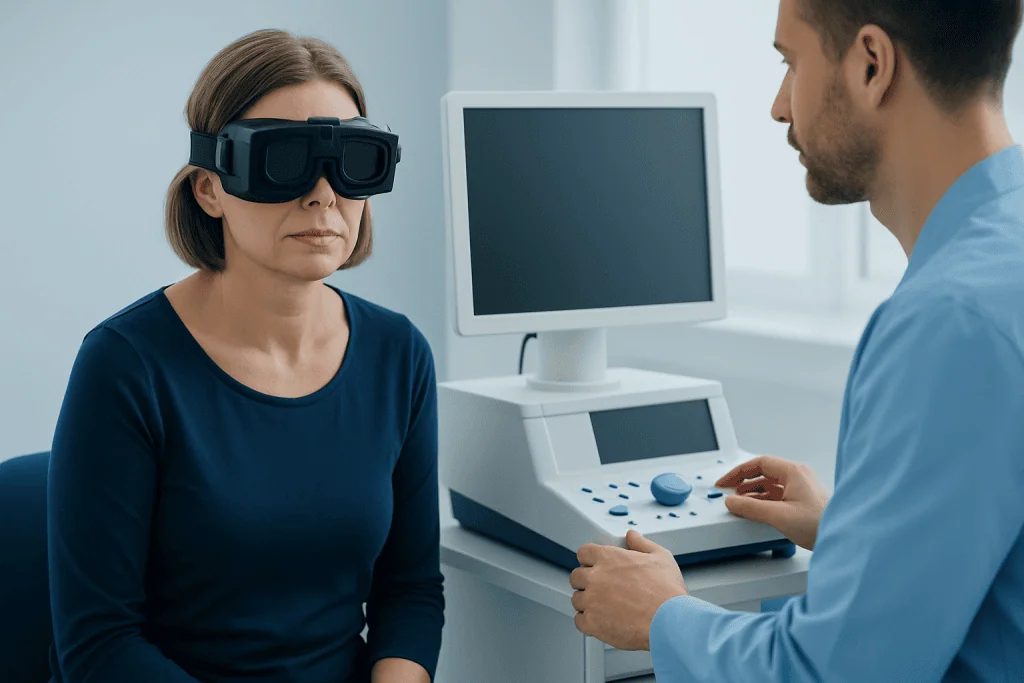
Common laboratory-based tests include videonystagmography or electronystagmography, which record eye movements during different tasks. These may include tracking moving targets, changing head and body positions, and caloric testing, in which warm and cool air or water gently stimulate each ear to compare vestibular responses. Another common study is the video head impulse test, which checks how well the vestibulo-ocular reflex keeps vision stable during quick head movements.
Some people also have vestibular evoked myogenic potentials, which assess parts of the otolith organs that detect linear movement and gravity. Computerized dynamic posturography may be used to evaluate how vision, inner ear input, and body sensation are integrated to maintain posture. Depending on symptoms, clinicians may also request hearing tests, blood tests, or imaging such as MRI scanning to look for structural causes when appropriate.
These tests do not stand alone. They are interpreted together with the history, examination, and sometimes referrals to related specialists. In selected cases, symptoms may overlap with disorders such as vestibular neuritis or other vestibular syndromes, making a combined clinical approach especially important.
What Test Results Can Show
Results can show whether the balance system is working normally, asymmetrically, or inconsistently. For example, a reduced response on one side during caloric testing may suggest weakness in one inner ear or vestibular nerve. Abnormal findings on head impulse testing may support this impression, especially if symptoms fit a peripheral vestibular pattern.
Some results suggest a central cause rather than an inner ear problem. Certain eye movement abnormalities, unusual patterns of nystagmus, or findings that do not fit a single ear may indicate involvement of brainstem or cerebellar pathways. In these cases, additional neurological assessment and imaging may be needed to clarify the cause.
Other test patterns may point toward specific vestibular conditions. Positional testing may support benign paroxysmal positional vertigo, while normal basic vestibular tests in a person with recurrent dizziness and headache features may raise suspicion for a migraine-related condition such as vestibular migraine. Posturography can show how someone uses visual and body cues for balance, which may be helpful in persistent imbalance or recovery after a vestibular injury.
It is also important to know what results cannot always show. A normal test does not mean symptoms are imaginary or unimportant. Some conditions cause intermittent dysfunction, some are diagnosed mainly by history, and some people are tested between episodes. For this reason, results are most meaningful when reviewed by clinicians experienced in vestibular disorders.
How Doctors Use Results to Plan Treatment
Treatment depends on the cause suggested by the overall assessment. If testing supports a peripheral vestibular problem, management may include targeted repositioning maneuvers, medication review, short-term symptom control in selected situations, or a tailored rehabilitation program. When imbalance persists after an inner ear event, vestibular rehabilitation can help the brain adapt and improve stability.
If results suggest a central pattern, doctors may investigate neurological causes and coordinate care across specialties. If migraine appears to be an important factor, treatment may focus on trigger management, lifestyle measures, and migraine-directed therapy. Hearing-related symptoms may prompt formal audiological assessment and ENT input.
Rehabilitation is often an important part of care, especially for long-lasting dizziness. Balance therapy may include gaze stabilization exercises, postural training, habituation exercises, and walking practice. In some cases, clinicians may recommend physical therapy and rehabilitation to improve confidence, reduce fall risk, and support return to daily activities.
For international patients with complex dizziness symptoms, Acibadem International’s multidisciplinary specialists and JCI-accredited hospitals can evaluate neuro-otologic and neurological causes and coordinate testing and treatment. When neurological concerns are part of the picture, this may include specialist neurology care alongside vestibular assessment.
Preparing for Testing and What to Expect
Preparation instructions depend on the exact tests being planned. Patients may be asked to avoid certain medicines for a short period if those medicines can affect vestibular responses, but this should only be done if the prescribing doctor agrees. It is also common to be told not to drink alcohol before testing and to arrive with a light meal to reduce nausea.
During testing, some maneuvers are specifically designed to provoke eye movements or reproduce dizziness briefly. This can feel uncomfortable, but it usually settles quickly. Many tests are noninvasive and do not involve needles. Eye movement recordings may use goggles or small electrodes, and balance platform testing typically involves standing safely with support available.
Because symptoms may temporarily flare after vestibular testing, some people prefer not to drive themselves home. Bringing a list of medications, previous scans, hearing test results, and a symptom diary can make the appointment more useful. A good diary notes triggers, duration, associated symptoms, and whether hearing, headache, or visual symptoms occur.
Self-Care, Safety, and When to See a Doctor
While waiting for evaluation, practical self-care may help reduce symptoms and improve safety. Staying hydrated, standing up gradually, getting regular sleep, and avoiding known personal triggers can be useful. It may also help to reduce fall risks at home by improving lighting, removing loose rugs, and using handrails where needed.
People with chronic dizziness should avoid self-diagnosing solely from online descriptions, because similar symptoms can arise from very different causes. Repeated use of over-the-counter motion medicines without medical guidance is also not ideal, especially when symptoms are ongoing, as some medicines can cause drowsiness or interfere with adaptation.
Medical review is advisable if dizziness is persistent, worsening, recurrent, or affecting daily life, work, walking, or driving. Urgent assessment is needed if dizziness occurs with fainting, chest pain, severe new headache, sudden hearing loss, double vision, facial drooping, weakness, numbness, trouble speaking, or difficulty walking. These symptoms may suggest a condition that needs prompt treatment.
When symptoms last for weeks or months, a structured assessment can be reassuring as well as informative. Testing helps doctors move beyond the general label of “dizziness” and identify patterns that support a safe, individualized plan.
Frequently asked questions
What is the purpose of neuro-otology tests for chronic dizziness?
These tests help doctors understand whether chronic dizziness is related to the inner ear, vestibular nerve, brain pathways, or another cause. They also help guide treatment by showing which parts of the balance system are functioning normally and which may need further evaluation.
Are balance and vestibular tests painful?
Most neuro-otology tests are not painful. Some can briefly trigger dizziness, nausea, or eye movement sensations because they are designed to stimulate the balance system, but these effects usually pass quickly.
Can test results be normal even if a person still feels dizzy?
Yes. Some dizziness conditions are intermittent, and testing may be done between episodes. In other cases, the diagnosis depends more on the symptom pattern and examination than on a single abnormal test result.
How long does dizziness testing usually take?
The length depends on which tests are ordered. A focused assessment may be relatively short, while a more complete vestibular workup with eye movement, positional, and balance testing can take longer and may be split across appointments.
Will a person need an MRI for chronic dizziness?
Not everyone needs an MRI. Imaging is usually considered when symptoms, examination findings, or test results raise concern for a central nervous system cause, or when doctors need to exclude structural problems.
What conditions can neuro-otology tests help identify?
They can support the diagnosis of several vestibular disorders, including one-sided vestibular weakness, positional vertigo, and some migraine-related balance problems. They may also suggest when symptoms are more likely to come from central neurological pathways rather than the inner ear.
References
- National Institute on Deafness and Other Communication Disorders
- American Academy of Otolaryngology–Head and Neck Surgery
- American Academy of Neurology
- Bárány Society
- National Health Service
This article is for general information only and is not a substitute for professional medical advice. Please consult a qualified doctor about your individual situation.
Explore treatments in Turkey — costs, top hospitals & a free quote
JCI-accredited · board-certified surgeons · reply within 24h
Add us as a Preferred Source to see more of our trusted health content across Google Search, AI Overviews and Discover.
Check your numbers in seconds
BMI, calories, due date, blood pressure and 30+ more clinical calculators — free, instant, doctor-reviewed ranges.