Neuroinfectious Disease Testing: MRI, Lumbar Puncture, and Blood Work Explained

Neuroinfectious disease testing looks for infections involving the nervous system, including the brain, spinal cord, and surrounding tissues. MRI can show inflammation, swelling, abscesses, or other structural changes linked to infection.
Key Takeaways
- Neuroinfectious disease testing looks for infections involving the nervous system, including the brain, spinal cord, and surrounding tissues.
- MRI can show inflammation, swelling, abscesses, or other structural changes linked to infection.
- A lumbar puncture examines cerebrospinal fluid and is often one of the most important tests for meningitis or encephalitis.
- Blood tests help detect signs of infection, inflammation, and possible viral, bacterial, fungal, or parasitic causes.
- Doctors usually interpret test results together rather than relying on a single test alone.
- Urgent evaluation is important when symptoms such as fever, severe headache, confusion, seizures, or neck stiffness occur.
Neuroinfectious disease testing helps doctors identify infections that affect the brain, spinal cord, meninges, or peripheral nerves. Common tests include MRI, lumbar puncture, and blood work, which together can show where inflammation is present and what may be causing it.
Overview of Neuroinfectious Disease Testing
Neuroinfectious disease testing refers to the group of medical tests used when a doctor suspects an infection affecting the nervous system. This may involve the brain, spinal cord, meninges (the protective layers around the brain and spinal cord), or peripheral nerves. Examples include meningitis, encephalitis, brain abscess, myelitis, and certain nerve infections.
Because symptoms can overlap with autoimmune, vascular, and other neurological conditions, testing is designed to answer several questions at once: whether an infection is present, which part of the nervous system is affected, how severe the inflammation is, and what organism may be responsible. The most common tools are imaging tests such as MRI, sampling of cerebrospinal fluid with a lumbar puncture, and blood tests.
Doctors often use these tests together rather than one by one. For example, MRI may show inflammation or swelling, while cerebrospinal fluid can reveal infection-related cells, proteins, and genetic material from viruses or bacteria. Blood work adds important clues about the body’s immune response and possible sources of infection elsewhere.
Symptoms That May Lead to Testing
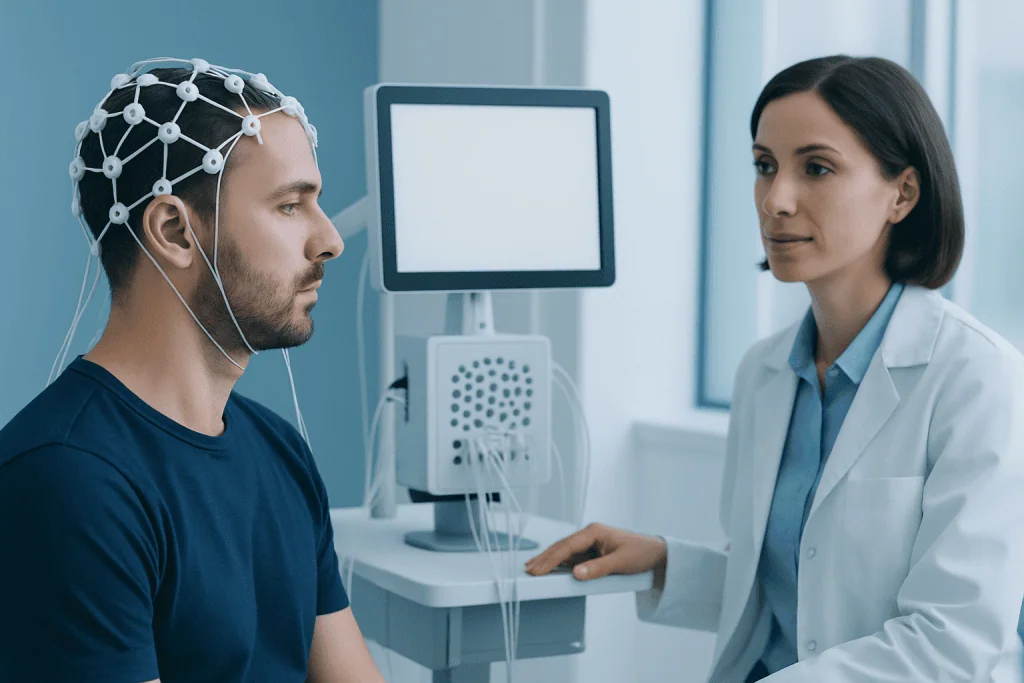
Neuroinfectious disease testing may be recommended when a person has symptoms suggesting infection in the nervous system. These symptoms can appear suddenly over hours to days, or develop more gradually depending on the cause. The pattern of symptoms helps doctors decide which tests are needed first.
Common warning signs include severe headache, fever, neck stiffness, confusion, unusual sleepiness, sensitivity to light, vomiting, new weakness, trouble speaking, changes in behavior, and seizures. In some cases, a person may have balance problems, numbness, back pain, or difficulty walking if the spinal cord or nerves are involved.
In babies, older adults, and people with weakened immune systems, symptoms may be less typical. Irritability, poor feeding, lethargy, falls, or subtle changes in mental status can be especially important. Because some neuroinfections can progress quickly, doctors usually assess these symptoms promptly and may begin treatment even while test results are still pending.
- Fever with severe headache or stiff neck
- Confusion, drowsiness, or personality change
- New seizure or loss of consciousness
- Focal neurological symptoms such as weakness or speech difficulty
- Recent infection, immune suppression, or travel history that raises concern for a specific cause
What Causes Neuroinfectious Diseases and Who Is at Risk?

Neuroinfectious diseases can be caused by many different organisms. Viruses are a common cause of encephalitis and meningitis. Bacteria can cause severe meningitis or abscesses, while fungi and parasites may affect people with certain risk factors or exposure histories. Sometimes the source is a nearby infection such as sinusitis, ear infection, or bloodstream infection that spreads to the nervous system.
Risk factors depend on the organism, but some general ones include a weakened immune system, recent neurosurgery, head trauma, certain chronic illnesses, and exposure to infected insects or animals. Travel history, food exposures, freshwater exposure, and tick or mosquito bites can also matter. Vaccination status may influence the likelihood of some infections.
Doctors also consider whether symptoms could be due to a noninfectious condition that looks similar, such as inflammation, autoimmune disease, stroke, or tumor. This is one reason neuroinfectious disease testing is often broad and carefully planned. The goal is not only to confirm infection, but also to rule out other conditions that may need very different treatment.
How MRI Helps in Diagnosis
MRI is one of the most useful imaging tools in neuroinfectious disease testing because it shows the brain and spinal cord in great detail. It can identify swelling, inflammation, abscesses, fluid collections, bleeding, or areas of tissue injury. Depending on the symptoms, doctors may order a brain or spine MRI with or without contrast dye.
Different infections can create different MRI patterns, although imaging alone usually cannot identify the exact organism. For example, MRI may show inflammation in certain parts of the brain that raises concern for viral encephalitis, or a ring-enhancing lesion that suggests an abscess. In spinal infections, MRI can reveal inflammation of the spinal cord, vertebrae, or surrounding tissues.
MRI is also important for safety and planning. If a person has signs of increased pressure inside the skull or a mass lesion, doctors may review imaging before performing a lumbar puncture. In addition, MRI helps monitor response to treatment and can show whether complications are improving or progressing over time.
What a Lumbar Puncture Shows
A lumbar puncture, also called a spinal tap, is a key test when meningitis or encephalitis is suspected. During this procedure, a doctor collects a small sample of cerebrospinal fluid from the lower back. This fluid surrounds the brain and spinal cord, so it can provide direct information about inflammation and infection within the central nervous system.
Laboratory analysis of cerebrospinal fluid may include cell counts, protein, glucose, culture, and molecular testing such as PCR. These results help doctors determine whether the pattern looks more consistent with a viral, bacterial, fungal, or other cause. Some samples may also be tested for specific antibodies or immune markers if less common infections are being considered. A lumbar puncture can therefore be one of the most informative parts of the evaluation.
Many patients worry that the procedure will be very painful or dangerous. In practice, it is usually done with local numbing medicine, and most people feel pressure more than sharp pain. Doctors take precautions to reduce risks, and one of the most common temporary side effects is a post-procedure headache. The medical team explains when to rest, hydrate, and seek help if symptoms continue.
What Blood Tests Can Reveal
Blood work supports neuroinfectious disease testing by looking for signs of infection, inflammation, and possible exposure to specific organisms. Routine tests may include a complete blood count, inflammatory markers, blood cultures, and checks of kidney and liver function. These results help guide diagnosis and treatment decisions, especially if medications need to be started quickly.
Doctors may also order serology or molecular blood tests for viruses, bacteria, fungi, or parasites depending on the patient’s history and symptoms. If a tick-borne, mosquito-borne, or travel-related infection is possible, blood testing may be tailored accordingly. In some situations, blood tests help identify whether an infection started elsewhere in the body and then reached the nervous system.
Importantly, normal blood tests do not completely rule out a neuroinfection. Some infections primarily affect the cerebrospinal fluid or brain tissue and may not produce a dramatic change in routine blood work. That is why blood tests are interpreted alongside imaging, clinical findings, and cerebrospinal fluid analysis.
How Doctors Put the Results Together
Diagnosing a neuroinfectious disease often requires combining several sources of information. A doctor considers the patient’s symptoms, physical examination, MRI findings, cerebrospinal fluid results, blood work, and exposure history. Timing matters too, because some tests are more informative early in illness while others become positive later.
In some cases, doctors also use additional studies such as CT scans, electroencephalography for seizures or altered mental status, or more specialized infectious disease testing. If symptoms suggest a condition like meningitis or encephalitis, treatment may begin before every test result is back, especially when serious bacterial or viral causes are possible. Early treatment can be very important.
Sometimes no single test gives a complete answer right away. Follow-up testing may be needed if symptoms change or if early results are inconclusive. This can be frustrating for patients and families, but it is a normal part of careful neurological and infectious disease evaluation.
Treatment, Follow-Up, and When to Seek Urgent Care
Treatment depends on the cause. Doctors may use antiviral, antibacterial, antifungal, or antiparasitic medicines, along with supportive care such as fluids, pain control, fever management, and seizure treatment if needed. Hospital care is common when symptoms are severe, when close neurological monitoring is necessary, or while waiting for important test results. In selected cases, additional therapies are used to reduce complications or control swelling.
Recovery varies widely. Some people improve quickly, while others need rehabilitation, repeat imaging, or repeated neurological assessment. Follow-up may include another set of blood tests or repeat MRI to confirm that inflammation is resolving. If there are persistent cognitive, movement, or nerve-related symptoms, continued care from neurology and infectious disease specialists can be helpful.
Urgent medical attention is needed for severe headache with fever, confusion, neck stiffness, seizure, fainting, sudden weakness, or unusual behavior. These symptoms do not always mean a neuroinfection, but they should never be ignored. Acibadem International’s multidisciplinary specialists in JCI-accredited hospitals diagnose and treat neurological infections for international patients, while tailoring testing to the individual case.
Frequently asked questions
What is neuroinfectious disease testing?
Neuroinfectious disease testing is the medical evaluation used to look for infections affecting the brain, spinal cord, meninges, or nerves. It usually includes a combination of MRI, lumbar puncture, blood tests, and a careful neurological examination.
Why are MRI, lumbar puncture, and blood work often done together?
Each test answers a different part of the diagnostic question. MRI shows structural changes and inflammation, lumbar puncture examines cerebrospinal fluid directly, and blood work looks for infection and immune response in the body. Together, they give a more complete picture than any one test alone.
Is a lumbar puncture always necessary?
Not always, but it is often very important when meningitis or encephalitis is suspected. The decision depends on symptoms, imaging findings, and the doctor's judgment about safety and likely causes.
Can blood tests alone diagnose a brain infection?
Usually not. Blood tests can provide important clues and sometimes identify a specific infection, but they may be normal or nonspecific even when the nervous system is affected. Doctors often need cerebrospinal fluid testing and imaging for a more accurate diagnosis.
How quickly are test results available?
Some results, such as routine blood work and initial cerebrospinal fluid measurements, may be available relatively quickly. Other tests, including cultures or specialized molecular studies, can take longer. Because of this, treatment may start before all final results return.
Are neuroinfectious diseases treatable?
Many are treatable, especially when recognized early. The right treatment depends on whether the cause is viral, bacterial, fungal, parasitic, or another organism. Close follow-up is often needed to monitor recovery and possible complications.
References
- World Health Organization
- Centers for Disease Control and Prevention
- National Institute of Neurological Disorders and Stroke
- Infectious Diseases Society of America
- American Academy of Neurology
This article is for general information only and is not a substitute for professional medical advice. Please consult a qualified doctor about your individual situation.
Joint and spine care in Turkey — expert assessment & treatment
JCI-accredited · board-certified surgeons · reply within 24h
Add us as a Preferred Source to see more of our trusted health content across Google Search, AI Overviews and Discover.