Neurointerventional Radiology: Conditions It Can Treat

Neurointerventional radiology uses image-guided, minimally invasive techniques instead of large incisions. It can treat several conditions affecting blood vessels in the brain, spine, head, and neck.
Key Takeaways
- Neurointerventional radiology uses image-guided, minimally invasive techniques instead of large incisions.
- It can treat several conditions affecting blood vessels in the brain, spine, head, and neck.
- Common examples include stroke, brain aneurysms, arteriovenous malformations, and carotid artery disease.
- Many procedures are performed through a small blood vessel in the wrist or groin.
- Treatment choice depends on the exact condition, symptoms, anatomy, and overall health.
Neurointerventional radiology is a medical specialty that uses imaging guidance and tiny catheters to diagnose and treat certain conditions of the brain, spine, head, and neck. It can offer a minimally invasive option for problems such as stroke, aneurysms, vascular malformations, and some spine-related pain conditions.
Overview
Neurointerventional radiology, also called interventional neuroradiology or endovascular neurosurgery in some settings, is a highly specialized field that treats disorders of the brain, spine, head, and neck using imaging-guided procedures. Instead of making large surgical cuts, specialists guide very small tubes called catheters through blood vessels, usually starting from the wrist or groin, to reach the area that needs treatment.
This approach is often described as minimally invasive. That means it may reduce tissue injury, shorten recovery time, and in selected cases lower the need for open surgery. Neurointerventional radiology is commonly used for conditions involving blood vessels, bleeding, blocked arteries, abnormal vessel connections, and some causes of spine pain.
These procedures are usually planned and performed by a multidisciplinary team. Depending on the condition, that team may include interventional neurologists, neuroradiologists, neurosurgeons, stroke specialists, vascular surgeons, anesthesiologists, and rehabilitation experts. The best option depends on the person’s diagnosis, symptoms, urgency, and general health.
What Conditions Can Neurointerventional Radiology Treat?
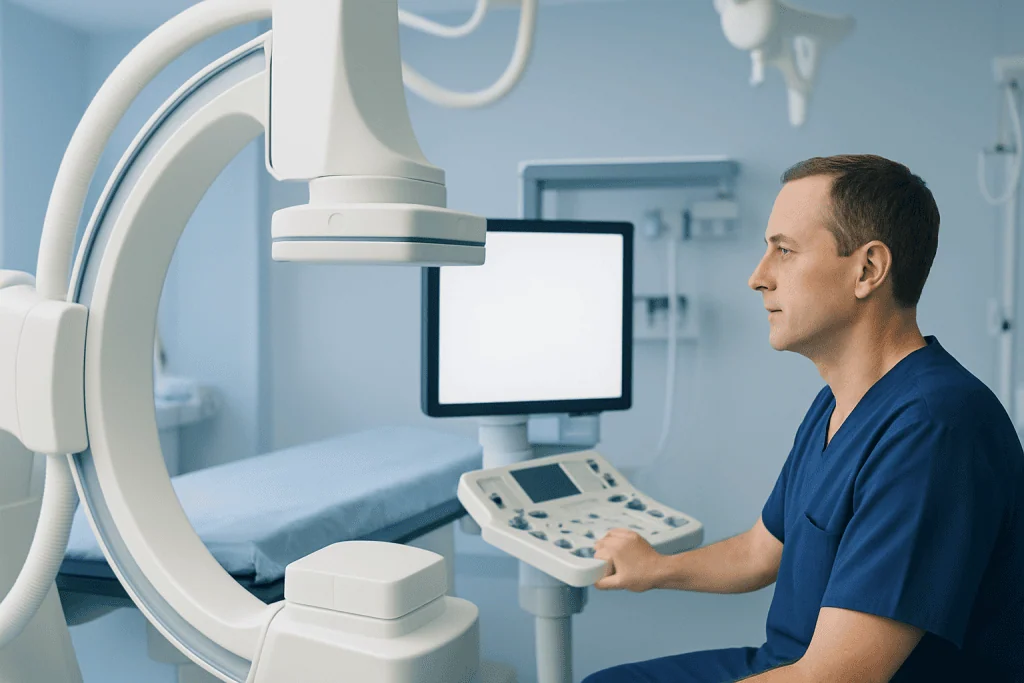
Neurointerventional radiology can treat a broad range of conditions, especially those involving blood flow to and from the brain. One of the most important uses is emergency treatment of acute ischemic stroke, where a blood clot blocks a brain artery. In selected patients, doctors may remove the clot with a procedure called mechanical thrombectomy to restore blood flow as quickly as possible.
Another major area is the treatment of brain aneurysms. An aneurysm is a weakened, bulging area in a blood vessel wall that can bleed if it ruptures. Depending on the aneurysm’s size, shape, and location, treatment may include coiling, flow-diverting stents, or other endovascular techniques. Some patients with brain aneurysm are treated this way instead of open surgery.
Specialists also treat vascular malformations, such as arteriovenous malformations and dural arteriovenous fistulas. These are abnormal connections between arteries and veins that can increase the risk of bleeding, seizures, headaches, or neurological symptoms. Endovascular embolization may be used alone or together with surgery or radiosurgery.
Other conditions may include narrowing of the carotid or intracranial arteries, certain tumors with abnormal blood supply, nosebleeds that do not stop with standard care, and some spinal disorders such as painful vertebral compression fractures. In these situations, image-guided procedures may control bleeding, improve blood flow, reduce symptoms, or support other treatments.
Common Symptoms and Warning Signs

The symptoms that lead to neurointerventional radiology evaluation depend on the condition being treated. Stroke symptoms often begin suddenly and may include weakness on one side of the body, facial drooping, trouble speaking, confusion, vision changes, dizziness, or severe difficulty walking. These symptoms are a medical emergency because treatment is most effective when given quickly.
Brain aneurysms and vascular malformations may cause no symptoms at all and may be found incidentally during imaging. When symptoms do occur, they can include headache, double vision, drooping eyelid, seizures, ringing in the ear, or other neurological changes. A ruptured aneurysm can cause a sudden, severe headache and requires urgent medical care.
Carotid artery disease may cause temporary stroke-like episodes, also called transient ischemic attacks, with brief weakness, numbness, speech trouble, or loss of vision in one eye. Spinal conditions such as vertebral compression fractures may cause back pain that worsens with movement and limits daily activities.
- Sudden weakness, numbness, or speech difficulty
- Severe sudden headache unlike usual headaches
- Brief episodes of vision loss or one-sided symptoms
- Seizures or unexplained neurological symptoms
- Persistent severe back pain after a fracture
Causes and Risk Factors
Different conditions treated by neurointerventional radiology have different causes. Stroke is often linked to blood clots, heart rhythm disorders such as atrial fibrillation, and narrowing of arteries caused by atherosclerosis. Carotid artery disease develops when fatty deposits build up in the vessel wall, reducing blood flow or causing clots to travel to the brain.
Brain aneurysms can be related to vessel wall weakness, high blood pressure, smoking, family history, and certain inherited connective tissue disorders. Arteriovenous malformations are usually thought to be developmental abnormalities of blood vessels, meaning they form earlier in life rather than from lifestyle alone.
Risk factors that affect blood vessel health can raise the chance of several neurovascular conditions. These include smoking, high blood pressure, diabetes, high cholesterol, obesity, limited physical activity, and older age. Traumatic injury, cancer, infection, or previous surgery can also play a role in selected cases.
Vertebral compression fractures are commonly associated with osteoporosis, aging, and trauma. In some people, fractures can also be related to cancer or other bone-weakening conditions. Understanding the cause is important because treatment should address both the symptoms and the underlying problem.
How Diagnosis and Planning Are Done
Diagnosis begins with a careful medical history, neurological examination, and imaging tests. The exact tests depend on the suspected condition and how urgent it is. For suspected stroke, doctors may use non-contrast CT, CT angiography, MRI, or perfusion imaging to see whether a blood vessel is blocked and whether brain tissue may still be saved.
For aneurysms, malformations, or vessel narrowing, imaging may include MRI, MRA, CTA, ultrasound, or catheter angiography. Catheter angiography is a detailed imaging study in which contrast dye is injected through a small catheter to map the blood vessels. It remains one of the most precise tools for understanding vascular anatomy and planning treatment.
Treatment decisions are individualized. Doctors consider the person’s symptoms, the location and size of the lesion, bleeding risk, stroke risk, and overall fitness for a procedure. In some cases, neurointerventional treatment is recommended urgently. In others, careful monitoring, medication, surgery, or radiation-based treatment may be more appropriate.
Treatment Options in Neurointerventional Radiology
One of the best-known treatments is mechanical thrombectomy for acute ischemic stroke. In this procedure, the specialist guides a catheter to the blocked artery and removes the clot using tiny devices. In selected patients, this can improve the chance of preserving brain function when performed promptly and under the right conditions.
For aneurysms, endovascular treatment may involve coils, stents, or flow-diverting devices that reduce blood flow into the aneurysm and help protect against rupture or rebleeding. Some patients may be candidates for aneurysm treatment through an endovascular approach, while others may need open neurosurgery depending on anatomy and risk.
Vascular malformations and fistulas may be treated with embolization. This means injecting special materials, such as liquid embolic agents or tiny particles, to close abnormal blood vessels. For narrowing of neck arteries, carotid artery stenting may be considered in selected patients, especially when surgery is not the best option. In the spine, image-guided procedures such as vertebroplasty and kyphoplasty may help stabilize painful compression fractures in appropriate cases.
As with any procedure, there are potential risks, including bleeding, infection, vessel injury, allergic reaction to contrast, stroke, or recurrence of the problem. The care team explains the expected benefits, alternatives, and possible complications before treatment whenever the situation allows.
Recovery, Prevention, and Self-care
Recovery after neurointerventional radiology depends on the procedure performed and the condition being treated. Some people go home within a day or two, while others, especially those treated for stroke or bleeding, may need longer hospital care and rehabilitation. Follow-up imaging is often important to confirm that the treated blood vessel remains stable or open.
Self-care after treatment usually includes taking medications exactly as prescribed, attending follow-up appointments, and reporting any new neurological symptoms right away. Some procedures require blood-thinning or antiplatelet medication for a period of time, and these should only be adjusted under medical supervision.
Prevention focuses mainly on protecting blood vessel health. Helpful steps include controlling blood pressure, stopping smoking, managing diabetes and cholesterol, maintaining a healthy weight, staying physically active, and following a balanced eating pattern. People with osteoporosis or fracture risk may also need bone health evaluation, fall prevention, and guidance on calcium, vitamin D, and exercise from their doctor.
At the end of a treatment journey, coordinated follow-up matters. In complex cases, centers such as Acibadem International bring together multidisciplinary specialists in JCI-accredited hospitals to diagnose and treat neurovascular and spine conditions for international patients.
When to See a Doctor
A doctor should be consulted promptly for symptoms that suggest a neurological or vascular problem, even if they improve quickly. Temporary weakness, numbness, speech difficulty, or vision loss may be warning signs of a transient ischemic attack or stroke risk. Early evaluation can help prevent more serious complications.
Emergency care is needed for sudden stroke symptoms, a seizure with new neurological changes, or a severe sudden headache unlike a person’s usual headaches. Persistent back pain after a fall or known spinal fracture also deserves medical assessment, especially if it limits movement or is accompanied by weakness or numbness.
People with a known aneurysm, vascular malformation, or carotid artery narrowing should keep regular appointments and follow the advice of their specialist. If there is a family history of aneurysm or stroke, discussing personal risk factors with a qualified doctor may also be helpful.
Frequently asked questions
What is neurointerventional radiology?
Neurointerventional radiology is a specialty that uses imaging guidance and small catheters to treat certain disorders of the brain, spine, head, and neck. It is often used for blood vessel problems and may offer a minimally invasive alternative to open surgery in selected cases.
Is neurointerventional radiology the same as brain surgery?
Not exactly. Traditional brain surgery usually involves an incision and direct access to the brain, while neurointerventional radiology is commonly performed through a blood vessel using tiny instruments. Both approaches can be effective, and the best choice depends on the condition and the patient’s overall situation.
Which stroke patients may benefit from neurointerventional treatment?
Some patients with acute ischemic stroke caused by a large blood vessel blockage may benefit from clot removal procedures. Eligibility depends on imaging findings, symptom timing, the blocked artery, and the patient’s medical condition, so urgent evaluation is essential.
Can neurointerventional radiology treat brain aneurysms?
Yes. Many brain aneurysms can be treated with endovascular techniques such as coiling or flow-diverting devices. The choice of treatment depends on the aneurysm’s size, shape, location, and whether it has bled.
Are these procedures safe?
These procedures are widely used and can be very effective when performed by experienced teams, but no procedure is risk-free. Possible complications vary by treatment and may include bleeding, stroke, infection, or reactions to contrast dye, so the care team discusses risks and benefits in detail.
How long does recovery take?
Recovery time varies widely based on the condition and the procedure. Some people recover quickly after a short hospital stay, while others may need longer observation, rehabilitation, or repeated imaging follow-up.
References
- World Stroke Organization
- American Stroke Association
- Society of NeuroInterventional Surgery
- National Institute of Neurological Disorders and Stroke
- Radiological Society of North America
This article is for general information only and is not a substitute for professional medical advice. Please consult a qualified doctor about your individual situation.
Joint and spine care in Turkey — expert assessment & treatment
JCI-accredited · board-certified surgeons · reply within 24h
Add us as a Preferred Source to see more of our trusted health content across Google Search, AI Overviews and Discover.
Check your numbers in seconds
BMI, calories, due date, blood pressure and 30+ more clinical calculators — free, instant, doctor-reviewed ranges.

More from the Health Library



Related Specialists

Dr. Sevil Elçin Kızılok
Pediatrics
Dr. Leman Evren Kadioğlu
Pathology
Assoc. Prof. Dr. Hilmi Kodaz
Medical Oncology
Dr. İsmail Beşiroviç
Inpatient Clinic Physicians Clinical Service