Neurological Disorders That Cause Sleep Problems

Many sleep problems are linked to disorders of the brain and nervous system, not just stress or lifestyle. Symptoms may include insomnia, excessive daytime sleepiness, abnormal movements, dream enactment, or disrupted breathing during sleep.
Key Takeaways
- Many sleep problems are linked to disorders of the brain and nervous system, not just stress or lifestyle.
- Symptoms may include insomnia, excessive daytime sleepiness, abnormal movements, dream enactment, or disrupted breathing during sleep.
- Diagnosis often combines a medical history, neurologic examination, sleep questionnaires, and sometimes a sleep study.
- Treatment depends on the underlying neurologic condition and may include medication changes, behavioral strategies, and targeted sleep therapies.
- New or worsening sleep symptoms, especially with falls, breathing pauses, confusion, or sudden weakness, should be assessed by a doctor.
Neurological conditions can affect the brain, nerves, breathing, movement, and body clock in ways that disturb sleep. Recognizing the pattern of sleep problems can help guide evaluation and treatment, often improving both sleep quality and daytime function.
Overview
Sleep is controlled by a complex network in the brain and nervous system. These systems regulate alertness, breathing, muscle tone, movement, dreaming, and the body’s internal clock. When a neurological disorder affects any of these functions, sleep can become fragmented, shortened, poorly refreshing, or unusually excessive.
Neurological disorders that cause sleep problems include conditions that directly affect sleep-wake centers in the brain as well as disorders that indirectly disturb sleep through pain, stiffness, tremor, breathing changes, seizures, or involuntary movements. Common examples include Parkinson’s disease, epilepsy, stroke, multiple sclerosis, dementia, migraine, neuropathy, restless legs syndrome, narcolepsy, and disorders of REM sleep.
Sleep problems may appear before a neurological diagnosis, develop later as the condition progresses, or arise as a side effect of medication. Because poor sleep can worsen memory, mood, concentration, balance, and quality of life, it is an important part of neurological care rather than a separate issue to ignore.
Symptoms and Sleep Patterns to Notice
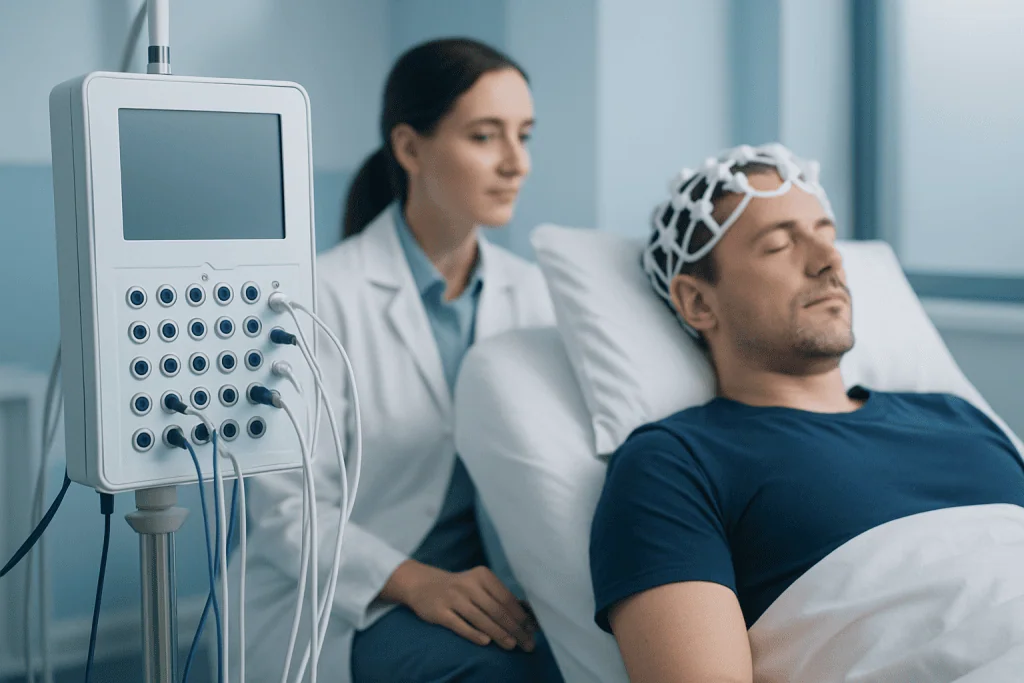
The symptoms vary depending on which part of the nervous system is affected. Some people have trouble falling asleep or wake often during the night. Others sleep for a normal number of hours but still wake unrefreshed, feel sleepy during the day, or unintentionally doze off. A careful description of the sleep pattern can offer important clues.
Neurological sleep-related symptoms may include unusual behaviors or body sensations at night. A person may act out dreams, jerk or kick during sleep, feel an urge to move the legs, become confused on waking, or have vivid hallucinations when falling asleep or waking up. Bed partners often notice signs such as loud snoring, pauses in breathing, gasping, punching, talking, or getting out of bed while asleep.
Symptoms that can suggest an underlying neurologic cause include:
- Persistent insomnia with a known neurologic disease
- Excessive daytime sleepiness despite enough time in bed
- Sudden sleep attacks or episodes of muscle weakness triggered by emotion
- Dream enactment, shouting, or hitting during sleep
- Repeated leg discomfort or urges to move at night
- Nighttime seizures, unusual jerks, or episodes of staring or confusion
- Morning headaches, loud snoring, or witnessed breathing pauses
- Sleep disruption due to pain, numbness, tremor, or muscle stiffness
It can be helpful to note when symptoms happen, how often they occur, what medications are being taken, and whether there are daytime effects such as fatigue, falls, poor concentration, or mood changes. This information often guides the next step in evaluation.
Which Neurological Disorders Can Disturb Sleep?

Several neurological conditions are strongly linked with sleep problems. In Parkinson’s disease and related movement disorders, sleep may be disrupted by stiffness, tremor, nighttime urination, vivid dreams, REM sleep behavior disorder, and daytime sleepiness. Dementia can disturb the body clock, causing nighttime wakefulness and daytime napping. In epilepsy, seizures may occur during sleep or become more likely when sleep is poor. Stroke and multiple sclerosis may affect breathing, movement, fatigue, and the sleep-wake cycle.
Some disorders are themselves considered neurologic sleep disorders. These include restless legs syndrome, narcolepsy, and REM sleep behavior disorder. Restless legs syndrome causes uncomfortable sensations and an urge to move the legs, usually worse at rest and in the evening. REM sleep behavior disorder causes dream enactment because the normal muscle paralysis of REM sleep is reduced or lost. Narcolepsy affects the brain’s control of sleep and wakefulness, causing excessive daytime sleepiness and sometimes sudden loss of muscle tone.
Other neurologic causes are indirect but still important. Peripheral neuropathy can cause burning, tingling, or pain that interferes with falling asleep. Migraine may be triggered by poor sleep, while migraine symptoms can also interrupt rest. Disorders that weaken breathing muscles or affect brainstem control can contribute to sleep-disordered breathing. In some cases, a sleep problem may be the first sign that prompts evaluation for a broader neurologic condition.
Because these conditions can overlap, the same person may have more than one sleep-related issue. For example, someone with Parkinson’s disease may have insomnia, daytime sleepiness, and REM sleep behavior disorder at the same time. A structured assessment helps distinguish the major contributors.
Causes, Triggers, and Risk Factors
The immediate cause of sleep disruption depends on the disorder. Some conditions damage or alter the brain circuits that control the sleep-wake cycle. Others interfere with breathing, body movement, sensory comfort, or the normal transitions between stages of sleep. Medications can also play a role, especially if they cause sedation, vivid dreams, insomnia, or changes in muscle tone.
Risk factors differ by condition, but sleep problems are more likely when there is chronic neurologic disease, older age, a history of head injury, mood disorders, irregular sleep schedules, alcohol use close to bedtime, or untreated pain. Certain neurologic conditions also increase the risk of sleep apnea, including stroke, neuromuscular disease, and disorders that affect the upper airway or brainstem regulation of breathing.
Triggers may worsen symptoms even when the underlying diagnosis is already known. These can include sleep deprivation, stress, infections, medication changes, caffeine late in the day, and inconsistent sleep timing. For seizure disorders in particular, lost sleep is a common trigger. Identifying these patterns can help reduce symptom burden.
Sometimes the relationship goes both ways: the neurological disorder causes poor sleep, and poor sleep then worsens the neurological symptoms. This cycle is seen in conditions such as migraine, epilepsy, Parkinson’s disease, and dementia. Breaking the cycle can improve daily function and overall well-being.
How Doctors Diagnose Neurologic Sleep Problems
Diagnosis starts with a detailed history. A doctor usually asks about bedtime and wake time, snoring, breathing pauses, dream enactment, limb movements, nighttime confusion, leg discomfort, daytime sleepiness, headaches, medication use, and other neurological symptoms. Information from a bed partner or caregiver can be especially valuable because many nighttime behaviors are not remembered in the morning.
A neurological examination may be combined with sleep-specific questionnaires and a sleep diary. Depending on the symptoms, blood tests may be used to look for contributors such as iron deficiency, thyroid disease, or metabolic problems. If a specific neurologic condition is suspected, imaging or other neurological tests may be recommended.
Many patients benefit from a sleep study. Overnight polysomnography records brain waves, breathing, oxygen levels, heart rhythm, eye movements, and muscle activity during sleep. It can help diagnose sleep apnea, REM sleep behavior disorder, periodic limb movements, and some seizure-related events. In selected cases, daytime nap testing is used to evaluate severe daytime sleepiness or suspected narcolepsy. A home sleep apnea test may be appropriate for some people when obstructive sleep apnea is strongly suspected, though an in-lab study is often preferred when complex neurologic symptoms are present.
Accurate diagnosis matters because treatment is different for each cause. For example, snoring with pauses in breathing may point toward sleep apnea treatment, while dream enactment may need a different neurologic sleep approach. A specialist in neurology or sleep medicine can help bring these pieces together.
Treatment Options
Treatment focuses on the underlying neurological disorder and the specific sleep problem it causes. In some cases, adjusting the timing or type of neurological medication improves nighttime sleep or reduces daytime drowsiness. In others, targeted therapies are needed for coexisting conditions such as insomnia, sleep apnea, restless legs syndrome, or REM sleep behavior disorder.
Behavioral measures are often part of care. These may include regular sleep and wake times, limiting caffeine and alcohol near bedtime, treating pain, reducing nighttime light exposure, and making the sleep environment safe when unusual nighttime behaviors occur. Cognitive behavioral therapy for insomnia can be helpful for persistent insomnia and is often preferred over long-term use of sleeping tablets.
Device-based or procedure-based care may be appropriate for selected patients. Sleep-disordered breathing may improve with CPAP therapy or other airway support. If nighttime events raise concern for seizures or another brain disorder, a neurologist may recommend further neurology evaluation and management. Movement-related sleep complaints may also need review by specialists in movement disorders care when Parkinsonism, tremor, or related symptoms are present.
Near the end of the diagnostic pathway, care is often multidisciplinary because sleep, neurology, mental health, and breathing disorders can overlap. Acibadem International’s multidisciplinary specialists and JCI-accredited hospitals diagnose and treat neurological and sleep-related conditions for international patients. Whatever the setting, treatment should be individualized, monitored over time, and adjusted if symptoms change.
Self-care, Safety, and When to See a Doctor
Self-care can support medical treatment, but it should not replace evaluation for ongoing or unusual symptoms. Helpful habits include keeping a consistent sleep schedule, staying physically active within one’s ability, getting morning light exposure, avoiding heavy meals and alcohol close to bedtime, and discussing all medicines and supplements with a doctor. If leg discomfort, pain, or nighttime cramps are interfering with sleep, bringing a symptom diary to the visit can be useful.
Safety is especially important when sleep behaviors involve movement, confusion, or falls. Removing sharp objects from around the bed, padding the sleep area if recommended, and making sure a bed partner knows what happens at night may reduce injury risk. People with severe daytime sleepiness should avoid driving or operating machinery until assessed.
Medical advice should be sought if sleep problems are frequent, worsening, or affecting daily life. Prompt evaluation is important for loud snoring with breathing pauses, dream enactment with injury, suspected seizures, new confusion at night, sudden weakness with emotions, or sleepiness that makes driving unsafe. New sleep problems in a person with Parkinson’s disease, dementia, stroke, multiple sclerosis, or another known neurologic condition also deserve attention.
Emergency care may be needed for prolonged seizures, severe breathing difficulty during sleep, sudden neurological changes, or major injury related to nighttime behaviors. In many other situations, early specialist assessment helps clarify the cause and leads to safer, more effective treatment.
Frequently asked questions
Can a neurological disorder cause insomnia?
Yes. Neurological conditions can interfere with the brain circuits that regulate sleep, or they may cause pain, stiffness, tremor, breathing changes, or nighttime confusion that make sleep difficult. Insomnia can also be related to medication effects or coexisting anxiety or depression.
What neurological condition is associated with acting out dreams?
Dream enactment is often associated with REM sleep behavior disorder. In this condition, the normal muscle relaxation of REM sleep is reduced, so a person may talk, shout, punch, kick, or get out of bed while dreaming. It should be assessed because it can lead to injury and may occur alongside other neurological conditions.
Are sleep problems common in Parkinson’s disease?
Yes, sleep problems are very common in Parkinson’s disease. They may include insomnia, daytime sleepiness, restless legs symptoms, vivid dreams, REM sleep behavior disorder, and sleep disruption from stiffness or nighttime urination. Treatment usually addresses both Parkinson’s symptoms and the specific sleep issue.
How do doctors tell the difference between a sleep disorder and nighttime seizures?
The history is very important, especially details from a bed partner or caregiver about what happens during the episode. Doctors may use overnight polysomnography, video monitoring, or EEG-based testing to look for seizure activity and compare it with sleep-stage changes. Sometimes both a sleep disorder and epilepsy are present.
When is daytime sleepiness a sign of something serious?
Daytime sleepiness deserves attention when it happens regularly despite enough time in bed, causes near-misses while driving, or appears with snoring, breathing pauses, falls, or sudden muscle weakness. It can reflect sleep apnea, narcolepsy, medication effects, or an underlying neurological disorder. A medical evaluation helps determine the cause safely.
Can treating the neurological condition improve sleep?
Often, yes. Better control of the underlying neurological disease may reduce pain, tremor, nighttime movements, seizures, or other symptoms that interrupt sleep. In many cases, sleep also improves further when a coexisting sleep disorder is treated directly.
References
- American Academy of Sleep Medicine
- National Institute of Neurological Disorders and Stroke
- National Institute on Aging
- American Academy of Neurology
- Mayo Clinic
This article is for general information only and is not a substitute for professional medical advice. Please consult a qualified doctor about your individual situation.
Explore treatments in Turkey — costs, top hospitals & a free quote
JCI-accredited · board-certified surgeons · reply within 24h
Add us as a Preferred Source to see more of our trusted health content across Google Search, AI Overviews and Discover.