Neurological Sleep Disorders in Children: Signs Parents Should Know

Neurological sleep disorders in children may show up as unusual movements, frequent waking, breathing pauses, or excessive daytime sleepiness. Not every sleep problem is neurological, but persistent or disruptive symptoms deserve medical attention.
Key Takeaways
- Neurological sleep disorders in children may show up as unusual movements, frequent waking, breathing pauses, or excessive daytime sleepiness.
- Not every sleep problem is neurological, but persistent or disruptive symptoms deserve medical attention.
- Diagnosis often includes a detailed sleep history, physical and neurological examination, and sometimes a sleep study.
- Treatment depends on the cause and may involve sleep habit changes, managing an underlying condition, or specialist care.
- Parents should seek prompt evaluation if a child has breathing pauses, injury during sleep, severe daytime sleepiness, or sudden weakness episodes.
Neurological sleep disorders in children are sleep problems linked to the brain, nerves, or body systems that regulate sleep and wakefulness. Recognizing early signs can help families seek the right evaluation and support before sleep issues affect learning, behavior, growth, and daily life.
Overview of neurological sleep disorders in children
Neurological sleep disorders in children are conditions in which sleep is affected by the brain, nervous system, or the body’s internal sleep-wake regulation. They are different from occasional bedtime resistance or short-term sleep disruption caused by stress, travel, or illness. These disorders can affect how easily a child falls asleep, how well they stay asleep, how they breathe during sleep, or how alert they feel during the day.
Sleep is essential for a child’s growth, attention, learning, mood, and physical health. When a neurological sleep disorder is present, the child may not get restorative sleep even if they spend enough time in bed. In some cases, the problem is easy to notice, such as frequent sleepwalking or unusual leg movements. In others, signs are subtle and may be mistaken for behavior issues, poor concentration, or tiredness from a busy schedule.
Examples include parasomnias such as confusional arousals and sleepwalking, sleep-related movement disorders, narcolepsy, circadian rhythm sleep-wake disorders, and sleep problems connected to neurological or developmental conditions. Some children may also have sleep-disordered breathing that overlaps with neurological symptoms or affects daytime brain function. A careful assessment helps identify whether the pattern is a common childhood sleep issue or part of a more complex condition such as epilepsy.
Signs parents should know
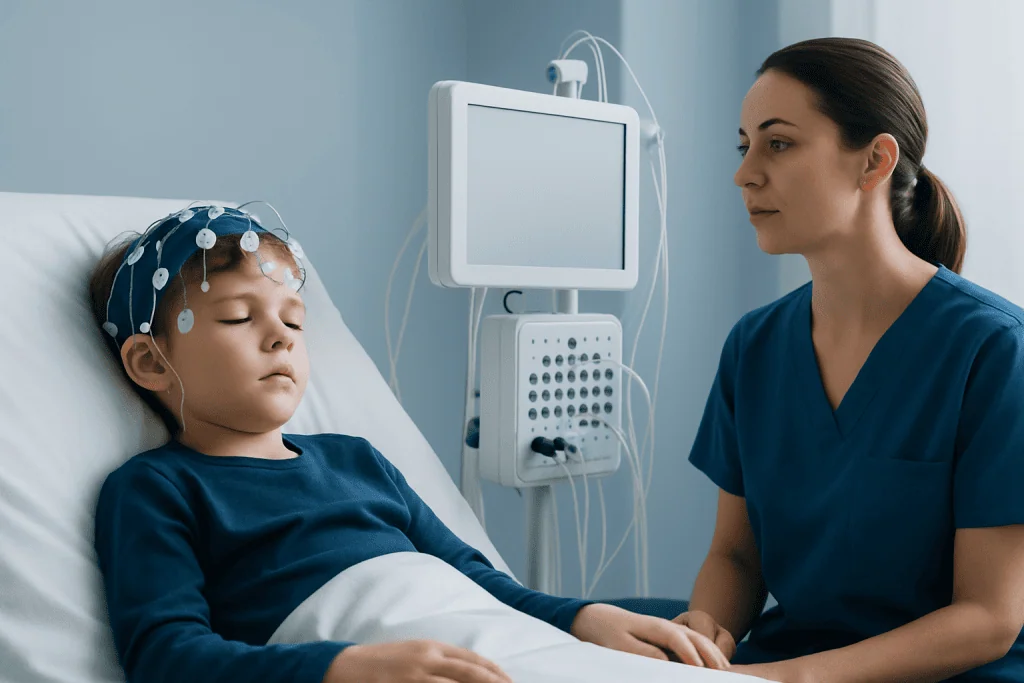
Parents often notice the first clues at home. Common warning signs include loud snoring, pauses in breathing, gasping during sleep, repeated night waking, and very restless sleep. Some children sweat heavily at night, sleep in unusual positions, or seem difficult to wake in the morning. Daytime signs can include sleepiness, irritability, headaches on waking, poor attention, and a decline in school performance.
Neurological sleep disorders may also cause unusual behaviors or movements during sleep. A child may sleepwalk, sit up confused, talk during sleep, grind their teeth, jerk their limbs, kick repeatedly, or act out vivid dreams. Some children describe uncomfortable sensations in the legs at bedtime and feel better when moving. Others may have episodes of sudden muscle weakness triggered by laughter or strong emotion, which can be a clue to narcolepsy.
Infants and younger children may not be able to describe symptoms clearly, so parents may need to watch for patterns. These can include frequent bedtime struggles despite a routine, unusual arching or stiffening, repetitive rocking, or naps that seem excessive for age. A symptom diary noting bedtimes, awakenings, snoring, movements, and daytime behavior can be very helpful when discussing concerns with a doctor.
- Breathing pauses or choking sounds during sleep
- Frequent sleepwalking or night terrors beyond the usual age range
- Regular jerking, kicking, or unusual repetitive movements
- Excessive daytime sleepiness despite adequate time in bed
- Sudden weakness episodes, vivid dreams, or sleep paralysis
Causes and risk factors

There is no single cause of neurological sleep disorders in children. Some result from differences in how the brain regulates sleep stages, wakefulness, breathing, or movement. Others are linked to genetics, developmental conditions, medications, iron deficiency, airway problems, or coexisting neurological disorders. In many children, more than one factor contributes to disrupted sleep.
Certain conditions can increase risk. Children with attention, learning, or developmental differences may have more sleep difficulties than their peers. Sleep problems are also more common in children with migraine, anxiety, seizure disorders, or neurodevelopmental conditions. Sometimes the symptom that looks neurological is actually related to another sleep disorder, such as sleep apnea, which can fragment sleep and lead to daytime concentration problems and behavioral changes.
Family history can matter as well. Restless legs syndrome, narcolepsy, and some parasomnias may cluster in families. Irregular schedules, too much evening screen exposure, caffeine, chronic sleep deprivation, and poor sleep routines can make underlying disorders more noticeable. Even when lifestyle factors play a role, persistent or unusual symptoms should not be dismissed, because they may point to a treatable medical cause.
How doctors diagnose these disorders
Diagnosis begins with a detailed history. A doctor will ask about sleep schedules, bedtime routines, snoring, unusual behaviors, daytime sleepiness, school function, mood, medications, and family history. Parents may be asked to describe what they observe or bring short home videos of concerning episodes. Information from teachers or caregivers can also help, especially if daytime sleepiness or attention changes are part of the picture.
The medical evaluation usually includes a physical examination and, when appropriate, a neurological assessment. The doctor may look for enlarged tonsils, nasal obstruction, growth concerns, signs of iron deficiency, or clues to an underlying neurological condition. In some cases, the child is referred to a pediatric sleep specialist, neurologist, ear, nose, and throat specialist, or other relevant clinician.
Further testing depends on the suspected disorder. An overnight sleep study may be recommended to evaluate breathing, oxygen levels, heart rhythm, brain activity, and limb movements during sleep. If seizures are a concern, the team may suggest an EEG or longer monitoring. Selected children may also need blood tests, actigraphy, or a daytime sleepiness evaluation such as a multiple sleep latency test.
Because symptoms can overlap, diagnosis may take time. For example, frequent nighttime events could represent parasomnias, nocturnal seizures, reflux-related arousals, or sleep-disordered breathing. A structured sleep assessment helps guide treatment and avoid unnecessary worry.
Treatment options and specialist care
Treatment depends on the diagnosis and the child’s age, symptoms, and overall health. For many children, the first steps include improving sleep habits, creating a predictable routine, reducing sleep deprivation, and addressing factors that worsen symptoms. This may be enough for mild parasomnias or behavior-related sleep difficulties, but neurological sleep disorders often need targeted treatment as well.
If a specific condition is found, management focuses on the underlying cause. Sleep-disordered breathing may be addressed with medical or surgical care, depending on the anatomy and severity. Restless legs syndrome or periodic limb movement disorder may lead the doctor to check iron status and review medications. Children with narcolepsy, circadian rhythm disorders, or sleep problems related to epilepsy or developmental conditions may need a coordinated plan involving more than one specialist, including pediatric neurology.
Safety is also an important part of treatment. For a child who sleepwalks or has confusional arousals, parents may need to secure windows, use stair gates, remove tripping hazards, and avoid bunk beds. If events are frequent, dangerous, or difficult to classify, a doctor may suggest more detailed assessment. In selected cases, referral to neurology care can help when symptoms suggest a broader nervous system disorder.
Near the end of the care pathway, some families may benefit from multidisciplinary evaluation. Acibadem International’s specialists in pediatric neurology, sleep medicine, and related fields at JCI-accredited hospitals diagnose and treat neurological sleep disorders in children for international patients.
Prevention and self-care at home
Not all neurological sleep disorders can be prevented, but healthy sleep habits can reduce strain on the child’s sleep system and may lessen symptoms. A consistent bedtime and wake time, age-appropriate sleep duration, a calming bedtime routine, and a sleep-friendly bedroom are good foundations. The room should be quiet, dark, and comfortable, and stimulating activities close to bedtime should be limited.
Parents can also support sleep by reducing evening caffeine, encouraging regular physical activity during the day, and keeping screens away from the hour before bed. When symptoms involve unusual events at night, keeping a sleep diary can help reveal patterns linked to stress, missed sleep, illness, or schedule changes. Video clips, if safely obtained, can be useful for the doctor.
Self-care does not replace evaluation when symptoms are persistent or concerning. Parents should avoid trying over-the-counter sleep products or supplements without medical advice, especially in younger children or those with neurological symptoms. A calm, observant approach is usually most helpful: note what happens, how long it lasts, and how the child behaves before and after the event.
When to see a doctor
Parents should arrange a medical review if a child snores regularly, has repeated breathing pauses, seems excessively sleepy during the day, or has unusual movements or behaviors during sleep that occur often. Evaluation is also important if poor sleep is affecting learning, mood, behavior, growth, or quality of life. A doctor can help determine whether the problem is developmental, behavioral, respiratory, neurological, or a combination of factors.
Urgent assessment is needed if a child turns blue, has prolonged breathing pauses, is hard to wake, gets injured during sleep events, or has episodes that may be seizures. Sudden weakness with emotions, frequent sleep paralysis, or abrupt changes in alertness also deserve prompt attention. It is especially important to seek care if symptoms appear suddenly or worsen over time.
Most sleep problems in children are treatable, and many improve significantly once the cause is identified. Early recognition can make a meaningful difference in daytime functioning and family well-being. With proper assessment and support, children can often return to safer, more restful sleep.
Frequently asked questions
What are neurological sleep disorders in children?
These are sleep conditions related to the brain, nerves, or the systems that control sleep and wakefulness. They can cause unusual nighttime behaviors, movement problems, breathing-related sleep disruption, or severe daytime sleepiness.
How can a parent tell the difference between normal sleep behavior and a disorder?
Many children occasionally talk in their sleep, resist bedtime, or wake briefly at night. A disorder is more likely when symptoms are frequent, intense, unsafe, or affect daytime mood, school performance, breathing, or alertness.
Can neurological sleep disorders cause behavior or learning problems?
Yes. Poor or fragmented sleep can affect attention, memory, emotional regulation, and energy levels. Sometimes a sleep disorder is first noticed because a child seems irritable, hyperactive, or unusually tired during the day.
Does snoring always mean a child has a neurological sleep disorder?
No. Snoring can occur for several reasons, including nasal congestion or enlarged tonsils. However, regular loud snoring, gasping, or breathing pauses should be evaluated because sleep-disordered breathing can disturb sleep and affect daytime functioning.
What tests might a child need?
The doctor may start with a detailed sleep history and physical examination. Depending on symptoms, the child may need an overnight sleep study, blood tests, or tests that assess brain activity or daytime sleepiness.
Can these disorders be treated?
In many cases, yes. Treatment depends on the cause and may include improving sleep habits, treating breathing problems, correcting contributing medical issues, or working with specialists such as pediatric neurologists or sleep physicians.
References
- American Academy of Sleep Medicine
- American Academy of Pediatrics
- National Institute of Neurological Disorders and Stroke
- National Heart, Lung, and Blood Institute
- Centers for Disease Control and Prevention
This article is for general information only and is not a substitute for professional medical advice. Please consult a qualified doctor about your individual situation.
Explore treatments in Turkey — costs, top hospitals & a free quote
JCI-accredited · board-certified surgeons · reply within 24h
Add us as a Preferred Source to see more of our trusted health content across Google Search, AI Overviews and Discover.

More from the Health Library



Related Specialists

Dr. Handan Bilgin
Neurology
Dr. Özge Özvural
Pediatric Rehabilitation
Assoc. Prof. Dr. Işil Yıldız
Gastrointestinal Oncology Unit Clinical Service
Prof. Dr. Fuat Demirkıran
Gynecology & Obstetrics