Neurological Sleep Disorders in Children: Signs That Need Specialist Assessment

Neurological sleep disorders in children may affect breathing, movement, alertness, behavior, learning, and growth. Warning signs include repeated pauses in breathing, sudden weakness with emotions, unusual nighttime movements, and excessive daytime sleepiness.
Key Takeaways
- Neurological sleep disorders in children may affect breathing, movement, alertness, behavior, learning, and growth.
- Warning signs include repeated pauses in breathing, sudden weakness with emotions, unusual nighttime movements, and excessive daytime sleepiness.
- A child may need assessment by a pediatrician, sleep specialist, neurologist, or ENT specialist depending on the symptoms.
- Diagnosis may include sleep history, home videos, sleep studies, and sometimes EEG or imaging tests.
- Many childhood sleep disorders improve with the right treatment, routines, and follow-up care.
Neurological sleep disorders in children are sleep problems linked to the brain, nerves, or how sleep is regulated. Some are mild and short-lived, but persistent snoring, unusual movements, severe sleepiness, or developmental concerns should be assessed by a specialist.
Overview
Neurological sleep disorders in children are problems with sleep that involve the brain, nervous system, or the body systems that control breathing, movement, and alertness during sleep. They are different from occasional bedtime resistance or short-term sleep disruption caused by illness, travel, or stress. These disorders can affect how a child falls asleep, stays asleep, breathes at night, moves during sleep, or stays awake during the day.
Sleep is essential for a child’s growth, mood, attention, memory, and physical health. When sleep is repeatedly disturbed, children may become irritable, hyperactive, sleepy, or have trouble with school performance. Some conditions are more obvious, such as loud snoring or repeated leg jerks, while others are harder to recognize because they may look like behavioral problems, inattention, or poor sleep habits.
Not every unusual sleep behavior signals a neurological disorder. Nightmares, brief sleep talking, and occasional restless nights are common in childhood. However, symptoms that are frequent, intense, worsening, or linked to breathing problems, injuries, severe daytime tiredness, developmental concerns, or episodes that resemble seizures deserve closer evaluation.
Signs and Symptoms That May Need Specialist Assessment
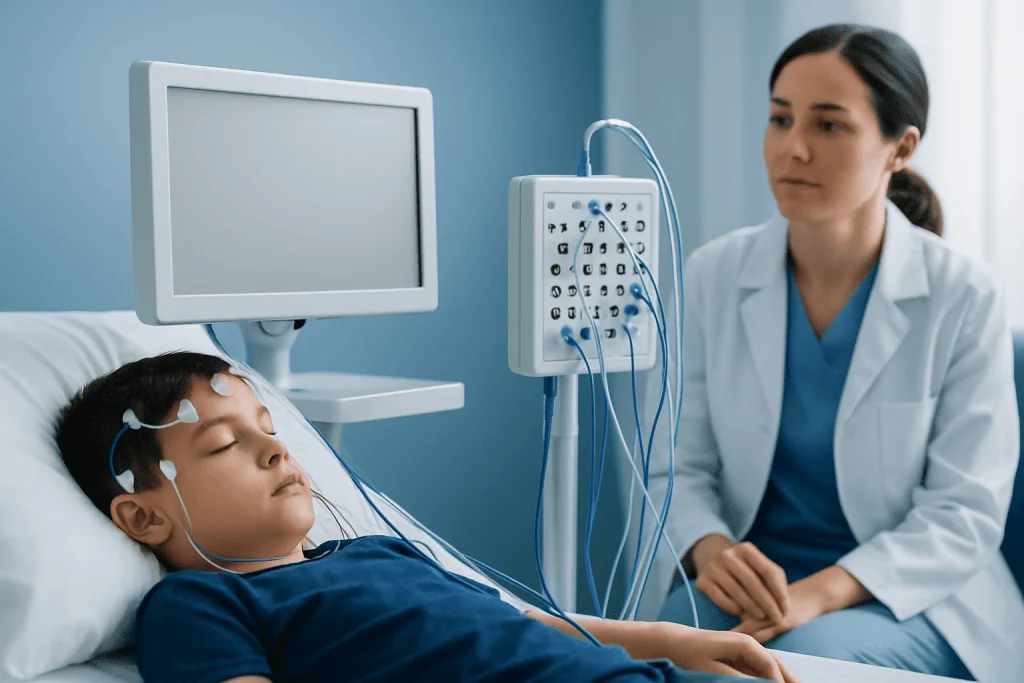
Some signs suggest that a child’s sleep problem may need specialist assessment rather than simple routine changes at home. A child who snores loudly most nights, seems to stop breathing, gasps, sweats heavily in sleep, or sleeps in unusual positions may have a sleep-related breathing disorder. Repeated awakenings, morning headaches, bedwetting beyond the expected age, and daytime behavioral difficulties can also be clues.
Excessive daytime sleepiness is another important warning sign. Children do not always say they feel sleepy. Instead, they may seem unusually irritable, distracted, emotional, clumsy, or hyperactive. Falling asleep in class, during car rides, or during quiet activities may suggest an underlying sleep disorder, especially if the child appears to get enough time in bed.
Unusual movements during sleep should also be taken seriously if they are repetitive, violent, or associated with confusion, injury, or daytime symptoms. These may include rhythmic jerking, repeated kicking, sudden sitting up, wandering, stiffening, or episodes that appear seizure-like. A specialist assessment can help distinguish common parasomnias from movement disorders or nighttime seizures such as those seen in epilepsy.
- Loud, persistent snoring or observed breathing pauses
- Excessive daytime sleepiness or sudden sleep attacks
- Unusual movements, jerking, or repetitive behaviors at night
- Sleepwalking, screaming, or confusion that is frequent or dangerous
- Sudden weakness triggered by laughter or strong emotions
- Problems with learning, mood, attention, or growth linked to poor sleep
Common Neurological Sleep Disorders in Children
Several neurological or neuro-related sleep disorders can affect children. Obstructive sleep apnea is one of the most common and occurs when the airway becomes partly or fully blocked during sleep. Although it is often related to enlarged tonsils or adenoids, it can also be more complex in children with neurological, craniofacial, or neuromuscular conditions. Central sleep apnea is less common and involves reduced brain signaling to breathe properly during sleep.
Narcolepsy is a neurological disorder that affects the brain’s control of sleep and wakefulness. Children with narcolepsy may have overwhelming daytime sleepiness, vivid dreams as they fall asleep or wake up, sleep paralysis, or cataplexy, which is sudden muscle weakness triggered by emotions such as laughter. This condition is often overlooked at first because symptoms can be mistaken for laziness, mood problems, or attention difficulties.
Movement-related sleep disorders may include restless legs syndrome, periodic limb movement disorder, rhythmic movement disorder, and sleep-related bruxism. Some children also have parasomnias such as confusional arousals, night terrors, or sleepwalking. In certain cases, events that occur during sleep may reflect a neurological condition rather than a simple parasomnia, including sleep apnea or nocturnal seizures. A careful description of episodes, including home video when safe and appropriate, can be very helpful.
Causes and Risk Factors
The causes of neurological sleep disorders in children vary by condition. Some are related to airway structure, enlarged tonsils and adenoids, or obesity, especially in sleep apnea. Others are linked to how the brain regulates sleep stages, breathing, and muscle tone. Genetics can play a role, and some disorders may run in families, including restless legs syndrome and narcolepsy.
Children with certain medical or developmental conditions may be at higher risk of sleep disorders. These include autism spectrum disorder, attention-related difficulties, cerebral palsy, neuromuscular disorders, epilepsy, craniofacial differences, and some genetic syndromes. Iron deficiency can contribute to restless legs symptoms or periodic limb movements in some children. Certain medicines, caffeine use, irregular sleep schedules, and chronic stress may worsen symptoms.
Risk factors do not mean a child will definitely develop a neurological sleep disorder. They simply increase the chance that symptoms may occur or persist. Because poor sleep can worsen behavior and learning, and behavior challenges can also worsen sleep, it is often helpful to assess the child as a whole rather than focus on sleep in isolation.
How Doctors Diagnose These Disorders
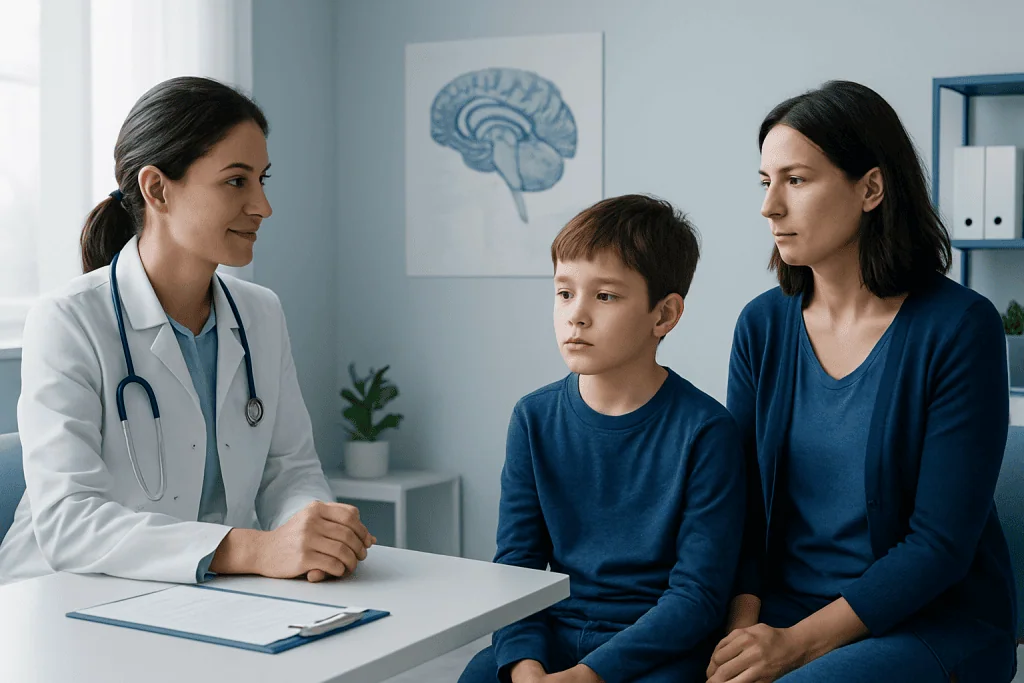
Diagnosis begins with a detailed history. The doctor will ask about the child’s bedtime routine, sleep schedule, snoring, breathing pauses, unusual movements, daytime sleepiness, school functioning, mood, and family history. Parents or caregivers may be asked to keep a sleep diary for one to two weeks. Short videos of unusual nighttime episodes can sometimes help, as long as recording is done safely and does not delay urgent medical care.
A physical examination may look for enlarged tonsils, nasal blockage, growth concerns, neuromuscular weakness, or signs of an underlying neurological condition. Depending on the symptoms, the child may be referred to a pediatric sleep specialist, neurologist, ENT specialist, pulmonologist, or another pediatric subspecialist. In some cases, coordinated care is important, especially when breathing, movement, and neurological symptoms overlap.
Testing depends on the likely cause. An overnight sleep study may be used to assess breathing, oxygen levels, heart rate, movements, and sleep stages. Some children also need a multiple sleep latency test to evaluate excessive daytime sleepiness and possible narcolepsy. If events may be seizures, doctors may consider EEG-based testing such as electroencephalography or a more detailed video EEG monitoring study. In selected situations, imaging such as brain MRI or blood tests, including iron studies, may also be useful.
Treatment Options
Treatment depends on the specific diagnosis and the child’s age, symptoms, and general health. For sleep-disordered breathing, treatment may involve addressing enlarged tonsils or adenoids, allergies, nasal blockage, or weight-related factors when relevant. Some children benefit from positive airway pressure therapy, particularly if airway obstruction persists or if they have central breathing problems or complex medical needs.
Children with narcolepsy, movement disorders, or parasomnias may need a combination of medical treatment, behavioral strategies, and safety planning. Scheduled naps, consistent sleep timing, and school accommodations can be very helpful for excessive daytime sleepiness. If iron deficiency is found, doctors may recommend correction under medical supervision. Medication decisions are individualized and should be guided by a qualified clinician familiar with pediatric sleep medicine.
When nighttime episodes may reflect seizures or another neurological condition, treatment focuses on the underlying cause. In more complex cases, multidisciplinary care is valuable. Near the end of the care pathway, families seeking coordinated evaluation may wish to know that Acibadem International’s multidisciplinary specialists in JCI-accredited hospitals diagnose and treat neurological sleep-related conditions in children and adults.
Prevention, Home Support, and Daily Sleep Habits
Not all neurological sleep disorders can be prevented, but healthy sleep habits can reduce strain on a child’s sleep system and make symptoms easier to recognize. Children benefit from a regular sleep schedule, a calming bedtime routine, and a sleep environment that is quiet, dark, and comfortable. Screens, caffeine, and stimulating activities close to bedtime are best limited.
Parents should watch for patterns rather than isolated bad nights. Keeping notes about snoring, breathing pauses, daytime behavior, school concerns, and unusual nighttime events can make medical visits more productive. If a child sleepwalks or has confusional arousals, safety steps such as securing windows, using gates near stairs, and removing sharp objects from the bedroom may help prevent injury.
Home support is important, but self-diagnosis should be avoided when symptoms are persistent or severe. A child who seems chronically sleepy, has repeated breathing problems at night, or shows possible seizure-like episodes should not rely on sleep routine changes alone. Early assessment can improve sleep, behavior, and family wellbeing.
When to See a Doctor Urgently
Parents should arrange medical review if a child snores most nights, struggles to wake in the morning despite enough time in bed, falls asleep in inappropriate situations, or has repeated nighttime behaviors that are intense, frequent, or hard to explain. Concerns are especially important when sleep problems affect school performance, mood, growth, or safety.
Urgent evaluation is needed if a child has pauses in breathing, turns blue, has prolonged or repeated seizure-like events, is difficult to wake after an episode, or is injured during nighttime events. Sudden collapse or weakness triggered by emotion, severe daytime sleepiness, and episodes of confusion with loss of awareness also warrant prompt specialist attention.
Even when symptoms are not an emergency, families should feel comfortable raising concerns early. Many neurological sleep disorders in children can be managed effectively once they are correctly identified. A careful, child-centered assessment helps separate common sleep issues from conditions that need specialist care.
Frequently asked questions
How are neurological sleep disorders in children different from ordinary sleep problems?
Ordinary sleep problems are often related to routines, stress, or temporary illness. Neurological sleep disorders involve the brain, nerves, or sleep regulation systems and are more likely to cause persistent symptoms such as breathing pauses, unusual movements, or extreme daytime sleepiness.
Can a child with a sleep disorder look hyperactive instead of sleepy?
Yes. Children often show sleepiness differently from adults and may become irritable, impulsive, restless, or have trouble concentrating. Because of this, poor sleep can sometimes be mistaken for a behavioral or attention problem.
Are night terrors and sleepwalking always signs of a neurological disease?
No. Night terrors and sleepwalking are common childhood parasomnias and are often benign. However, frequent, violent, late-onset, or unusual episodes, especially those with injury or daytime symptoms, may need medical assessment to rule out other causes.
What kind of doctor evaluates neurological sleep disorders in children?
Assessment may begin with a pediatrician. Depending on the symptoms, the child may then see a pediatric sleep specialist, neurologist, ENT specialist, pulmonologist, or another specialist with experience in childhood sleep disorders.
Does every child with snoring need a sleep study?
Not always, but persistent snoring should be discussed with a doctor. A sleep study may be recommended if there are breathing pauses, daytime symptoms, growth or learning concerns, or other signs that suggest sleep apnea or another significant sleep disorder.
Can neurological sleep disorders in children be treated successfully?
Many can be improved significantly with the right diagnosis and treatment plan. Treatment may include medical therapy, behavioral strategies, airway treatment, safety measures, or management of an underlying neurological condition.
References
- American Academy of Sleep Medicine
- American Academy of Pediatrics
- National Institute of Neurological Disorders and Stroke
- Centers for Disease Control and Prevention
- National Sleep Foundation
This article is for general information only and is not a substitute for professional medical advice. Please consult a qualified doctor about your individual situation.
Explore treatments in Turkey — costs, top hospitals & a free quote
JCI-accredited · board-certified surgeons · reply within 24h
Add us as a Preferred Source to see more of our trusted health content across Google Search, AI Overviews and Discover.