Neurological Testing: An Evidence-Based Guide for Patients

Neurological testing may include a physical exam, imaging, blood tests, and specialized studies of nerve or brain function. Not every patient needs every test; doctors choose tests based on symptoms, medical history, and exam findings.
Key Takeaways
- Neurological testing may include a physical exam, imaging, blood tests, and specialized studies of nerve or brain function.
- Not every patient needs every test; doctors choose tests based on symptoms, medical history, and exam findings.
- Many neurological tests are noninvasive, and more advanced tests are used only when they are clinically needed.
- Good preparation, including bringing medication lists and prior results, can make testing more useful and efficient.
- Urgent medical evaluation is important for sudden weakness, speech trouble, seizure, severe headache, or sudden vision loss.
Neurological testing is a group of exams and procedures used to assess how the brain, spinal cord, nerves, and muscles are working. It helps doctors identify the cause of symptoms such as weakness, numbness, tremor, headaches, balance problems, memory changes, or seizures and choose the most appropriate next steps.
What neurological testing means
Neurological testing refers to the methods doctors use to evaluate the nervous system, including the brain, spinal cord, peripheral nerves, and muscles. In practice, it is not a single test but a structured process that may begin with a neurological exam and, if needed, continue with imaging, laboratory studies, or electrical tests. The goal is to explain symptoms clearly, rule out urgent conditions, and guide treatment based on evidence.
Patients are often referred for neurological testing because they have symptoms such as headaches, dizziness, tremor, numbness, tingling, weakness, memory changes, sleep-related behaviors, fainting, or episodes that may be seizures. In some cases, testing is used to monitor a known condition or evaluate recovery after an injury, infection, or stroke. Doctors usually select the least invasive and most informative tests first.
Because the nervous system affects movement, sensation, thinking, speech, and balance, neurological symptoms can overlap with other medical conditions. For that reason, testing is designed not only to detect neurological disease but also to distinguish it from problems involving the heart, inner ear, metabolism, medications, or mental health. A careful workup can prevent unnecessary procedures and focus attention on the most likely cause.
When doctors recommend neurological testing
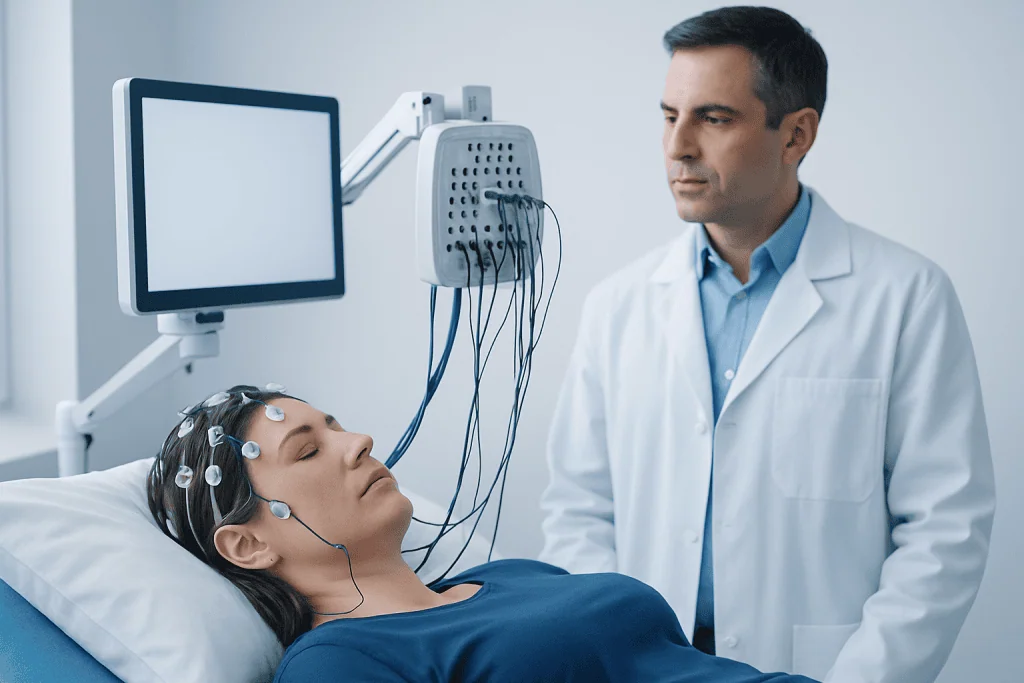
Doctors consider neurological testing when symptoms suggest a problem in the nervous system or when routine evaluation has not fully explained a person’s concerns. Common reasons include persistent or worsening headaches, unexplained numbness, burning pain, weakness, loss of balance, frequent falls, tremor, double vision, hearing changes, speech difficulty, memory concerns, confusion, and episodes of loss of awareness.
Testing may also be recommended after a head injury, spinal trauma, or suspected infection affecting the brain or nerves. If a person has symptoms concerning for stroke, prompt testing is especially important because timing can affect treatment decisions. Similarly, recurrent episodes that may represent epilepsy often require further evaluation to confirm the diagnosis and characterize the type of event.
In many patients, the purpose of testing is to narrow down a broad list of possibilities. For example, numbness in the hands may relate to a pinched nerve, peripheral neuropathy, vitamin deficiency, or a problem in the brain or spinal cord. The pattern of symptoms, their timing, and associated features help determine which tests are most likely to be useful.
Common types of neurological tests

The first and often most informative step is the neurological exam. During this office-based assessment, the doctor checks mental status, speech, eye movements, facial strength, coordination, reflexes, sensation, walking, and muscle strength. This helps localize where a problem may be occurring and whether further testing is needed.
Imaging tests are commonly used to look at the structure of the brain or spine. A CT scan may be used quickly in emergencies, while MRI provides more detailed images of soft tissues and is especially helpful for many brain and spinal conditions. Depending on the clinical question, a doctor may request MRI scanning or CT imaging to identify bleeding, stroke, tumors, inflammation, disc problems, or other structural changes.
Electrical tests assess function rather than structure. Electroencephalography, or EEG, records the brain’s electrical activity and may help evaluate seizures, unexplained episodes of altered awareness, or certain sleep-related concerns. Electromyography and nerve conduction studies measure how nerves and muscles transmit signals and are often used to investigate peripheral neuropathy, muscle disease, or nerve compression.
Other tests may include blood work, lumbar puncture, ultrasound of blood vessels, neuropsychological assessment, sleep studies, or evoked potentials. Each test answers a different question, so the combination is tailored to the patient’s symptoms rather than chosen from a fixed checklist.
How doctors choose the right tests
Evidence-based neurological care relies on matching the test to the clinical question. A patient with sudden speech difficulty and one-sided weakness may need urgent brain imaging first, while a patient with gradual tingling in the feet may need blood tests and nerve studies. The doctor considers how quickly symptoms developed, whether they come and go, what body areas are involved, and whether there are warning signs such as fever, trauma, or severe pain.
Medical history is equally important. Existing conditions such as diabetes, autoimmune disease, high blood pressure, migraine, cancer, or thyroid disorders can change the most likely diagnosis and the best testing strategy. Medications, alcohol use, vitamin status, family history, and recent infections may also be relevant because they can affect nerve or brain function.
The aim is to gather enough information to make decisions safely without exposing patients to unnecessary procedures. In some situations, careful observation and follow-up are more useful than extensive testing right away. In others, prompt specialist assessment is needed to rule out rapidly progressive disease or conditions requiring urgent treatment, such as severe nerve compression or bleeding in the brain.
What to expect before, during, and after testing
Preparation depends on the type of neurological testing being planned. Patients are often advised to bring a list of symptoms, current medications, allergies, prior scan reports, and any videos of episodes such as shaking spells or abnormal movements if these can be captured safely. A symptom timeline, including when symptoms began and what makes them better or worse, can be especially helpful.
Most neurological exams are done in a clinic setting and do not require special preparation. Imaging tests may require removal of metal items, and some MRI studies are performed with contrast depending on the indication. For EEG, the scalp is cleaned and small electrodes are placed on the head; for EMG and nerve conduction studies, small electrical pulses and a fine needle electrode may be used to study nerve and muscle activity.
After testing, results may be available immediately in some cases or may take several days if images or recordings need specialist interpretation. It is common for one test to answer only part of the question, so follow-up discussions are important. A normal result can still be useful because it helps rule out certain disorders and may direct attention toward other explanations.
Understanding results and next steps
Neurological test results are interpreted in context. An MRI may show age-related changes that are not causing symptoms, while a normal scan does not always exclude a functional or microscopic problem. Likewise, nerve conduction studies can identify damage to large peripheral nerves but may not detect every type of small-fiber nerve disorder.
Doctors combine the test findings with the physical exam and medical history to decide what should happen next. This may involve reassurance and monitoring, referral to a neurologist, rehabilitation, medication changes, further testing, or treatment of an underlying condition such as diabetes, vitamin deficiency, infection, or inflammation. If spinal cord or brain pressure is suspected, more urgent intervention may be required.
In some cases, care may involve several specialties. A person with balance problems might need input from neurology, ENT, physiotherapy, or cardiology depending on the cause. For selected structural problems, treatment planning may include advanced imaging and specialist evaluation, and some patients with persistent spine-related symptoms may benefit from assessment linked to neurosurgical care when appropriate.
When to seek medical care
Neurological symptoms should not be ignored if they are sudden, severe, or clearly worsening. Immediate medical care is important for sudden weakness or numbness on one side, new speech difficulty, sudden confusion, sudden loss of vision, a seizure lasting several minutes, a new severe headache unlike usual headaches, or loss of consciousness. These symptoms can signal a time-sensitive emergency.
Medical review is also recommended for symptoms that are persistent or interfering with daily life, even if they are not dramatic. Examples include repeated falls, tremor, progressive memory changes, persistent tingling, unexplained muscle weakness, facial drooping, swallowing difficulty, or headaches that are becoming more frequent. Early evaluation can help identify treatable causes and reduce uncertainty.
If symptoms follow a head injury, spinal injury, fever, or a recent infection, it is sensible to seek professional advice promptly. International patients who need coordinated assessment may be evaluated by multidisciplinary specialists at Acibadem International’s JCI-accredited hospitals, where neurological symptoms can be investigated with modern diagnostic pathways including EEG testing when clinically indicated.
Self-care, preparation, and practical questions to ask
Patients can support the diagnostic process by preparing for appointments thoughtfully. Keeping a diary of headaches, seizures, tremor episodes, dizziness, sleep behaviors, or sensory symptoms can reveal patterns that are not obvious during a short clinic visit. Bringing family members or caregivers may also help, especially when the symptoms involve memory, awareness, or events the patient cannot fully describe.
General self-care remains important while testing is underway. Good sleep, hydration, regular meals, and medication adherence can reduce symptom triggers in some conditions and improve the quality of certain tests. It is also wise not to stop prescribed medicines unless a clinician specifically advises this before a study.
Useful questions to ask include what the test is looking for, whether alternatives exist, how to prepare, what discomfort to expect, when results will be available, and what the next steps might be if findings are normal or abnormal. Clear communication can help patients feel more informed and involved in decisions about their care.
Frequently asked questions
What is neurological testing used for?
Neurological testing is used to find out whether symptoms are related to the brain, spinal cord, nerves, or muscles. It can help diagnose a condition, rule out urgent causes, measure severity, and guide treatment or follow-up.
Is neurological testing painful?
Many neurological tests, such as a neurological exam, CT, MRI, or EEG, are not painful. Some tests, including EMG or nerve conduction studies, can be uncomfortable for a short time, but the discomfort is usually temporary and manageable.
Do all patients with neurological symptoms need a brain scan?
No. Brain imaging is useful in many situations, but not every symptom requires a CT or MRI. Doctors decide based on the symptom pattern, physical exam, timing, and whether there are red flags suggesting a structural problem.
What is the difference between EEG and EMG?
EEG measures the brain's electrical activity and is often used when seizures or certain episodes of altered awareness are suspected. EMG, usually combined with nerve conduction studies, evaluates how well nerves and muscles are working and is often used for weakness, numbness, or suspected nerve injury.
How long does it take to get results from neurological testing?
Some results are available the same day, especially from a physical examination or urgent imaging review. Others may take several days because a specialist needs to interpret recordings, scans, or laboratory findings carefully.
Can neurological tests be normal even if symptoms are real?
Yes. A normal result does not mean symptoms are imagined or unimportant. Some conditions are intermittent, subtle, or not easily captured on a particular test, which is why follow-up and clinical judgment remain important.
References
- National Institute of Neurological Disorders and Stroke
- American Academy of Neurology
- National Institute for Health and Care Excellence
- Mayo Clinic
- MedlinePlus
This article is for general information only and is not a substitute for professional medical advice. Please consult a qualified doctor about your individual situation.
Joint and spine care in Turkey — expert assessment & treatment
JCI-accredited · board-certified surgeons · reply within 24h
Add us as a Preferred Source to see more of our trusted health content across Google Search, AI Overviews and Discover.