Neurology vs Neurophysiology: What Is the Difference and Which Specialist Do You Need?
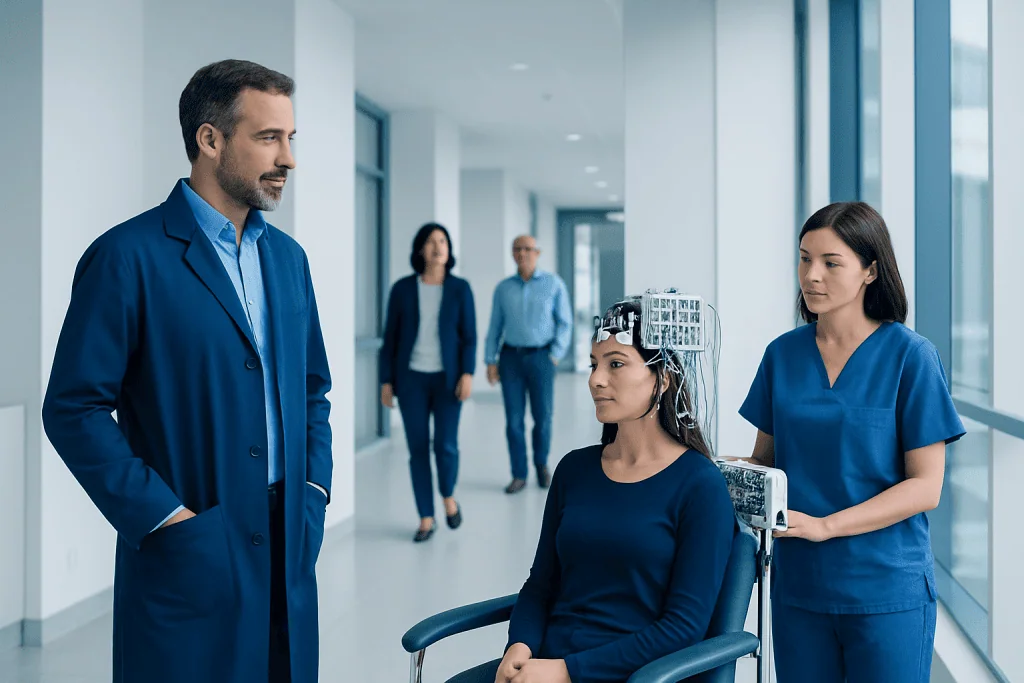
Neurology is the medical specialty that diagnoses and treats disorders of the brain, spinal cord, nerves, and muscles. Neurophysiology focuses on testing the function of the nervous system using studies such as EEG, EMG, and nerve conduction tests.
Key Takeaways
- Neurology is the medical specialty that diagnoses and treats disorders of the brain, spinal cord, nerves, and muscles.
- Neurophysiology focuses on testing the function of the nervous system using studies such as EEG, EMG, and nerve conduction tests.
- A person with symptoms such as seizures, weakness, numbness, tremor, or unexplained dizziness may first see a neurologist.
- A neurophysiology test is often ordered when a doctor needs more information about electrical activity in the brain, nerves, or muscles.
- Many patients need both specialties as part of one diagnostic and treatment pathway.
- The right specialist depends on symptoms, the suspected condition, and whether testing or ongoing treatment is needed.
Neurology and neurophysiology both focus on the brain, spinal cord, nerves, and muscles, but they play different roles. A neurologist evaluates symptoms, makes diagnoses, and manages treatment, while a neurophysiologist performs and interprets tests that measure how the nervous system is working.
Overview: how neurology and neurophysiology differ
Neurology is a broad medical specialty concerned with disorders of the nervous system. This includes the brain, spinal cord, peripheral nerves, and muscles. A neurologist is a medical doctor who evaluates symptoms, performs a neurological examination, orders tests, makes a diagnosis, and develops a treatment plan for conditions such as epilepsy, migraine, neuropathy, multiple sclerosis, movement disorders, and stroke-related problems.
Neurophysiology is a related field that focuses on how the nervous system functions. Clinical neurophysiology uses specialized tests to measure electrical activity in the brain, spinal cord, nerves, and muscles. A clinical neurophysiologist may be a physician with advanced training in these tests, and in some settings a specially trained scientist or technologist may help perform them under medical supervision.
In simple terms, neurology asks, “What condition is causing these symptoms, and how should it be treated?” Neurophysiology asks, “How well are the brain, nerves, or muscles working, and what do the test results show?” These fields often overlap and support each other, especially when symptoms are complex or difficult to explain.
For patients, the distinction matters because it can help set expectations. One appointment may focus on history, examination, diagnosis, and treatment decisions, while another may focus mainly on testing. Both are valuable parts of care, and many people benefit from seeing both specialists during the same evaluation.
What a neurologist does
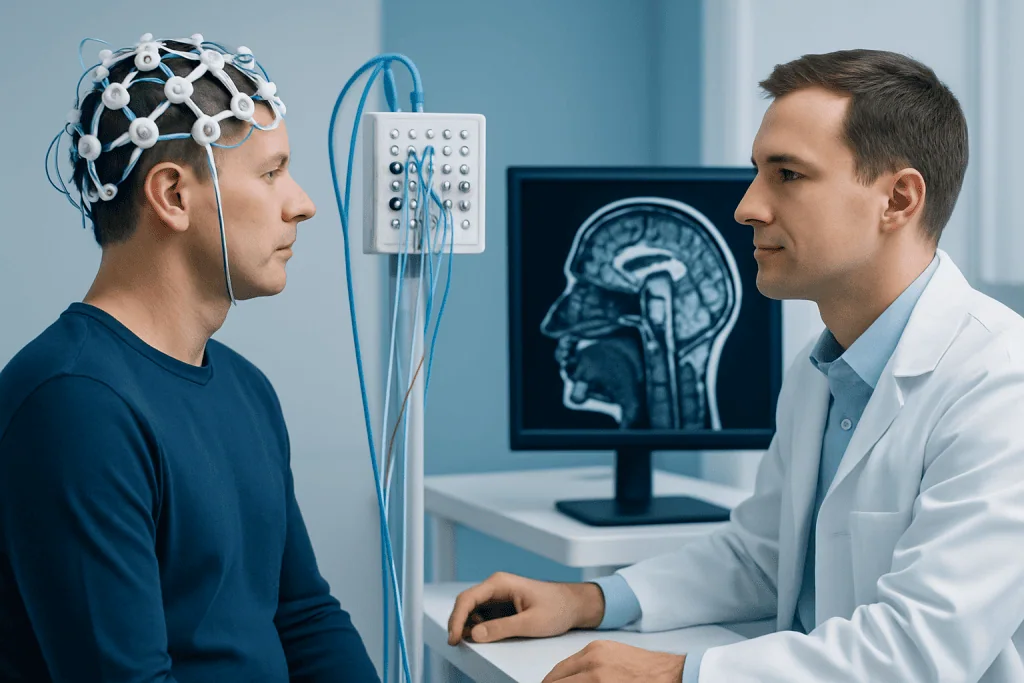
A neurologist usually becomes involved when someone has symptoms that may come from the nervous system. These can include recurring headaches, seizures, fainting episodes, memory changes, tremor, balance problems, numbness, tingling, weakness, facial drooping, or changes in speech. The neurologist reviews medical history, medications, family history, and the timing and pattern of symptoms.
The neurological examination is an important part of the visit. It may include checks of strength, reflexes, sensation, coordination, eye movements, walking, and mental function. Based on these findings, the neurologist decides whether symptoms are most likely related to the brain, spinal cord, nerve roots, peripheral nerves, neuromuscular junction, or muscles.
Neurologists also coordinate investigations and treatment. They may request brain or spine imaging, blood tests, lumbar puncture, or neurophysiology studies. They prescribe medications when appropriate, monitor disease progression, and advise on rehabilitation, lifestyle measures, and follow-up care.
Common conditions managed in neurology include epilepsy, peripheral neuropathy, Parkinsonian symptoms, nerve compression syndromes, and inflammatory or autoimmune nervous system disorders. In many cases, the neurologist is the main doctor guiding long-term management, even when neurophysiology testing is part of the work-up.
What a neurophysiologist does

A neurophysiologist studies the function of the nervous system by using specialized diagnostic tests. These tests help show whether electrical signals are being generated and transmitted normally in the brain, spinal pathways, nerves, or muscles. They are especially useful when symptoms suggest abnormal nerve or muscle function but the cause is not yet clear from the examination alone.
Common neurophysiology tests include electroencephalography (EEG), electromyography (EMG), nerve conduction studies (NCS), evoked potentials, and sleep-related neurophysiology tests in selected cases. An EEG records electrical activity in the brain and may help assess seizures, blackouts, or unusual episodes. EMG and nerve conduction studies assess how well nerves and muscles are working and are often used for weakness, numbness, tingling, or suspected nerve injury.
During testing, the neurophysiology team follows standardized methods to collect accurate information. The clinical neurophysiologist then interprets the results in medical context. The findings may support a diagnosis, rule out some causes, or help locate the affected part of the nervous system more precisely.
These tests do not replace a clinical evaluation. Instead, they add objective information that can guide diagnosis and treatment. For example, a patient with hand numbness may have symptoms from the neck, a trapped nerve at the wrist, or a more general neuropathy. EMG testing and nerve conduction studies may help distinguish between these possibilities.
Which symptoms may lead to neurology or neurophysiology care?
People are often referred to neurology because of symptoms rather than a known diagnosis. A person may be sent to a neurologist after repeated headaches, episodes of loss of awareness, sudden weakness, imbalance, visual changes, memory concerns, tremor, or altered sensation. In some cases, symptoms start suddenly and need urgent medical assessment, especially if stroke is a concern.
Referral for neurophysiology is often based on a specific clinical question. For example, a doctor may want to know whether blackout episodes are seizures, whether leg weakness comes from a muscle disorder or nerve problem, or whether numbness reflects carpal tunnel syndrome, neuropathy, or nerve root irritation. The patient may still feel that the symptoms are general, but the test is chosen to answer a targeted question.
Common situations where neurophysiology is helpful include:
- Suspected seizures or unexplained episodes of staring, shaking, or loss of awareness
- Numbness, tingling, burning pain, or electric shock-like sensations
- Muscle weakness, twitching, cramps, or suspected muscle disease
- Possible nerve compression, such as carpal tunnel syndrome
- Balance or sensory symptoms where nerve pathway testing may clarify the cause
- Monitoring some known neurological conditions over time
In practice, many patients move between the two specialties. A neurologist may recommend EEG testing for suspected seizure activity or nerve conduction studies for numbness and weakness. The test results are then combined with symptoms, examination, and imaging to reach the clearest diagnosis possible.
How diagnosis works together
Diagnosis in nervous system disorders often requires more than one step. Symptoms can overlap between different conditions, and the same symptom may come from very different parts of the body. For example, weakness may result from a brain disorder, spinal cord problem, pinched nerve, peripheral nerve disease, neuromuscular junction disorder, or primary muscle condition. This is why a careful clinical examination remains essential.
The neurologist usually starts by deciding where the problem is likely to be located. Neurophysiology can then provide functional evidence. If a person has suspected epilepsy, an EEG may detect abnormal electrical activity in the brain, although a normal EEG does not always exclude seizures. If a person has suspected neuropathy, EMG and nerve conduction studies may show whether the problem affects sensory nerves, motor nerves, or both.
Other tests may also be needed. MRI or CT scans look at structure, while neurophysiology looks at function. Blood tests can identify inflammation, metabolic causes, vitamin deficiencies, or autoimmune markers. In some situations, a sleep study, neuropsychological assessment, or spinal fluid analysis may be relevant as well.
The best interpretation comes when all these pieces are considered together. A single test rarely tells the whole story. Patients are often reassured to know that a referral for neurophysiology usually means the doctor is being thorough and trying to make the diagnosis more accurate, not necessarily that a serious condition is expected.
Which specialist does a person need?
The answer depends on the person’s symptoms and the stage of evaluation. If someone has new neurological symptoms and does not yet know the cause, a neurologist is usually the most appropriate first specialist. The neurologist can assess the whole picture, decide whether the problem is neurological, and determine which tests are actually needed.
If a doctor has already assessed the symptoms and needs a specific function test, the person may be referred directly to neurophysiology. This is common for suspected nerve compression, neuropathy, muscle disorders, or seizure assessment. The referral may be made by a neurologist, rehabilitation specialist, orthopedic doctor, pediatrician, or primary care physician.
It can help to think of the roles this way:
- Neurologist: evaluates symptoms, examines the patient, makes diagnoses, prescribes treatment, and follows progress
- Neurophysiologist: performs and interprets tests that measure nervous system function
- Both together: provide a more complete picture when symptoms are complex or the diagnosis is uncertain
People do not always need to choose on their own. The referring doctor usually guides the process. If symptoms are progressing, affecting daily function, or remain unexplained, asking whether a neurology review or neurophysiology test would be helpful is a reasonable next step.
What to expect during common neurophysiology tests
Knowing what happens during testing can make the experience less stressful. An EEG usually involves placing small sensors on the scalp to record brain activity. The test is painless, although the adhesive or preparation gel may feel unfamiliar. In some cases, the patient may be asked to breathe deeply, look at flashing lights, or try to sleep during the recording, depending on the reason for the test.
EMG and nerve conduction studies are different. Nerve conduction studies use small electrical impulses on the skin to measure how quickly and strongly nerves respond. EMG uses a fine needle electrode to record activity in selected muscles. Some parts of the test can be uncomfortable, but most people tolerate them well, and the information gained can be very useful.
Preparation depends on the test. Patients may be advised to arrive with clean hair for an EEG, avoid lotions before nerve testing, or bring a list of medications and symptoms. It helps to mention pacemakers, blood-thinning medications, implanted devices, skin conditions, or pregnancy when scheduling, so the team can give appropriate instructions.
Results may be explained on the same day or sent to the referring doctor. The final interpretation is most meaningful when discussed with the clinician who knows the patient’s symptoms and examination findings. In centers such as Acibadem International, multidisciplinary specialists in JCI-accredited hospitals evaluate international patients and coordinate neurological assessment, neurophysiology testing, and follow-up care when needed.
When to seek medical attention
Anyone with persistent or unexplained neurological symptoms should arrange medical assessment. Symptoms such as ongoing numbness, repeated blackouts, tremor, new weakness, severe headaches, memory change, or trouble with coordination deserve professional evaluation, especially if they are worsening or interfering with normal activities.
Some symptoms need urgent attention. Sudden facial drooping, arm or leg weakness, trouble speaking, sudden vision loss, severe new headache, seizure lasting several minutes, repeated seizures without recovery, or sudden confusion should be treated as medical emergencies. Prompt care is important because early treatment can be time-sensitive.
Even when symptoms are not urgent, early evaluation can still be helpful. It may shorten the time to diagnosis, reduce uncertainty, and allow treatment to start sooner if needed. Patients can support the process by noting when symptoms began, how long they last, possible triggers, and whether there is any family history of neurological conditions.
When in doubt, it is safest to ask a qualified doctor. The goal is not to assume the worst, but to make sure symptoms are interpreted correctly and the right specialist is involved at the right time.
Frequently asked questions
Is a neurologist the same as a neurophysiologist?
No. A neurologist is a doctor who diagnoses and treats disorders of the nervous system, while a neurophysiologist focuses on tests that measure nervous system function. In many hospitals, these specialties work closely together.
Should a person see a neurologist first?
Usually yes, especially if the symptoms are new or the cause is not known. A neurologist can assess the full picture and decide whether neurophysiology testing, imaging, or other investigations are needed.
What conditions are investigated with neurophysiology tests?
Neurophysiology is commonly used for suspected seizures, neuropathy, carpal tunnel syndrome, muscle disease, nerve injury, and some sleep-related neurological problems. The exact test depends on the symptom pattern and the doctor’s clinical question.
Are EEG and EMG the same test?
No. EEG records electrical activity in the brain, while EMG records electrical activity in muscles and is often paired with nerve conduction studies. They are used for different clinical problems.
Are neurophysiology tests painful?
Many neurophysiology tests are painless or only mildly uncomfortable. EEG is painless, while nerve conduction studies and EMG can cause brief discomfort, but most people tolerate them well.
Can a normal neurophysiology test rule out disease?
Not always. A normal result can be reassuring, but some neurological conditions may still be present even if a test is normal at one point in time. Doctors interpret results together with symptoms, examination findings, and other tests.
References
- World Health Organization
- National Institute of Neurological Disorders and Stroke
- American Academy of Neurology
- International Federation of Clinical Neurophysiology
This article is for general information only and is not a substitute for professional medical advice. Please consult a qualified doctor about your individual situation.
Neurophysiology in Turkey — costs, top hospitals & a free quote
JCI-accredited · board-certified surgeons · reply within 24h
Add us as a Preferred Source to see more of our trusted health content across Google Search, AI Overviews and Discover.