

Neuromodulation for Movement Symptoms: When Electrical Stimulation Is Considered

Neuromodulation can help some people with tremor, Parkinson’s disease, dystonia, or other movement disorders. The best-known option is deep brain stimulation, which delivers adjustable electrical signals to specific brain areas.
Key Takeaways
- Neuromodulation can help some people with tremor, Parkinson’s disease, dystonia, or other movement disorders.
- The best-known option is deep brain stimulation, which delivers adjustable electrical signals to specific brain areas.
- It does not cure the underlying condition, but it may reduce symptoms and improve daily function.
- Careful evaluation by a multidisciplinary team is essential to decide who may benefit and what risks to consider.
- Follow-up programming and long-term care are important parts of successful treatment.
Neuromodulation for movement symptoms refers to treatments that use carefully controlled electrical stimulation to help improve tremor, stiffness, slowness, or involuntary movements. It is usually considered when symptoms are affecting daily life and medicines no longer provide enough benefit or cause troublesome side effects.
Overview
Neuromodulation for movement symptoms is a treatment approach that changes abnormal nerve signaling using electrical stimulation. In movement disorders, certain brain circuits may become overactive, underactive, or poorly coordinated. By delivering gentle, controlled electrical pulses to selected areas, neuromodulation can help restore a more balanced pattern of activity and reduce symptoms.
The most established neuromodulation therapy for movement disorders is deep brain stimulation, often called DBS. In this treatment, very thin electrodes are placed in carefully chosen brain targets and connected to a small implanted pulse generator. The system can then be adjusted over time to match the person’s symptoms and response.
Neuromodulation is not usually the first treatment tried. It is generally considered after a person has received a clear diagnosis and used appropriate medications and supportive therapies, such as physical, occupational, or speech therapy. For the right patient, it can offer meaningful symptom control and improve independence in daily activities.
Which movement symptoms may improve
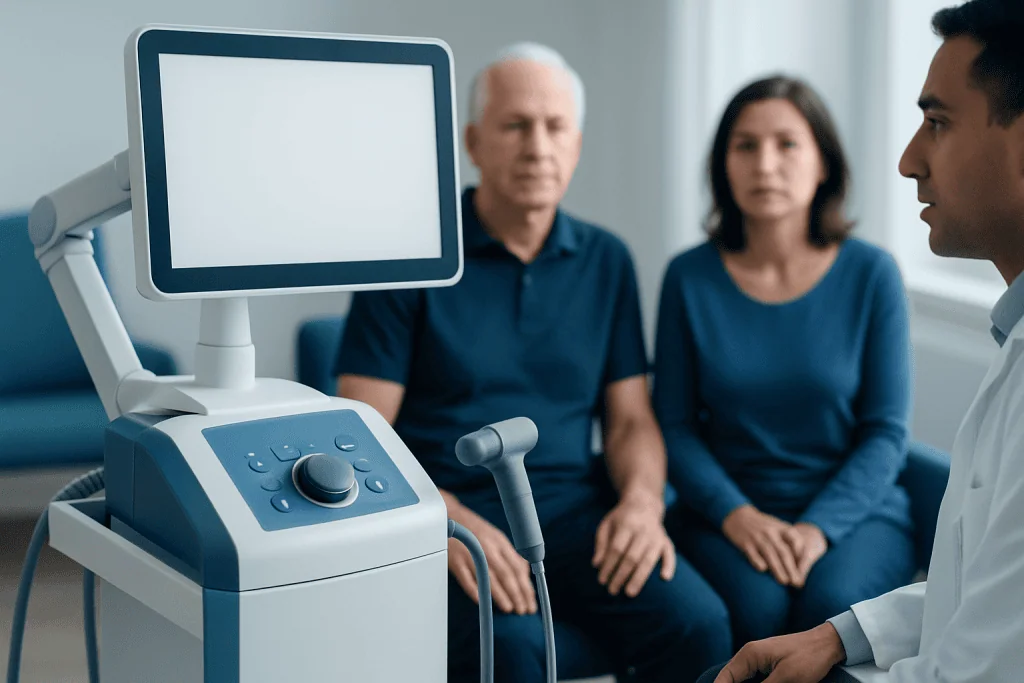
Neuromodulation may be considered for several movement-related symptoms, depending on the diagnosis. It is most commonly used for tremor, slowness of movement, stiffness, involuntary twisting movements, and some types of medication-related fluctuations. The degree of benefit varies from person to person and depends on which symptoms are most prominent.
In Parkinson’s disease, deep brain stimulation may help reduce tremor, rigidity, slowness, and periods when medication stops working smoothly. In essential tremor, it may lessen shaking that interferes with eating, writing, dressing, or other precise tasks. In dystonia, it may help reduce sustained muscle contractions and abnormal postures, although improvement can be more gradual.
Not every symptom responds equally well. For example, balance problems, speech changes, swallowing difficulty, or memory problems may not improve and can sometimes be influenced by the underlying disease itself. This is why treatment planning focuses on the symptoms most likely to respond, rather than expecting every concern to improve.
- Tremor that remains disruptive despite medication
- Motor fluctuations or “on-off” periods with Parkinson’s disease
- Dyskinesia, or involuntary movements related to treatment
- Dystonia causing pain, abnormal posture, or disability
- Selected cases of severe movement symptoms affecting quality of life
When electrical stimulation is considered

Doctors usually consider neuromodulation when symptoms are significantly affecting daily life and standard treatments are no longer giving consistent control. This may happen when medications wear off too quickly, cause unwanted side effects, or fail to adequately reduce tremor or other troublesome movements. In some people, symptoms may still respond to medicine, but the benefit may be too short-lived or unpredictable.
Timing matters. Neuromodulation is often most helpful when it is offered after symptoms become difficult to manage but before severe disability or major thinking and balance problems develop. A person does not need to wait until symptoms are extreme to discuss this option. Early referral to a specialist can help with planning, even if treatment is not needed immediately.
Several factors are reviewed before recommending treatment. These include the exact diagnosis, which symptoms are causing the most difficulty, response to medication, general health, mood, memory, and personal goals. People and families are encouraged to think of neuromodulation as one part of long-term management, not a replacement for expert ongoing care.
Evaluation and diagnosis before treatment
A careful evaluation is essential because neuromodulation works best when the diagnosis is accurate and the expected treatment goals are realistic. Assessment usually begins with a neurologist who specializes in movement disorders. The doctor reviews symptom history, medication response, examination findings, and how symptoms affect work, mobility, communication, sleep, and daily routines.
Testing often includes brain imaging, such as MRI, to help with planning and to rule out other causes of symptoms. Many centers also perform neuropsychological assessment to look at memory, attention, mood, and problem-solving. This helps identify whether a person is likely to manage treatment well and whether there are concerns that could influence the choice of therapy.
The evaluation is usually multidisciplinary. Neurologists, neurosurgeons, neuropsychologists, rehabilitation specialists, and sometimes psychiatrists work together to determine suitability. This approach is especially important for people with complex conditions such as essential tremor or Parkinsonian syndromes, because different disorders can appear similar but respond differently to stimulation.
Treatment options and how they work
The best-known treatment is deep brain stimulation, in which electrodes are placed in specific areas of the brain linked to movement control. These electrodes connect to a pulse generator implanted under the skin, usually near the chest. The device sends electrical pulses that can be adjusted during follow-up visits to improve symptom control and reduce side effects.
DBS is highly individualized. Different brain targets may be chosen depending on whether the main problem is tremor, Parkinson’s symptoms, or dystonia. After implantation, doctors program the device over several visits, gradually fine-tuning settings. Medications may still be needed, but some people can lower the amount they take or achieve more stable control.
Other device-based approaches may be considered in selected cases, but DBS remains the most established neuromodulation therapy for many movement disorders. In some situations, doctors may discuss other advanced symptom-control procedures such as focused ultrasound for selected tremor cases, although this is not a form of implanted electrical stimulation. The right option depends on the condition, symptom pattern, age, overall health, and patient preference.
No treatment is risk-free. Possible concerns with implanted neuromodulation include infection, bleeding, device-related problems, and stimulation side effects such as tingling, speech changes, or temporary balance difficulty. These risks are carefully reviewed before any decision is made, and close follow-up helps manage them.
Recovery, follow-up, and living with neuromodulation
Successful neuromodulation is a process rather than a single event. After surgery, recovery usually includes wound healing, device checks, and a series of programming visits. The first settings may not provide the final result, because the team often adjusts stimulation gradually to find the best balance between benefit and side effects.
People often continue to take medication, although doses or schedules may change. Physical therapy, speech therapy, and regular exercise remain important because movement disorders affect more than one part of daily function. Good outcomes often come from combining device therapy with rehabilitation, sleep support, nutrition, and attention to mood and cognition.
The implanted system also needs long-term monitoring. Battery life depends on the device type and settings used, and some systems can be recharged while others need replacement after a period of use. Ongoing appointments help ensure the therapy continues to match changing symptoms over time.
Near the end of the treatment journey, some patients seek care in experienced international centers. Acibadem International’s multidisciplinary specialists and JCI-accredited hospitals evaluate and treat movement disorders using advanced neuromodulation approaches as part of coordinated care.
When to speak with a specialist
It is reasonable to ask about neuromodulation if movement symptoms are limiting independence, making work or self-care difficult, or causing repeated medication adjustments without stable relief. A specialist review can be useful even before a final decision is made, because it helps clarify whether the symptoms fit a condition that may respond well to stimulation.
People should also seek medical advice if symptoms are changing quickly, if diagnosis is uncertain, or if side effects from medication are becoming hard to tolerate. Families and caregivers can play an important role by sharing observations about memory, mood, sleep, falls, or changes in communication that the patient may not fully notice.
Urgent medical attention is needed for sudden new weakness, severe confusion, loss of consciousness, signs of stroke, high fever with marked stiffness, or sudden worsening after a procedure. In general, however, most decisions about neuromodulation are planned carefully and discussed over time, with the aim of choosing the safest and most suitable path for the individual.
Frequently asked questions
What is neuromodulation for movement symptoms?
Neuromodulation is a treatment that uses controlled electrical stimulation to influence nerve circuits involved in movement. In some people, it can reduce tremor, stiffness, slowness, or involuntary movements when medication alone is not enough.
Is deep brain stimulation a cure?
No, deep brain stimulation does not cure the underlying disease. It aims to improve selected symptoms and daily functioning, and many people still need medicine and ongoing specialist care.
Who may be a good candidate for this treatment?
A good candidate is usually someone with a confirmed movement disorder diagnosis, symptoms that significantly affect quality of life, and either incomplete benefit from medication or troublesome medication side effects. Suitability also depends on general health, memory, mood, and realistic treatment goals.
Which symptoms may not improve with neuromodulation?
Symptoms such as balance difficulty, speech problems, swallowing issues, or memory changes may not respond as well, depending on the underlying condition. A specialist team explains which symptoms are most likely to improve and which may need other forms of support.
What are the risks of implanted electrical stimulation?
Possible risks include infection, bleeding, discomfort at the implant site, hardware problems, or side effects related to stimulation settings. Careful patient selection, experienced teams, and regular follow-up help reduce these risks and address problems early.
Will a person still need medication after treatment?
Many people still need medication after neuromodulation, but doses may change. The goal is often better symptom stability, fewer side effects, or improved function rather than stopping all medicines completely.
References
- National Institute of Neurological Disorders and Stroke
- National Institute for Health and Care Excellence
- American Academy of Neurology
- International Parkinson and Movement Disorder Society
- Mayo Clinic
This article is for general information only and is not a substitute for professional medical advice. Please consult a qualified doctor about your individual situation.
Neuromodulation in Turkey — costs, top hospitals & a free quote
JCI-accredited · board-certified surgeons · reply within 24h
Add us as a Preferred Source to see more of our trusted health content across Google Search, AI Overviews and Discover.

More from the Health Library


Related Specialists

Assoc. Prof. Dr. Filiz Gülustan
Ear Nose & Throat
Prof. Dr. Cengiz Canpolat
Pediatrics & Pediatric Oncology
Asst. Prof. Dr. Tarkan İkizoğlu
Pediatrics
Assoc. Prof. Dr. Nejdet Karşıyakalı
Urology