Neuromuscular Disease Diagnosis: Why EMG Alone May Not Be the Whole Answer
EMG is useful, but it does not diagnose every neuromuscular condition on its own. A detailed medical history and neurological examination remain essential.
Key Takeaways
- EMG is useful, but it does not diagnose every neuromuscular condition on its own.
- A detailed medical history and neurological examination remain essential.
- Blood tests, MRI, genetic testing, and muscle or nerve biopsy may be needed in selected cases.
- The best diagnostic plan depends on whether symptoms suggest muscle, nerve, neuromuscular junction, or motor neuron disease.
- Early specialist assessment can help guide treatment and avoid unnecessary delays.
Neuromuscular disease diagnosis is rarely based on a single test. EMG can provide valuable clues, but doctors usually combine it with symptoms, examination findings, blood tests, imaging, and sometimes genetic or tissue studies to reach a clear diagnosis.
Overview: Why EMG Is Important but Not the Whole Answer
Neuromuscular disease diagnosis can be complex because many different conditions may cause similar symptoms, such as weakness, cramps, numbness, muscle wasting, fatigue, or balance problems. These disorders can affect muscles, peripheral nerves, the neuromuscular junction, or the motor neurons that control movement. Since the same symptom can come from different parts of the nervous system, diagnosis usually involves several steps rather than one single test.
Electromyography, often called EMG, is one of the best-known tests in this field. It helps doctors evaluate how muscles and the nerves supplying them are functioning. EMG is often performed together with nerve conduction studies, which measure how quickly and effectively electrical signals travel through peripheral nerves. These tests can strongly support a diagnosis, but they need to be interpreted in the context of the person’s symptoms and examination.
EMG does not directly identify every underlying cause of weakness or sensory change. Some early-stage disorders may produce subtle findings, while some diseases mainly affect areas that EMG cannot fully assess. In other cases, the pattern seen on EMG may suggest a broad category of disease but not the exact diagnosis. That is why doctors often combine EMG with blood work, imaging, genetic testing, or other specialized studies.
For patients, this broader approach can feel reassuring. It means that diagnosis is not based on a single result in isolation, but on a careful and structured assessment designed to find the most accurate explanation for symptoms.
What EMG and Nerve Conduction Studies Can Show
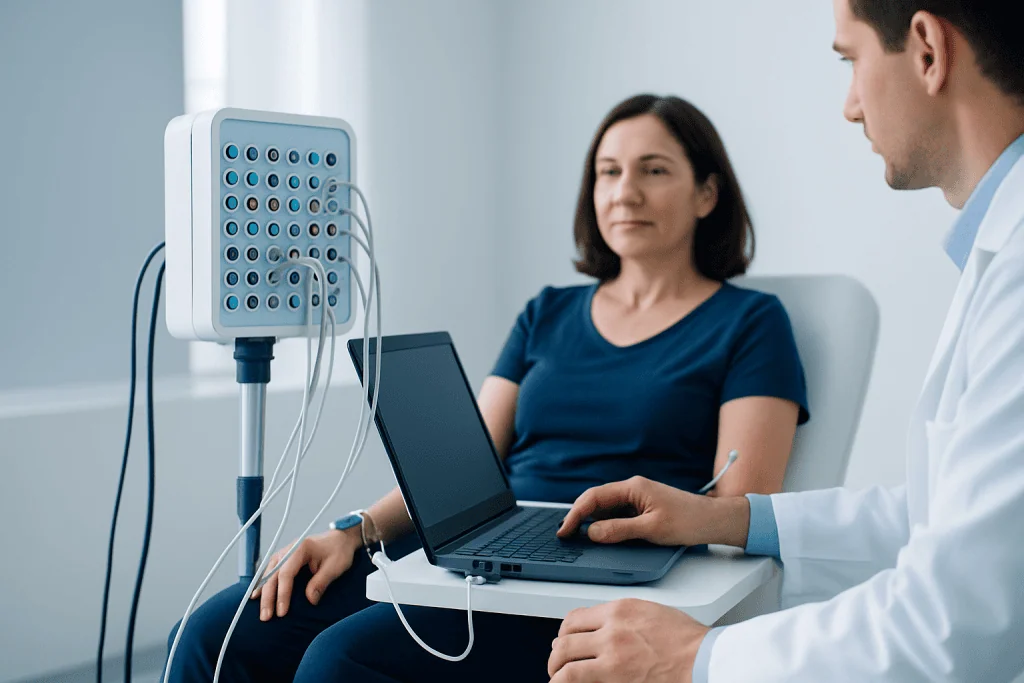
EMG evaluates the electrical activity of muscles at rest and during contraction. A thin needle electrode is placed into selected muscles, allowing the specialist to look for patterns that may suggest muscle disease, nerve injury, or problems with the communication between nerve and muscle. Nerve conduction studies usually involve small electrical stimulations on the skin to assess how well sensory and motor nerves are working.
These tests can help doctors distinguish between several broad categories of disease. For example, they may suggest a neuropathy affecting peripheral nerves, a myopathy affecting muscle tissue, a disorder of the neuromuscular junction such as myasthenia gravis, or a motor neuron disorder such as amyotrophic lateral sclerosis. They can also help determine whether a nerve problem is widespread or localized, and whether it is acute or chronic.
Even so, EMG has limits. Results can depend on timing, because some abnormalities may not appear immediately after symptoms begin. Findings may also vary depending on which muscles and nerves are tested. In addition, EMG does not replace imaging when a structural problem is suspected, and it cannot identify many genetic, inflammatory, metabolic, or autoimmune causes by itself.
Because of this, doctors use EMG as part of a larger diagnostic picture. A normal or only mildly abnormal EMG does not always rule out disease, just as an abnormal EMG does not automatically provide the final answer.
Symptoms and Clues Doctors Consider First

The diagnostic process often starts with listening carefully to the patient’s story. Doctors ask when symptoms began, whether they came on suddenly or gradually, and whether they are stable, worsening, or fluctuating. They also ask about patterns such as weakness in the hands or feet, trouble climbing stairs, eyelid drooping, swallowing difficulty, muscle pain, twitching, numbness, or shortness of breath.
The exact pattern of symptoms can offer strong clues. Weakness that worsens with activity and improves with rest may point toward a neuromuscular junction disorder. Distal numbness and tingling may suggest peripheral nerve disease. Symmetrical proximal weakness may raise suspicion for muscle disease, including inflammatory or inherited myopathies. Symptoms involving speech, swallowing, and breathing can indicate a more urgent need for evaluation.
The neurological examination is equally important. Doctors assess muscle strength, reflexes, tone, coordination, sensation, gait, and signs of muscle wasting or involuntary movements. They may also look for skin changes, joint findings, or features outside the nervous system that could suggest a broader autoimmune or genetic condition.
Family history, medication use, recent infections, toxin exposure, alcohol use, and chronic illnesses such as diabetes or thyroid disease can all shape the next steps. In many cases, these details help doctors decide whether EMG is likely to be useful and which additional tests may be most informative.
When Additional Tests Are Needed
If EMG suggests a neuromuscular disorder but does not fully explain it, doctors may order blood tests. These can look for muscle enzymes such as creatine kinase, vitamin deficiencies, thyroid problems, autoimmune markers, inflammation, infection, or metabolic abnormalities. Blood tests are often a practical next step because many reversible causes of weakness or neuropathy can be identified this way.
Imaging may also play an important role. MRI can help evaluate the brain, spinal cord, nerves, or muscles depending on the symptoms. For example, MRI may be useful when weakness could be related to a structural spine problem, nerve root compression, muscle inflammation, or a central nervous system condition rather than a primary peripheral neuromuscular disease. In selected cases, doctors may recommend MRI scanning as part of the work-up.
Genetic testing has become increasingly important, especially when symptoms began early in life, there is a family history, or the clinical pattern suggests an inherited condition. Some patients may also need repetitive nerve stimulation or single-fiber EMG when a neuromuscular junction disorder is suspected. If doctors believe a muscle disease is likely, they may consider muscle biopsy to examine tissue changes directly.
Occasionally, a nerve biopsy or lumbar puncture is considered, though these are usually reserved for specific situations. The goal is not to perform every possible test, but to use the right combination of investigations for the most likely diagnosis.
Conditions That May Need More Than EMG to Diagnose
Some neuromuscular disorders are not fully defined by EMG findings alone. Inflammatory muscle diseases, for example, can show a myopathic pattern on EMG, but blood tests, MRI, and sometimes biopsy are often needed to confirm the diagnosis and distinguish one type from another. Similarly, inherited muscular dystrophies may require genetic testing to identify the exact condition and help with family counseling.
Peripheral neuropathies also have many possible causes. Diabetes, vitamin deficiency, autoimmune disease, infection, medications, hereditary neuropathies, and toxin exposure can all produce overlapping symptoms. Nerve conduction studies can show whether the neuropathy is primarily demyelinating or axonal, but additional laboratory and clinical information is often needed to understand why it developed.
Disorders of the neuromuscular junction may require specialized testing beyond routine EMG. For instance, antibody testing and targeted electrophysiological studies are often important when doctors suspect a neuromuscular junction disorder such as myasthenia gravis. Likewise, motor neuron diseases may require repeat assessments over time, because early findings can evolve and become clearer with follow-up.
There are also situations where symptoms mimic neuromuscular disease but have another explanation, such as cervical spine disease, stroke, severe electrolyte imbalance, medication side effects, or systemic illness. That is another reason a broader diagnostic approach matters: it helps avoid both missed diagnoses and unnecessary treatment.
How Doctors Build a Complete Diagnosis
The most accurate diagnoses usually come from combining several sources of information. Doctors look at the patient’s history, the neurological examination, EMG and nerve conduction results, blood work, imaging, and any specialized studies that fit the clinical picture. Each piece contributes differently: one test may suggest where the problem is located, while another helps identify the cause.
Timing is also important. Some neuromuscular diseases change over weeks, months, or years, and early test results may not tell the full story. Follow-up visits can help doctors see whether weakness is progressing, fluctuating, or responding to treatment. In some cases, repeating EMG or adding another study later can be more informative than rushing to invasive testing too early.
This process can feel slow for patients who want immediate answers, but a stepwise evaluation is often the safest and most reliable path. It reduces the chance of mislabeling a condition and helps ensure that treatment is based on the right diagnosis. When needed, patients may be referred to specialists in neurology, neurophysiology, genetics, rehabilitation, pulmonology, or rheumatology.
In experienced centers, diagnosis may involve a multidisciplinary team. Near the end of the diagnostic journey, some patients benefit from coordinated assessments such as neurological rehabilitation planning or respiratory evaluation if mobility or breathing is affected.
What Patients Can Do and When to Seek Medical Care
Patients can help the diagnostic process by keeping a clear record of symptoms. It may be useful to note when weakness started, which muscles seem affected, whether symptoms vary during the day, and whether there are triggers such as exercise, illness, or fatigue. Bringing a list of medications, supplements, and family history to the appointment can also help the doctor choose the most appropriate tests.
While waiting for evaluation, general self-care matters. Good nutrition, hydration, regular sleep, and avoiding excessive alcohol or unprescribed supplements may reduce additional strain on nerves and muscles. Patients should not stop prescribed medications on their own, but they can ask whether any current treatment could contribute to symptoms. Gentle activity may be helpful for some people, though overexertion should be avoided if weakness is significant or unexplained.
Medical review is especially important if there is progressive weakness, repeated falls, swallowing difficulty, facial weakness, shortness of breath, severe muscle pain, or loss of bladder or bowel control. Sudden symptoms, especially if they affect one side of the body or breathing, need urgent assessment. Early evaluation can help identify treatable causes and support safer management.
For international patients needing specialist assessment, Acibadem International’s multidisciplinary teams in JCI-accredited hospitals diagnose and treat neuromuscular conditions using coordinated neurological, imaging, laboratory, and rehabilitation services.
Frequently asked questions
Can EMG diagnose every neuromuscular disease?
No. EMG is very helpful, but it does not identify every neuromuscular disorder on its own. Many patients also need a clinical examination, blood tests, imaging, genetic testing, or sometimes biopsy to confirm the cause.
What is the difference between EMG and nerve conduction studies?
EMG looks at the electrical activity inside muscles using a thin needle electrode. Nerve conduction studies assess how well electrical signals travel along peripheral nerves, usually with small surface stimulations on the skin. The two tests are often performed together because they provide complementary information.
Can EMG be normal even if symptoms are real?
Yes, this can happen. Very early disease, mild involvement, or conditions affecting areas not fully captured during testing may lead to normal or limited findings. Doctors interpret EMG results together with symptoms, examination, and other investigations.
When might a doctor order genetic testing?
Genetic testing may be considered when symptoms suggest an inherited neuromuscular condition, when there is a family history, or when weakness began at a young age. It can help identify the exact disorder and guide counseling and long-term management.
Is a muscle biopsy always necessary?
No, not always. A muscle biopsy is usually reserved for selected cases, especially when doctors suspect inflammatory, metabolic, or certain structural muscle diseases and other tests have not provided a complete answer. In many patients, diagnosis can be made without biopsy.
When should someone seek urgent medical care for possible neuromuscular disease?
Urgent care is important if weakness is rapidly worsening or if there is trouble breathing, swallowing, speaking, or walking safely. Sudden one-sided weakness, severe back pain with bladder or bowel changes, or repeated falls also need prompt medical attention.
References
- World Health Organization
- National Institute of Neurological Disorders and Stroke
- American Association of Neuromuscular & Electrodiagnostic Medicine
- Muscular Dystrophy Association
- National Institute of Arthritis and Musculoskeletal and Skin Diseases
This article is for general information only and is not a substitute for professional medical advice. Please consult a qualified doctor about your individual situation.
Explore treatments in Turkey — costs, top hospitals & a free quote
JCI-accredited · board-certified surgeons · reply within 24h
Add us as a Preferred Source to see more of our trusted health content across Google Search, AI Overviews and Discover.