Neurophysiology in Children: When Development, Seizures, or Weakness Need Testing
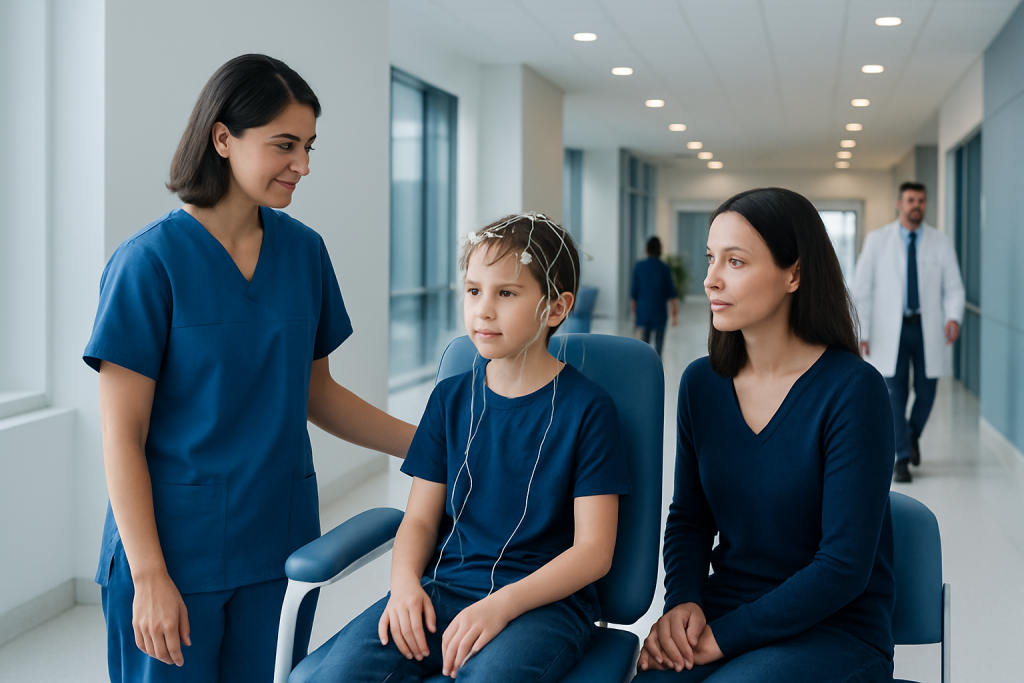
Pediatric neurophysiology tests electrical activity in the brain, nerves, and muscles to support diagnosis. Common reasons for testing include seizures, fainting-like spells, weakness, delayed development, and abnormal movements.
Key Takeaways
- Pediatric neurophysiology tests electrical activity in the brain, nerves, and muscles to support diagnosis.
- Common reasons for testing include seizures, fainting-like spells, weakness, delayed development, and abnormal movements.
- Many tests, such as EEG, are painless; some nerve and muscle tests may cause brief discomfort but are generally well tolerated.
- Results are interpreted together with the child’s history, examination, and sometimes imaging or laboratory tests.
- Parents can help by preparing the child calmly and following instructions about sleep, hair washing, meals, or medicines before the test.
Neurophysiology in children uses specialized tests to understand how the brain, nerves, and muscles are working. These tests can help explain seizures, developmental concerns, weakness, unusual movements, sleep-related events, and episodes that are difficult to diagnose from symptoms alone.
Overview: What neurophysiology in children means
Neurophysiology in children is the medical study of how the nervous system functions. It focuses on the electrical signals that allow the brain, spinal cord, nerves, and muscles to communicate. In pediatric care, these tests are used when a child has symptoms that may come from the nervous system, especially when the cause is not clear from a routine examination alone.
Common pediatric neurophysiology tests include electroencephalography (EEG), which records brain activity; nerve conduction studies (NCS), which measure how quickly nerves carry signals; electromyography (EMG), which assesses muscle and nerve function; and evoked potentials, which show how the brain responds to visual, hearing, or sensory stimulation. Some children may also have video EEG monitoring when doctors need to compare symptoms or events with brain activity.
These tests do not replace a doctor’s evaluation. Instead, they add objective information that can help confirm or rule out problems such as epilepsy, nerve injury, muscle disease, neuromuscular junction disorders, or developmental conditions affecting the nervous system. In many cases, neurophysiology helps distinguish neurological causes from non-neurological events.
When a child may need neurophysiology testing
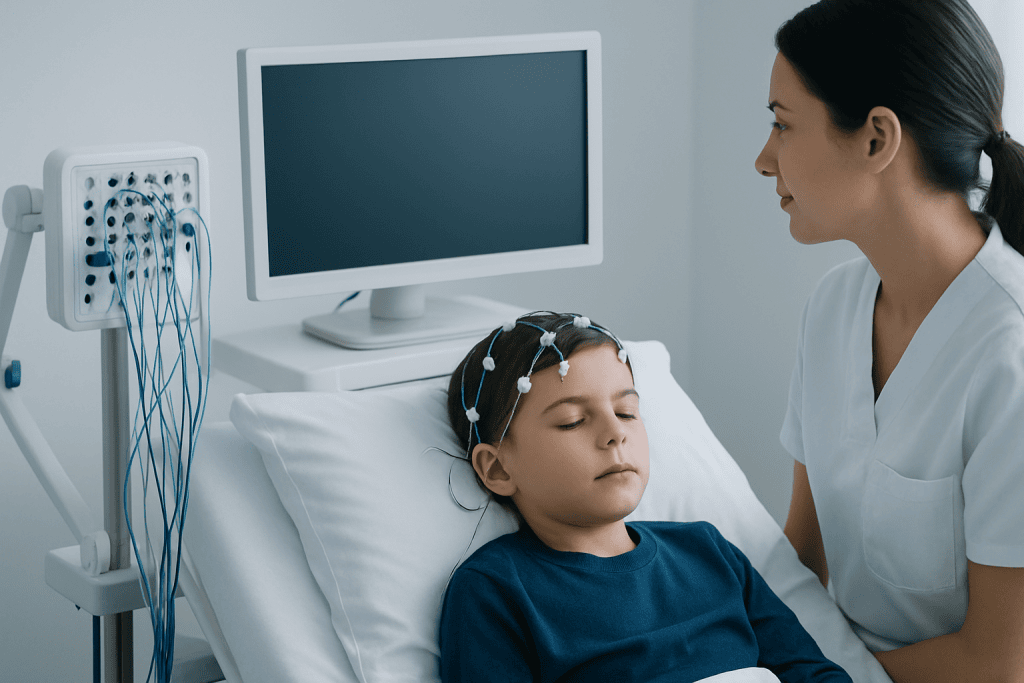
Doctors may recommend neurophysiology testing when a child has episodes that look like seizures, staring spells, sudden falls, jerking movements, unexplained fainting-like events, or periods of confusion. EEG is often used to assess whether unusual events are related to abnormal brain electrical activity. It can also help classify seizure types and guide treatment planning for children with suspected or confirmed epilepsy.
Testing may also be useful when a child has weakness, poor muscle tone, frequent tripping, delayed motor milestones, numbness, tingling, facial weakness, or muscle fatigue. In these situations, NCS and EMG may help identify whether the problem is mainly in the nerves, muscles, or the connection between them.
Children with developmental regression, sleep-related events, head injury symptoms, visual or hearing pathway concerns, or certain inherited neurological conditions may also benefit from neurophysiology studies. Not every child with these symptoms needs testing, but the tests can be especially helpful when the clinical picture is complex or when treatment decisions depend on a clear diagnosis.
Symptoms and conditions these tests can help evaluate
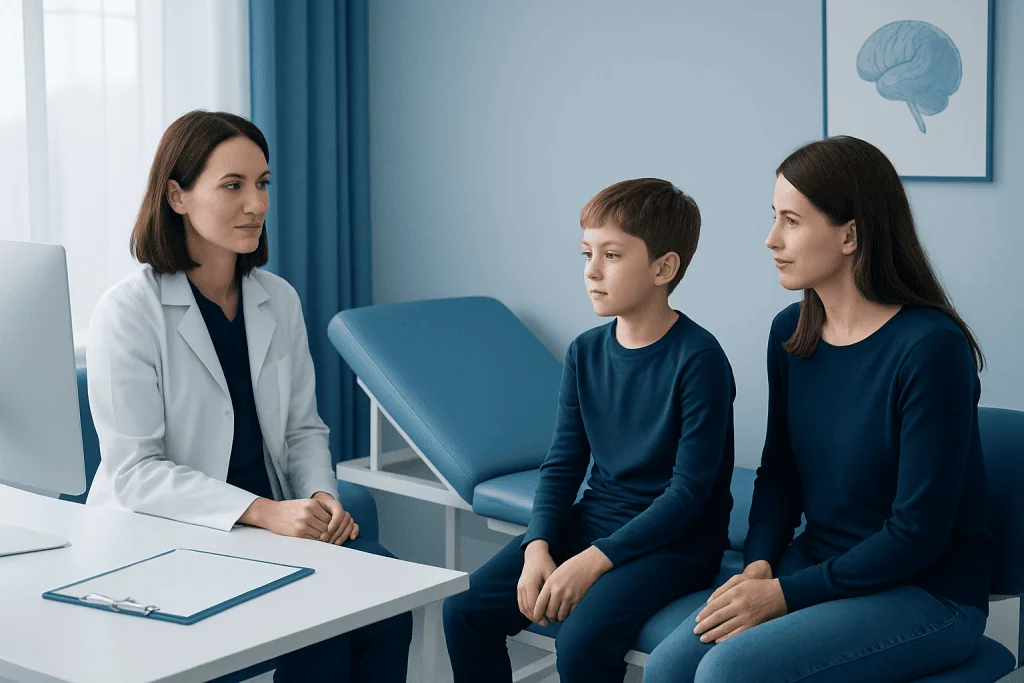
Pediatric neurophysiology can support evaluation of a wide range of symptoms. Some are brief events, such as a child becoming unresponsive or having unusual body movements. Others are ongoing problems, such as muscle weakness, delayed walking, tremor, poor coordination, or persistent sensory symptoms.
Conditions that may be investigated include seizure disorders, peripheral neuropathies, muscular disorders, motor neuron conditions, inflammatory nerve disease, and certain inherited neuromuscular syndromes. Neurophysiology can also help in the assessment of suspected neuromuscular diseases or functional episodes that resemble neurological events but have a different explanation.
- Possible seizure activity or unexplained staring spells
- Muscle weakness, floppy tone, or delayed motor milestones
- Numbness, tingling, burning, or sensory loss
- Abnormal movements, jerks, or tremor
- Sudden falls, collapse episodes, or sleep-related events
- Hearing, vision, or sensory pathway concerns in selected cases
The same symptom can have different causes depending on the child’s age, medical history, and examination. For that reason, neurophysiology results are always interpreted in context rather than on their own.
Types of neurophysiology tests used in children
EEG is one of the most common pediatric neurophysiology tests. Small sensors are placed on the scalp to record brain electrical activity. The test is painless, though the adhesive or paste may feel unfamiliar. A routine EEG may last under an hour, while sleep-deprived, ambulatory, or prolonged video EEG studies may be used if events are infrequent or difficult to classify. In some cases, doctors may advise EEG testing as the first step when seizures are suspected.
Nerve conduction studies involve small electrical stimulations applied to the skin over a nerve to measure how strongly and how fast signals travel. Electromyography may follow, using a very fine needle electrode to record electrical activity in selected muscles. These tests can feel briefly uncomfortable, but they provide valuable information about whether weakness or sensory symptoms come from nerve, muscle, or neuromuscular junction problems.
Evoked potentials are another group of tests. They measure the brain’s response to specific sensory input, such as sound, visual patterns, or touch. Depending on the child’s symptoms, doctors may recommend visual, auditory, or somatosensory studies. When needed, pediatric teams adapt the environment and pace to make testing more manageable for infants, children, and adolescents.
How doctors prepare for and interpret the testing
Preparation depends on the test. Before an EEG, parents are often asked to wash the child’s hair and avoid oils, sprays, or styling products. For some EEGs, partial sleep deprivation may be recommended to increase the chance of capturing meaningful brain activity. For nerve and muscle tests, children should usually eat normally unless the doctor gives different instructions, and they should wear comfortable clothing that allows access to the limbs.
Parents should tell the medical team about medicines, allergies, implanted devices, recent fever, skin problems, and whether the child is especially anxious or sensitive to touch. Bringing comfort items, snacks, and a familiar toy can help younger children cope better. Explaining the test in simple, honest language often reduces fear more effectively than promising that nothing unusual will happen.
Results are interpreted by a specialist who considers the child’s symptoms, examination findings, developmental history, family history, and any imaging or blood tests. A normal result does not always rule out a neurological condition, and an abnormal result may need further confirmation. Sometimes the next step includes imaging, sleep studies, genetic evaluation, or additional neurological assessment such as EMG testing or prolonged monitoring.
What treatment may follow the results
Neurophysiology itself does not treat a condition, but it helps guide treatment choices. If testing supports a diagnosis of epilepsy, care may involve anti-seizure medication, seizure safety planning, and follow-up with a pediatric neurologist. If there is evidence of a nerve or muscle disorder, treatment may include rehabilitation, medication, immune-based therapy in selected cases, respiratory or nutritional support, or referral to a specialized neuromuscular team.
Some children need only reassurance and observation if the test results suggest a benign or non-epileptic explanation for symptoms. Others may need additional tests to clarify the diagnosis. The goal is to avoid both under-treatment and unnecessary treatment by understanding the cause as accurately as possible.
When a structural brain problem, persistent seizures, or difficult-to-control symptoms are suspected, doctors may combine neurophysiology with advanced imaging or multidisciplinary review. Depending on the findings, care may include pediatric neurology care and, in selected situations, rehabilitation support to improve movement, strength, and daily function.
Helping a child before, during, and after the test
Children usually cope best when they know what to expect. Parents can explain that the test helps doctors learn how the brain, nerves, or muscles are working. It is often helpful to say whether the test is painless, such as EEG, or whether there may be short moments of discomfort, as with some nerve or muscle studies. Honest, calm preparation supports trust.
On the day of testing, practical steps can make a difference. Adequate rest, a favorite comfort object, and age-appropriate distraction such as music, stories, or videos may help. For infants and younger children, timing the appointment around feeding and naps can improve cooperation. If a child has sensory sensitivities, developmental differences, or severe anxiety, the team should know in advance so they can adapt the environment.
After the test, most children can return to normal activities right away. If a child had a needle EMG, there may be mild temporary soreness in the tested muscles. Parents should ask when results will be available and what symptoms should prompt earlier follow-up. If episodes continue, recording a video of the event, when safe and appropriate, can sometimes help the doctor interpret the findings.
When to see a doctor
A child should be assessed promptly if there are repeated unexplained spells, new weakness, loss of developmental skills, persistent numbness, worsening coordination, or unusual movements that interfere with daily life. Medical review is also important when teachers or caregivers notice episodes of staring, confusion, or sudden falls that the family has not seen at home.
Urgent medical attention is needed if a child has a first seizure, a prolonged seizure, repeated seizures without recovery in between, difficulty breathing, severe head injury, sudden inability to walk, or rapid progression of weakness. Any neurological symptom associated with high fever, severe headache, ongoing vomiting, or reduced alertness should also be evaluated without delay.
For families seeking specialist evaluation, Acibadem International’s multidisciplinary teams in JCI-accredited hospitals assess children with seizures, developmental concerns, and neuromuscular symptoms, including pediatric neurophysiology testing for international patients. A qualified pediatric neurologist or neurophysiologist can advise which tests are appropriate and how the results fit into the child’s overall care plan.
Frequently asked questions
Is neurophysiology testing safe for children?
Yes. Most pediatric neurophysiology tests are considered safe and are routinely used to evaluate neurological symptoms. EEG is painless, and while nerve conduction studies or EMG may cause brief discomfort, serious complications are uncommon when testing is performed by trained professionals.
Does an EEG always diagnose epilepsy?
No. An EEG can provide helpful evidence, but it does not diagnose epilepsy by itself. Some children with epilepsy may have a normal EEG between seizures, while some EEG changes can occur in children who do not have epilepsy.
Will my child need sedation for these tests?
Many children do not need sedation, especially for routine EEG. Whether sedation is considered depends on the child’s age, developmental level, and the type of test, but the team usually tries to use child-friendly preparation and reassurance first.
How long do pediatric neurophysiology tests take?
The timing depends on the test. A routine EEG may take less than an hour, while prolonged video EEG monitoring can last many hours or longer. Nerve conduction studies and EMG are usually shorter, but the duration varies with how many areas need evaluation.
What should parents do to prepare their child?
Preparation depends on the test, but parents are often asked to follow practical instructions such as washing the child’s hair before EEG or bringing loose clothing for limb testing. It also helps to explain the test simply, bring comfort items, and inform the team about medicines, sensory sensitivities, or anxiety.
Can a normal test result still mean something is wrong?
Yes, sometimes. A normal result does not always rule out a neurological condition, especially if symptoms happen only occasionally or outside the test period. Doctors interpret results together with the child’s symptoms, examination, and any other investigations.
References
- World Health Organization
- International League Against Epilepsy
- American Clinical Neurophysiology Society
- American Academy of Neurology
- National Institute of Neurological Disorders and Stroke
This article is for general information only and is not a substitute for professional medical advice. Please consult a qualified doctor about your individual situation.
Neurophysiology in Turkey — costs, top hospitals & a free quote
JCI-accredited · board-certified surgeons · reply within 24h
Add us as a Preferred Source to see more of our trusted health content across Google Search, AI Overviews and Discover.