Neuropsychological Testing for Children: When Learning or Behavior Needs Closer Evaluation

A child neuropsychological evaluation looks at thinking, learning, attention, language, memory, and behavior. Testing can help clarify why a child is struggling at school, home, or socially.
Key Takeaways
- A child neuropsychological evaluation looks at thinking, learning, attention, language, memory, and behavior.
- Testing can help clarify why a child is struggling at school, home, or socially.
- The process is individualized and usually includes interviews, questionnaires, and age-appropriate tasks.
- Results do not simply give a score; they guide treatment, school accommodations, and daily strategies.
- An evaluation is especially helpful when concerns are persistent, complex, or not explained by routine assessment alone.
Neuropsychological testing for children helps explain how a child thinks, learns, remembers, pays attention, and manages emotions or behavior. It can provide a clearer picture of strengths and challenges, helping families, schools, and clinicians plan effective support.
Overview: What Neuropsychological Testing for Children Assesses
Neuropsychological testing for children is a detailed evaluation of how a child’s brain-based skills are working in everyday life. It examines areas such as attention, memory, language, problem-solving, visual-spatial skills, processing speed, executive functioning, academic abilities, and emotional or behavioral regulation. The goal is not to label a child, but to understand how they learn and what support may help them succeed.
These evaluations are typically performed by a pediatric neuropsychologist or another clinician with specialized training in child development, brain-behavior relationships, and standardized testing. The assessment is tailored to the child’s age, developmental stage, medical history, and the concerns raised by parents, teachers, or doctors. Young children, school-age children, and adolescents may all be assessed in different ways.
A neuropsychological evaluation is often more in-depth than routine school testing or a brief office screening. It does not focus on intelligence alone. Instead, it looks at patterns across multiple skills to help explain why a child may be having difficulty with learning, attention, behavior, mood, or day-to-day functioning.
When a Child May Need a Closer Evaluation
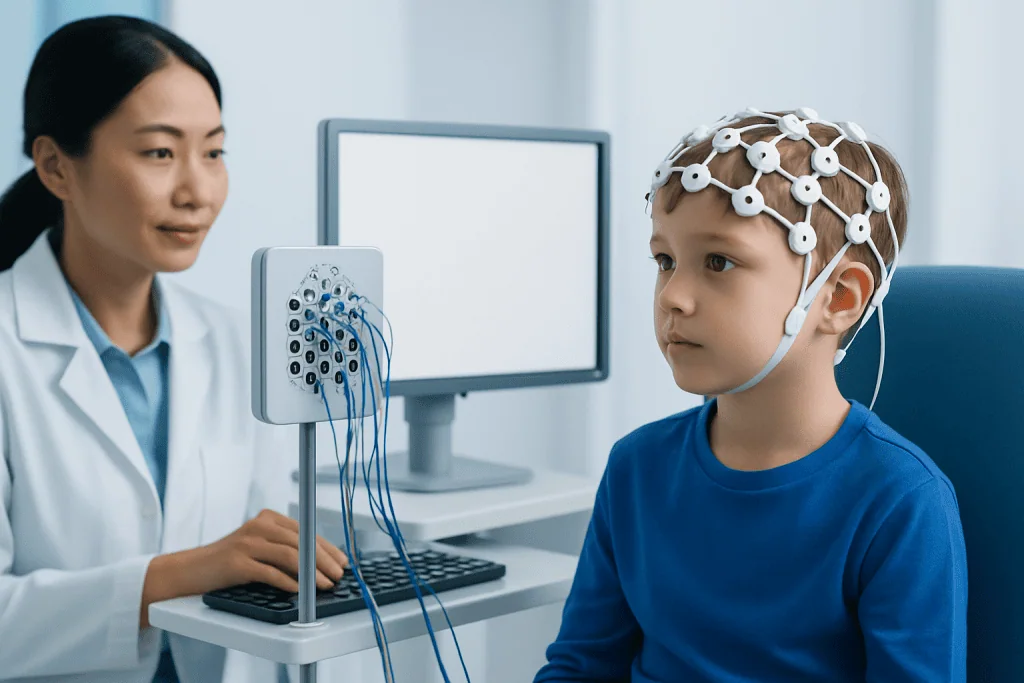
Families and clinicians may consider neuropsychological testing when a child’s learning or behavior concerns are ongoing, unclear, or affecting school, home life, friendships, or confidence. Sometimes a child seems bright but struggles to keep up academically. In other cases, emotional outbursts, distractibility, forgetfulness, or inconsistent performance raise questions that deserve a closer look.
Common reasons for referral include suspected attention-deficit/hyperactivity disorder, learning disorders, developmental differences, language-related challenges, memory problems, and difficulties after a medical event or neurological condition. Testing may also help when a child has a known diagnosis but needs a clearer picture of current functioning and support needs.
- Falling behind in reading, writing, or math despite effort or tutoring
- Problems with focus, organization, planning, or impulse control
- Unexplained changes in school performance
- Difficulty following multi-step instructions or remembering information
- Behavioral concerns, emotional regulation difficulties, or social struggles
- Concerns after concussion, epilepsy, prematurity, genetic conditions, or other neurological or medical issues
Not every child with school or behavior concerns needs full neuropsychological testing. However, when questions are complex or progress has been limited, a more comprehensive evaluation can provide useful direction for care and educational planning.
What Symptoms or Challenges Testing Can Help Clarify

Children do not always describe their difficulties clearly, and similar behaviors can have different causes. For example, a child who avoids homework may be dealing with attention problems, anxiety, a language disorder, a specific learning disorder, sleep issues, or frustration caused by an unmet need. Neuropsychological testing helps sort out these possibilities by looking closely at patterns of strengths and weaknesses.
The evaluation may help clarify concerns such as slow processing speed, poor working memory, trouble understanding spoken language, weak reading skills, or difficulty with flexibility and self-control. It can also identify areas in which the child is doing well, which is just as important for planning support. A child with reading challenges, for example, may have strong reasoning or visual problem-solving that can be built upon.
In some situations, testing contributes to the assessment of conditions such as ADHD, autism spectrum disorder, epilepsy, traumatic brain injury, or other developmental and neurological conditions. It may also be useful when symptoms overlap across several areas and a clearer explanation is needed before choosing treatment or school accommodations.
How the Evaluation Process Works
A child neuropsychological evaluation usually begins with a detailed clinical interview. Parents or caregivers are asked about the child’s development, medical history, school progress, family history, behavior, mood, sleep, and daily functioning. Information from teachers and other professionals may also be requested, because children often function differently across settings.
The testing itself typically involves structured, age-appropriate activities completed one-on-one with the examiner. A child may be asked to answer questions, solve puzzles, remember words or pictures, read, write, draw, sort information, or perform tasks that measure attention and mental flexibility. Breaks are usually provided, and sessions may be completed over one or more visits depending on the child’s age, stamina, and needs.
Standardized questionnaires completed by parents, teachers, and sometimes the child can add valuable information about attention, executive function, emotions, behavior, and adaptive skills. The clinician then interprets all of the findings together rather than relying on any single test score.
Afterward, families usually receive a report and feedback session explaining the results in practical terms. This discussion often includes recommendations for school supports, therapies, follow-up medical care, and home strategies. In some cases, the evaluation may lead to referral for additional services such as pediatric neurology, speech and language therapy, occupational therapy, or mental health care.
Diagnosis, Interpretation, and What the Results Mean
Neuropsychological testing does not work like a simple pass-or-fail exam. The clinician compares the child’s performance with age-based expectations and looks at how different abilities relate to one another. A child may have average overall reasoning but still have meaningful weaknesses in reading fluency, sustained attention, or executive functioning that affect daily life.
Results can help confirm or rule out certain conditions, but they are most valuable when used to guide decision-making. The report may identify patterns consistent with specific learning disorder, attention difficulties, language impairment, developmental delays, or challenges related to medical or neurological conditions. It may also show that emotional stress, sleep difficulties, or another health issue is contributing to the child’s struggles.
Because development changes over time, results represent the child’s functioning at that point in life. Some children benefit from repeat testing later, especially if they are very young, if symptoms change, or if there has been an illness, injury, or treatment that may affect the brain. A careful interpretation helps families understand both immediate needs and longer-term planning.
Treatment Planning and Support After Testing
The most helpful part of neuropsychological testing for children is often what comes next. Findings can guide individualized support at school, home, and in healthcare settings. Recommendations may include classroom accommodations, changes in teaching approach, tutoring, behavioral strategies, counseling, therapy services, or medical follow-up depending on the child’s needs.
For school-related concerns, the report may support discussions about individualized education plans, learning accommodations, or targeted interventions. Practical examples might include extra time for tasks, reduced distraction during testing, step-by-step instructions, assistive technology, or direct reading and writing support. Families can often share the report with the school team to help create a more effective plan.
If symptoms suggest a treatable medical, developmental, or emotional condition, the child may be referred for further evaluation or therapy. Depending on the situation, this may involve child and adolescent psychiatry, psychology, speech and language therapy, or rehabilitation services. Some children also benefit from targeted follow-up for related concerns such as learning disabilities or developmental conditions that affect attention and self-regulation.
Near the end of the care pathway, families may seek multidisciplinary support. Acibadem International’s specialists in child neurology, neuropsychology, and related fields at JCI-accredited hospitals evaluate and treat international patients when a coordinated approach is needed.
How Parents Can Prepare and Support Their Child
Parents can help by explaining the evaluation in calm, simple language. It may be helpful to tell the child that the visit is designed to understand how they learn best, not to judge them or catch them making mistakes. Children often do better when they know there will be activities, questions, and breaks, and that some tasks may feel easy while others may feel hard.
Before the appointment, families should bring relevant medical records, school reports, previous evaluations, and a list of concerns and questions. Good sleep, regular meals, hydration, glasses or hearing aids if used, and familiar comfort items for younger children can also support a smoother testing day. It is usually best to follow the clinic’s instructions about medications, especially if the child takes medicine for attention or mood.
After the evaluation, parents can support progress by focusing on recommendations one step at a time. A child benefits most when home, school, and healthcare professionals share the same goals. Encouragement, realistic expectations, and recognition of strengths can make a meaningful difference in confidence and long-term outcomes.
When to Speak With a Doctor or Specialist
Parents should consider speaking with a pediatrician, child neurologist, psychologist, or school professional if concerns about learning, attention, memory, or behavior are persistent or worsening. Early evaluation can be especially helpful when a child is becoming discouraged, avoiding schoolwork, or having increasing difficulty with social relationships or emotional control.
Medical review is also important when learning or behavior changes appear suddenly, follow a head injury, or occur along with headaches, seizures, developmental regression, sleep problems, or other neurological symptoms. In these situations, testing may be one part of a broader assessment rather than the first or only step.
A timely referral does not mean something severe is present. In many cases, it simply allows the child’s strengths and challenges to be understood sooner so support can begin earlier and more effectively. Families should seek guidance from a qualified clinician who can recommend the most appropriate type of evaluation for their child.
Frequently asked questions
What is neuropsychological testing for children?
It is a detailed evaluation of thinking, learning, attention, memory, language, behavior, and emotional functioning. The purpose is to understand how a child’s brain-based skills affect everyday life and to guide support at home, school, and in healthcare.
How is this different from school testing?
School evaluations often focus on academic performance and eligibility for educational services. Neuropsychological testing is usually broader and more detailed, looking at multiple cognitive and behavioral skills together to explain why a child is having difficulty.
How long does a child neuropsychological evaluation take?
The length varies depending on the child’s age, needs, and the questions being asked. Some evaluations are completed in one day, while others are divided into shorter sessions to reduce fatigue and get the most accurate results.
Can testing diagnose ADHD or a learning disorder?
Testing can provide important evidence that supports diagnosis, but it is usually interpreted together with interviews, medical history, observations, and reports from parents and teachers. A diagnosis is based on the full clinical picture, not a single test result.
Should parents prepare a child in a special way?
It helps to explain the visit in a reassuring and simple way, emphasizing that the goal is to learn how the child learns best. Good sleep, regular meals, and bringing school records or prior reports can also make the process smoother.
What happens after the results are discussed?
Families usually receive recommendations tailored to the child’s needs. These may include school accommodations, therapy, behavioral strategies, follow-up with specialists, or monitoring over time if concerns are still developing.
References
- American Academy of Pediatrics
- American Psychological Association
- National Institute of Neurological Disorders and Stroke
- Centers for Disease Control and Prevention
- National Institute of Mental Health
This article is for general information only and is not a substitute for professional medical advice. Please consult a qualified doctor about your individual situation.
Explore treatments in Turkey — costs, top hospitals & a free quote
JCI-accredited · board-certified surgeons · reply within 24h
Add us as a Preferred Source to see more of our trusted health content across Google Search, AI Overviews and Discover.