Newborn Sneezing a Lot: What Patients Need to Know

Frequent sneezing alone is commonly a normal newborn reflex and does not necessarily mean a baby has a cold. Newborns have narrow nasal passages and breathe mainly through their noses, so even small amounts of mucus can trigger sneezing.
Key Takeaways
- Frequent sneezing alone is commonly a normal newborn reflex and does not necessarily mean a baby has a cold.
- Newborns have narrow nasal passages and breathe mainly through their noses, so even small amounts of mucus can trigger sneezing.
- Fever, labored breathing, poor feeding, unusual sleepiness, or fewer wet diapers require prompt medical assessment.
- Saline nose drops and gentle suction may help congestion, but over-the-counter cold medicines should not be given to newborns.
- Smoke, fragrances, dry air, and household irritants can make nasal symptoms more noticeable.
Newborn sneezing a lot is usually normal, particularly in the first weeks of life. Sneezing helps babies clear mucus, milk droplets, dust, and other mild irritants from their very small nasal passages; however, it should be considered alongside feeding, breathing, temperature, and overall behavior.
Why Newborns Sneeze So Often
When a newborn is sneezing a lot but is otherwise feeding well, breathing comfortably, and behaving normally, it is usually not a cause for concern. Sneezing is a protective reflex that clears the nose of mucus, dried secretions, lint, dust, milk, or other tiny particles. A baby may sneeze several times in a row, especially after waking, feeding, or being moved between environments.
Newborn noses are much smaller than adult noses. Even a small amount of normal nasal mucus can make the nose feel blocked and trigger a sneeze. Babies also breathe mainly through their noses in early life, so their nasal reflexes are particularly active. Sneezing by itself does not confirm that a newborn has an infection or allergy.
It can be helpful for parents and caregivers to look at the whole picture rather than counting sneezes. A comfortable baby with normal skin color, normal feeding, regular wet diapers, and no fever is likely showing a normal reflex. If sneezing occurs with new concerning symptoms, it is sensible to contact a pediatric clinician.
Normal Sneezing Versus Signs of a Cold
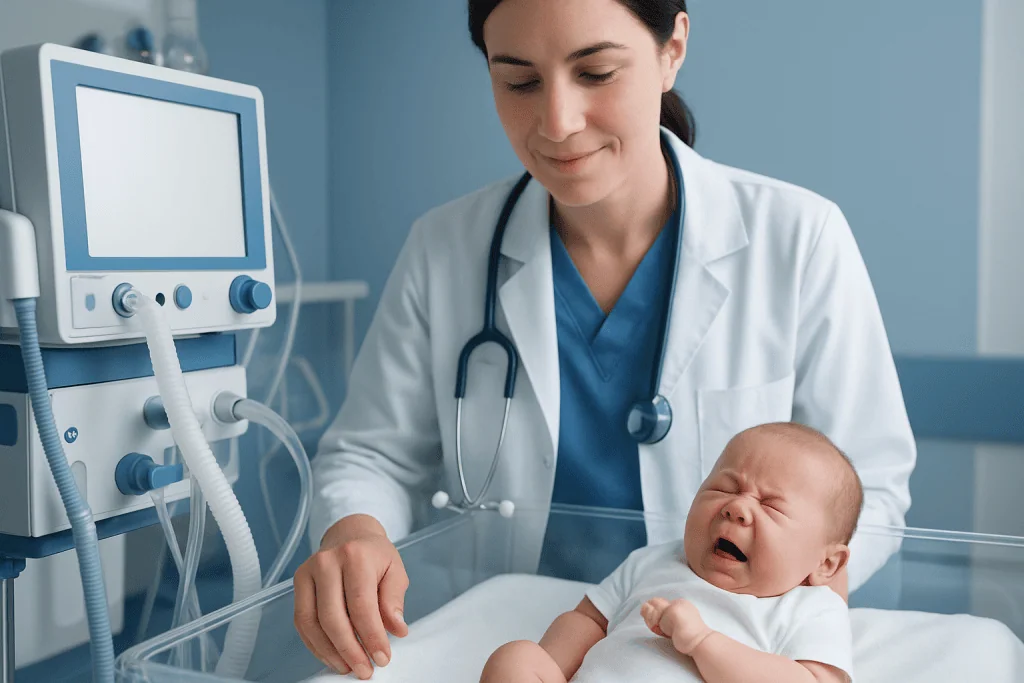
A newborn may have occasional stuffiness, clear nasal mucus, or brief sneezing without being ill. Dry indoor air, changing temperatures, and exposure to mild irritants can all make these normal symptoms more noticeable. Some babies also sneeze after feeds because small amounts of milk or saliva can reach the back of the nose.
A viral upper respiratory infection, often called a cold, may cause sneezing together with persistent congestion, a runny nose, cough, irritability, or reduced interest in feeding. Nasal discharge may begin clear and later become thicker; mucus color alone does not reliably show whether an illness is serious or whether antibiotics are needed. Most childhood colds are caused by viruses and do not improve with antibiotics.
Allergies are a less common explanation for persistent nasal symptoms in a newborn. Seasonal allergies usually develop later, after repeated exposure to environmental allergens. Still, a clinician can assess ongoing symptoms and consider whether irritants, infection, feeding-related concerns, or another condition may be contributing.
Common Triggers and Possible Causes
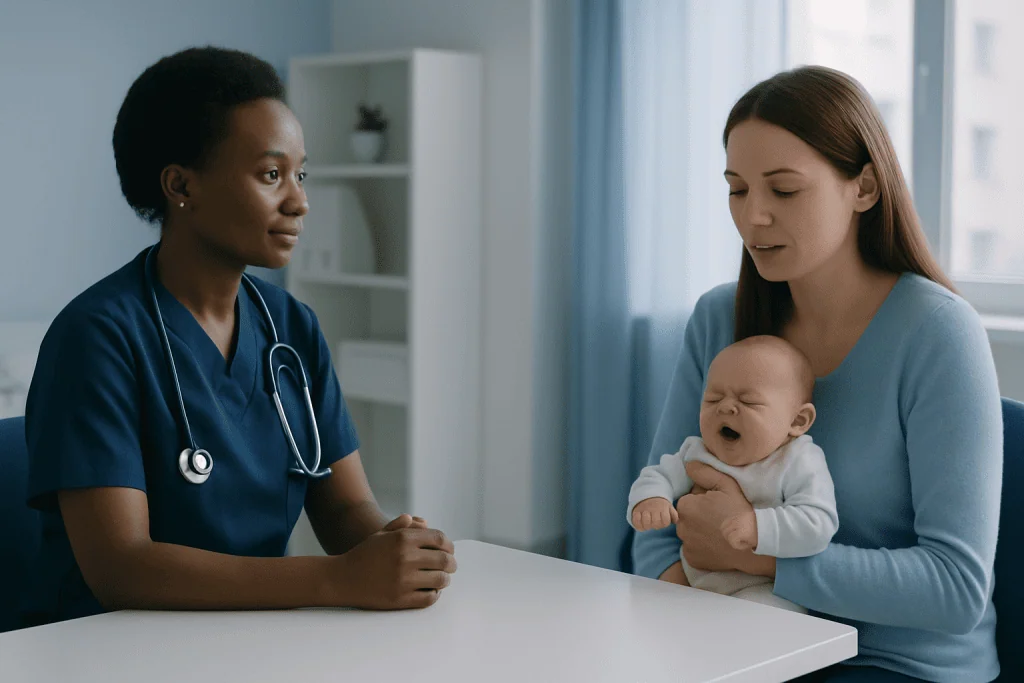
Normal nasal clearing is the most frequent reason for newborn sneezing. The nose constantly produces mucus to trap particles, and newborns cannot blow their noses. Sneezing is one of the ways their bodies keep the nasal passages clear.
Environmental triggers can also play a role. Tobacco smoke, vaping aerosols, incense, scented candles, perfume, strong cleaning products, air fresheners, and dust can irritate a newborn’s sensitive airways. Very dry air may thicken nasal mucus, while a sudden change from a warm to cool setting can briefly stimulate the sneeze reflex.
Less commonly, frequent sneezing may occur with a respiratory infection. A newborn can catch viruses from close contacts, including older children and adults who have mild symptoms. Hand hygiene, limiting close contact with people who are unwell, and keeping routine vaccinations up to date for household members according to local guidance can reduce exposure.
A clinician may consider other causes if a baby has persistent noisy breathing, poor weight gain, repeated choking during feeds, or symptoms present from birth. These features do not necessarily mean there is a serious problem, but they deserve individualized medical review.
Symptoms That Matter Alongside Sneezing
Breathing and feeding are the most important things to observe when a newborn has nasal symptoms. A mildly stuffy nose can make feeding slower because babies need to pause more often to breathe. However, a baby should generally still be able to feed, wake for feeds, and produce regular wet diapers.
Signs of increased work of breathing include fast breathing that does not settle, widening of the nostrils, grunting, pulling in of the skin between or below the ribs, or a persistent high-pitched sound when breathing in. Blue, gray, or unusually pale lips or skin are emergency signs. Parents should not rely on a consumer device or app alone if a baby appears unwell.
Behavior changes can also be important. A newborn who is unusually sleepy, difficult to wake, weakly feeding, persistently inconsolable, vomiting repeatedly, or having noticeably fewer wet diapers should be assessed promptly. These signs can occur with different illnesses and should not be attributed to congestion alone.
- Comfortable breathing, normal feeding, and no fever generally support a non-urgent cause of sneezing.
- Congestion plus cough or reduced feeding may suggest a viral illness and merits advice from a pediatric clinician.
- Breathing difficulty, color changes, or a fever in a young infant require urgent medical attention.
Safe Ways to Help a Congested Newborn
If a newborn seems congested, simple measures are usually best. Sterile saline nose drops or spray made for infants may loosen nasal mucus before a feed or sleep. A bulb syringe or nasal aspirator can then be used gently if mucus is clearly interfering with breathing or feeding. Frequent or forceful suction can irritate the lining of the nose, so it should be used only when needed.
Keeping the air free from smoke and strong scents is important. If the home air is dry, a clean cool-mist humidifier may improve comfort. The humidifier should be emptied, cleaned, and dried according to the manufacturer’s instructions to reduce mold and germ buildup.
For sleep, babies should always be placed on their backs on a firm, flat sleep surface with no pillows, positioners, loose blankets, or toys. Elevating a mattress, using a reclined seat for routine sleep, or placing objects under the baby’s head is not recommended because these approaches can create unsafe sleep conditions.
Over-the-counter cough and cold medicines, decongestants, mentholated rubs, and herbal remedies should not be given to a newborn unless specifically advised by a qualified clinician. Caregivers should also avoid using essential oils near the baby’s face, as strong fragrances may irritate the airways.
When to Seek Medical Care
Parents should seek urgent medical care for a newborn with trouble breathing, blue or gray coloring, pauses in breathing, marked chest retractions, or an inability to feed because of breathing difficulty. Emergency care is also needed if the baby is very difficult to wake, appears limp, has a seizure, or seems severely unwell.
A rectal temperature of 100.4°F (38°C) or higher in a baby younger than 3 months needs prompt medical evaluation, even if sneezing and congestion are the only other symptoms. Young infants can become unwell quickly, and fever should not be managed at home without speaking to a clinician. A low temperature, especially if the baby seems unwell, also warrants medical advice.
Contact a pediatric clinician the same day if sneezing is accompanied by worsening cough, poor feeding, vomiting, fewer wet diapers, persistent irritability, or a change in alertness. It is also appropriate to ask for advice if nasal symptoms last, recur often, or cause concern. A clinician can examine the baby and explain whether monitoring, supportive care, or further testing is appropriate.
Protecting Newborn Nasal and Respiratory Health
Not every episode of sneezing can be prevented, because sneezing is a normal body function. However, families can reduce avoidable irritation by maintaining a smoke-free home and car, choosing fragrance-free household products where possible, and keeping bedding and soft furnishings reasonably clean. Visitors should wash their hands before touching the baby and postpone close visits if they have cough, fever, or other infectious symptoms.
Feeding support is also valuable. Whether a baby is breastfed, formula-fed, or receives a combination of feeds, regular feeding and wet diapers are useful signs of wellbeing. If congestion makes feeds difficult, offering shorter, more frequent feeds after gentle saline use may help, but families should seek advice if intake falls noticeably.
Routine newborn checkups provide an opportunity to discuss breathing noises, feeding patterns, sleep, and any symptoms that worry caregivers. Acibadem International’s multidisciplinary specialists and JCI-accredited hospitals can assess newborn health concerns for international patients when medical evaluation is needed.
Frequently asked questions
Is it normal for a newborn to sneeze many times a day?
Yes. Frequent sneezing is often normal in newborns because it helps clear their small nasal passages of mucus and particles. If the baby is breathing comfortably, feeding well, has no fever, and seems otherwise well, sneezing alone is usually reassuring.
Does newborn sneezing mean my baby has a cold?
Not necessarily. Sneezing can happen without infection, especially after feeds or in dry or mildly irritating environments. A cold is more likely when sneezing occurs with ongoing congestion, cough, changes in feeding, irritability, or fever.
Can newborns have allergies that cause sneezing?
Environmental allergies are less common in newborns than in older children. Strong scents, smoke, dust, and dry air may irritate the nose and cause sneezing without being a true allergy. Persistent symptoms should be discussed with a pediatric clinician.
What can be used for a newborn's blocked nose?
Sterile saline drops made for infants and gentle suction can help if mucus is affecting feeding or comfort. Over-the-counter cold medicines, decongestants, and medicated nasal sprays should not be used unless a clinician specifically recommends them.
When is a fever dangerous in a newborn?
A rectal temperature of 100.4°F (38°C) or higher in a baby younger than 3 months requires prompt medical assessment. Families should contact a clinician urgently rather than trying to treat the fever at home.
Should a congested newborn sleep with the mattress raised?
No. Babies should sleep on their backs on a firm, flat surface without pillows, wedges, or mattress elevation. These products and positions can make sleep unsafe and are not recommended for managing congestion.
References
- American Academy of Pediatrics
- Centers for Disease Control and Prevention
- National Health Service
- Mayo Clinic
- World Health Organization
This article is for general information only and is not a substitute for professional medical advice. Please consult a qualified doctor about your individual situation.
Explore treatments in Turkey — costs, top hospitals & a free quote
JCI-accredited · board-certified surgeons · reply within 24h
Add us as a Preferred Source to see more of our trusted health content across Google Search, AI Overviews and Discover.