Non Union Fibula Fracture Treatment: How It Works, Results and What to Expect

A fibula nonunion means the fracture has not healed as expected over time and may require further evaluation. Treatment aims to create a stable healing environment, restore alignment and address causes such as inadequate blood supply, movement or infection.
Key Takeaways
- A fibula nonunion means the fracture has not healed as expected over time and may require further evaluation.
- Treatment aims to create a stable healing environment, restore alignment and address causes such as inadequate blood supply, movement or infection.
- Surgery may involve fixation with plates and screws, removal of unhealthy tissue and, when needed, bone grafting.
- Recovery depends on fracture location, the procedure performed, bone quality, smoking status and adherence to rehabilitation guidance.
- New or worsening pain, swelling, deformity, fever or wound drainage should be assessed promptly.
Non union fibula fracture treatment is tailored to why the bone has not healed, and may include improving stability, using bone graft material, addressing infection or correcting factors that slow healing. Most people need assessment by an orthopedic specialist to determine whether monitoring, nonsurgical support or surgery is the safest approach.
Overview: How Non Union Fibula Fracture Treatment Works
Non union fibula fracture treatment helps a broken fibula heal when healing has stalled or has not occurred within the expected period. The approach begins with identifying the reason for nonunion, then improving the conditions needed for bone repair. This may involve protecting the leg from excess load, correcting nutritional or medical factors, treating infection, or performing surgery to stabilize the fracture and add bone-forming material.
The fibula is the smaller bone on the outside of the lower leg. It contributes to ankle stability, particularly near its lower end, called the lateral malleolus. A nonunion can occur after an isolated fibula fracture or as part of a more complex ankle or lower-leg injury. Some nonunions cause little discomfort, while others lead to ongoing pain, ankle instability or difficulty returning to daily activities.
Orthopedic care is individualized because not every delayed-healing fibula fracture requires an operation. However, persistent symptoms, movement at the fracture site, poor alignment or an unstable ankle may make orthopedic surgery an appropriate option.
Symptoms, Causes and Who May Need Treatment
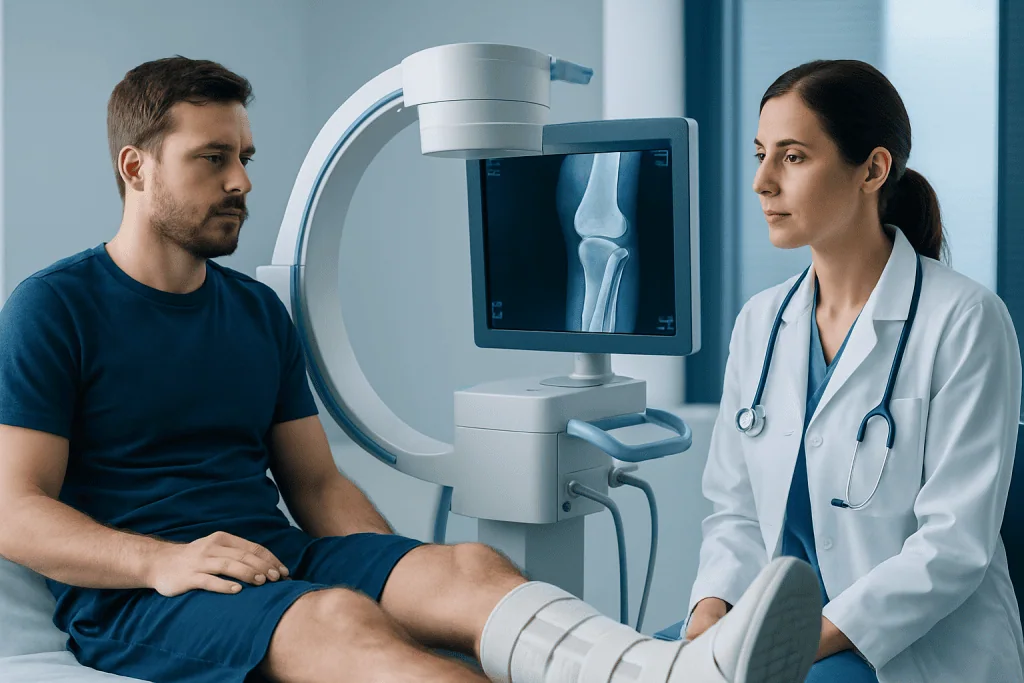
A fibula nonunion may cause ongoing pain at the original fracture site, tenderness when pressure is applied, swelling after activity or a feeling that the ankle is weak or unstable. Some people notice pain while walking, climbing stairs or standing for prolonged periods. In certain cases, imaging identifies a nonunion before symptoms become severe.
Bone healing depends on a combination of stability, blood supply and the body’s ability to make new bone. A fracture may fail to unite when there is too much movement between the bone ends, a gap at the fracture site, significant soft-tissue damage, reduced blood flow, infection or poor alignment. Smoking and nicotine exposure can interfere with healing. Diabetes, poor nutrition, vitamin deficiencies, certain medicines and inflammatory or metabolic bone conditions may also contribute.
People may be candidates for active treatment when imaging confirms poor healing and they have persistent pain, functional limitations, ankle instability or a fracture pattern unlikely to heal without support. A specialist will also consider the person’s general health, activity needs, skin and soft-tissue condition, prior operations and whether infection is possible.
- Hypertrophic nonunion: the body is attempting to heal, but the fracture often lacks enough stability.
- Atrophic nonunion: there is limited new bone formation and the area may need biological support, such as bone grafting.
- Infected nonunion: infection must be identified and treated alongside fracture stabilization.
Diagnosis and Planning the Right Approach

Diagnosis starts with a review of the injury, previous treatment, symptoms and medical history. The orthopedic clinician examines the leg and ankle for localized tenderness, alignment, movement at the fracture site, circulation, nerve function and signs of infection. They may ask about smoking or nicotine use, medications, diabetes and previous wound concerns because these details can affect treatment planning.
Standard X-rays are usually the first imaging test. They can show whether bridging bone has formed, whether fixation hardware remains intact and whether the fibula and ankle are aligned. CT scanning may provide a more detailed view when X-rays do not clearly show the extent of union. Blood tests may be considered when infection, nutritional problems or metabolic bone conditions are suspected.
The care team also assesses the ankle joint itself. A fibula fracture near the ankle can affect ankle stability, and treatment decisions may differ if ligaments, the syndesmosis or the joint surface are involved. Related assessment and rehabilitation principles may also apply to ankle fractures, especially when pain or instability affects walking.
Procedure: Step-by-Step Non Union Fibula Fracture Treatment
When surgery is recommended, its purpose is to give the fracture both mechanical stability and a healthy biological environment for healing. The exact operation depends on fracture location, the type of nonunion, prior hardware and whether infection or deformity is present. It is typically performed under anesthesia in a hospital setting.
First, the surgeon accesses the fracture through an incision planned to protect nearby skin, nerves and blood vessels. Scar tissue or nonviable tissue between the bone ends may be carefully removed, a process called debridement. The bone surfaces may then be refreshed to expose healthy bleeding bone, which supports the healing response.
Next, the surgeon restores appropriate alignment and stabilizes the fibula, commonly using a plate and screws. In selected cases, different fixation methods may be used. If there is a gap, poor bone biology or an atrophic nonunion, bone graft material may be placed at the site. The graft may come from the patient’s own bone, donated bone or another medically suitable source. If infection is identified, tissue samples are collected and treatment can include targeted antibiotics and, sometimes, staged surgery.
After fixation, the wound is closed and the leg may be placed in a splint, boot or cast. The plan may include a period without weight bearing or with limited weight bearing. Follow-up appointments and repeat X-rays help the team judge healing and guide safe progression in activity.
Benefits, Risks and Recovery Timeline
The potential benefit of nonunion treatment is improved fracture healing, pain reduction, better ankle stability and a safer return to daily movement. Successful healing can also reduce the risk of ongoing abnormal motion at the fracture site and protect function around the ankle. Results vary, and healing is influenced by the cause of nonunion, bone and soft-tissue health, infection status and following the recovery plan.
All surgery has risks. These include bleeding, blood clots, anesthesia-related problems, wound-healing difficulty, infection, nerve or blood-vessel injury, irritation from hardware, persistent pain, stiffness, repeat nonunion or a need for further procedures. The surgeon discusses individual risks before treatment and explains ways to reduce them, such as stopping nicotine use and managing chronic health conditions.
Recovery is gradual. In the first days and weeks, the focus is on wound care, swelling control, pain management and protecting the repair. Weight-bearing restrictions vary and must be followed carefully; advancing too quickly can jeopardize healing. Follow-up imaging is commonly used over the following months to check for new bone formation.
Physical therapy may begin with safe movement and later progress to strength, balance, gait and ankle mobility exercises. physical therapy and rehabilitation can help people rebuild function while respecting the surgeon’s restrictions. Full recovery may take several months or longer, particularly after complex injuries or revision surgery.
Will a Nonunion Fracture Eventually Heal?
A nonunion fracture may not heal on its own without a change in treatment, particularly when the fracture is unstable, there is a gap between bone ends, blood supply is limited or infection is present. Some fractures that appear slow to heal are described as delayed unions and can still progress with time and appropriate protection. A confirmed nonunion generally needs specialist review to determine why healing has stopped.
The outlook can be favorable when the underlying cause is corrected. Stable fixation, bone grafting when appropriate, treatment of infection and attention to factors such as nicotine use, nutrition and diabetes management can improve the environment for healing. A clinician can explain whether continued observation is reasonable or whether treatment is advisable.
How Long Does It Take for a Non-Displaced Fibula Fracture to Heal?
A straightforward, non-displaced fibula fracture often shows substantial healing within several weeks, although the exact timeframe differs by fracture location, age, health and whether the ankle is stable. People may need longer before they can return comfortably to impact activities, sports or physically demanding work. Follow-up X-rays and clinical examination are more reliable than symptoms alone for deciding when activity can increase.
If a non-displaced fracture remains painful or does not show expected progress on imaging, the clinician may look for factors delaying union. It is important not to remove a boot, cast or activity restriction early without medical advice, even if pain has improved. A rehabilitation plan can be adjusted as healing develops.
Can You Walk With a Nonunion Fracture?
Some people can walk with a fibula nonunion, especially if the fracture is in a less weight-bearing area and the ankle remains stable. However, being able to walk does not mean the bone has healed or that walking is safe at all activity levels. Walking may worsen pain, increase swelling or place stress on an unstable fracture or fixation device.
Weight-bearing guidance should come from the treating orthopedic team. Depending on the injury and treatment stage, a person may need crutches, a walker, a protective boot or a period of no weight bearing. Sudden increase in pain, a new sense of instability or difficulty bearing weight should be reported promptly.
How Painful Is a Nonunion Fracture?
Pain from a nonunion fracture varies widely. It may be a persistent ache, sharp pain with movement or weight bearing, localized tenderness, or soreness and swelling after activity. Some people have relatively mild symptoms despite an imaging-confirmed nonunion, while others experience substantial limitations in walking, work or sleep.
Increasing pain is not something to ignore, particularly when accompanied by redness, warmth, fever, drainage, numbness, a change in foot color or worsening swelling. Pain can be managed with a clinician-guided plan, but treating the cause of the nonunion is important when pain reflects ongoing instability or another complication.
When to Seek Medical Care
Medical assessment is important when pain after a fibula fracture persists beyond the expected recovery period, returns after initial improvement or prevents normal walking and daily activities. A person should arrange timely review if they notice ongoing swelling, tenderness directly over the fracture, a feeling of movement or instability, or concerns that the ankle is not recovering as expected.
Urgent medical care is needed for severe or rapidly worsening pain, new deformity, inability to bear weight after a change in symptoms, fever, wound drainage, spreading redness, a cold or pale foot, or new numbness and weakness. These signs do not always indicate a serious complication, but they require prompt evaluation.
At Acibadem International, multidisciplinary orthopedic specialists at JCI-accredited hospitals assess and treat complex fracture-healing concerns for international patients, coordinating imaging, surgery and rehabilitation when needed.
Frequently asked questions
What is a fibula fracture nonunion?
A fibula fracture nonunion occurs when a broken fibula does not heal within the anticipated time or shows no further progress toward healing. Diagnosis is based on symptoms, examination findings and imaging, rather than on a single timetable alone. An orthopedic specialist can determine whether it is delayed healing or a true nonunion.
Does every fibula nonunion need surgery?
No. Some cases can be monitored or managed with protection, activity changes and treatment of factors that may interfere with bone healing. Surgery is more likely to be considered when there is pain, instability, poor alignment, a gap at the fracture site, failed fixation or suspected infection.
What surgery is used for non union fibula fracture treatment?
Surgery often involves cleaning the nonunion site, restoring alignment and stabilizing the bone with hardware such as a plate and screws. Bone grafting may be added when extra biological support is needed. If infection is present, the treatment plan may require tissue testing, antibiotics and sometimes more than one procedure.
Can smoking affect fibula fracture healing?
Yes. Smoking and other nicotine products can reduce blood flow and interfere with the processes involved in bone and wound healing. Stopping nicotine use before and after treatment is one of the important steps a care team may recommend.
When can someone put weight on the leg after nonunion surgery?
The timing is individualized and depends on the fracture pattern, the stability of the repair, bone quality and the surgeon’s findings. Some people need a period of no weight bearing, while others may begin protected weight bearing sooner. The treating team should provide the specific plan.
Can a fibula nonunion cause ankle arthritis?
A nonunion near the ankle can affect joint alignment or stability, which may place abnormal stress on the ankle over time. Not every fibula nonunion leads to arthritis, but persistent instability or malalignment should be assessed. Early specialist review can help guide treatment intended to protect ankle function.
References
- American Academy of Orthopaedic Surgeons
- American Orthopaedic Foot & Ankle Society
- National Institute of Arthritis and Musculoskeletal and Skin Diseases
- Orthopaedic Trauma Association
This article is for general information only and is not a substitute for professional medical advice. Please consult a qualified doctor about your individual situation.
Joint and spine care in Turkey — expert assessment & treatment
JCI-accredited · board-certified surgeons · reply within 24h
Add us as a Preferred Source to see more of our trusted health content across Google Search, AI Overviews and Discover.