Norovirus in Children: Vomiting, Dehydration Signs, and Recovery

Norovirus spreads easily and often causes sudden vomiting and watery diarrhea in children. The main concern is dehydration, especially in babies, toddlers, and children who cannot keep fluids down.
Key Takeaways
- Norovirus spreads easily and often causes sudden vomiting and watery diarrhea in children.
- The main concern is dehydration, especially in babies, toddlers, and children who cannot keep fluids down.
- Treatment is usually supportive, with oral fluids, rest, and gradual return to normal eating.
- Good handwashing and careful cleaning help reduce spread at home, school, and daycare.
- Medical care is important if a child shows dehydration, severe symptoms, or symptoms that are not improving.
Norovirus in children is a very common viral stomach infection that often causes sudden vomiting, diarrhea, and stomach cramps. Most children recover within a few days with careful fluid replacement, rest, and close attention to dehydration signs.
Overview
Norovirus in children is a highly contagious viral infection that affects the stomach and intestines. It is sometimes called a “stomach bug” or viral gastroenteritis. A child may become ill very suddenly, often with vomiting, diarrhea, nausea, and stomach pain. Although symptoms can feel intense, the illness is usually short-lived and many children improve within 1 to 3 days.
Norovirus is one of the most common causes of gastroenteritis in children worldwide. It spreads easily in homes, schools, daycare centers, and other places where children are in close contact. Even a small amount of the virus can cause infection, which is why outbreaks can happen quickly.
For most children, norovirus is uncomfortable but manageable at home. The biggest concern is not the virus itself, but the fluid loss caused by vomiting and diarrhea. Parents and caregivers should focus on preventing dehydration, monitoring symptoms, and knowing when to seek medical advice.
Symptoms of Norovirus in Children
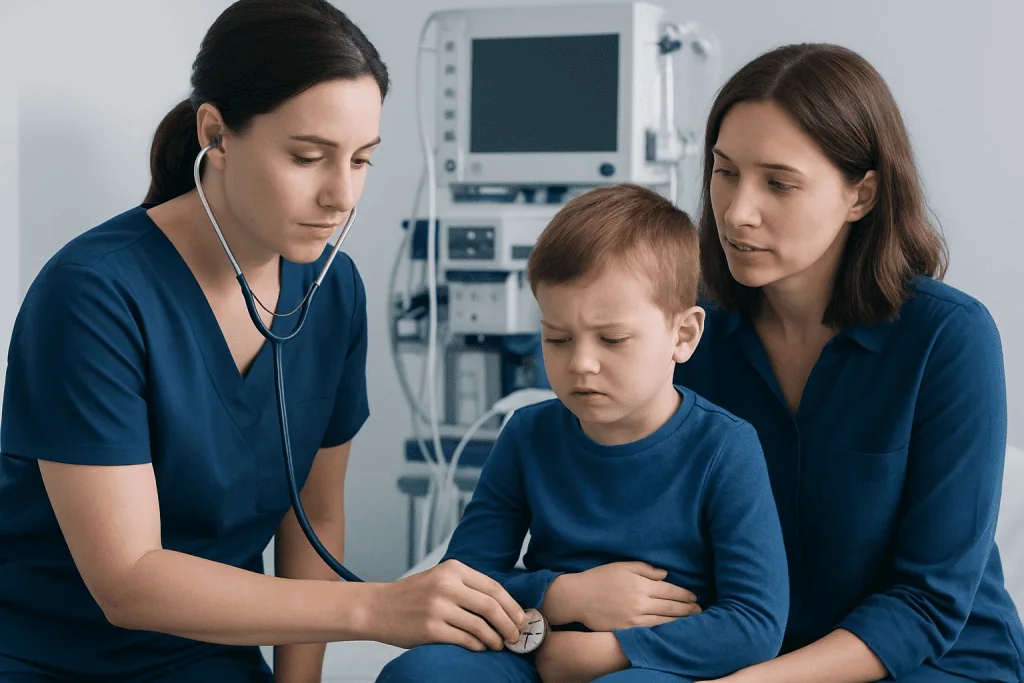
Symptoms usually begin suddenly, often within a day or two after exposure. A child may seem well one moment and become sick very quickly. Vomiting is especially common in children, while older children may also have frequent watery diarrhea.
Common symptoms include:
- Sudden vomiting
- Watery diarrhea
- Nausea
- Stomach cramps
- Low-grade fever
- Headache
- Body aches
- Tiredness or weakness
Some children may have mainly vomiting, while others have mostly diarrhea. Mild fever and reduced appetite are also common. Babies and toddlers may not be able to describe nausea or cramps, so irritability, sleepiness, crying, or refusing feeds may be the first signs noticed.
Symptoms often improve within a few days, but bowel habits and appetite may take a little longer to return to normal. If diarrhea is severe, if the child seems unusually sleepy, or if there are signs of dehydration, a doctor should assess the child promptly.
How Norovirus Spreads and Who Is at Risk

Norovirus spreads through the fecal-oral route, which means the virus can pass from tiny particles of stool or vomit into the mouth. This can happen after touching contaminated hands, surfaces, toys, food, or drinks. Children can also catch it from close contact with someone who is infected.
The virus can survive on surfaces for some time, making shared spaces an important source of spread. Bathrooms, changing areas, tabletops, doorknobs, and frequently touched toys may all play a role if they are not cleaned carefully. Outbreaks are common in daycare centers, schools, camps, and households.
Any child can get norovirus, but the risk may be higher in young children, especially those in group settings. Children are also more likely to become dehydrated than adults because they have smaller fluid reserves. Babies, toddlers, and children with other medical conditions need especially close observation.
Norovirus is different from many bacterial stomach infections and also different from some other viral illnesses such as gastroenteritis. Because many infections can cause vomiting and diarrhea, a doctor may consider the child’s age, exposure history, and symptoms when deciding what is most likely.
Dehydration Signs to Watch For
Dehydration is the most important complication of norovirus in children. It happens when vomiting and diarrhea cause the body to lose more fluid than the child can replace. This can develop quickly in infants and young children, especially if they are vomiting often or refusing to drink.
Early and moderate signs of dehydration may include:
- Dry mouth or dry lips
- Thirst
- Less urine than usual or fewer wet diapers
- Darker urine
- No tears when crying
- Sunken eyes
- Tiredness, dizziness, or unusual sleepiness
- Irritability or fussiness
In babies, caregivers may also notice a sunken soft spot on the head, poor feeding, or unusual limpness. A child who cannot keep down fluids for several hours, who seems difficult to wake, or who is breathing fast should be assessed urgently.
These warning signs matter because dehydration may require medical treatment. In some cases, children need evaluation for IV fluid treatment if they are unable to drink enough or are losing large amounts of fluid. Prompt attention can help prevent more serious complications.
How Doctors Diagnose Norovirus
Doctors usually diagnose norovirus based on symptoms, how suddenly the illness started, and whether there has been exposure to other sick children or family members. In many straightforward cases, no special test is needed. The pattern of sudden vomiting and diarrhea in a household or school outbreak often strongly suggests norovirus.
A doctor will ask about how much the child is drinking, how often the child is urinating, whether there is fever, and whether there is blood in the stool or vomit. The physical examination focuses on hydration status, overall alertness, heart rate, and signs of abdominal pain that may point to another condition.
Tests may be considered if symptoms are severe, prolonged, unusual, or if the child has an underlying health problem. Stool testing is not always necessary for mild illness, but it may be used in hospital settings, outbreaks, or when another infection is suspected.
Because other conditions can mimic norovirus, medical review is important if symptoms do not follow the expected course. Depending on the child’s symptoms, doctors may consider problems such as foodborne infection, rotavirus, appendicitis, or a urinary infection.
Treatment and Recovery at Home
There is no specific antiviral medicine that cures norovirus. Treatment focuses on preventing dehydration, reducing discomfort, and giving the body time to recover. The most important step is offering fluids in small, frequent amounts, especially after each episode of vomiting or diarrhea.
Oral rehydration solutions are often helpful because they replace both water and important salts. If a child is vomiting, it may help to give very small sips every few minutes rather than larger drinks. Breastfed babies should usually continue breastfeeding, and formula-fed infants can often continue feeds unless a doctor advises otherwise.
Once vomiting starts to settle, children can gradually return to simple foods and then their normal diet as tolerated. Rest is useful, but strict bed rest is not necessary if the child wants to sit up, play quietly, or move around. Medicines to stop diarrhea are generally not suitable for young children unless prescribed by a doctor.
If symptoms are more severe, a doctor may recommend hospital assessment, especially when oral fluids are not enough. In selected situations, children may need supportive care through a pediatric team, including pediatric emergency care or short-term monitoring with pediatric evaluation. Near the end of the care journey, some families may seek advice from centers such as Acibadem International, where multidisciplinary specialists in JCI-accredited hospitals diagnose and treat children with gastrointestinal infections and dehydration concerns.
Prevention and Self-care
Because norovirus spreads so easily, prevention depends mainly on hygiene. Careful handwashing with soap and water is one of the best ways to reduce transmission. This is especially important after diaper changes, helping a child use the toilet, cleaning vomit, and before preparing food.
Surfaces that may be contaminated should be cleaned thoroughly. Vomit and stool should be handled carefully, and soiled clothes or bedding should be washed promptly. Shared toys, bathroom surfaces, and frequently touched items deserve extra attention during and shortly after illness.
Children should stay home from school or daycare while they are actively vomiting or having significant diarrhea. Even after they start feeling better, they may still spread the virus for a period of time, so continued hygiene is important. Food should not be prepared for others by someone who is currently ill.
At home, caregivers can support recovery by offering fluids often, watching urine output, and encouraging a gradual return to meals. Sugary drinks and some sports drinks may not be ideal for small children with gastroenteritis, so parents should ask a doctor or pharmacist which fluids are best for the child’s age.
When to See a Doctor
Many children with norovirus recover without complications, but medical advice is important when symptoms are severe or the child is at higher risk. Babies, very young children, and children with chronic medical conditions may need earlier review because dehydration can develop faster in these groups.
Parents and caregivers should contact a doctor if the child has ongoing vomiting, cannot keep fluids down, has diarrhea lasting more than a few days, or seems to be getting worse instead of better. Bloody stool, severe stomach pain, high fever, or unusual drowsiness are not typical signs of simple norovirus and should be assessed.
Urgent care is needed for signs of significant dehydration, such as very little urine, no wet diapers for many hours, difficulty waking the child, confusion, fast breathing, or a limp and weak appearance. Immediate help is also needed if an infant is feeding poorly or appears unusually quiet and less responsive.
Seeking care early can make treatment simpler and safer. A doctor can confirm whether norovirus is the likely cause, rule out other conditions, and decide whether home care, oral rehydration, or more intensive treatment is the best next step.
Frequently asked questions
How long does norovirus last in children?
Norovirus symptoms often last 1 to 3 days, although some children may feel tired or have loose stools for a little longer. Recovery time can vary depending on age, hydration, and how severe the vomiting and diarrhea were.
What should a child drink with norovirus?
Small, frequent amounts of fluid are usually best, especially oral rehydration solution when available. Breast milk should usually be continued for breastfed babies, and parents can ask a doctor which fluids are most suitable for the child’s age.
When should parents worry about dehydration?
Parents should be concerned if the child is urinating less, has a dry mouth, no tears, sunken eyes, unusual sleepiness, or cannot keep fluids down. Babies and toddlers can become dehydrated quickly, so early medical advice is wise if these signs appear.
Can children eat during norovirus recovery?
Yes, once vomiting begins to improve, children can usually return gradually to eating. Starting with light, familiar foods and then moving back to a normal diet as tolerated is often reasonable, unless a doctor recommends something different.
Is norovirus the same as food poisoning?
Not exactly. Norovirus is a viral infection, while food poisoning can be caused by viruses, bacteria, toxins, or parasites. The symptoms may look similar, which is why a doctor may consider several possible causes of vomiting and diarrhea.
How can families stop norovirus spreading at home?
Handwashing with soap and water is very important, especially after using the bathroom, changing diapers, and cleaning up vomit. Careful cleaning of surfaces, washing soiled laundry promptly, and keeping sick children home from school or daycare also help reduce spread.
References
- World Health Organization
- Centers for Disease Control and Prevention
- American Academy of Pediatrics
- National Health Service
- European Society for Paediatric Gastroenterology Hepatology and Nutrition
This article is for general information only and is not a substitute for professional medical advice. Please consult a qualified doctor about your individual situation.
Persistent digestive symptoms? Get evaluated in Turkey
JCI-accredited · board-certified surgeons · reply within 24h
Add us as a Preferred Source to see more of our trusted health content across Google Search, AI Overviews and Discover.

Pediatrics
Complete healthcare for infants, children and adolescents across all sub-specialties.
232 specialists in this unit