Nursemaid Elbow Treatment: How It Works, Results and What to Expect

Nursemaid elbow is common in young children, especially from about 1 to 4 years of age. Treatment is usually a short reduction maneuver performed by a trained clinician.
Key Takeaways
- Nursemaid elbow is common in young children, especially from about 1 to 4 years of age.
- Treatment is usually a short reduction maneuver performed by a trained clinician.
- Imaging is not always needed when the history and examination are typical, but X-rays may be used if a fracture is possible.
- Many children use the arm again within minutes, though some take longer to regain confidence.
- Avoid pulling, swinging, or lifting a child by the hands, wrists, or forearms to reduce recurrence.
Nursemaid elbow treatment is a brief, clinician-performed maneuver that returns a partially displaced elbow ligament and radial bone to their usual position. Most children begin using the arm again shortly afterward, although assessment is important to rule out a fracture or another injury.
Overview: How Nursemaid Elbow Treatment Works
Nursemaid elbow treatment is a simple procedure used when the radial head, a small bone near the elbow, has slipped partly out from beneath its supporting ligament. The medical term is radial head subluxation. It most often happens in toddlers and preschool-aged children after a sudden pull on the arm, although a parent may not always see a specific incident.
A trained clinician restores the normal alignment with a controlled movement called a reduction. The child’s elbow and forearm are gently positioned in one of two commonly used ways. The maneuver takes only seconds and usually does not require surgery, a cast, or sedation when the diagnosis is clear.
The aim is to relieve pain and allow the child to use the arm normally again. Because fractures and other injuries can sometimes look similar, a clinician should assess a child who will not use an arm rather than attempting a reduction at home.
Who May Be a Candidate for Reduction
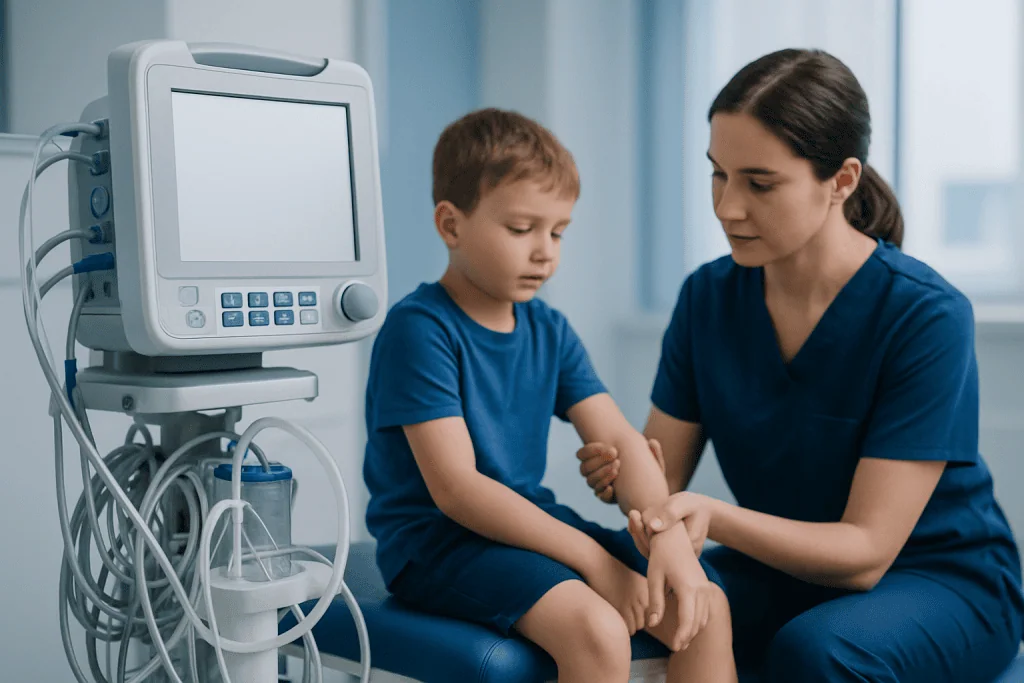
A child may be considered for nursemaid elbow treatment when the symptoms and circumstances are typical. The child often holds the affected arm close to the body, slightly bent at the elbow, with the palm turned inward or downward. They may resist using the hand or reaching for toys, but there is often little or no visible swelling or bruising.
Clinicians consider the child’s age, the way the problem began, and the physical examination. A classic history may involve a pull on the hand or forearm while walking, stepping off a curb, being lifted by the arms, or playing. Nursemaid elbow is less common after around 5 years of age because the elbow structures become more stable as a child grows.
Reduction may not be the first step if there is marked swelling, bruising, deformity, severe tenderness over a bone, an open wound, fever, or concern for a fall or direct blow. In these situations, the medical team may order X-rays or investigate other causes of arm pain before moving the joint.
What Happens During the Procedure
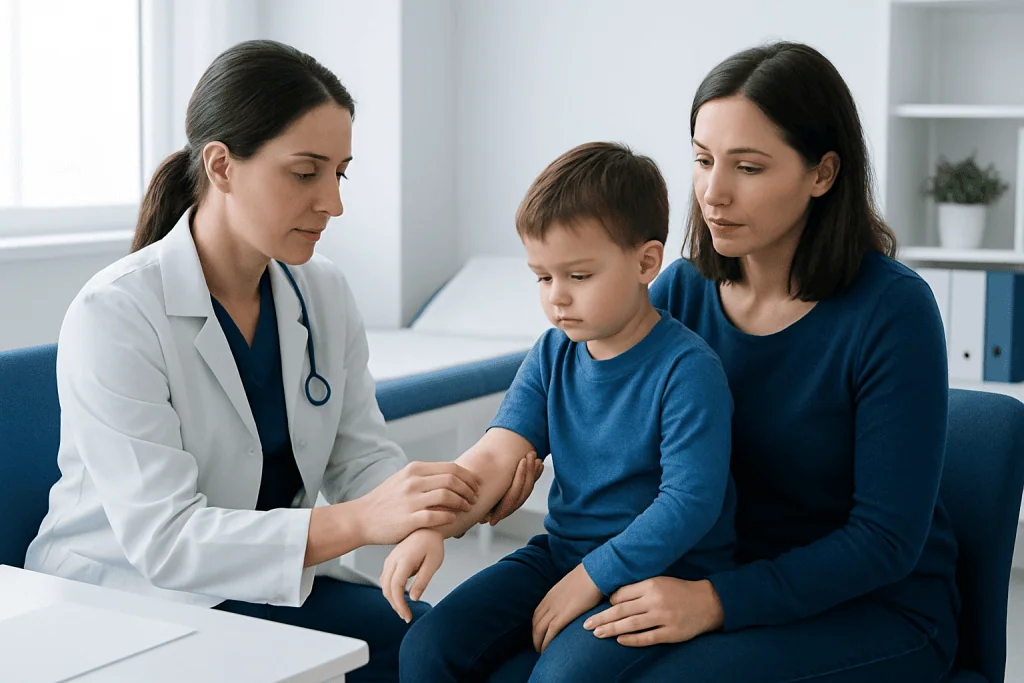
Before treatment, the clinician examines the shoulder, upper arm, elbow, forearm, wrist, and hand. This helps identify tenderness, swelling, circulation concerns, or signs that suggest an injury other than nursemaid elbow. They will also ask when the symptoms began and whether the child fell or had another injury.
For a typical case, the clinician uses one of two established reduction techniques. One involves rotating the child’s forearm so the palm faces upward while supporting the elbow. The other involves rotating the forearm inward while flexing the elbow. A soft click may be felt or heard, but this does not happen in every successful reduction.
The maneuver can be briefly uncomfortable, and children may cry or pull away during it. However, it is very quick. Pain medicine, sedation, or anesthesia is generally not necessary for an uncomplicated reduction, although care is individualized to the child and situation.
Afterward, the child is observed and encouraged to reach, grasp, or play. If they do not begin using the arm, the clinician reassesses the diagnosis, may repeat a reduction when appropriate, and may arrange imaging or specialist review.
Expected Results and Recovery Timeline
Many children begin using the affected arm within a few minutes after successful nursemaid elbow treatment. Others need 10 to 30 minutes, particularly if they are anxious, tired, or reluctant to move after a painful experience. Offering a favorite toy, snack, or familiar activity can help the clinician see whether normal movement is returning.
When the child resumes comfortable use of the arm and the examination is reassuring, they can usually return to ordinary calm activities the same day. A sling, splint, cast, and formal rehabilitation are not routinely needed for a straightforward nursemaid elbow.
If the arm had been painful or held still for many hours, a child may be slower to use it even after the joint is reduced. Continued refusal to move the arm should be reassessed promptly. The care team may consider an X-ray to check for a fracture or another condition that needs different treatment.
A prior nursemaid elbow can make recurrence more likely in some children until they outgrow the tendency. A recurrence is still best assessed by a qualified healthcare professional, especially when the symptoms or injury mechanism differ from previous episodes.
Benefits, Risks, and Limits of Treatment
The principal benefit of reduction is rapid restoration of normal elbow alignment and relief of discomfort. In a child with a typical nursemaid elbow, the procedure is brief and is usually effective without invasive treatment. It also helps avoid unnecessary immobilization when a fracture is not present.
Short-lived discomfort during the maneuver is the most common concern. A reduction may not work immediately if the diagnosis is incorrect, if the joint has not fully returned to position, or if the child remains guarded because of pain or fear. In that case, additional assessment is more appropriate than repeated attempts at home.
Serious complications from a properly performed clinical reduction are uncommon. The more important risk is missing another injury, such as a fracture, which is why a careful examination and selective use of imaging are essential. Parents should not try internet-based techniques or ask untrained individuals to manipulate the child’s arm.
Children with persistent elbow pain, swelling, repeated episodes, or an atypical injury may benefit from pediatric orthopedic assessment. Related bone and joint concerns can also be evaluated through orthopedic care when specialist review is needed.
Prevention and Care at Home
The most useful prevention step is to avoid traction on a young child’s arms. Adults should not lift, swing, pull, or jerk a child by the hands, wrists, or forearms. Instead, lift children under the armpits or around the torso, with appropriate support for their age and development.
Parents and caregivers can share this advice with relatives, childcare staff, and older siblings. During walking, it is safer to let a child hold an adult’s hand without pulling upward, particularly when stepping off curbs or navigating stairs. Children may need closer support at the trunk rather than a tug on the arm.
After a successful reduction, families generally do not need to restrict the child’s usual gentle activities unless the clinician gives specific instructions. However, they should continue avoiding arm swinging and forceful pulling. If pain returns or the child again stops using the arm, medical assessment is recommended.
Acibadem International’s multidisciplinary specialists and JCI-accredited hospitals assess and treat pediatric bone and joint concerns for international patients, with care plans guided by the child’s symptoms and examination findings.
When to Seek Medical Care
A child who suddenly will not use an arm should be assessed by a healthcare professional as soon as possible, even if nursemaid elbow seems likely. Prompt evaluation can relieve discomfort and ensures that a fracture, dislocation, or another injury is not overlooked.
Urgent medical care is especially important after a fall, a direct impact, or an injury involving significant force. It is also important if there is swelling, bruising, a visible change in arm shape, severe pain, numbness, pale or cool fingers, a wound, or inability to move the fingers.
Parents should seek reassessment if the child does not use the arm after a reduction, develops worsening pain, or has new swelling or fever. A clinician can determine whether X-rays, repeat examination, or referral to pediatric orthopedics is needed.
Frequently asked questions
What is nursemaid elbow treatment?
Nursemaid elbow treatment is a clinician-performed reduction that places the radial head and its supporting ligament back into their usual relationship at the elbow. It is generally a very brief procedure. Most children do not need surgery, a cast, or sedation when the diagnosis is typical.
How quickly will a child use the arm after treatment?
Many children begin using the arm within a few minutes of a successful reduction. Some may take 10 to 30 minutes because they remain cautious after the painful event. If the child continues not to use the arm, the clinician may reassess and consider imaging.
Does nursemaid elbow treatment hurt?
The reduction may cause a moment of discomfort, and a child may cry during the movement. The maneuver itself lasts only seconds. Once the elbow is reduced, pain often improves quickly.
Are X-rays always needed for nursemaid elbow?
No. X-rays may not be necessary when the history and examination strongly suggest nursemaid elbow and there are no signs of fracture. They are more likely to be used when there was a fall, substantial swelling or bruising, unusual tenderness, deformity, or unsuccessful reduction.
Can parents fix nursemaid elbow at home?
Parents should not attempt to reduce nursemaid elbow at home. A child who does not use an arm may have a fracture or another injury that requires a different approach. A trained clinician can examine the child and perform reduction safely when appropriate.
Can nursemaid elbow happen again?
Yes, some children have recurrent episodes, especially while they are young. The likelihood usually decreases as the ligaments and bones mature. Avoiding pulling, lifting, or swinging a child by the arms can help reduce recurrence.
References
- American Academy of Orthopaedic Surgeons
- American Academy of Pediatrics
- National Health Service
- Merck Manual Consumer Version
This article is for general information only and is not a substitute for professional medical advice. Please consult a qualified doctor about your individual situation.
Joint and spine care in Turkey — expert assessment & treatment
JCI-accredited · board-certified surgeons · reply within 24h
Add us as a Preferred Source to see more of our trusted health content across Google Search, AI Overviews and Discover.