Oiliness in Urine: What Patients Need to Know

An oily appearance does not always mean that oil or fat is present in the urine. Residue from cleaning products, skin products, diet, or the toilet bowl can change the appearance of urine.
Key Takeaways
- An oily appearance does not always mean that oil or fat is present in the urine.
- Residue from cleaning products, skin products, diet, or the toilet bowl can change the appearance of urine.
- Persistent oily, foamy, cloudy, milky, or unusual-smelling urine may warrant a urine test.
- Kidney conditions that cause protein or fat to enter urine are uncommon but important causes to rule out when symptoms persist.
- Urgent medical care is appropriate if urine changes occur with severe pain, fever, swelling, reduced urination, or visible blood.
Oiliness in urine usually describes an oily film, sheen, droplets, or greasy appearance noticed in the toilet. It can result from harmless external residue or concentrated urine, but recurrent changes should be assessed because they can occasionally be related to fat, protein, infection, or other substances in the urine.
Overview: What Does Oiliness in Urine Mean?
Oiliness in urine is a description rather than a diagnosis. A person may notice a rainbow-like film on the water, droplets floating on top, a greasy appearance, or urine that seems unusually shiny. In many cases, the change is not caused by the urine itself. Oils, soaps, cleaning chemicals, lotions, vaginal products, semen, stool residue, or other material already in the toilet bowl may mix with urine and alter its appearance.
When the appearance happens repeatedly in a clean container or is accompanied by other symptoms, a medical evaluation is sensible. Less commonly, urine can contain substances such as protein, fat, cells, crystals, or lymphatic fluid that change how it looks. A basic urinalysis can help distinguish a harmless observation from a change that needs further investigation.
Urine color and appearance naturally vary with hydration, food intake, medicines, and the time of day. Looking at one isolated episode is usually less useful than noticing a consistent pattern. Recording whether the change occurs every time, only after particular meals, or alongside pain or swelling can help a clinician decide which tests are appropriate.
What an Oily or Greasy Appearance Can Look Like
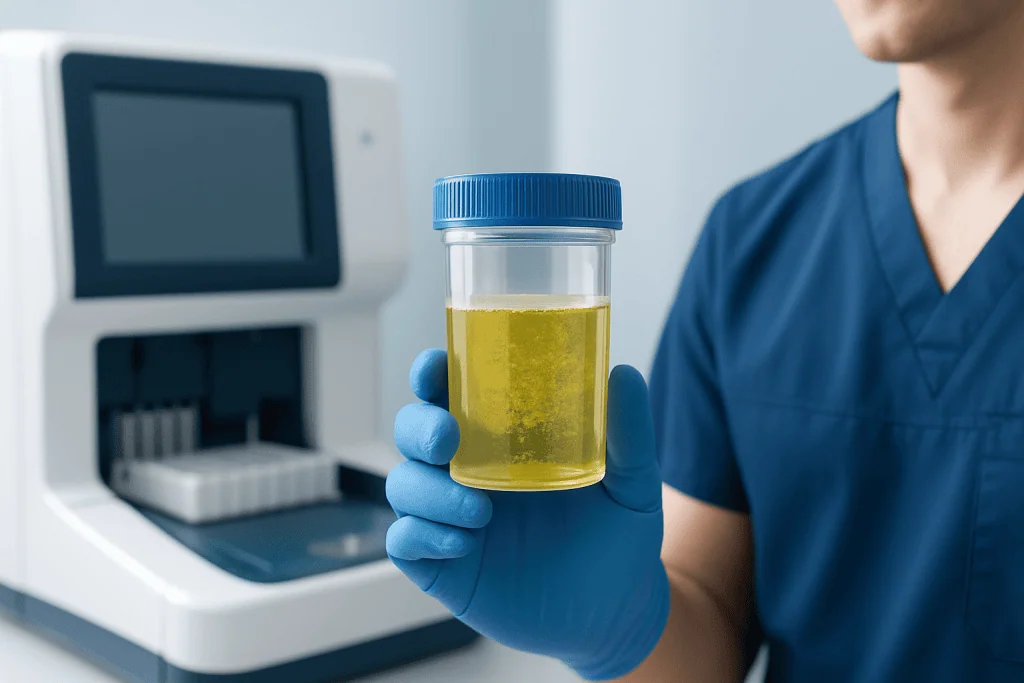
People use the term oily urine in different ways. Some mean a thin film on the water after urinating, while others describe bubbles, foam, cloudiness, floating particles, or a milky color. These features have different possible explanations, so it is helpful to describe the change as precisely as possible rather than assuming it has one cause.
A film floating on toilet water may be due to products in the bowl or to urine mixing with naturally occurring body oils. Brief bubbles after urinating are common and can occur when urine hits the water quickly. Persistent dense foam, especially if it occurs regularly and does not quickly disappear, can sometimes be associated with protein in the urine and should be discussed with a clinician.
Milky or cloudy urine is not necessarily oily. It may be related to concentrated urine, crystals, mucus, white blood cells from an infection, or, rarely, chyle, a fluid rich in fats that normally travels through the lymphatic system. Visible blood may make urine pink, red, tea-colored, or brown and requires medical assessment, even when there is no pain.
Possible Causes of Oiliness in Urine

Common, non-medical explanations should be considered first. Toilet cleaning agents, air fresheners, bath oils, soap, lotion, lubricant, or menstrual and vaginal products may leave a surface film that becomes noticeable after urination. Dietary fats do not normally pass directly into urine as visible oil. However, dehydration can make urine more concentrated and may make normal variation in urine appearance more noticeable.
Some medical causes can affect urine appearance. Protein in the urine, also called proteinuria, may make urine persistently foamy. When significant protein loss is linked with fat particles in urine, this can occur in certain kidney disorders, including nephrotic syndrome. This is usually assessed through laboratory testing rather than by appearance alone, because visual changes cannot reliably confirm fat in urine.
Urinary tract infections can cause cloudy urine, odor changes, burning, urgency, or lower abdominal discomfort. Kidney stones may cause pain, blood in the urine, nausea, or urinary symptoms. In rare situations, chyluria can occur when lymphatic fluid enters the urinary tract, producing milky or cloudy urine that may separate into layers after standing. A doctor may also review medicines, supplements, recent procedures, and relevant medical history.
- External residue in the toilet bowl or on the skin
- Concentrated urine due to low fluid intake
- Protein or fat particles related to kidney disease
- Urinary tract infection or inflammation
- Crystals, mucus, semen, or vaginal discharge mixing with urine
- Rare lymphatic causes of milky urine, such as chyluria
Symptoms That May Occur Alongside Urine Changes
Oiliness in urine without any other symptoms is often less concerning, particularly if it happens once and does not recur. However, associated symptoms can provide important clues. Burning during urination, a frequent urge to urinate, lower abdominal pressure, fever, or strong-smelling urine may suggest a urinary tract infection and should be evaluated.
Swelling around the eyes, ankles, feet, or hands can be a sign of fluid retention. When it occurs together with persistent foaminess, fatigue, high blood pressure, or changes in the amount of urine produced, it may indicate a kidney-related problem. These symptoms do not confirm a specific condition, but they make timely medical assessment more important.
Flank or back pain, severe side pain that comes in waves, nausea, or blood in urine can occur with kidney stones or other urinary tract conditions. People who are pregnant, have diabetes, have known kidney disease, have a weakened immune system, or have had recent urinary procedures should contact a healthcare professional sooner when new urine changes occur.
How Doctors Evaluate Oily-Looking Urine
A clinician will usually begin by asking about the exact appearance of the urine, how long it has been happening, fluid intake, diet, medications, supplements, and associated symptoms. They may ask whether the change was observed in a clean sample container rather than only in a toilet bowl. Information about recent infections, kidney problems, pregnancy, travel, surgery, or family history can also be relevant.
A urinalysis is often the first test. It can check for protein, blood, glucose, ketones, white blood cells, bacteria, crystals, and other substances. If protein is detected, a urine protein measurement may be ordered. A urine culture can identify bacteria when infection is suspected, while blood tests may assess kidney function, blood sugar, cholesterol, or signs of inflammation when clinically indicated.
Further testing is based on the findings rather than on urine appearance alone. An ultrasound or other imaging study may be considered for persistent symptoms, suspected stones, urinary obstruction, or certain kidney concerns. If a rare cause such as chyluria is suspected, specialists may use additional urine testing and imaging to identify the source and plan care.
Treatment and Practical Self-Care
Treatment depends entirely on the underlying cause. No specific treatment is needed when the oily appearance is caused by toilet residue, skin products, or a temporary change in hydration. Drinking fluids regularly, unless a clinician has advised fluid restriction for a medical condition, can help maintain normally diluted urine. It may also help to observe urine once in a clean, clear container rather than interpreting the appearance of toilet water.
It is best not to start antibiotics, diuretics, herbal remedies, or kidney supplements based only on urine appearance. Urinary infections require assessment and, when appropriate, targeted treatment. Kidney-related protein loss, stones, diabetes-related changes, and lymphatic conditions each require different management plans directed by a qualified clinician.
A person can support a useful evaluation by noting the timing of the change, photographs of a clean-catch sample if requested by their clinician, recent foods or new supplements, and any symptoms such as swelling or pain. Acibadem International’s multidisciplinary specialists and JCI-accredited hospitals diagnose and treat kidney and urinary conditions for international patients when further assessment is needed.
When to Seek Medical Care
A routine medical appointment is appropriate when oily-looking, cloudy, milky, or persistently foamy urine continues for more than a few days, recurs often, or cannot be explained by residue in the toilet bowl. Evaluation is also recommended when there is burning, urgency, pelvic discomfort, unusual odor, new swelling, fatigue, or a noticeable decrease in urine output.
Prompt medical care is important for visible blood in the urine, fever with urinary symptoms, severe back or side pain, vomiting, inability to pass urine, sudden marked swelling, or shortness of breath. These symptoms can have several causes, some of which need timely treatment. Children, pregnant people, and individuals with known kidney disease should seek advice early for new or persistent urine changes.
Most changes in urine appearance are not emergencies, and many have simple explanations. Still, persistent changes deserve attention because urine testing is straightforward and can provide reassurance or identify a condition at an earlier stage. A primary care clinician, urologist, or nephrologist can guide the next steps based on the symptoms and test results.
Frequently asked questions
Is oiliness in urine normal?
A one-time oily film may be caused by soap, cleaning products, body lotions, or other residue in the toilet bowl. If the appearance continues in a clean sample or occurs with other symptoms, it is worth discussing with a healthcare professional.
Does oily urine mean there is fat in the urine?
Not necessarily. Urine appearance alone cannot show whether fat is present. Fat particles in urine are uncommon and may occur with some kidney conditions, but laboratory testing is needed to identify them.
Can dehydration cause oily-looking urine?
Dehydration can make urine darker and more concentrated, which can make changes in appearance more noticeable. It does not usually cause true oil in urine, but regular fluid intake may help clarify whether the change is temporary.
What is the difference between oily, foamy, and cloudy urine?
Oily urine usually describes a surface film or sheen. Foamy urine has bubbles and can be temporary, although persistent foam can sometimes be associated with protein. Cloudy urine may be caused by crystals, mucus, infection-related cells, or other material in the urine.
Can a urinary tract infection make urine look oily?
A urinary tract infection more commonly causes cloudy or strong-smelling urine, burning, urgency, or pelvic discomfort. It may alter the appearance of urine, but an oily film is not a specific sign of infection.
When is oily-looking urine urgent?
Urgent assessment is needed if urine changes occur with visible blood, fever, severe back or side pain, vomiting, inability to urinate, significant swelling, or shortness of breath. These symptoms should not be managed by observation alone.
References
- National Institute of Diabetes and Digestive and Kidney Diseases
- National Kidney Foundation
- Mayo Clinic
- Merck Manual Consumer Version
- American Urological Association
This article is for general information only and is not a substitute for professional medical advice. Please consult a qualified doctor about your individual situation.
Explore treatments in Turkey — costs, top hospitals & a free quote
JCI-accredited · board-certified surgeons · reply within 24h
Add us as a Preferred Source to see more of our trusted health content across Google Search, AI Overviews and Discover.
Check your numbers in seconds
BMI, calories, due date, blood pressure and 30+ more clinical calculators — free, instant, doctor-reviewed ranges.