One Testis Larger Than the Other: A Complete Medical Overview

A small difference in testicle size or position is common and may be completely normal. Sudden pain, rapid swelling, redness, fever, or nausea can signal an urgent problem.
Key Takeaways
- A small difference in testicle size or position is common and may be completely normal.
- Sudden pain, rapid swelling, redness, fever, or nausea can signal an urgent problem.
- Common causes include hydrocele, varicocele, infection, injury, cysts, and less commonly a tumor.
- Doctors usually diagnose the cause with a physical exam and a scrotal ultrasound.
- Treatment depends on the cause and may range from monitoring to medication or surgery.
- Regular self-awareness helps a person notice changes early without causing unnecessary worry.
Having one testis larger than the other is often a normal variation, and mild differences in size or position are common. However, new swelling, pain, a firm lump, or a sudden change should be checked by a doctor because some causes need prompt treatment.
Overview: Is it normal if one testis is larger than the other?
Yes, one testis larger than the other can be normal. Many males naturally have slight differences in testicle size, shape, or position, and one testis often hangs a little lower than the other. If the difference has been present for a long time and has not changed, it may simply reflect normal anatomy.
What matters most is whether the change is new, getting worse, or happening with other symptoms. A testicle that suddenly becomes larger, painful, firm, or heavy should not be ignored. Swelling can come from the testis itself or from surrounding structures in the scrotum, so not every size difference means the testicle tissue is diseased.
This is why the symptom needs a careful, practical approach rather than assumptions. Some causes are mild and temporary, while others require urgent treatment to protect testicular health and fertility. A medical assessment can usually identify the cause quickly, often with an examination and ultrasound.
What changes are common, and what symptoms are not?
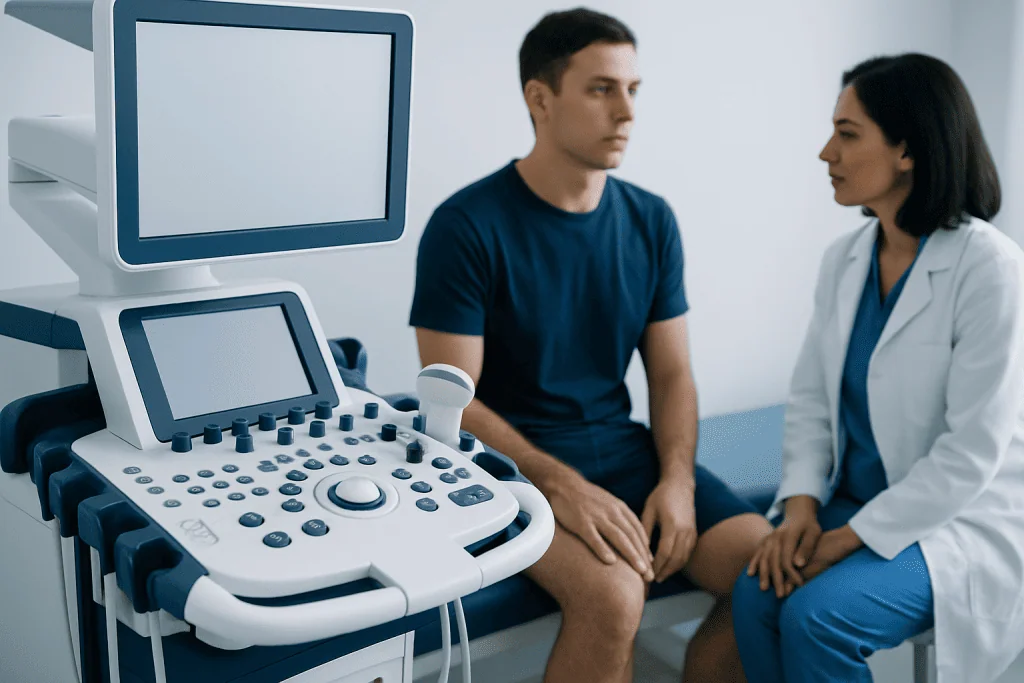
A mild size difference without pain is often harmless. Some people also notice that one side of the scrotum sits lower, especially in warm temperatures or after physical activity. This alone is usually not a cause for concern.
Symptoms that deserve more attention include a new lump, a firm area inside the testis, heaviness in the scrotum, aching in the groin, tenderness, or visible swelling. Pain may be mild and gradual, as in some infections or varicoceles, or sudden and severe, which can happen with testicular torsion. Torsion is a medical emergency because the blood supply may be reduced.
Other warning signs can point toward infection or inflammation. These include redness, warmth, fever, burning with urination, urinary frequency, or discharge. In some cases, swelling is painless, which can happen with a hydrocele, a cyst, or occasionally testicular cancer.
- Usually common: long-standing mild size difference, one side hanging lower
- Needs review soon: new swelling, heaviness, dull ache, lump, or ongoing discomfort
- Needs urgent care: sudden severe pain, rapid swelling, nausea, vomiting, redness, or fever
Possible causes of one testis being larger than the other

There are several reasons one side of the scrotum may look or feel larger. A hydrocele is a collection of fluid around the testicle and often causes smooth, painless swelling. A varicocele is an enlargement of veins in the scrotum, more common on the left side, and may feel like a soft bundle or cause a dragging sensation. Epididymal cysts and spermatoceles are fluid-filled sacs near the testis that can also make one side seem larger.
Inflammation and infection are also common causes. Epididymitis and orchitis can cause pain, swelling, warmth, and sometimes fever. These conditions may occur after urinary or sexually transmitted infections. Trauma from sports, exercise, or a direct blow can lead to bruising, bleeding, or swelling in the scrotum as well.
Less common but very important causes include inguinal hernia, testicular torsion, and tumors. A hernia can cause fullness in the groin or scrotum, especially with straining. Torsion causes sudden intense pain and swelling and needs immediate treatment. A tumor may present as a painless lump, firmness, or gradual enlargement rather than severe pain.
Sometimes the issue is not the testis itself but the structures around it. For example, a swollen epididymis, fluid sac, or enlarged vein can make one side appear larger even when the testicle is normal. This distinction is one reason urology evaluation and ultrasound are often helpful.
Risk factors and situations that raise concern
Some situations make an underlying medical cause more likely. Recent injury, intense physical activity, heavy lifting, urinary symptoms, fever, or unprotected sexual contact can point toward trauma, hernia, or infection. A previous history of undescended testis, prior scrotal surgery, or earlier episodes of similar pain may also be relevant.
Age can offer clues, although it does not give a diagnosis by itself. Adolescents and younger adults are more commonly affected by torsion and some testicular tumors. Middle-aged and older adults may be more likely to have hydroceles, cysts, or hernias, but all age groups can develop a range of causes.
Fertility concerns can matter too. Varicoceles sometimes affect sperm production, especially if they are large or longstanding. Ongoing discomfort, shrinking of one testis, or difficulty conceiving are all good reasons to bring the symptom to medical attention rather than waiting for it to settle on its own.
How doctors diagnose the cause
Diagnosis starts with a medical history and physical examination. The doctor may ask when the size difference was first noticed, whether it changes during the day, and whether there is pain, fever, urinary symptoms, trauma, or sexual health concerns. During the exam, they assess the testicles, epididymis, spermatic cord, and groin for lumps, tenderness, fluid, hernia, or abnormal veins.
The main imaging test is a scrotal ultrasound. This is painless, does not use radiation, and can show whether the swelling comes from the testicle itself or from structures around it. Ultrasound also helps detect reduced blood flow in suspected torsion, fluid collections such as hydroceles, enlarged veins such as varicoceles, infection-related changes, and suspicious masses.
Additional tests depend on the situation. A urine test may look for infection, and blood tests may be used if there is concern about inflammation or a tumor. If a suspicious mass is found, the person may be referred promptly to specialists experienced in oncology care and surgical planning.
Most causes can be clarified without delay once the right tests are done. Seeking assessment early is especially important when symptoms are sudden, painful, or associated with a hard lump.
Treatment options and what recovery may involve
Treatment depends entirely on the cause. Normal anatomical variation does not need treatment. Infections such as epididymitis or orchitis may be treated with medications, rest, scrotal support, hydration, and follow-up. Swelling from minor injury may improve with rest, cold packs wrapped in cloth, and limiting strenuous activity for a short period, if a doctor has ruled out more serious damage.
Hydroceles, cysts, and some varicoceles may only need monitoring if they are painless and not causing complications. If symptoms are bothersome, fertility is affected, or the diagnosis is uncertain, a procedure may be considered. Inguinal hernias and symptomatic varicoceles may require surgical treatment, while suspicious testicular masses are handled with a more urgent specialist approach.
Testicular torsion is different from most other causes because it is time-sensitive. It usually requires urgent surgery to restore blood flow and protect the testis. Delaying care in this situation can increase the chance of permanent damage.
When the cause is more complex, coordinated care may involve radiology, urology, surgery, and cancer specialists. For international patients, Acibadem International’s multidisciplinary specialists and JCI-accredited hospitals diagnose and treat scrotal and testicular conditions, including cases needing advanced surgical care.
Self-checks, prevention, and everyday self-care
There is no guaranteed way to prevent every cause of scrotal swelling, but general self-care can help a person notice changes early and reduce avoidable risks. Using protective sports equipment during contact activities may lower the risk of injury. Prompt treatment of urinary or sexually transmitted infections can reduce the risk of inflammation spreading to the epididymis or testis.
Regular self-awareness is more useful than frequent anxious checking. A person can become familiar with their normal size, shape, and position, ideally during or after a warm shower when the scrotal skin is relaxed. The aim is not to search for problems every day, but to recognize a new lump, clear change in size, unusual heaviness, or persistent discomfort.
Simple support measures may ease minor symptoms while awaiting medical advice. These include wearing supportive underwear, avoiding heavy lifting if it worsens discomfort, and resting after minor strain. However, self-care should never replace urgent assessment if there is sudden pain, major swelling, or a hard new lump.
When to seek medical care
Medical care is recommended if one testis larger than the other is a new finding, becomes more noticeable, or comes with pain, heaviness, a lump, fever, urinary symptoms, or infertility concerns. Even when the cause turns out to be benign, proper diagnosis provides reassurance and helps avoid missing a condition that needs treatment.
Urgent care is needed right away for sudden severe scrotal pain, rapid swelling, nausea, vomiting, fever with scrotal redness, or pain after an injury. These symptoms can occur with torsion, serious infection, or significant trauma. It is safer to be assessed quickly than to wait and hope the problem will pass.
If there is a painless but firm lump, prompt evaluation is also important. A hard area inside the testis should always be examined by a qualified doctor, because early diagnosis makes planning treatment much more straightforward if a significant condition is found.
Frequently asked questions
Is it normal for one testicle to be bigger than the other?
Yes, a small difference in size is often normal. Many people also notice that one testicle hangs lower than the other. If the difference is new, increasing, or linked to pain or a lump, it should be checked.
When is one testis larger than the other an emergency?
It can be an emergency if there is sudden severe pain, rapid swelling, nausea, vomiting, or redness and fever. These symptoms may suggest testicular torsion or a serious infection. Immediate medical care is important to protect the testicle and overall health.
Can a hydrocele or varicocele make one side look larger?
Yes, both can make one side of the scrotum appear larger. A hydrocele is fluid around the testicle, while a varicocele is an enlargement of veins. Both are often benign, but a doctor should confirm the diagnosis.
Does a larger testicle always mean cancer?
No, most cases are not caused by cancer. Common explanations include fluid collections, enlarged veins, cysts, infection, or normal variation. Still, a firm painless lump or clear enlargement should always be evaluated.
How do doctors find out why one testis is larger?
Doctors usually start with questions about symptoms and a physical exam. A scrotal ultrasound is commonly used because it can show fluid, blood flow, cysts, enlarged veins, inflammation, or masses. Urine or blood tests may also be needed in some cases.
Can this affect fertility?
Sometimes it can, depending on the cause. Varicoceles, severe infections, torsion, and some other conditions may affect sperm production or testicular function. This is one reason ongoing swelling or discomfort should not be ignored.
This article is for general information only and is not a substitute for professional medical advice. Please consult a qualified doctor about your individual situation.
Explore treatments in Turkey — costs, top hospitals & a free quote
JCI-accredited · board-certified surgeons · reply within 24h
Add us as a Preferred Source to see more of our trusted health content across Google Search, AI Overviews and Discover.

More from the Health Library

And Chia: An Evidence-Based Guide for Patients

Insulin Degludec: A Complete Medical Overview

Olopatadine — Explained by Medical Evidence, Not Myths

Castrated: An Evidence-Based Guide for Patients

Apolipoprotein B: An Evidence-Based Guide for Patients