Optic Neuritis: Early Symptoms, Diagnosis, and Recovery Outlook

Optic neuritis commonly causes eye pain, blurred vision, and changes in color vision, often in one eye. It may occur on its own or be linked to conditions such as multiple sclerosis, infections, or other inflammatory disorders.
Key Takeaways
- Optic neuritis commonly causes eye pain, blurred vision, and changes in color vision, often in one eye.
- It may occur on its own or be linked to conditions such as multiple sclerosis, infections, or other inflammatory disorders.
- Diagnosis usually involves an eye examination, imaging such as MRI, and sometimes blood tests or additional neurological evaluation.
- Vision often improves over weeks to months, although some people may have lingering changes in sharpness, color, or contrast.
- New or sudden vision loss should always be assessed urgently by a qualified doctor.
Optic neuritis is inflammation of the optic nerve, the structure that carries visual information from the eye to the brain. It often causes eye pain and reduced vision in one eye, and prompt medical assessment can help identify the cause and support recovery.
Overview
Optic neuritis is inflammation of the optic nerve. This nerve carries signals from the retina at the back of the eye to the brain, where those signals are interpreted as vision. When the nerve becomes inflamed, the messages it sends may be disrupted, leading to pain, blurred vision, dim vision, or difficulty seeing colors clearly.
This condition most often affects one eye at a time, although both eyes can be involved in some cases. Symptoms may develop over hours to a few days. Many people notice that vision seems washed out or that colors, especially red, appear less vivid. Some also feel discomfort when moving the affected eye.
Optic neuritis can happen by itself, but it is sometimes associated with immune-related or neurological conditions, including multiple sclerosis. Because of this, doctors often look beyond the eye itself and consider the nervous system as a whole. A careful evaluation helps clarify the cause and determine whether treatment is needed right away.
The outlook is often encouraging. Many patients experience partial or substantial improvement over time, especially when the inflammation settles. Even so, recovery can vary from person to person, and some may continue to notice mild visual changes after the acute episode has passed.
Symptoms of Optic Neuritis
The most common symptoms of optic neuritis are eye pain and vision loss. The pain is often felt behind the eye and may become more noticeable when the eye moves. Vision changes can range from mild blurring to more marked loss of clarity, and they usually affect one eye more than the other.
Another common feature is reduced color vision. Colors may appear faded, dull, or less intense than usual. Some people notice a central blurry spot or dark area in their field of vision, making it harder to read, recognize faces, or see fine detail. Brightness and contrast may also seem reduced.
Symptoms can worsen temporarily with exercise, a hot shower, fever, or overheating. This does not necessarily mean the nerve is being damaged further, but it can make existing visual symptoms more noticeable. Episodes of flashing lights may occur in some people, especially with eye movement.
- Eye pain, especially with movement
- Blurred or dim vision in one eye
- Reduced color perception
- A central blind spot or patchy visual loss
- Lower contrast sensitivity or washed-out vision
- Temporary worsening with heat or exertion
Because these symptoms can overlap with other serious eye or neurological problems, sudden vision changes should never be ignored. A timely assessment helps distinguish optic neuritis from other causes such as retinal disease, glaucoma, or blood flow problems affecting the eye.
Causes and Risk Factors

Optic neuritis occurs when the optic nerve becomes inflamed. In many cases, the inflammation is related to the immune system. The body’s defense system may mistakenly target the protective covering around nerve fibers, known as myelin, which can interfere with how visual signals travel to the brain.
One of the best-known associations is with demyelinating disease, particularly multiple sclerosis. Optic neuritis can be an early event in that condition, although not everyone who develops optic neuritis will go on to develop multiple sclerosis. Other inflammatory disorders, including neuromyelitis optica spectrum disorder and MOG antibody-associated disease, may also affect the optic nerve.
Infections are another possible cause. Viral illnesses, sinus or systemic infections, and, less commonly, bacterial or autoimmune conditions may trigger inflammation. In some patients, a clear cause is never identified. Doctors may also consider whether medications, toxins, or other neurological diseases could be contributing to the symptoms.
Risk factors depend on the underlying cause but may include a personal history of autoimmune disease, prior neurological symptoms, or recent infection. Age and sex patterns can vary with the specific disorder involved. Since optic neuritis can be linked to broader nervous system inflammation, a full medical history is an important part of the evaluation.
How Optic Neuritis Is Diagnosed
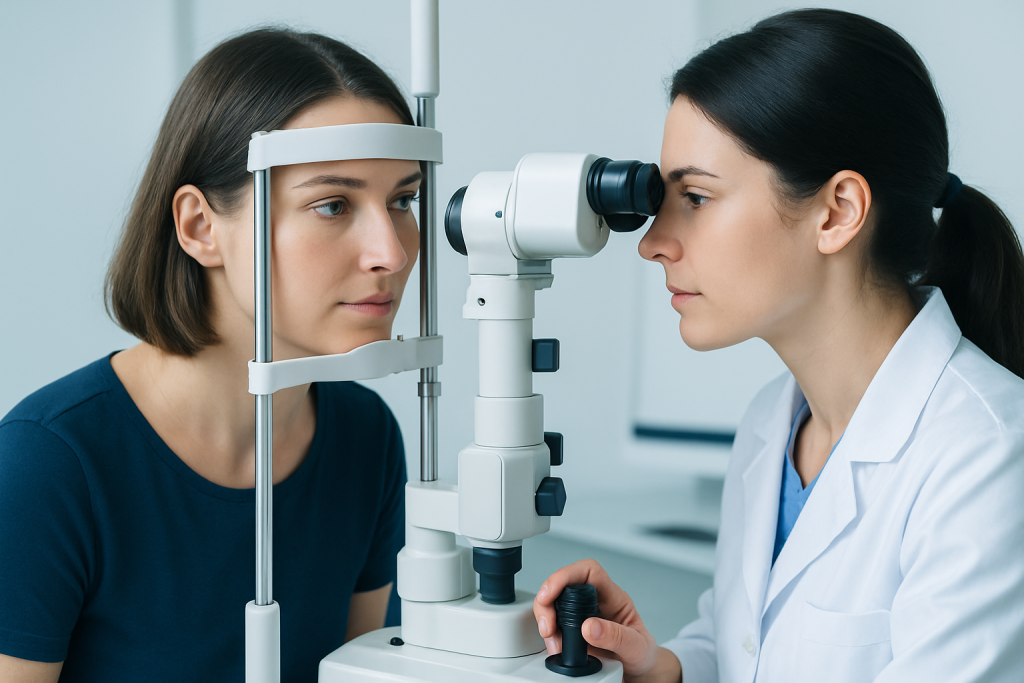
Diagnosis starts with a detailed discussion of symptoms and a full eye examination. The doctor will usually check visual acuity, color vision, pupil responses, and the visual field. In optic neuritis, the pupil in the affected eye may react differently to light, which can help point to a problem involving the optic nerve rather than the surface of the eye.
The optic nerve may look swollen during examination, but in many cases the nerve appears normal at first because the inflammation is located behind the eyeball. This is why the diagnosis often relies on the overall clinical picture rather than one visible finding alone. A neuro-ophthalmologist or neurologist may become involved when symptoms suggest a condition affecting both the eye and nervous system.
MRI is commonly used to look at the optic nerve and the brain. It can help confirm inflammation and may show signs that suggest an associated condition such as multiple sclerosis. Depending on the situation, doctors may also request blood tests to check for infections, autoimmune markers, or antibodies linked to specific inflammatory disorders. In selected cases, optical coherence tomography, visual field testing, or MRI imaging and other neurological investigations may be recommended.
If the cause is uncertain or symptoms are atypical, further testing may be needed to rule out other conditions that can mimic optic neuritis. These may include compression of the optic nerve, retinal disease, ischemic optic neuropathy, or other inflammatory eye disorders. Reaching the right diagnosis is important because treatment and follow-up differ between these conditions.
Treatment Options
Treatment depends on the severity of symptoms and the suspected underlying cause. Some mild cases may be monitored closely, particularly if the diagnosis is clear and symptoms are improving. In other cases, doctors may recommend corticosteroid treatment to reduce inflammation and speed visual recovery. Steroids may help symptoms improve sooner, although they do not always change the final level of vision recovery.
If optic neuritis is linked to a broader immune or neurological disorder, treatment may also focus on that underlying condition. This can involve coordinated care with neurology, immunology, or infectious disease specialists. The goal is not only to treat the current episode but also to reduce the risk of future attacks when possible.
Some patients need additional testing and ongoing follow-up to see whether the episode is isolated or part of a longer-term neurological condition. When symptoms are severe, unusual, or recurrent, doctors may consider more advanced therapies or hospital-based treatment. In a comprehensive center, evaluation may include neurology assessment and, when indicated, specialized eye examination.
Patients should avoid starting or stopping medications on their own. Because other eye conditions can look similar but require different treatment, self-treatment is not advised. A doctor can explain whether treatment is needed urgently and what kind of monitoring will support a safer recovery.
Recovery Outlook and Daily Self-care
Many people with optic neuritis begin to notice improvement within a few weeks, and vision may continue to recover over several months. Recovery can be good, but not always complete. Some people are left with subtle problems such as reduced color vision, lower contrast sensitivity, or difficulty seeing clearly in dim light, even when standard vision tests improve.
The recovery outlook depends partly on the cause. Episodes related to certain immune conditions may behave differently from typical demyelinating optic neuritis, and repeated attacks can increase the chance of lasting damage. This is why follow-up appointments are important, even if vision seems to improve quickly.
During recovery, practical adjustments can help. Good lighting, avoiding overheating, taking breaks during visually demanding tasks, and using the unaffected eye more when needed may make daily activities easier. People should ask their doctor when it is safe to drive, return to work, or resume sports, especially if vision remains reduced.
Near the end of the care journey, some patients seek treatment in centers that can coordinate eye and neurological expertise in one place. Acibadem International’s multidisciplinary specialists and JCI-accredited hospitals diagnose and treat optic neuritis for international patients when advanced evaluation or follow-up is needed.
When to See a Doctor
Any sudden decrease in vision should be treated as urgent. Medical attention is especially important when vision loss develops over hours or days, when there is pain with eye movement, or when one eye sees colors or brightness differently from the other. Prompt evaluation helps identify whether optic neuritis is the cause and whether other urgent conditions need to be ruled out.
People should seek urgent care if symptoms are severe, affect both eyes, or are accompanied by other neurological signs such as weakness, numbness, balance problems, or changes in speech. These features may suggest a broader nervous system condition that needs timely assessment. Fever, significant headache, or signs of infection are also reasons to be seen promptly.
Even after an initial diagnosis, follow-up matters. Worsening symptoms, repeated episodes, or poor recovery may change the treatment plan and prompt further testing. A doctor can also advise on whether referral to a neuro-ophthalmology or neurology specialist would be helpful.
Because optic neuritis can be the first sign of a larger health issue, an early and thorough evaluation is the safest approach. Reassurance is appropriate in many cases, but it should come after a qualified assessment rather than waiting to see if the problem resolves on its own.
Frequently asked questions
Is optic neuritis an emergency?
Optic neuritis is not always a medical emergency in the same way as trauma, but sudden vision loss should be assessed urgently. Quick evaluation helps confirm the diagnosis and rule out other serious causes of vision change.
Can optic neuritis go away on its own?
Many cases improve over time, and some people recover substantial vision without intensive treatment. However, a doctor should still evaluate the condition because the cause matters and some related disorders need specific care.
Does optic neuritis always mean multiple sclerosis?
No. Optic neuritis can occur on its own or with several different inflammatory, infectious, or immune-related conditions. Multiple sclerosis is one possible association, but not everyone with optic neuritis develops it.
How long does recovery from optic neuritis take?
Improvement often begins within a few weeks, but recovery may continue over several months. Some people recover nearly fully, while others may notice lingering changes in color vision, contrast, or visual sharpness.
Can optic neuritis come back?
Yes, it can recur, especially when it is linked to an underlying inflammatory or autoimmune condition. Recurrent episodes usually need further evaluation to look for a broader diagnosis and to consider long-term management.
What tests are usually needed for optic neuritis?
Doctors commonly perform an eye examination, vision testing, and an MRI to assess the optic nerve and brain. Depending on the situation, blood tests or additional neurological investigations may also be recommended.
References
- National Eye Institute
- American Academy of Ophthalmology
- National Institute of Neurological Disorders and Stroke
- Mayo Clinic
- MS International Federation
This article is for general information only and is not a substitute for professional medical advice. Please consult a qualified doctor about your individual situation.
Explore treatments in Turkey — costs, top hospitals & a free quote
JCI-accredited · board-certified surgeons · reply within 24h
Add us as a Preferred Source to see more of our trusted health content across Google Search, AI Overviews and Discover.

More from the Health Library



Related Specialists

Assoc. Prof. Dr. Mehmet Barburoğlu
Interventional Neuroradiology
Dr. Benal Çubuk
Pediatrics
Prof. Dr. Çağatay Karşıdağ
Psychiatry
Dr. Necati Ormancı
Anesthesiology