Oral Cancer Pictures: Early Signs, Risk Factors, and How It Is Treated

Oral cancer pictures can highlight suspicious changes, but they cannot confirm a diagnosis. Early signs may include a mouth sore that lasts more than two weeks, patches, swelling, pain, or trouble swallowing.
Key Takeaways
- Oral cancer pictures can highlight suspicious changes, but they cannot confirm a diagnosis.
- Early signs may include a mouth sore that lasts more than two weeks, patches, swelling, pain, or trouble swallowing.
- Major risk factors include tobacco, alcohol, HPV infection, sun exposure to the lips, and increasing age.
- Diagnosis usually involves an oral exam, imaging tests, and a biopsy.
- Treatment may include surgery, radiation therapy, chemotherapy, targeted therapy, or a combined approach.
- Prompt medical assessment improves the chance of finding oral cancer at an earlier stage.
Oral cancer pictures may help people recognize warning signs such as a sore that does not heal, red or white patches, or a lump in the mouth. Pictures are only a visual guide, however, and diagnosis depends on a medical exam, imaging, and often a biopsy.
Overview: What oral cancer pictures can and cannot show
Oral cancer pictures can help people understand what suspicious mouth changes may look like, especially in the early stages. Common examples shown in educational images include a sore that does not heal, a white or red patch on the gums or tongue, thickened tissue, or a lump inside the mouth. These pictures are useful for awareness, but real-life changes can look different from person to person.
Oral cancer is a type of head and neck cancer that can affect the lips, tongue, gums, inner lining of the cheeks, floor of the mouth, roof of the mouth, and the area behind the wisdom teeth. Many early changes are painless, which is one reason they may be missed. Some symptoms may also resemble canker sores, irritation from dentures, or infections, so appearance alone is not enough to tell the difference.
The safest way to use oral cancer pictures is as a prompt to pay attention to lasting changes. If a suspicious area remains for more than two weeks, or if it grows, bleeds, or becomes painful, a dental or medical evaluation is important. A clinician can examine the area directly and decide whether tests are needed.
What early oral cancer may look like
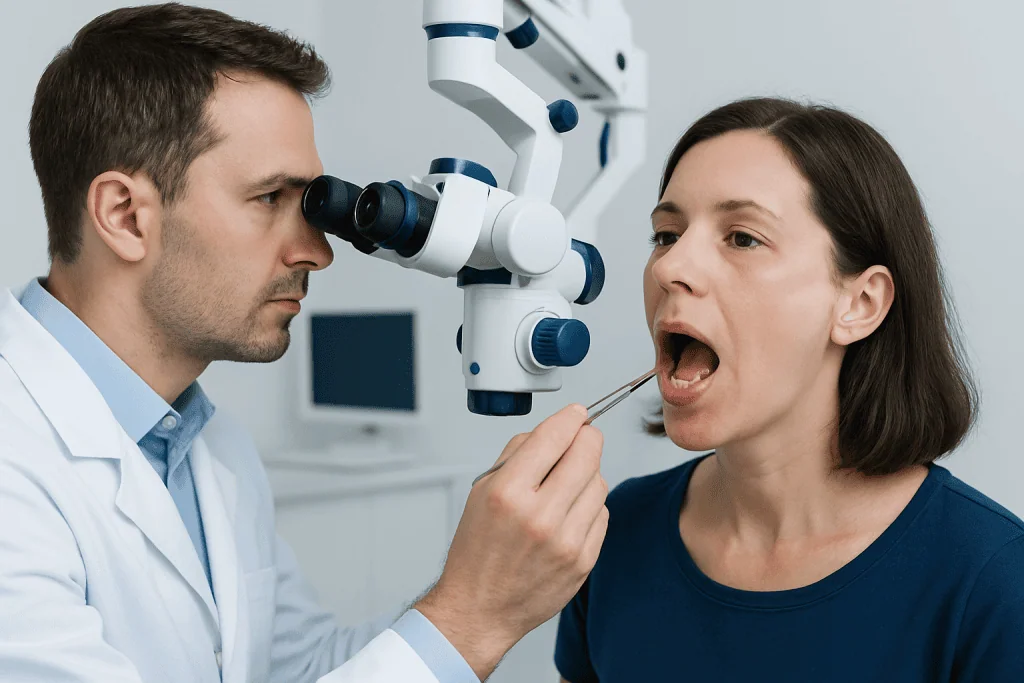
People who search for oral cancer pictures are often trying to compare a symptom they can see or feel. Early oral cancer may appear as a small ulcer with raised edges, a flat white patch, a red patch, or an area with mixed red-and-white discoloration. Some lesions look rough, crusted, or thickened rather than ulcer-like. On the lip, the surface may appear persistently cracked or scaly.
Color changes can matter. White patches are called leukoplakia, and red patches are called erythroplakia; both can have noncancerous causes, but persistent patches deserve assessment because some contain precancerous or cancerous cells. A lesion may also look like a firm lump, swelling, or an area that bleeds easily when touched or while brushing teeth.
Changes are not limited to what is visible. A person may notice a new numb area, a loose tooth without an obvious dental reason, difficulty moving the tongue, or a feeling that something is stuck in the throat. These symptoms can accompany visible abnormalities and should not be ignored if they continue.
- Sore in the mouth that does not heal
- White, red, or mixed-color patches
- Lump, thickening, or swelling
- Unexplained bleeding or tenderness
- Persistent lip crusting or a nonhealing crack
Symptoms and warning signs beyond pictures

Oral cancer is not always obvious in a photo, especially when it starts in less visible parts of the mouth or throat. Symptoms can include pain when chewing, difficulty swallowing, ear pain on one side, ongoing bad breath, a change in speech, or trouble fitting dentures that previously felt comfortable. Some people first notice enlarged lymph nodes in the neck.
Not every persistent mouth problem is cancer, but certain patterns are more concerning. A symptom that lasts longer than two weeks, gradually worsens, or keeps returning in the same place should be checked. This is especially important if the person also has known risk factors such as smoking or heavy alcohol use.
Some oral cancers cause few symptoms early on. For that reason, routine dental examinations can be valuable, since dentists often inspect the soft tissues of the mouth and may spot changes before they become more advanced. A visible lesion plus symptoms such as numbness, jaw stiffness, or unexplained weight loss needs timely medical attention.
Causes and risk factors
Oral cancer develops when cells in the mouth acquire genetic changes that allow them to grow in an uncontrolled way. There is not always a single cause, but several factors are strongly linked to increased risk. Tobacco use is one of the most important, including cigarettes, cigars, pipes, and smokeless tobacco. Alcohol also raises risk, and the combination of tobacco and alcohol is especially harmful.
Human papillomavirus, particularly certain high-risk types, is more strongly associated with cancers in the oropharynx, but it is still an important part of the wider discussion about mouth and throat cancers. Long-term sun exposure increases the risk of cancer of the lips. Risk also rises with age, and poor oral hygiene, chronic irritation, or a weakened immune system may contribute in some cases.
Having a risk factor does not mean a person will definitely develop cancer, and some people with oral cancer have no clear risk factors. Even so, reducing avoidable exposures can lower risk. People who want a broader understanding of oral cancer and related head and neck conditions may benefit from discussing their personal risk profile with a qualified clinician.
- Tobacco in any form
- Regular heavy alcohol use
- HPV-related disease in some mouth and throat cancers
- Sun exposure to the lips
- Increasing age and immune suppression
How oral cancer is diagnosed
Diagnosis begins with a careful history and physical examination. A doctor or dentist will ask how long the lesion has been present, whether it has changed, and whether there are symptoms such as pain, bleeding, numbness, or trouble swallowing. They will inspect the entire mouth and often feel the neck for enlarged lymph nodes.
If an area looks suspicious, the next step is usually a biopsy. This means removing a small tissue sample so it can be examined under a microscope. A biopsy is the only way to confirm whether an abnormal spot is cancer, precancer, or a benign condition. Depending on the location, additional imaging may be used to assess the size of the tumor or whether nearby structures are involved.
Imaging tests may include MRI scans, CT scans, ultrasound, or PET/CT in selected cases. These tests do not replace biopsy, but they help with staging and treatment planning. Because mouth lesions can have many causes, it is important not to rely on online images alone when a lesion persists.
Treatment options for oral cancer
Treatment depends on the size and location of the cancer, whether lymph nodes are involved, and the person’s overall health. Surgery is often a main treatment for localized oral cancer and may involve removing the tumor along with a margin of healthy tissue. In some cases, surgery also includes treatment of lymph nodes in the neck.
Radiation therapy may be used after surgery, instead of surgery in selected situations, or together with other treatments. Chemotherapy, targeted therapy, or immunotherapy may also be recommended depending on the stage and specific features of the cancer. For some patients, a combination approach offers the best chance of controlling the disease while preserving function as much as possible.
Reconstruction and rehabilitation can be important parts of care, especially if speech, swallowing, or appearance are affected. Support may include nutrition counseling, dental support, speech and swallowing therapy, and follow-up imaging. Readers exploring broader cancer care may also find information on cancer treatment and radiation therapy helpful. Near the end of the care pathway, Acibadem International’s multidisciplinary specialists and JCI-accredited hospitals diagnose and treat oral cancer for international patients.
Prevention and self-check habits
No prevention plan can eliminate risk completely, but several practical steps can help lower it. Avoiding tobacco is one of the most effective measures. Limiting alcohol, protecting the lips from sun exposure, maintaining good oral hygiene, and keeping regular dental visits are also sensible habits. HPV vaccination may reduce the risk of some HPV-related head and neck cancers according to public health recommendations.
Self-checks can support awareness but should not replace professional screening. In good light, a person can look at the lips, gums, tongue, inside of the cheeks, roof of the mouth, and floor of the mouth using a mirror. Areas to watch for include sores, color changes, new lumps, swelling, or surface changes that do not improve.
Dentures or broken teeth can sometimes cause irritation, but a sore thought to be from friction should still improve after the source is corrected. If it does not, medical review is appropriate. Prevention is not only about reducing risk; it is also about recognizing concerning changes early enough for prompt evaluation.
When to seek medical care
Medical or dental care is recommended if a mouth sore, patch, lump, or lip lesion lasts longer than two weeks. Assessment is also important sooner if the area is enlarging, bleeding easily, causing significant pain, or making it hard to eat, speak, or swallow. A neck lump, numbness in the mouth, or a loose tooth without a clear reason should also be checked.
Urgent evaluation may be needed if swallowing becomes difficult enough to affect hydration or nutrition, or if there is rapid swelling. People with a history of tobacco use, heavy alcohol use, prior head and neck cancer, or immune suppression should be especially cautious about persistent mouth changes. Early assessment does not mean cancer is likely; it simply helps rule out serious causes and allows faster treatment when needed.
Even if a lesion resembles images found online, only a clinician can determine whether it is harmless, precancerous, or malignant. A prompt appointment with a dentist, oral surgeon, ENT specialist, or oncologist is the safest next step when warning signs persist.
Frequently asked questions
Can oral cancer pictures diagnose oral cancer?
No. Oral cancer pictures are useful for education and awareness, but they cannot confirm what a lesion is. A biopsy and medical examination are needed to make a diagnosis.
What does early oral cancer usually look like?
Early oral cancer may look like a sore that does not heal, a red or white patch, a lump, or an area of thickened tissue. It can also appear as a cracked or crusted lip lesion or a spot that bleeds easily.
How long should a mouth sore last before seeing a doctor?
A mouth sore or patch that lasts more than two weeks should be examined by a dentist or doctor. This does not mean it is cancer, but persistent lesions need assessment to rule out serious causes.
Are white patches in the mouth always cancer?
No, white patches can have several causes, including irritation, infection, or inflammatory conditions. However, a persistent white patch should be evaluated because some can be precancerous or cancerous.
Who is most at risk for oral cancer?
People who use tobacco, drink alcohol heavily, have significant sun exposure to the lips, or are older may have a higher risk. Some mouth and throat cancers are also associated with HPV infection.
Is oral cancer treatable if found early?
Yes. When found early, oral cancer is often more manageable and treatment may be less extensive. Outcomes depend on the exact type, location, stage, and the person’s general health.
References
- National Cancer Institute
- American Cancer Society
- World Health Organization
- National Institute of Dental and Craniofacial Research
- Centers for Disease Control and Prevention
This article is for general information only and is not a substitute for professional medical advice. Please consult a qualified doctor about your individual situation.
Oncology care in Turkey — second opinion and treatment plan
JCI-accredited · board-certified surgeons · reply within 24h
Add us as a Preferred Source to see more of our trusted health content across Google Search, AI Overviews and Discover.