Orthopedic Specialist for Kids: An Evidence-Based Patient Guide
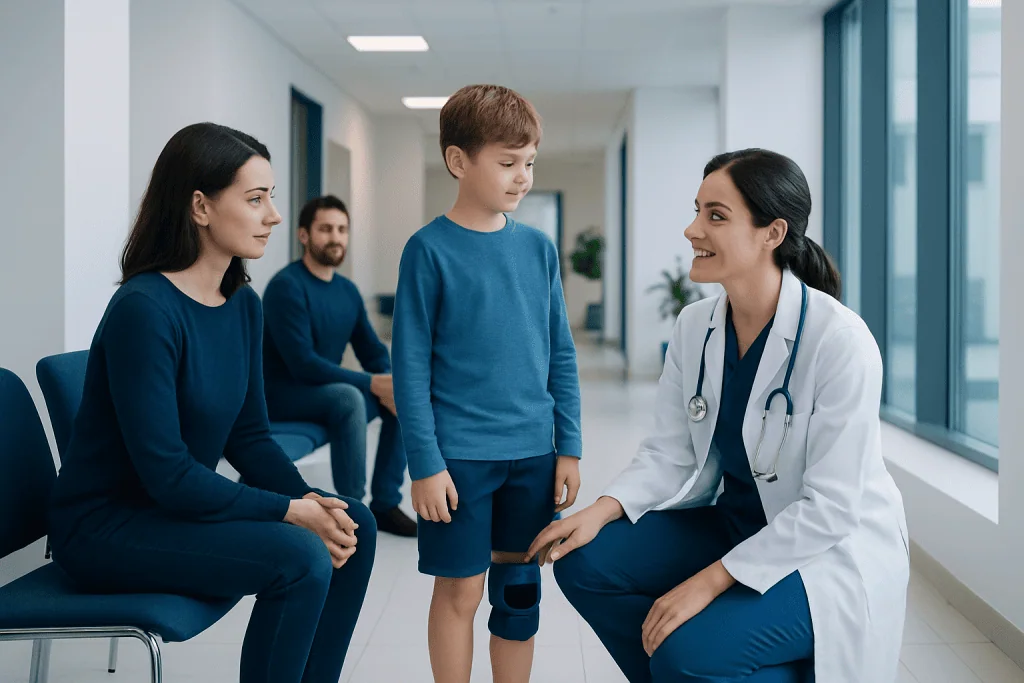
Pediatric orthopedic specialists focus on musculoskeletal conditions in growing children. Many childhood gait, posture, and limb concerns improve with monitoring or non-surgical care.
Key Takeaways
- Pediatric orthopedic specialists focus on musculoskeletal conditions in growing children.
- Many childhood gait, posture, and limb concerns improve with monitoring or non-surgical care.
- A child may be referred for fractures, pain, limping, scoliosis, hip concerns, sports injuries, or limb differences.
- Assessment usually includes a medical history, physical examination, and imaging only when clinically needed.
- Urgent evaluation is important for severe pain, an inability to bear weight, fever with a painful joint, or a visibly deformed limb.
An orthopedic specialist for kids is a doctor trained to assess and manage bone, joint, muscle, spine, and movement concerns in infants, children, and adolescents. They consider how growth affects diagnosis and treatment, often using observation, physiotherapy, bracing, or casting before surgery is considered.
Overview: What Does an Orthopedic Specialist for Kids Do?
An orthopedic specialist for kids, also called a pediatric orthopedist, diagnoses and treats conditions affecting the bones, joints, muscles, tendons, ligaments, spine, and nerves that support movement. These specialists understand that children are not simply smaller adults: bones are still growing, growth plates are present, and many normal developmental variations change naturally over time.
Children may see a specialist after a fracture or sports injury, but referrals are also common for limping, persistent pain, a change in walking pattern, curved spine, hip clicking, flat feet, inward- or outward-turning feet, limb alignment concerns, or congenital differences. The aim is to identify whether a finding is a normal stage of development, a condition requiring follow-up, or a problem that needs treatment.
Care is individualized according to the child’s age, symptoms, examination findings, activity level, and expected growth. Pediatric orthopedic care often involves a team that may include pediatricians, radiologists, physiotherapists, rehabilitation professionals, genetic specialists, neurologists, and pediatric surgeons when appropriate.
Common Reasons a Child May Be Referred
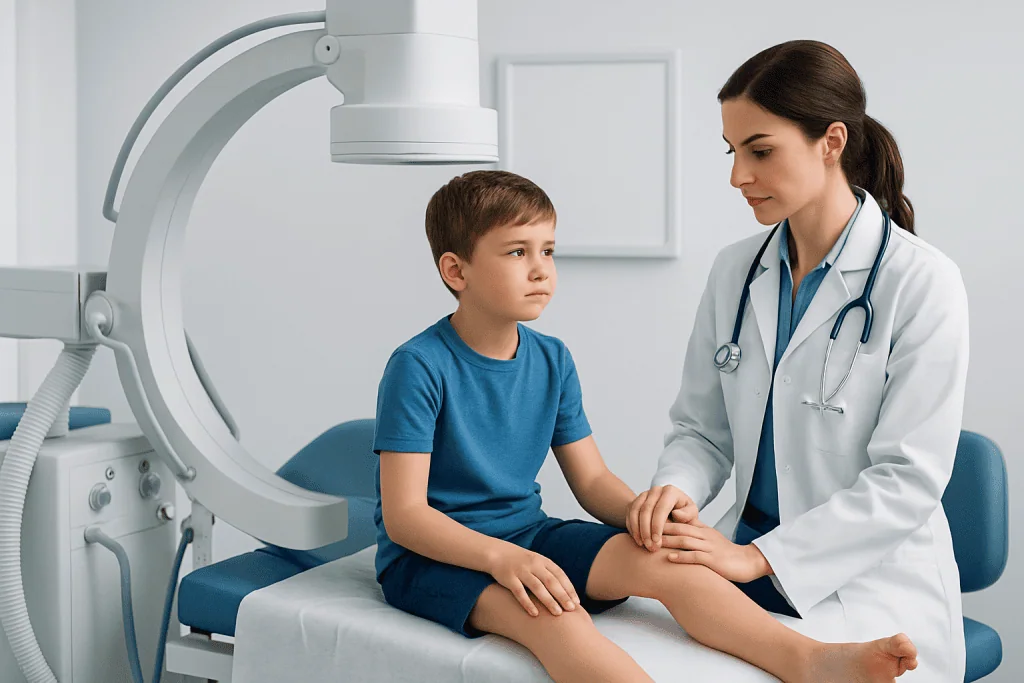
Some referrals are prompted by an acute event, such as a fall, collision, or twisting injury. Others arise gradually, for example when parents notice uneven shoulders, frequent tripping, a limp, pain during sports, or a foot position that does not seem to be improving. A pediatrician may also identify a concern during a routine developmental or physical examination.
Common conditions assessed by an orthopedic specialist for kids include fractures; sprains and growth-plate injuries; hip dysplasia; scoliosis; limb-length differences; clubfoot; bone and joint infections; inflammatory joint problems; and developmental variations in leg or foot alignment. Conditions that affect mobility, including cerebral palsy, may also require coordinated orthopedic input to support comfort, positioning, walking, and independence.
- Persistent or recurrent bone, joint, back, or muscle pain
- A limp, refusal to walk, or reduced use of an arm or leg
- Visible changes in limb shape, posture, or spinal alignment
- Fractures, particularly complex fractures or injuries near a growth plate
- Sports-related injuries that do not settle as expected
- Concerns present from birth or noted during early development
Not every variation requires intervention. For example, some toddlers naturally have bowed legs, and many young children temporarily walk with their feet turned inward. A specialist can explain what is typical for a child’s stage of development and arrange follow-up if needed.
How the Assessment Works
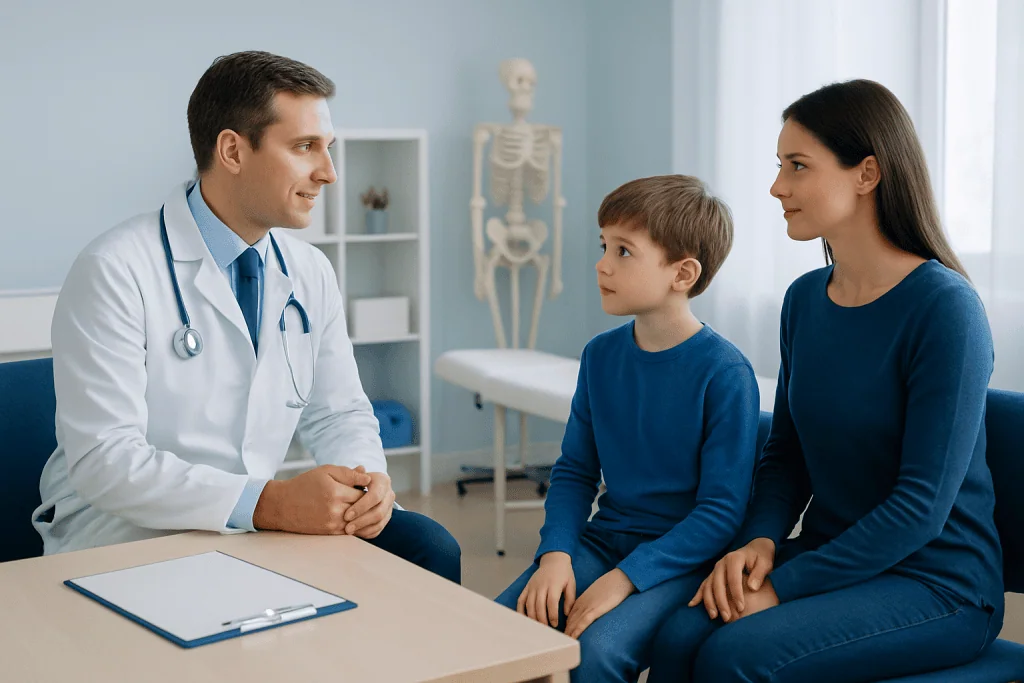
The first consultation usually begins with a detailed history. Parents or caregivers may be asked when symptoms began, whether there was an injury, what makes symptoms better or worse, whether the child has fever or nighttime pain, and how the issue affects walking, school, play, sleep, or sports. Information about birth history, development, previous illnesses, medicines, and family history can also be relevant.
The physical examination is adapted to the child’s age and comfort. The specialist may observe how the child sits, stands, walks, runs, or uses an affected limb. They may assess joint movement, muscle strength, tenderness, balance, spinal alignment, leg length, and the shape of the feet. For infants, hip and limb examinations are especially important.
Imaging is not always needed. When it is clinically useful, the doctor may request an X-ray, ultrasound, MRI, CT scan, or other tests. X-rays can help assess fractures, bone alignment, or spinal curves; ultrasound can be useful for some infant hip assessments; and MRI may provide more detail about soft tissues, cartilage, bone marrow, or certain injuries without using ionizing radiation.
Parents can help by bringing prior scans or reports, a list of medicines, and notes about symptoms. Short videos of an intermittent limp, unusual movement, or sport-related difficulty can sometimes be useful when the concern is not apparent during the appointment.
Treatment Options and When Procedures Are Considered
Treatment depends on the diagnosis, severity, the child’s age, and the likely effect of future growth. Many children need reassurance and periodic review rather than active treatment. When care is needed, non-surgical options may include activity modification, pain management advised by a clinician, physiotherapy, exercises, orthotics, casting, splinting, or bracing.
For fractures, the specialist may recommend a cast, removable brace, or splint to keep the bone protected while it heals. Some displaced or unstable fractures need a procedure to restore alignment. Pediatric orthopedic surgery may also be considered for selected congenital conditions, significant spinal deformity, severe limb deformity, certain hip disorders, infections requiring drainage, or injuries that cannot be safely managed without an operation.
Surgery is not the default response to a pediatric orthopedic diagnosis. If it is recommended, the team should explain the goal of the procedure, alternatives, expected benefits, possible risks, and how growth may affect future care. Families should have an opportunity to ask questions and take part in decisions.
In some situations, orthopedic care overlaps with rehabilitation. Physical therapy and rehabilitation can help restore safe movement, strength, confidence, and function after injury, immobilization, surgery, or a condition affecting mobility.
If a Procedure Is Needed: Candidacy, Steps, Benefits and Risks
A child may be a candidate for an orthopedic procedure when a condition is unlikely to improve with observation or non-surgical treatment, when pain or function is significantly affected, or when delaying treatment could make correction more difficult. The decision is based on clinical findings rather than age alone. The specialist will consider the child’s overall health, skeletal maturity, imaging results, symptoms, and family goals.
Before a planned procedure, the child generally has a preoperative review that may include medical history, examination, anesthesia assessment, and any necessary tests. On the day of treatment, the child is prepared in an age-appropriate way, and anesthesia or sedation is provided when required. The procedure may involve setting a fracture, placing or removing fixation devices, correcting bone alignment, treating soft-tissue structures, or addressing a joint or spine problem. The exact steps vary greatly by diagnosis.
Potential benefits include improved alignment, healing, pain relief, stability, mobility, or protection of long-term function. However, all procedures carry potential risks. These can include bleeding, infection, reactions to anesthesia, blood clots, stiffness, nerve or blood-vessel injury, delayed healing, incomplete correction, recurrence, or a need for further treatment. The likelihood and relevance of each risk depend on the individual procedure and child.
Families should receive clear instructions about preparation, fasting if anesthesia is planned, medicines, pain control, wound or cast care, activity restrictions, and follow-up. A second opinion may be reasonable for complex diagnoses or major surgery, particularly when there is time to consider options safely.
Recovery and Follow-Up
Recovery timelines vary widely. A minor injury treated with a splint may improve over days to weeks, while recovery after fracture fixation, spinal treatment, or reconstructive surgery can take longer and may involve several stages. The orthopedic team will give a plan based on the condition, procedure, and child’s healing progress.
Follow-up visits may include examination and repeat imaging to confirm that a bone, joint, or spine is healing or developing as expected. Children with casts, braces, or mobility restrictions may need practical guidance for school, bathing, transport, sleep, and return to play. Caregivers should follow the specific restrictions provided rather than comparing recovery with another child’s experience.
Physiotherapy may be recommended after certain injuries or operations to regain range of motion, strength, coordination, and confidence. Return to sports should be gradual and based on medical advice, particularly after a fracture, ligament injury, surgery, or a period of reduced activity. Returning too early may raise the risk of reinjury.
Contact the treating team promptly if pain is worsening rather than improving, a cast feels too tight, fingers or toes become pale, blue, cold, numb, or increasingly swollen, there is drainage from a wound, or the child develops fever or seems unwell. These symptoms do not always indicate a serious problem, but timely assessment is important.
Supporting Bone and Joint Health at Home
Parents cannot prevent every orthopedic condition or injury, but everyday habits can support healthy growth and movement. Children benefit from regular age-appropriate physical activity, sufficient sleep, balanced nutrition, and safe participation in play and sport. A clinician can advise on individual needs where there are dietary restrictions, chronic health conditions, or concerns about growth.
Properly fitted protective equipment, well-maintained sports environments, and coaching on safe technique can help reduce some sports injuries. Children should be encouraged to report pain rather than being expected to play through it. Persistent pain, swelling, limping, or reduced performance should be assessed before the child returns to demanding activity.
It is usually best to avoid buying braces, shoe inserts, or corrective devices without professional advice. Many foot and leg alignment differences in young children are part of typical development, and unnecessary devices may not help. A pediatric orthopedic specialist can advise whether observation, footwear changes, therapy, or another approach is appropriate.
Acibadem International’s multidisciplinary specialists and JCI-accredited hospitals provide assessment and treatment for pediatric orthopedic conditions for international patients, with care plans tailored to the child’s diagnosis and developmental stage.
When to Seek Medical Care
Parents should arrange medical assessment for a child with persistent or recurring pain, a limp lasting more than a short period, difficulty using an arm or leg, a suspected fracture, a noticeable change in posture or spinal shape, or symptoms that interfere with normal activity. A pediatrician can often guide the initial assessment and refer to an orthopedic specialist for kids when needed.
Urgent medical evaluation is recommended after a significant injury with deformity, severe pain, inability to bear weight, or loss of movement. Prompt assessment is also important when a painful joint or bone is accompanied by fever, redness, warmth, swelling, or a child who appears generally unwell, because infection and other causes need to be considered.
Seek emergency care for a limb that is pale, blue, cold, numb, or severely swollen after an injury or cast placement, or for uncontrolled bleeding. If a child has severe back pain with weakness, numbness, bladder or bowel changes, or difficulty walking, urgent assessment is also needed.
Early review does not mean that a serious condition is likely. It helps clinicians identify problems that need treatment and reassure families when a child’s symptoms or development are within an expected range.
Frequently asked questions
What is the difference between a pediatric orthopedist and an orthopedic surgeon?
A pediatric orthopedist is an orthopedic doctor with expertise in musculoskeletal conditions affecting infants, children, and adolescents. Some pediatric orthopedists perform surgery, but many appointments focus on assessment, monitoring, casting, bracing, rehabilitation, and non-surgical treatment. Surgical care is considered only when it is appropriate for the child’s diagnosis.
Does a child need a referral to see an orthopedic specialist for kids?
This depends on the local healthcare system, insurance requirements, and the clinic’s policies. A pediatrician, family doctor, emergency clinician, or sports medicine clinician may recommend referral after an initial assessment. Parents can contact the relevant service to ask about appointment requirements.
Should parents worry about in-toeing or bowed legs?
In-toeing and bowed legs are common developmental patterns at some ages and often improve as a child grows. Assessment is helpful if the pattern is severe, affects walking or activity, causes pain, is worsening, or is more pronounced on one side. A specialist can determine whether monitoring or treatment is needed.
When does a child’s limp need urgent attention?
A limp should be assessed promptly if the child cannot bear weight, has severe pain, fever, redness or swelling around a joint, or appears unwell. Urgent assessment is also important after injury, particularly if there is deformity or reduced movement. A mild limp that persists or recurs should still be discussed with a clinician.
Are X-rays safe for children?
When medically necessary, X-rays use a low dose of ionizing radiation and are performed with measures to keep exposure as low as reasonably achievable. The doctor will request imaging only when the expected diagnostic value outweighs the small associated risk. Other imaging methods, such as ultrasound or MRI, may be used in certain situations.
How long before a child can return to sports after an orthopedic injury?
The timeline depends on the injury, treatment, pain level, healing, strength, range of motion, and the demands of the sport. A child should return only when the treating clinician advises that it is safe, often with a gradual progression. Returning before healing is adequate may increase the chance of reinjury.
References
- American Academy of Orthopaedic Surgeons
- American Academy of Pediatrics
- OrthoInfo
- National Institute of Arthritis and Musculoskeletal and Skin Diseases
- World Health Organization
This article is for general information only and is not a substitute for professional medical advice. Please consult a qualified doctor about your individual situation.
Joint and spine care in Turkey — expert assessment & treatment
JCI-accredited · board-certified surgeons · reply within 24h
Add us as a Preferred Source to see more of our trusted health content across Google Search, AI Overviews and Discover.

More from the Health Library



Related Specialists

Prof. Dr. İlker Yağcı
Physical Medicine & Rehabilitation
Prof. Dr. Berna Özkan
Ophthalmology
Dr. Cem Tekin Baran
Orthopedic Surgery & Traumatology
Dr. Cansu Yılmaz
Pediatrics