Osteoarthritis: Joint Wear, Pain Control, and Treatment Planning

Osteoarthritis is not simply “wear and tear”; it involves the whole joint, including cartilage, bone, ligaments, muscles, and joint lining. Symptoms often include activity-related pain, short-lived stiffness, swelling, reduced movement, and occasional grinding or clicking.
Key Takeaways
- Osteoarthritis is not simply “wear and tear”; it involves the whole joint, including cartilage, bone, ligaments, muscles, and joint lining.
- Symptoms often include activity-related pain, short-lived stiffness, swelling, reduced movement, and occasional grinding or clicking.
- Treatment usually starts with education, weight management when needed, targeted exercise, and pain control tailored to the person.
- Medications, injections, physical therapy, braces, and assistive devices may help, but they should be chosen with a doctor’s guidance.
- Joint replacement surgery may be considered when severe osteoarthritis limits daily life despite well-planned non-surgical care.
Osteoarthritis is a common joint condition in which cartilage, bone, and surrounding tissues change over time, leading to pain, stiffness, and reduced movement. With the right diagnosis and a step-by-step treatment plan, many people can stay active and manage symptoms safely.
Overview
Osteoarthritis is the most common form of arthritis and a frequent cause of joint pain in adults. It can affect many joints, but it is especially common in the knees, hips, hands, spine, and feet. Although people often describe it as “joint wear,” osteoarthritis is more than simple aging of cartilage. It is a whole-joint condition involving cartilage, bone, the joint lining, ligaments, tendons, and the muscles that support movement.
In a healthy joint, smooth cartilage helps bones glide with low friction. In osteoarthritis, cartilage can become thinner or less resilient, and the bone underneath may change shape. The joint may react by producing extra fluid, forming bony enlargements called osteophytes, or becoming inflamed at times. These changes can lead to pain, stiffness, swelling, and reduced function.
Osteoarthritis usually develops gradually. Some people have mild changes on an X-ray with little discomfort, while others experience significant pain and limitation. This is why treatment should focus on the person, not only the scan. The goal is to reduce pain, improve movement, protect independence, and plan care in a way that matches the patient’s health, lifestyle, and priorities.
Symptoms and Commonly Affected Joints
Osteoarthritis symptoms vary from person to person and may come and go. Pain is often worse with activity and improves with rest, especially in the early stages. Stiffness may occur after sitting or first thing in the morning, but it usually lasts a shorter time than in many inflammatory forms of arthritis. People may also notice swelling, warmth, grinding sensations, clicking, reduced flexibility, or a feeling that the joint is less stable.
Knee osteoarthritis can cause pain when walking, climbing stairs, squatting, or getting up from a chair. Hip osteoarthritis may be felt in the groin, outer hip, thigh, or sometimes the knee, and can make it difficult to put on socks or shoes. Hand osteoarthritis may affect the finger joints or the base of the thumb, causing aching, stiffness, reduced grip strength, and bony enlargement. Spine osteoarthritis may contribute to neck or lower back stiffness and, in some cases, nerve-related symptoms if nearby structures are compressed.
Symptoms that can suggest osteoarthritis include:
- Pain during or after joint use
- Brief stiffness after rest
- Reduced range of motion
- Swelling or a sense of fullness around the joint
- Crepitus, which means a grinding or crackling sensation
- Difficulty with daily activities such as walking, dressing, gripping, or kneeling
Causes and Risk Factors
Osteoarthritis develops when the normal repair processes inside a joint can no longer keep up with mechanical stress, injury, inflammation, or age-related tissue changes. It is not caused by one single factor. Instead, it often reflects a combination of joint structure, genetics, previous injury, body weight, muscle strength, work or sport history, and general health.
Age is an important risk factor, but osteoarthritis is not inevitable. Previous joint injury, such as a ligament tear or fracture involving the joint surface, can increase the risk later in life. Repetitive heavy loading, certain occupations, high-impact activities after injury, and joint alignment issues may also contribute. Excess body weight increases load across weight-bearing joints such as the knees and hips, and body fat may also influence inflammation through metabolic pathways.
Risk factors may include:
- Older age, especially after midlife
- Family history of osteoarthritis
- Previous joint injury or surgery
- Higher body weight, particularly for knee osteoarthritis
- Joint shape, alignment, or instability problems
- Muscle weakness or poor movement mechanics
- Some metabolic conditions, such as diabetes, which may influence joint health
Understanding risk factors helps guide treatment. For example, strengthening muscles around the knee can reduce joint load, while weight management may improve symptoms in some patients. A doctor or physiotherapist can help identify which factors are most relevant for an individual patient.
Diagnosis and Assessment
Diagnosis usually begins with a medical history and physical examination. The doctor asks where the pain is located, when it occurs, how long stiffness lasts, what activities are difficult, and whether there has been injury, swelling, locking, or instability. The examination may assess joint tenderness, range of motion, swelling, alignment, walking pattern, muscle strength, and function.
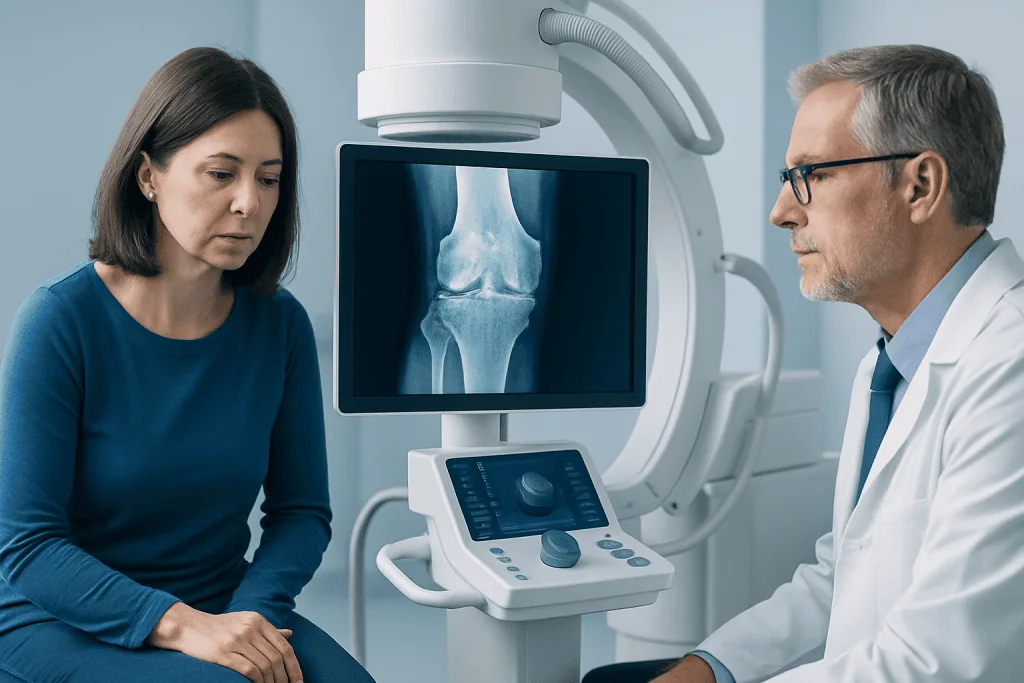
X-rays are often used when symptoms persist, when the diagnosis is uncertain, or when treatment planning requires more detail. X-rays may show joint space narrowing, osteophytes, bone thickening, or changes in alignment. However, imaging results do not always match pain levels. A person can have visible osteoarthritis with few symptoms, or significant pain with modest X-ray findings. For this reason, clinical assessment remains essential.
Blood tests are not needed for every patient with typical osteoarthritis, but they may be ordered if the doctor suspects another condition, such as rheumatoid arthritis, gout, infection, or another inflammatory disease. MRI or ultrasound may be considered in selected cases, for example if there are symptoms of meniscus injury, tendon problems, unexplained swelling, or if surgery is being planned.
Treatment Options: A Step-by-Step Plan
Osteoarthritis treatment is usually layered, beginning with the safest and most sustainable strategies. Education is important because patients who understand their condition often feel more confident moving, pacing activity, and using pain relief appropriately. Treatment should be personalized according to the affected joint, symptom severity, medical history, work demands, and personal goals.
Exercise is a core part of osteoarthritis care. Strengthening exercises support the joint and may reduce pain, while flexibility and range-of-motion exercises help maintain movement. Low-impact aerobic activities such as walking, cycling, swimming, or water exercise can support general health. A physiotherapist can help design a program that progresses gradually and avoids flare-ups. Short periods of increased discomfort can occur when starting exercise, but severe or lasting pain should be reviewed.
Pain control may include topical anti-inflammatory medicines, oral pain relievers, or oral anti-inflammatory drugs when appropriate. These options are not suitable for everyone, especially people with kidney disease, stomach ulcers, heart disease, blood pressure problems, or those taking blood thinners. A doctor or pharmacist should guide medication choice and duration. Some patients may benefit from joint injections, such as corticosteroid injections for short-term relief during a flare; other injection options should be discussed carefully because benefits vary and not all are recommended for every joint or patient.
Supportive devices can make daily life easier. Canes, walking poles, shoe inserts, knee braces, thumb splints, ergonomic tools, or raised seating may reduce strain and improve confidence. Surgery, including joint replacement, may be considered when pain and disability remain significant despite appropriate non-surgical care. Hip and knee replacement can be effective for carefully selected patients, but timing should be individualized after discussion of benefits, risks, recovery, and expectations.
Prevention, Self-Care, and Daily Living
Not all osteoarthritis can be prevented, but many people can reduce symptoms and protect joint function with consistent self-care. Maintaining a healthy weight, when relevant, can reduce load on the knees, hips, and feet. Even modest weight reduction may help some patients, but goals should be realistic and supportive rather than restrictive. A balanced diet, adequate protein, and attention to overall health can support muscle strength and mobility.
Activity pacing is a practical skill. Instead of stopping activity completely, patients may benefit from breaking tasks into shorter sessions, alternating heavier and lighter activities, and planning rest before pain becomes severe. Heat can ease stiffness, especially before movement, while cold packs may help swelling or soreness after activity. Comfortable footwear and safe walking surfaces can also reduce strain and fall risk.
Joint-friendly habits include:
- Choosing low-impact exercise most days, as tolerated
- Strengthening the muscles around affected joints
- Using assistive devices early when they improve function
- Avoiding long periods in one position
- Warming up before activity and increasing exercise gradually
- Seeking help for persistent sleep problems, mood changes, or fear of movement
It is also important to be cautious with supplements and unproven treatments. Some products may interact with medicines or have uncertain benefits. Patients should discuss supplements, injections, or alternative therapies with a qualified healthcare professional, especially if they have other medical conditions.
When to See a Doctor
A medical evaluation is recommended if joint pain lasts more than a few weeks, interferes with walking or daily tasks, causes repeated swelling, or does not improve with simple measures. Early assessment can confirm the diagnosis, rule out other causes, and help create a plan before symptoms lead to reduced activity and muscle weakness.
Patients should seek prompt medical advice if a joint becomes suddenly very swollen, red, hot, or extremely painful, especially with fever or feeling unwell. Sudden inability to bear weight, major injury, new numbness or weakness, or severe night pain should also be assessed without delay. These symptoms do not always mean something serious, but they deserve timely evaluation.
People considering injections, long-term medication use, or surgery should discuss options with an orthopedic specialist or another qualified clinician. At Acibadem International, multidisciplinary specialists in JCI-accredited hospitals diagnose and treat osteoarthritis for international patients, including imaging assessment, rehabilitation planning, pain management, and surgical consultation when appropriate.
Frequently asked questions
Is osteoarthritis the same as “wear and tear”?
Osteoarthritis is often described as wear and tear, but that phrase is incomplete. It involves changes in cartilage, bone, joint lining, ligaments, and muscles, as well as the body’s repair and inflammation responses. This is why treatment can include exercise, weight management, pain control, and sometimes surgery.
Can exercise make osteoarthritis worse?
Appropriate exercise usually helps osteoarthritis rather than harms it. Strengthening, stretching, and low-impact aerobic activity can reduce pain and improve function over time. The key is to start gradually, use good technique, and adjust the plan if pain becomes severe or persists after activity.
Does an X-ray show how much pain a person should have?
Not always. Some people have significant X-ray changes with little pain, while others have troubling symptoms with milder imaging findings. Doctors interpret X-rays together with the patient’s symptoms, physical examination, activity limitations, and treatment goals.
What is the best medicine for osteoarthritis pain?
There is no single best medicine for everyone. Topical anti-inflammatory medicines, oral pain relievers, and oral anti-inflammatory drugs may be considered depending on the joint involved and the person’s medical history. A doctor should guide medication choices, especially for people with heart, kidney, stomach, blood pressure, or bleeding risks.
Do joint injections cure osteoarthritis?
Joint injections do not cure osteoarthritis or rebuild a normal joint. Some injections may provide temporary pain relief for selected patients, especially during a flare, but benefits vary. The decision should be made after discussing the diagnosis, risks, expected duration of relief, and alternative treatments with a clinician.
When is joint replacement considered?
Joint replacement may be considered when osteoarthritis causes severe pain, loss of function, and reduced quality of life despite well-planned non-surgical treatment. The decision depends on symptoms, imaging, general health, personal goals, and readiness for rehabilitation. An orthopedic surgeon can explain the potential benefits, risks, recovery process, and expected limitations.
References
- World Health Organization
- National Institute for Health and Care Excellence
- American Academy of Orthopaedic Surgeons
- American College of Rheumatology
- European Alliance of Associations for Rheumatology
This article is for general information only and is not a substitute for professional medical advice. Please consult a qualified doctor about your individual situation.
Osteoarthritis in Turkey — costs, top hospitals & a free quote
JCI-accredited · board-certified surgeons · reply within 24h
Add us as a Preferred Source to see more of our trusted health content across Google Search, AI Overviews and Discover.
Check your numbers in seconds
BMI, calories, due date, blood pressure and 30+ more clinical calculators — free, instant, doctor-reviewed ranges.

Physical Medicine & Rehabilitation
Restoring movement and function after injury, surgery or neurological conditions.
150 specialists in this unitMore from the Health Library



Related Specialists

Prof. Dr. S. Tolga Aydoğ
Physical Medicine & Rehabilitation
Fzt. Osman Karaoğlan
Physical Medicine & Rehabilitation
Fzt. Munise Nilay Güven
Physical Medicine & Rehabilitation
Dr. Ahmet Ali Aktaş
General Surgery