Osteoarthritis: Joint Wear, Pain Relief, and Mobility Care

Osteoarthritis is not simply wear and tear; it involves the whole joint, including cartilage, bone, ligaments, muscles, and joint lining. Typical symptoms include joint pain, short-lived stiffness, swelling, reduced range of motion, and creaking or grinding sensations.
Key Takeaways
- Osteoarthritis is not simply wear and tear; it involves the whole joint, including cartilage, bone, ligaments, muscles, and joint lining.
- Typical symptoms include joint pain, short-lived stiffness, swelling, reduced range of motion, and creaking or grinding sensations.
- Treatment usually combines exercise, physical therapy, weight management, pain-relieving medicines, supportive devices, and sometimes injections or surgery.
- Regular low-impact movement is one of the most helpful ways to reduce stiffness and support joint function.
- A doctor should assess persistent joint pain, swelling, sudden worsening, loss of function, or symptoms that affect daily activities.
Osteoarthritis is a common joint condition in which cartilage and other joint tissues gradually change, leading to pain, stiffness, and reduced movement. With the right diagnosis, exercise, weight management, pain relief, and medical care when needed, many people can stay active and protect their quality of life.
Overview
Osteoarthritis is the most common form of arthritis and a leading cause of joint pain in adults. It develops when the tissues inside and around a joint change over time. Cartilage, the smooth protective tissue that helps bones glide over one another, may become thinner or uneven. The bone beneath it can remodel, the joint lining may become mildly inflamed, and surrounding muscles and ligaments may become less supportive.
Although osteoarthritis is often described as joint wear and tear, this phrase does not tell the whole story. The condition is influenced by age, previous injury, body weight, genetics, muscle strength, joint alignment, and everyday mechanical load. It can affect almost any joint, but it is especially common in the knees, hips, hands, spine, and big toes.
Osteoarthritis usually progresses slowly. Symptoms may come and go, and many people have periods when they feel better and times when pain or stiffness increases. The aim of care is to reduce pain, maintain mobility, improve strength, and support daily independence. Early guidance can help people make safe choices and avoid unnecessary loss of activity.
Symptoms and Commonly Affected Joints
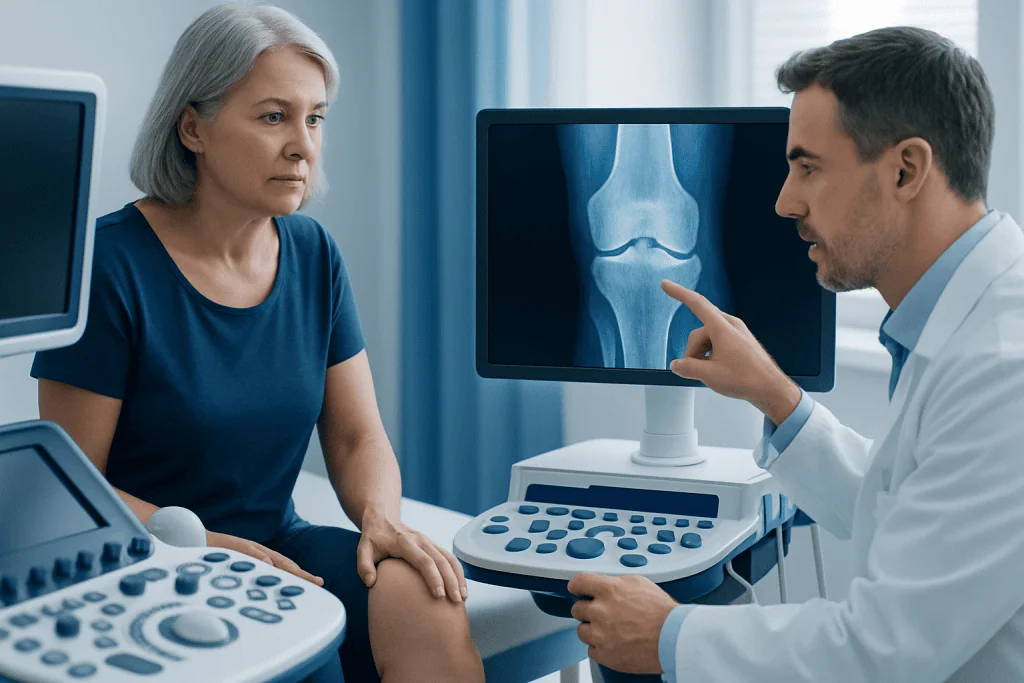
The main symptom of osteoarthritis is joint pain. Pain may be worse after activity, after standing for a long time, or at the end of the day. Some people also feel stiffness after resting, especially in the morning or after sitting. In osteoarthritis, morning stiffness is often brief and improves as the joint warms up.
Other symptoms can include swelling, tenderness, reduced range of motion, weakness around the joint, or a feeling that the joint is unstable. Some people notice creaking, clicking, or grinding sounds during movement. These sounds, known as crepitus, are common and do not always mean the joint is being damaged, but they should be discussed with a clinician if they are accompanied by pain or swelling.
Symptoms vary according to the joint involved. Knee osteoarthritis may cause difficulty with stairs, squatting, or getting up from a chair. Hip osteoarthritis can cause pain in the groin, outer hip, thigh, or sometimes the knee. Hand osteoarthritis may lead to aching, bony enlargements at the finger joints, and reduced grip strength. Spine osteoarthritis may contribute to neck or lower back stiffness and, in some cases, nerve irritation if nearby structures are affected.
Causes and Risk Factors
Osteoarthritis develops when a joint has difficulty repairing itself after repeated stress, injury, or age-related tissue changes. This does not mean that normal movement is harmful. In fact, appropriate movement nourishes cartilage and strengthens the muscles that protect joints. Problems are more likely when the joint has been injured, is overloaded, is poorly aligned, or lacks enough muscular support.
Risk factors include older age, a family history of osteoarthritis, previous joint injury, repetitive heavy loading, obesity, and some occupations or sports that place repeated stress on specific joints. Women are more likely to develop osteoarthritis in certain joints, particularly after midlife. Conditions that affect joint shape, such as hip dysplasia or previous fractures, may also increase risk.
- Excess body weight increases mechanical load on weight-bearing joints and may also contribute to low-grade inflammation.
- Previous ligament, cartilage, or meniscus injuries can raise the risk of osteoarthritis years later.
- Weak muscles around a joint can reduce stability and increase discomfort during activity.
- Genetic factors may influence cartilage structure, joint shape, and pain sensitivity.
Having risk factors does not mean osteoarthritis is inevitable. Many modifiable factors, such as activity pattern, strength, weight, footwear, and workplace ergonomics, can be addressed with a personalized care plan.
Diagnosis
Diagnosis begins with a medical history and physical examination. The doctor asks where the pain is located, how long it has been present, what makes it better or worse, and how it affects walking, sleep, work, hobbies, and self-care. The physical exam may assess joint tenderness, swelling, range of motion, alignment, walking pattern, muscle strength, and signs of other conditions.
X-rays are often used when symptoms are persistent, severe, or affecting treatment decisions. They may show joint space narrowing, bone spurs, or changes in bone shape. However, X-ray findings do not always match symptoms. Some people have visible changes but little pain, while others have significant pain with only mild imaging findings. For this reason, treatment is guided by the whole clinical picture, not imaging alone.
Blood tests are not usually needed to confirm osteoarthritis, but they may be ordered if the doctor suspects another type of arthritis, infection, gout, or an inflammatory condition. MRI or ultrasound may be considered in selected cases, such as unclear diagnosis, suspected soft tissue injury, or symptoms that do not fit typical osteoarthritis. A clear diagnosis helps ensure that pain relief and mobility care are targeted and safe.
Treatment Options
Osteoarthritis treatment is usually stepwise and tailored to the person, the affected joint, symptom severity, general health, and daily goals. The foundation of care is education, exercise, and weight management when appropriate. A physiotherapist can teach strengthening, stretching, balance, and low-impact aerobic exercises that protect joints while improving function. Even small improvements in strength and movement confidence can make daily tasks easier.
Pain relief may include topical anti-inflammatory medicines, oral pain relievers, or oral nonsteroidal anti-inflammatory drugs when suitable. These medicines are not appropriate for everyone, especially people with certain stomach, kidney, heart, blood pressure, or bleeding risks, so they should be discussed with a doctor or pharmacist. Heat can help stiffness, while cold packs may ease swelling after activity. Braces, insoles, canes, or ergonomic tools may reduce stress on painful joints.
Injections may be considered for some people when pain flares or limits rehabilitation. Corticosteroid injections can provide short-term relief in selected joints, although they are not a cure. Other injection options are sometimes discussed depending on the joint and local clinical practice, but benefits vary and should be reviewed carefully with a specialist. Supplements are widely used, but evidence is mixed; patients should tell their doctor about all supplements to avoid interactions or unsafe use.
When osteoarthritis is advanced and symptoms remain severe despite well-planned non-surgical care, surgery may be an option. Joint replacement, most commonly for the hip or knee, can reduce pain and improve function for carefully selected patients. Other procedures may be considered for specific joint problems. The decision is based on pain, disability, imaging, overall health, expectations, and a detailed discussion of benefits, risks, recovery, and rehabilitation.
Prevention and Self-care for Mobility
Not all osteoarthritis can be prevented, but joint health can be supported at any age. Regular, low-impact exercise is one of the best self-care strategies. Walking, cycling, swimming, water exercise, tai chi, and supervised strength training can improve pain, balance, stamina, and joint control. The safest approach is to start gradually, increase slowly, and adjust activity during flare-ups without stopping movement completely unless advised by a clinician.
Weight management can reduce stress on the knees, hips, and feet. A balanced eating pattern that supports muscle and bone health is also helpful. This usually means enough protein, vegetables, fruits, whole grains, healthy fats, and adequate vitamin D and calcium according to individual needs. People with medical conditions such as diabetes, kidney disease, or heart disease should ask their healthcare team for tailored nutrition advice.
Joint protection techniques can make everyday life easier. Wearing supportive shoes, using hand tools with larger grips, avoiding long periods in one position, pacing heavier tasks, and alternating activity with rest can reduce strain. A cane used in the opposite hand from a painful hip or knee may improve comfort and stability. Home safety measures, such as removing trip hazards and using handrails, can also help maintain confidence.
During a flare-up, it is reasonable to reduce high-impact activity, use heat or cold, and focus on gentle range-of-motion movements. If symptoms settle, strengthening and activity can be rebuilt gradually. If pain repeatedly flares after the same task, a physiotherapist or physician can help identify whether technique, footwear, muscle weakness, or joint alignment is contributing.
When to See a Doctor
A medical assessment is recommended when joint pain lasts more than a few weeks, interferes with daily activities, limits walking or hand use, or does not improve with sensible self-care. People should also seek advice for persistent swelling, warmth, redness, unexplained weight loss, fever, night pain, sudden severe pain, or pain after an injury. These symptoms may need evaluation for conditions other than typical osteoarthritis.
Prompt care is important if a joint suddenly becomes very swollen, painful, and difficult to move, especially if there is fever or the person feels unwell. This can indicate infection or another urgent problem, and it should not be managed at home. A doctor can also review medicines to ensure pain relief is safe for the person’s age, medical history, and other treatments.
People living with osteoarthritis benefit from periodic review, especially when symptoms change. Treatment plans can be updated as goals, fitness, work demands, and joint function change. For international patients, Acibadem International’s multidisciplinary specialists and JCI-accredited hospitals provide diagnosis and treatment for osteoarthritis, including rehabilitation and surgical care when appropriate.
Frequently asked questions
Is osteoarthritis the same as rheumatoid arthritis?
No. Osteoarthritis is mainly related to changes in cartilage, bone, and joint mechanics over time, although mild inflammation can occur. Rheumatoid arthritis is an autoimmune inflammatory disease that can affect many joints and other organs. The diagnosis and treatment approaches are different, so persistent joint symptoms should be assessed by a doctor.
Does exercise make osteoarthritis worse?
Appropriate exercise usually helps osteoarthritis rather than worsening it. Strengthening and low-impact aerobic activity can reduce pain, improve joint support, and maintain independence. Exercise should be adapted to the person’s symptoms, and a physiotherapist can help create a safe plan.
Can osteoarthritis be cured?
There is currently no treatment that completely reverses osteoarthritis in all patients. However, symptoms can often be controlled, and mobility can improve with exercise, weight management, pain relief, assistive devices, and medical care. In advanced cases, joint replacement may be considered to improve pain and function.
What is the best pain relief for osteoarthritis?
The best option depends on the affected joint, symptom severity, age, medical history, and other medicines. Topical anti-inflammatory treatments, oral pain relievers, oral anti-inflammatory medicines, heat or cold therapy, and injections may be considered. A healthcare professional can help choose the safest approach.
When is joint replacement needed for osteoarthritis?
Joint replacement may be considered when osteoarthritis is advanced, pain is significant, function is limited, and non-surgical treatments no longer provide enough relief. The decision depends on the person’s health, imaging findings, daily limitations, and expectations. Rehabilitation before and after surgery is important for recovery.
Can diet help osteoarthritis?
Diet cannot cure osteoarthritis, but it can support weight management, muscle health, and general wellbeing. A balanced eating pattern with enough protein, fruits, vegetables, whole grains, and healthy fats is commonly recommended. People with chronic medical conditions should seek individualized nutrition advice.
References
- World Health Organization
- American College of Rheumatology
- European Alliance of Associations for Rheumatology
- National Institute for Health and Care Excellence
- American Academy of Orthopaedic Surgeons
This article is for general information only and is not a substitute for professional medical advice. Please consult a qualified doctor about your individual situation.
Osteoarthritis in Turkey — costs, top hospitals & a free quote
JCI-accredited · board-certified surgeons · reply within 24h
Add us as a Preferred Source to see more of our trusted health content across Google Search, AI Overviews and Discover.

Physical Medicine & Rehabilitation
Restoring movement and function after injury, surgery or neurological conditions.
150 specialists in this unitMore from the Health Library



Related Specialists

Asst. Prof. Dr. Neval Yurttutan Uyar
Clinical Laboratory
Ody. İrem Mürtekin
Audiology
Dr. Sevda Arık Tekin
Ophthalmology
Dr. Ayşe Esra Sirmagül
Physical Medicine & Rehabilitation