Ovarian Cysts: Symptoms, Ultrasound Findings, and When Surgery Is Needed

Most ovarian cysts in reproductive-age women are functional cysts related to ovulation and often resolve on their own. Ultrasound is the main test used to describe cyst size, appearance, blood flow, and features that guide follow-up or treatment.
Key Takeaways
- Most ovarian cysts in reproductive-age women are functional cysts related to ovulation and often resolve on their own.
- Ultrasound is the main test used to describe cyst size, appearance, blood flow, and features that guide follow-up or treatment.
- Simple cysts are usually low risk, while complex cysts with solid areas, thick septations, papillary projections, or ascites require closer assessment.
- Surgery may be needed for suspected torsion, significant symptoms, persistent growth, concerning imaging findings, or selected postmenopausal cysts.
- Sudden severe pelvic pain, fainting, fever, or heavy bleeding should be assessed urgently.
Ovarian cysts are fluid-filled or tissue-containing sacs that develop in or on an ovary, and many are benign and temporary. Understanding symptoms, ultrasound features, and the reasons surgery may be considered helps patients make informed decisions with their gynecologist.
Overview
Ovarian cysts are sacs that form within or on the surface of an ovary. They may contain clear fluid, blood, thick material, or tissue. Many ovarian cysts are part of the normal menstrual cycle and are called functional cysts. These often appear, change, and disappear without a person ever knowing they were present.
Although the word “cyst” can sound worrying, most ovarian cysts are benign, especially in people who have regular menstrual cycles. The medical approach is based on several details: the person’s age, symptoms, pregnancy status, menopausal status, cyst size, and ultrasound appearance.
Some cysts need only observation, while others may need medication, repeat imaging, or surgery. The goal is to relieve symptoms when present, protect ovarian function when possible, and identify the uncommon cysts that need more urgent or specialized care.
Common Symptoms of Ovarian Cysts
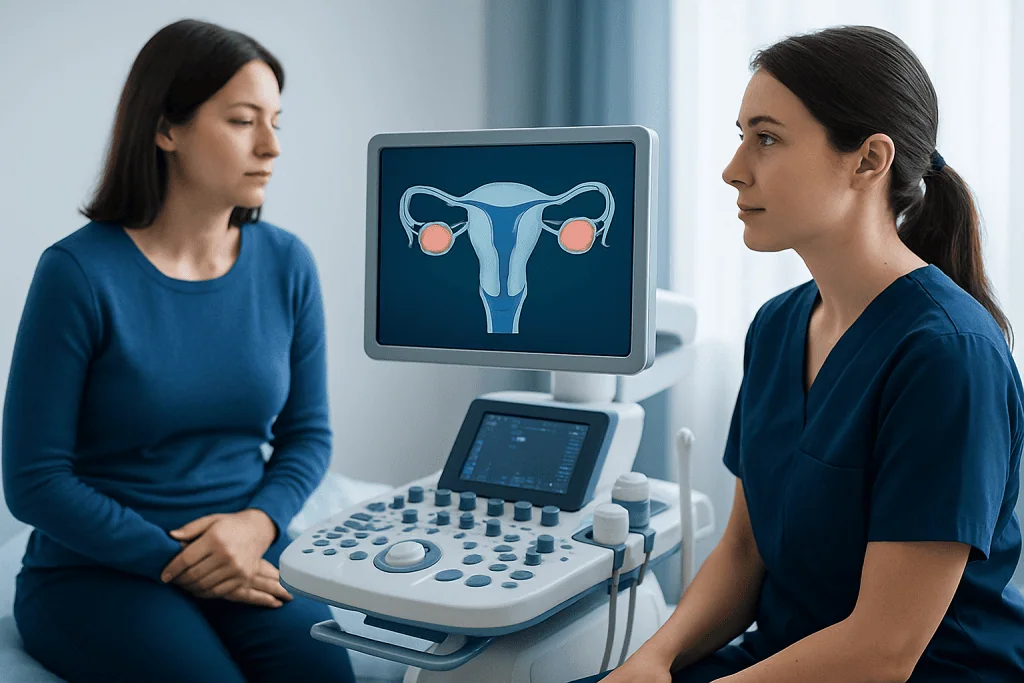
Many ovarian cysts cause no symptoms and are found during a routine pelvic examination or ultrasound for another reason. When symptoms occur, they are often related to the cyst’s size, pressure on nearby organs, bleeding into the cyst, rupture, or twisting of the ovary, known as ovarian torsion.
Possible symptoms include dull or sharp pelvic pain, a feeling of pressure or heaviness in the lower abdomen, bloating, pain during intercourse, changes in menstrual bleeding, or discomfort before or during menstruation. Some people notice urinary frequency or constipation if a larger cyst presses on the bladder or bowel.
Symptoms alone cannot reliably show whether a cyst is simple, complex, benign, or more concerning. Similar symptoms may occur with endometriosis, fibroids, pelvic inflammatory disease, appendicitis, urinary problems, gastrointestinal conditions, or ectopic pregnancy. This is why a careful medical assessment is important when pelvic pain is persistent, unusual, or severe.
Types, Causes, and Risk Factors
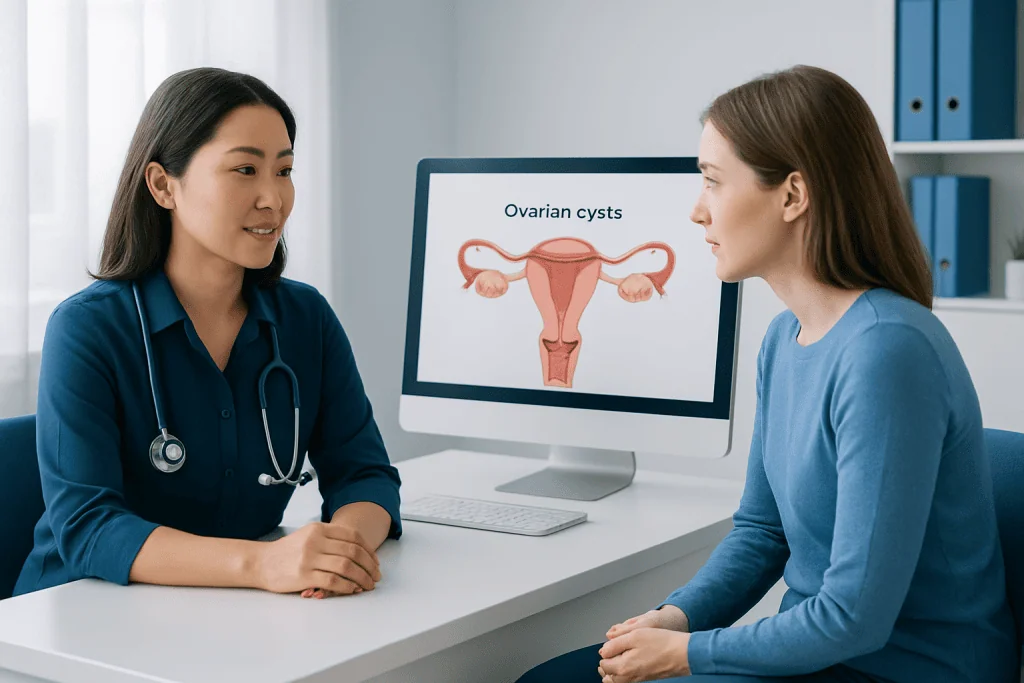
Functional cysts are the most common type in reproductive-age women. A follicular cyst may form when a follicle does not release an egg as expected. A corpus luteum cyst may form after ovulation if the follicle seals and fills with fluid or blood. These cysts often resolve over one or more menstrual cycles.
Other benign cysts are not directly caused by the monthly ovulation process. Endometriomas are associated with endometriosis and may contain old blood, sometimes described as “chocolate cysts.” Dermoid cysts, also called mature cystic teratomas, may contain tissue such as fat, hair, or calcified material. Cystadenomas arise from ovarian surface tissue and may contain watery or mucous-like fluid.
Risk factors vary by cyst type. Ovulation, pregnancy, fertility medications, endometriosis, a history of prior ovarian cysts, and hormonal patterns can influence cyst development. Polycystic ovary syndrome, or PCOS, is different from a single large ovarian cyst; it is a hormonal condition often associated with many small follicles in the ovaries, irregular ovulation, and metabolic features.
After menopause, new ovarian cysts are evaluated more cautiously because the ovaries are no longer expected to form functional cysts from regular ovulation. Many postmenopausal cysts are still benign, but doctors often use a lower threshold for follow-up testing or specialist referral depending on ultrasound findings and overall risk.
Ultrasound Findings and Diagnosis
Pelvic ultrasound is the main imaging test for ovarian cysts. It may be performed through the abdomen, through the vagina, or both, depending on the patient’s situation. Transvaginal ultrasound often gives detailed views of the ovaries, while abdominal ultrasound may help assess larger masses or be preferred in selected patients.
The ultrasound report usually describes the cyst’s size, location, wall thickness, internal contents, septations, solid areas, and blood flow using Doppler imaging. A simple cyst is typically round or oval, thin-walled, filled with clear fluid, and without solid parts. This appearance is generally reassuring, especially in premenopausal patients.
Some cysts have characteristic patterns. A hemorrhagic cyst may show a lace-like or reticular pattern from blood clot. An endometrioma may have a homogeneous “ground-glass” appearance. A dermoid cyst may show echogenic areas, shadowing, or fat-related features. These descriptions help the gynecologist decide whether observation, further imaging, or surgery is most appropriate.
Features that usually need closer assessment include thick septations, solid nodules, papillary projections, strong blood flow within solid areas, irregular borders, fluid in the abdomen, or rapid growth. Diagnosis may also include a pregnancy test, blood tests such as CA-125 in selected patients, and occasionally MRI. CA-125 is not a general screening test and can be raised in many benign conditions, so it must be interpreted in context.
Treatment Options and Monitoring
Treatment depends on the cyst type, size, symptoms, and the patient’s age and reproductive plans. For many simple or typical functional cysts, watchful waiting is recommended. This may involve repeat ultrasound after a period of time to confirm that the cyst is shrinking or has resolved.
Pain relief may include medicines recommended by a healthcare professional, rest during painful episodes, and heat application for mild cramping. Hormonal contraceptives may help reduce the chance of forming new functional cysts in some patients, but they do not usually make an existing cyst disappear faster. Treatment decisions should consider medical history, pregnancy plans, and contraindications.
If an ovarian cyst is linked to endometriosis, management may include hormonal therapy, pain management, fertility planning, or surgery depending on symptoms and goals. For patients trying to conceive, the balance between treating the cyst and preserving healthy ovarian tissue is especially important.
Monitoring should be individualized. A small simple cyst in a young person may need little or no follow-up, while a larger cyst, persistent cyst, complex cyst, or postmenopausal cyst may require scheduled imaging and specialist review. Patients should follow the plan recommended by their gynecologist rather than relying on symptoms alone.
When Surgery Is Needed
Surgery is not needed for every ovarian cyst. It may be recommended when a cyst causes significant or persistent pain, continues to grow, does not resolve over time, has concerning ultrasound features, or is associated with complications. The decision also depends on whether the patient is premenopausal, postmenopausal, pregnant, or planning future pregnancy.
Urgent surgery may be required if ovarian torsion is suspected. Torsion happens when the ovary twists around its supporting tissues, which can reduce blood flow. It often causes sudden, severe one-sided pelvic pain, sometimes with nausea or vomiting. Prompt care aims to untwist and preserve the ovary whenever possible.
Surgery may also be considered for a ruptured cyst with ongoing internal bleeding, a large cyst at risk of torsion, a dermoid cyst that is growing or symptomatic, an endometrioma causing pain or affecting fertility planning, or a cyst that cannot be confidently classified as benign. In postmenopausal patients, surgical evaluation may be advised more often when cysts are complex or persistent.
Most benign-appearing cysts that require surgery can be treated with minimally invasive laparoscopy, depending on size, appearance, and surgical expertise. The surgeon may remove only the cyst, called cystectomy, or remove the ovary in selected cases, called oophorectomy. If cancer is suspected, referral to a gynecologic oncology team is important so that surgery is planned appropriately from the start.
Prevention and Self-care
There is no guaranteed way to prevent all ovarian cysts, especially functional cysts related to normal ovulation. However, regular gynecologic care can help identify patterns such as recurrent cysts, endometriosis, or hormonal conditions. Patients who frequently develop painful cysts should discuss preventive options with their doctor.
Self-care is mainly supportive and should not replace medical assessment when symptoms are new or severe. Helpful steps may include tracking menstrual cycles and pain patterns, noting the location and timing of symptoms, using doctor-approved pain relief, and attending recommended follow-up scans. Keeping a symptom diary can make consultations more productive.
- Seek advice before using hormonal medicines or supplements for cyst prevention.
- Tell the doctor about pregnancy possibility, fertility plans, and prior ovarian surgery.
- Do not ignore sudden severe pain, fainting, fever, or heavy bleeding.
- Follow imaging recommendations even if symptoms improve.
Patients treated at international centers may benefit from coordinated evaluation by gynecology, radiology, fertility, and gynecologic oncology teams when needed. Acibadem International’s multidisciplinary specialists and JCI-accredited hospitals diagnose and treat ovarian cysts for international patients, with care plans based on individual findings and goals.
When to See a Doctor
A gynecologist should be consulted for pelvic pain that is persistent, worsening, one-sided, or associated with bloating, menstrual changes, pain during intercourse, or difficulty with urination or bowel movements. Medical evaluation is also appropriate if an ovarian cyst has been seen on imaging and the patient is unsure what follow-up is needed.
Urgent medical care is recommended for sudden severe pelvic or abdominal pain, pain with fever or vomiting, dizziness or fainting, shoulder pain, rapid breathing, heavy vaginal bleeding, or symptoms during pregnancy. These signs do not always mean a serious problem is present, but they should be checked promptly to rule out torsion, significant bleeding, ectopic pregnancy, or infection.
Patients should also seek specialist review if they are postmenopausal and newly diagnosed with an ovarian cyst, if the ultrasound report describes complex or solid features, or if a cyst is growing on repeat imaging. Timely assessment helps determine whether reassurance, monitoring, medical treatment, or surgery is the safest next step.
Frequently asked questions
Are ovarian cysts usually cancer?
Most ovarian cysts, especially in premenopausal women, are benign and related to normal ovarian function. The risk assessment depends on age, menopausal status, ultrasound appearance, symptoms, and sometimes blood tests. Complex or persistent cysts need careful evaluation, but many are still non-cancerous.
What does a simple ovarian cyst mean on ultrasound?
A simple ovarian cyst is usually a thin-walled, fluid-filled cyst without solid areas or internal projections. This appearance is generally reassuring, particularly in reproductive-age patients. Depending on its size and the patient’s symptoms, the doctor may recommend no treatment or a repeat ultrasound.
Can an ovarian cyst go away on its own?
Yes, many functional cysts disappear naturally over one or more menstrual cycles. A follow-up ultrasound may be used to confirm that the cyst is shrinking or resolved. Cysts such as dermoids or endometriomas are less likely to disappear on their own.
When is ovarian cyst pain an emergency?
Sudden severe one-sided pelvic pain, especially with nausea, vomiting, fainting, fever, or heavy bleeding, should be assessed urgently. These symptoms can occur with ovarian torsion, cyst rupture with bleeding, ectopic pregnancy, or infection. Prompt evaluation helps protect health and guide the right treatment.
Does every complex ovarian cyst need surgery?
Not every complex cyst requires surgery, because some complex appearances occur with benign hemorrhagic cysts or endometriomas. The decision depends on the exact ultrasound features, size, persistence, symptoms, blood flow, age, and medical history. A gynecologist may recommend repeat imaging, MRI, blood tests, or surgical removal.
Will ovarian cyst surgery affect fertility?
Many cyst surgeries aim to remove the cyst while preserving healthy ovarian tissue whenever possible. Fertility impact depends on the cyst type, size, whether one or both ovaries are involved, and the amount of ovarian tissue affected. Patients who want future pregnancy should discuss fertility-preserving options before surgery.
Can birth control pills treat ovarian cysts?
Hormonal contraceptives may reduce the chance of developing new functional cysts in some patients by preventing ovulation. They usually do not make an existing cyst resolve faster. Whether they are suitable depends on the patient’s medical history, preferences, and pregnancy plans.
References
- American College of Obstetricians and Gynecologists
- Royal College of Obstetricians and Gynaecologists
- Society of Radiologists in Ultrasound
- European Society of Gynaecological Oncology
- National Institute for Health and Care Excellence
This article is for general information only and is not a substitute for professional medical advice. Please consult a qualified doctor about your individual situation.
Ovarian Cyst in Turkey — costs, top hospitals & a free quote
JCI-accredited · board-certified surgeons · reply within 24h
Add us as a Preferred Source to see more of our trusted health content across Google Search, AI Overviews and Discover.
Check your numbers in seconds
BMI, calories, due date, blood pressure and 30+ more clinical calculators — free, instant, doctor-reviewed ranges.

Gynecology & Obstetrics
Women’s health across pregnancy, gynecologic surgery and high-risk pregnancy care.
187 specialists in this unitMore from the Health Library



Related Specialists

Dr. Fatma Kutlusoy Güçlü
Gynecology & Obstetrics
Dr. Göker Utku Değer
Orthopedic Surgery & Traumatology
Assoc. Prof. Dr. Özgür Timurkaynak
Dermatology
Dr. Aydın Halefoğlu
Anesthesiology