Over the Counter Nsaids for Gout: What Patients Need to Know

Over-the-counter NSAIDs may help relieve gout flare pain and swelling, but they do not lower uric acid or prevent future attacks. These medicines are best used early in a flare and only by people who do not have important safety risks such as stomach ulcers, kidney disease, or certain heart conditions.
Key Takeaways
- Over-the-counter NSAIDs may help relieve gout flare pain and swelling, but they do not lower uric acid or prevent future attacks.
- These medicines are best used early in a flare and only by people who do not have important safety risks such as stomach ulcers, kidney disease, or certain heart conditions.
- Severe pain, fever, first-time joint swelling, or symptoms that do not improve should be assessed by a doctor.
- Hydration, rest, and avoiding alcohol may support recovery, but long-term gout care often requires diagnosis and a prevention plan.
- Patients taking blood thinners or other regular medicines should check with a clinician or pharmacist before using NSAIDs.
Over the counter NSAIDs for gout can reduce pain, swelling, and inflammation during a gout flare, especially when started early. However, they are not suitable for everyone, and patients should know when self-care is reasonable and when medical advice is important.
Overview: Can over-the-counter NSAIDs help gout?
Over the counter NSAIDs for gout can help reduce pain, warmth, swelling, and stiffness during an acute flare. Common examples include ibuprofen and naproxen, which work by lowering inflammation in the joint. For many adults, they can provide meaningful short-term relief when used early in a flare and according to the package directions or a clinician’s advice.
However, NSAIDs are symptom-relief medicines, not a cure for gout. They do not remove uric acid crystals from the joint and they do not lower the body’s uric acid level over time. This means they may help a flare feel better, but they do not prevent future attacks unless the underlying condition is diagnosed and managed.
It is also important to remember that not every painful, swollen joint is gout. A first attack, a very intense attack, or a joint that is red and hot could also reflect infection or another inflammatory problem. Patients who already have a diagnosis of gout may recognize a familiar pattern, but new symptoms should not automatically be treated as routine.
How gout feels and what a flare usually looks like
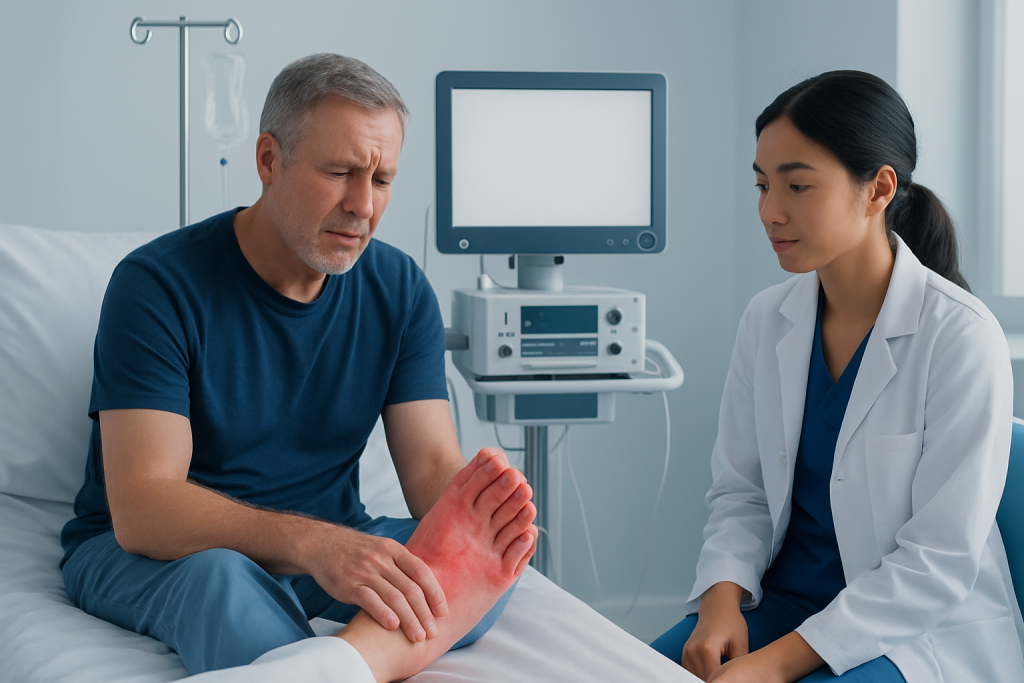
Gout is a form of inflammatory arthritis caused by uric acid crystal deposits in a joint. A flare often begins suddenly, sometimes overnight, and can cause severe pain within a few hours. The affected joint may become swollen, red or purple, warm to the touch, and difficult to move.
The big toe is a classic location, but gout can also affect the midfoot, ankle, knee, wrist, fingers, or elbow. Some people notice even light pressure from a bedsheet is uncomfortable. Others may have milder but recurring attacks that come and go over time.
Between flares, the joint may return to normal, which can make the condition easy to ignore. But repeated attacks can lead to joint damage, ongoing inflammation, or uric acid deposits under the skin called tophi. That is one reason why short-term pain relief and long-term prevention should be thought of separately.
- Typical features: sudden onset, swelling, warmth, redness, intense tenderness
- Common joints: big toe, ankle, knee, foot, wrist, elbow
- Common triggers: dehydration, alcohol, rich meals, illness, surgery, some medicines
Which over-the-counter NSAIDs are used for gout?

The most widely available over-the-counter NSAIDs for gout are ibuprofen and naproxen. These medicines can reduce inflammation and are commonly used for short-term relief of arthritis pain. Aspirin is also an NSAID, but it is generally not preferred for gout flares because it can affect uric acid handling in the body and may complicate management.
Patients should use only one NSAID at a time unless a doctor specifically advises otherwise. Taking more than one NSAID together does not usually improve relief, but it does raise the chance of stomach bleeding, kidney strain, and other side effects. It is also important to follow package instructions carefully and avoid exceeding the stated amount or duration.
Not everyone with gout should self-treat with OTC NSAIDs. These medicines may be unsuitable for people with a history of stomach ulcers or bleeding, chronic kidney disease, poorly controlled high blood pressure, heart failure, liver disease, or known allergy to NSAIDs. They may also interact with blood thinners, some antidepressants, corticosteroids, and certain blood pressure medicines.
For people who cannot take NSAIDs safely, doctors may consider alternatives such as prescription anti-inflammatory medicines, colchicine, or corticosteroids depending on the patient’s overall health. In some cases, specialist evaluation through rheumatology care is helpful, especially if attacks are frequent, the diagnosis is uncertain, or joint symptoms are severe.
When OTC NSAIDs may be reasonable and when they may not be
Over-the-counter treatment may be reasonable for an adult who has a known history of gout, recognizes the symptoms of a usual flare, has no major safety risks for NSAIDs, and can follow the label directions. These medicines tend to work best when started early, ideally as soon as symptoms begin. Resting the joint, elevating it, and staying well hydrated may also help support comfort.
On the other hand, self-treatment may not be the best choice if the pain is extreme, the joint cannot be used at all, more than one large joint is involved, or symptoms are accompanied by fever or feeling unwell. A painful hot joint can sometimes be caused by a joint infection, and that requires urgent medical assessment rather than home treatment.
Patients should also be cautious if the diagnosis is uncertain. Conditions such as pseudogout, septic arthritis, injury, bursitis, or other forms of inflammatory arthritis can look similar. If symptoms are new, unusual, or not improving as expected, medical review is safer than assuming the problem is a routine gout flare.
How doctors diagnose gout and assess future risk
Doctors diagnose gout by combining the story of the attack, the pattern of joints involved, physical examination, and sometimes tests. Blood tests may measure uric acid, but uric acid can be normal during a flare, so this test alone cannot confirm or exclude gout. Imaging and joint aspiration may be used when the diagnosis is unclear.
The most definitive test is examination of joint fluid under a microscope to look for uric acid crystals. This is especially important when infection is a possibility or when a first attack affects an unusual joint. Ultrasound and other imaging tools can also help identify crystal deposits or inflammation.
Diagnosis is only part of the evaluation. Doctors also look for factors that make gout more likely or more difficult to control, including kidney disease, obesity, high blood pressure, diabetes, sleep apnea, and certain medicines such as diuretics. If repeated flares are occurring, a broader plan may be needed, sometimes with internal medicine evaluation to review overall health and risks.
Treatment beyond pain relief: managing the cause of gout
Because NSAIDs do not address the underlying uric acid problem, some patients need more than flare treatment. If gout attacks are frequent, if tophi are present, if kidney stones have occurred, or if there is joint damage, a doctor may discuss urate-lowering treatment. The goal is to reduce uric acid enough to prevent crystals from forming and gradually dissolve existing deposits.
Long-term treatment plans vary by patient. They may include medicines to lower uric acid, review of diet and alcohol intake, weight management if appropriate, and management of related conditions such as high blood pressure or kidney disease. Patients should not start, stop, or adjust long-term gout medicines on their own without medical guidance.
During flare-prone periods, some patients may also need a preventive strategy while uric acid is being brought under control. For people who have recurrent symptoms or associated kidney concerns, related assessment can sometimes involve nephrology care if kidney function or stone risk is part of the picture.
Prevention and self-care between gout flares
Self-care cannot replace medical treatment when gout is frequent or advanced, but daily habits can still make a difference. Good hydration, moderation with alcohol, and a balanced eating pattern may help reduce triggers in some people. Limiting binge drinking and very large meals is often especially useful for those who notice attacks after social occasions or travel.
Weight management can help reduce gout risk in some individuals, particularly when excess weight is linked with insulin resistance or metabolic syndrome. Sudden crash dieting, however, may worsen uric acid shifts and should be avoided. A gradual, medically sensible approach is safer and more sustainable.
Patients are sometimes advised to review medicines with their doctor as well. Certain diuretics and other drugs can contribute to high uric acid in some people. Rather than stopping prescribed medicines independently, patients should ask whether alternatives are appropriate.
For international patients who need evaluation of repeated attacks or long-term management, Acibadem International’s multidisciplinary specialists and JCI-accredited hospitals provide diagnosis and treatment planning tailored to gout and related conditions.
When to seek medical care
Medical care is important if this is the first episode of a swollen, painful joint, if symptoms are severe, or if there is fever, chills, spreading redness, or marked illness. These features can suggest infection or another urgent condition that should not be managed with over-the-counter medicine alone.
Patients should also seek care if an apparent gout flare does not begin to improve, if attacks keep coming back, or if they cannot safely use NSAIDs because of ulcers, kidney disease, heart disease, pregnancy, or medicine interactions. People taking blood thinners should be especially careful and check with a healthcare professional before using an NSAID.
Urgent assessment is also sensible when pain follows an injury, when multiple joints become swollen, or when there is concern about dehydration or reduced urine output. If symptoms are persistent or complicated, a doctor may recommend further tests or referral to orthopedics and traumatology or another specialist depending on the cause.
Frequently asked questions
Do over-the-counter NSAIDs cure gout?
No. Over-the-counter NSAIDs can reduce pain and inflammation during a gout flare, but they do not lower uric acid or remove the crystals causing the attack. Patients with repeated flares often need medical evaluation for long-term gout management.
Which OTC NSAIDs are commonly used for gout?
Ibuprofen and naproxen are the most common over-the-counter NSAIDs used for short-term gout symptom relief. Patients should follow the package instructions and avoid taking more than one NSAID at the same time unless a doctor advises it.
Is aspirin a good choice for gout pain?
Aspirin is generally not the preferred OTC option for gout flares. It may affect uric acid handling and can complicate management, so patients should ask a clinician which pain reliever is most appropriate for their situation.
Who should avoid OTC NSAIDs for gout?
People with stomach ulcers, past gastrointestinal bleeding, kidney disease, certain heart conditions, liver disease, NSAID allergy, or those taking blood thinners should be cautious. Pregnancy and some chronic medicines can also change whether NSAIDs are safe, so medical or pharmacy advice is important.
How quickly should NSAIDs work for a gout flare?
If an NSAID is going to help, patients often notice some relief within the first day, especially if it is started early. If pain is getting worse, not improving, or is accompanied by fever or significant swelling, medical assessment is recommended.
What else can help during a gout flare besides NSAIDs?
Resting the joint, elevating it, applying a cool compress, and drinking enough fluids may help with comfort. Avoiding alcohol and heavy meals during the flare may also be sensible, but these steps do not replace proper medical care when symptoms are severe or unusual.
This article is for general information only and is not a substitute for professional medical advice. Please consult a qualified doctor about your individual situation.
Gout in Turkey — costs, top hospitals & a free quote
JCI-accredited · board-certified surgeons · reply within 24h
Add us as a Preferred Source to see more of our trusted health content across Google Search, AI Overviews and Discover.
Check your numbers in seconds
BMI, calories, due date, blood pressure and 30+ more clinical calculators — free, instant, doctor-reviewed ranges.

More from the Health Library

Bloated Stomach and Feeling Sick and Tired Female: A Complete Medical Overview

Soda Crackers: An Evidence-Based Guide for Patients

Lyposingrass: A Complete Medical Overview

M.c.v. in Blood Report — Explained by Medical Evidence, Not Myths

Head Itches and Hair Loss: What Patients Need to Know