

Overnight Polysomnography With EEG: Why Brain Wave Monitoring Matters
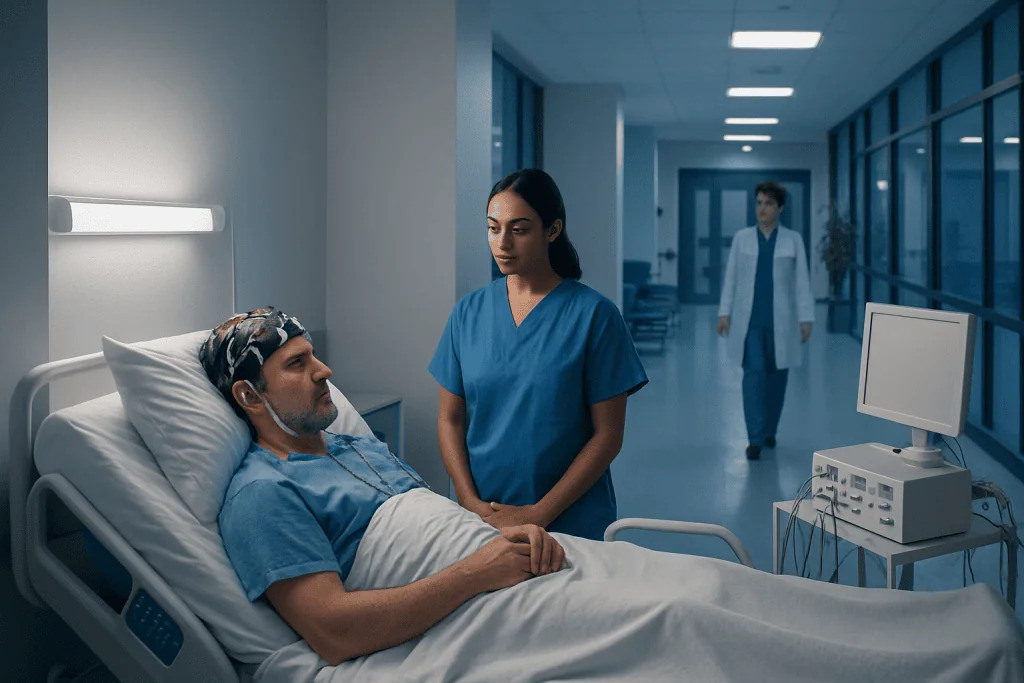
Overnight polysomnography with EEG is the standard in-lab test for many suspected sleep disorders. EEG helps confirm sleep stages, arousals, and whether symptoms happen during sleep or while awake.
Key Takeaways
- Overnight polysomnography with EEG is the standard in-lab test for many suspected sleep disorders.
- EEG helps confirm sleep stages, arousals, and whether symptoms happen during sleep or while awake.
- The test can help diagnose conditions such as sleep apnea, parasomnias, narcolepsy, and some nighttime seizure-related events.
- The study is noninvasive and usually performed overnight in a specialized sleep laboratory.
- Accurate results support more personalized treatment and safer long-term care.
Overnight polysomnography with EEG is a detailed sleep study that records brain waves along with breathing, oxygen levels, heart rhythm, and body movements during sleep. Brain wave monitoring matters because it shows when a person is truly asleep, which sleep stage they are in, and whether abnormal events are linked to sleep or wakefulness.
Overview: What Overnight Polysomnography With EEG Is
Overnight polysomnography with EEG is a comprehensive sleep test performed in a sleep laboratory. “Polysomnography” means recording multiple body functions during sleep, while “EEG” stands for electroencephalography, which measures the brain’s electrical activity through small sensors placed on the scalp. Together, these recordings provide a detailed picture of how the body and brain behave across the night.
Standard recordings often include brain waves, eye movements, chin and leg muscle activity, breathing effort, airflow, oxygen levels, heart rhythm, body position, and sometimes video monitoring. Because sleep disorders can affect several systems at once, combining these signals helps specialists interpret the whole sleep pattern rather than relying on a single measurement.
This test is often considered when symptoms suggest a sleep-related breathing disorder, unusual nighttime behaviors, unexplained daytime sleepiness, or possible movement or seizure-related events during sleep. Compared with simpler home tests, in-lab polysomnography with EEG gives more information about sleep quality and the timing of symptoms.
Why Brain Wave Monitoring Matters
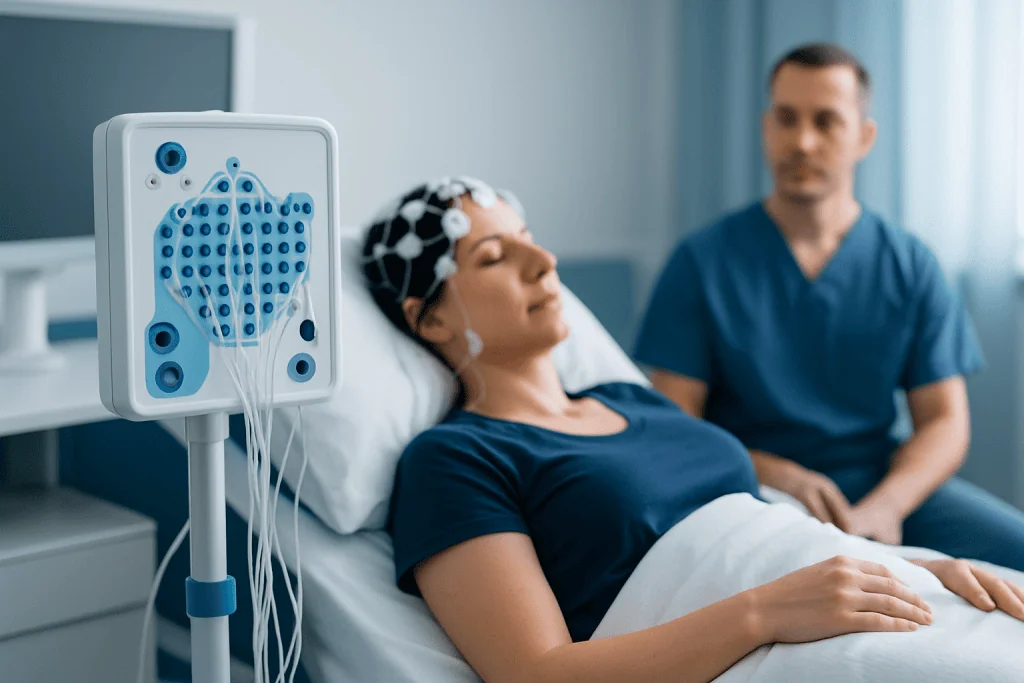
EEG is central to sleep medicine because it shows whether a person is awake or asleep and identifies the different stages of sleep. These stages include light sleep, deep sleep, and REM sleep, each of which has a typical brain wave pattern. Without EEG, it is much harder to know exactly when sleep begins, how often it is interrupted, and whether symptoms occur in a specific stage.
Brain wave monitoring also detects brief arousals that a person may not remember the next day. These tiny awakenings can fragment sleep and contribute to fatigue, concentration problems, and unrefreshing sleep. In disorders such as obstructive sleep apnea, EEG helps show how repeated breathing disturbances disturb normal sleep architecture.
EEG can also help distinguish between different causes of nighttime events. For example, an unusual movement, vocalization, or confusion at night may be related to a parasomnia, a breathing-related arousal, or less commonly a seizure. The combination of EEG, muscle recordings, breathing signals, and video allows specialists to interpret these events more accurately.
In people with excessive daytime sleepiness, EEG data from the overnight study may also help guide whether additional testing is needed the next day, such as a multiple sleep latency test. This can be important when evaluating conditions like narcolepsy.
When Doctors Recommend This Sleep Study
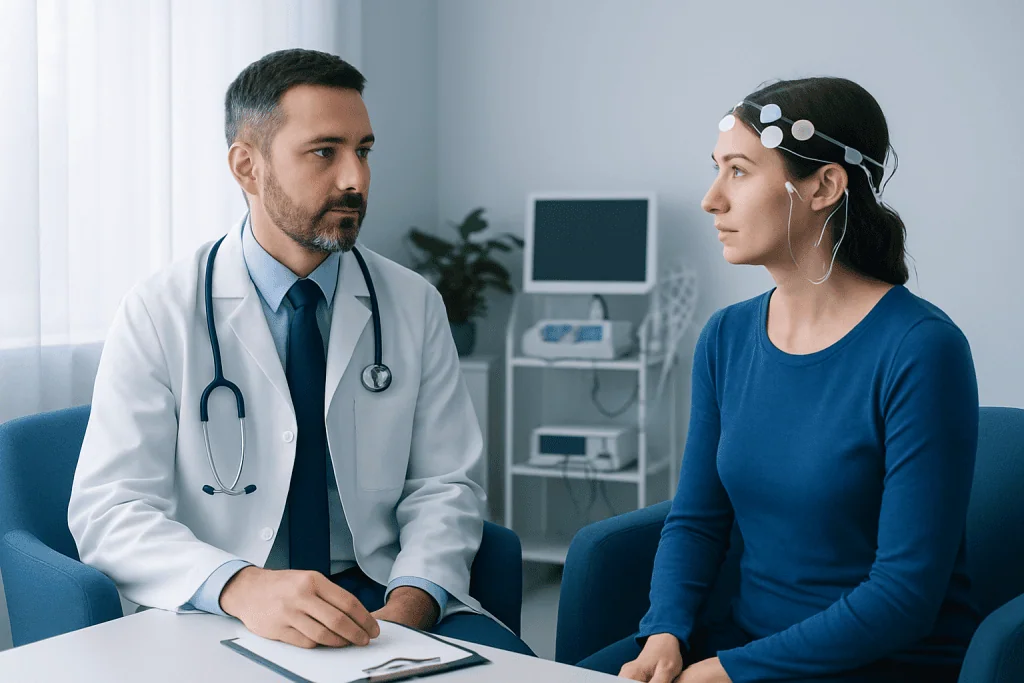
A doctor may recommend overnight polysomnography with EEG when symptoms suggest that a sleep disorder needs a full in-lab evaluation. Common reasons include loud snoring, witnessed pauses in breathing, gasping during sleep, restless or disrupted sleep, frequent awakenings, unexplained daytime sleepiness, and morning headaches. The test may also be advised when home sleep testing is not suitable or has not answered the clinical question.
It is especially helpful for people who have complex or unusual nighttime symptoms. These may include sleepwalking, acting out dreams, repetitive limb movements, sudden awakenings with confusion, or episodes that raise concern for seizures during sleep. In children and adults alike, the detailed EEG-based recording can clarify what is happening and when.
Polysomnography with EEG is commonly used to evaluate suspected sleep apnea, but its role goes beyond breathing problems. It may also support the diagnosis of insomnia-related sleep disruption, periodic limb movement disorder, REM sleep behavior disorder, and other parasomnias. In some cases, the study is performed as part of planning or adjusting treatment such as sleep apnea treatment.
What Happens During the Test
Before the study begins, a sleep technologist places sensors on the scalp, near the eyes, on the chin, chest, legs, and finger, using gentle adhesive or paste. These sensors do not deliver electricity; they only record signals. Most people can still turn in bed and sleep in a fairly natural way, even though the setup may feel unfamiliar at first.
Throughout the night, the equipment records brain waves, eye movements, breathing, oxygen levels, heart rhythm, and muscle activity. A technologist monitors the study from another room and can help if a sensor loosens or the patient needs assistance. Some sleep labs also use video and audio recording to correlate visible behaviors with the body’s signals.
In certain cases, the study may include CPAP titration during the same night or on a separate night if breathing-related sleep disorder is found. This means specialists adjust positive airway pressure levels to see what best supports breathing and sleep quality. When needed, this may guide CPAP therapy recommendations.
Patients are usually asked to avoid caffeine late in the day and to follow the sleep lab’s instructions about medications, hair products, and bedtime routine. Although sleeping in a lab is different from sleeping at home, the test can still provide enough information for reliable interpretation.
How Results Are Interpreted
After the study, a sleep specialist reviews the recordings in detail. EEG helps measure sleep onset, total sleep time, sleep efficiency, and the proportion of time spent in each sleep stage. The specialist also looks for arousals, breathing events, oxygen drops, abnormal movements, unusual behaviors, and heart rhythm changes during the night.
One major advantage of EEG is that it allows breathing events to be linked to actual sleep rather than quiet wakefulness. This matters because breathing patterns and body movements can look different when a person is lying awake. By confirming when the patient is asleep, EEG improves the accuracy of calculations such as event frequency and sleep fragmentation.
The full interpretation takes the person’s symptoms, medical history, medications, and sometimes neurologic or respiratory conditions into account. A result may confirm a diagnosis, suggest the need for additional testing, or help rule out some disorders. If the findings point to a movement disorder or nocturnal seizure concern, the doctor may recommend further neurologic evaluation or more specialized monitoring.
Conditions It Can Help Diagnose
Overnight polysomnography with EEG can help diagnose a wide range of sleep disorders. These include obstructive sleep apnea, central sleep apnea, parasomnias, periodic limb movement disorder, REM sleep behavior disorder, and some hypersomnia disorders. Because the test shows both sleep stages and body function, it is particularly useful when symptoms overlap.
For breathing-related disorders, EEG shows how often airway obstruction or changes in breathing disturb sleep and trigger brief arousals. This helps explain why some people feel very tired even if they do not fully wake up. It also helps estimate the clinical impact of the disorder beyond oxygen levels alone.
For nighttime behaviors, EEG can show whether an event starts from deep sleep, REM sleep, or wakefulness. That information can help differentiate a parasomnia from another condition. In selected situations, specialists may also consider whether symptoms fit a neurologic sleep disorder that needs targeted evaluation or treatment, including neurology consultation.
The study is not the only sleep test available, but it is often the most informative when the diagnosis is uncertain or when symptoms are complex. For many patients, that added detail leads to a clearer care plan.
Benefits, Limits, and Preparing for the Study
The main benefit of overnight polysomnography with EEG is diagnostic precision. It records what happens across the night in real time and links symptoms to true sleep stages, breathing changes, muscle activity, and brain wave patterns. This can reduce uncertainty and help avoid treatment based on incomplete information.
At the same time, it is helpful to understand its limits. Sleeping in a laboratory may feel different from sleeping at home, and a single night may not capture every symptom a person experiences. Even so, trained specialists can usually obtain enough information to make meaningful conclusions, especially when the symptoms occur frequently.
Preparation is usually simple. Patients should follow the instructions provided by the sleep center, bring a list of medications, and mention any devices they use at night, such as inhalers or hearing aids. Comfortable sleepwear and normal bedtime habits can make the experience easier. If there are concerns about claustrophobia, mobility, or assistance during the night, these should be discussed in advance.
Near the end of the care journey, some patients may benefit from coordinated follow-up across sleep medicine, neurology, pulmonology, or ENT. Acibadem International’s multidisciplinary specialists in JCI-accredited hospitals evaluate and treat sleep-related conditions for international patients when this level of care is needed.
When to See a Doctor
A medical review is a good idea if poor sleep is affecting daytime functioning, safety, mood, concentration, or quality of life. People should also seek assessment if a bed partner notices repeated pauses in breathing, choking, unusual movements, dream enactment, or episodes of confusion during sleep. Persistent excessive sleepiness should not be ignored, especially if it affects driving or work.
Urgent evaluation may be needed if nighttime symptoms are linked with injury, severe breathing difficulty, fainting, chest symptoms, or events that strongly suggest seizures. In these situations, a clinician can decide whether overnight polysomnography with EEG is the right next step or whether another test is more appropriate.
Early evaluation can be reassuring as well as practical. Many sleep disorders are treatable, and identifying the exact pattern is often the first step toward better sleep, safer nights, and improved daytime well-being.
Frequently asked questions
Is overnight polysomnography with EEG the same as a regular sleep study?
It is a type of sleep study, but it is more detailed than simpler sleep tests. The EEG part records brain waves, which helps specialists confirm sleep stages and interpret symptoms more accurately.
Does the EEG part of the test hurt?
No. The scalp sensors only record electrical activity from the brain and do not send electricity into the body. Some people notice mild discomfort from adhesive or paste, but the test is generally well tolerated.
Can this test diagnose sleep apnea?
Yes, it can help diagnose obstructive and central sleep apnea. EEG is useful because it shows whether breathing events are happening during true sleep and how much they disrupt sleep quality.
Why would someone need EEG instead of a home sleep test?
A home sleep test usually focuses mainly on breathing and oxygen levels and does not fully track brain waves or sleep stages. EEG is especially helpful when symptoms are complex, when unusual nighttime behaviors are present, or when a home test is inconclusive.
Can polysomnography with EEG detect seizures during sleep?
It can sometimes help identify events that may be seizure-related, especially when combined with video and other signals. However, some patients may need more specialized EEG monitoring if seizures remain a strong concern.
What if a person cannot sleep well in the lab?
This is a common worry, and many people still sleep enough for the test to be useful. Sleep specialists are trained to interpret studies even when sleep is shorter than usual, as long as there is enough recorded data.
References
- American Academy of Sleep Medicine
- National Institute of Neurological Disorders and Stroke
- National Heart, Lung, and Blood Institute
- American Thoracic Society
- International League Against Epilepsy
This article is for general information only and is not a substitute for professional medical advice. Please consult a qualified doctor about your individual situation.
Hair transplant in Turkey — costs, graft counts & a free assessment
JCI-accredited · board-certified surgeons · reply within 24h
Add us as a Preferred Source to see more of our trusted health content across Google Search, AI Overviews and Discover.

More from the Health Library


Related Specialists

Dr. Salim Sırrı Türker
Orthopedic Surgery & Traumatology
Prof. Dr. Oya Yönal
Gastroenterology
Ali Furkan Gürler
Physical Medicine & Rehabilitation
Assoc. Prof. Dr. Emrullah Hayta
Physical Medicine & Rehabilitation