

Ovulation Test Kit Explained: Causes, Management, and When to See a Doctor

An ovulation test kit detects the LH surge that usually occurs 24 to 36 hours before ovulation. A positive result suggests the fertile window is approaching, but it does not guarantee pregnancy or confirm egg release.
Key Takeaways
- An ovulation test kit detects the LH surge that usually occurs 24 to 36 hours before ovulation.
- A positive result suggests the fertile window is approaching, but it does not guarantee pregnancy or confirm egg release.
- Irregular cycles, polycystic ovary syndrome, some medicines, and timing errors can affect accuracy.
- Using test results together with menstrual tracking and body signs may improve understanding of fertility timing.
- Medical evaluation is helpful if cycles are very irregular, tests stay unclear, or pregnancy has not occurred after appropriate trying.
An ovulation test kit is a home test that helps predict the most fertile days in a menstrual cycle by detecting a rise in luteinizing hormone (LH) before ovulation. It can be a useful tool for timing intercourse or understanding cycle patterns, but it does not confirm that ovulation definitely happened and may be less reliable in some hormone-related conditions.
Overview: What an Ovulation Test Kit Does
An ovulation test kit is a home fertility tool designed to identify the time just before ovulation. Most kits work by measuring luteinizing hormone, or LH, in urine. LH normally rises sharply shortly before an ovary releases an egg, so a positive test can help show when the fertile window is most likely.
This can be useful for people trying to conceive, tracking cycle regularity, or learning more about reproductive health. In many cycles, the best chance of conception is during the one to two days before ovulation and the day of ovulation itself. A test kit does not diagnose infertility on its own, but it can offer practical timing information.
It is also important to understand what these tests cannot do. An ovulation test kit predicts that ovulation may be near, but it does not prove that the egg was released. Some people may have an LH surge without actual ovulation, and others may have hormone patterns that make results harder to interpret.
How an Ovulation Test Kit Works
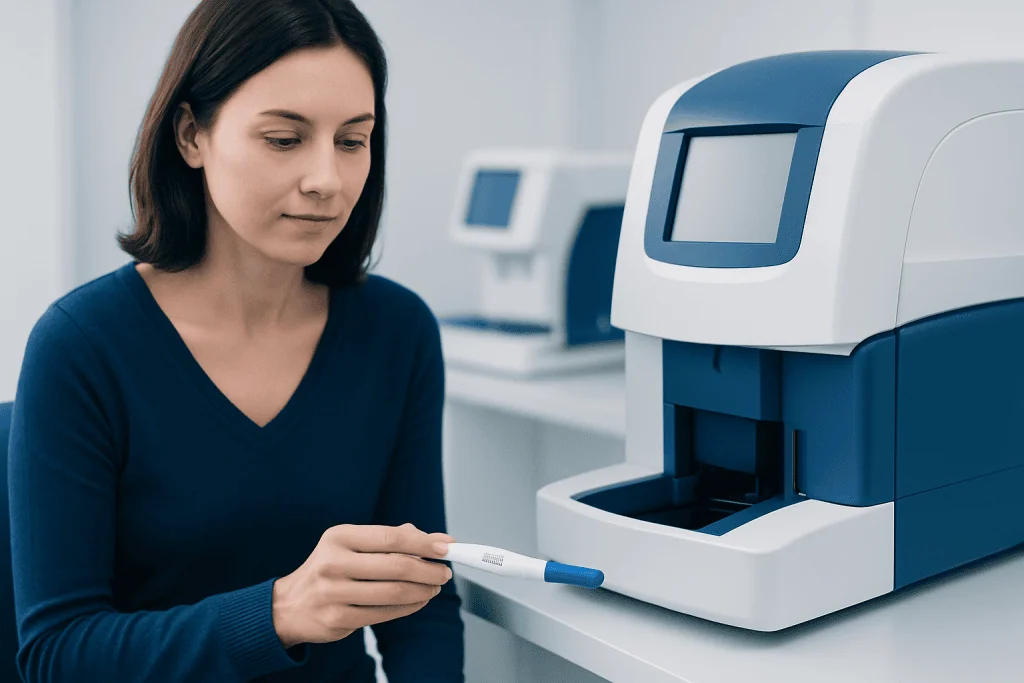
Most ovulation test kits check urine for LH. During much of the menstrual cycle, LH stays at a lower baseline level. As ovulation approaches, the body produces a surge in LH, usually 24 to 36 hours before the egg is released. The kit detects this rise and displays a result through colored lines or a digital reading.
These tests are different from pregnancy tests. Pregnancy tests look for human chorionic gonadotropin, or hCG, after implantation. Ovulation kits are used earlier in the cycle and help estimate the fertile period before pregnancy could begin.
Because cycle timing varies, instructions usually recommend starting testing several days before expected ovulation. This is often based on menstrual cycle length, but people with irregular periods may need to test across a wider window. Some find that combining an ovulation test kit with calendar tracking or fertility awareness signs gives a clearer picture of the cycle.
- A negative test usually means no LH surge was detected at that time.
- A positive test usually means the LH surge has been detected and ovulation is likely soon.
- Digital tests may reduce uncertainty when line-based results are hard to read.
How to Use It and Read the Results

Careful use improves the value of an ovulation test kit. Each brand has specific instructions, but many advise testing at about the same time each day and avoiding unusually heavy fluid intake beforehand, since very diluted urine may affect results. Unlike many pregnancy tests, first-morning urine is not always preferred for LH testing, because LH may appear in urine later in the day depending on the person and the brand’s guidance.
Line-based tests usually require comparing the test line with the control line. In many kits, the result is considered positive only when the test line is as dark as or darker than the control line. Faint lines can be confusing and do not always mean the surge has started. Digital tests may display a clear symbol, which some users find easier to interpret.
When a positive result appears, the fertile window is likely open. For couples trying to conceive, intercourse on the day of the positive result and the following day is commonly advised, though exact timing may vary. If results are repeatedly difficult to interpret, a clinician may suggest a more structured fertility assessment, especially if there is a concern about infertility.
Why Results Can Be Misleading or Unclear
An ovulation test kit is helpful, but results are not perfect. Some people naturally have shorter or longer LH surges, and some may miss the surge if they test only once a day. Others may have persistently elevated LH levels, making the test appear positive more often than expected.
Hormonal conditions can also affect interpretation. For example, people with polycystic ovary syndrome (PCOS) may have irregular ovulation or ongoing hormonal fluctuations that cause confusing results. Recent pregnancy, certain fertility medicines, and approaching menopause can also make readings less straightforward.
Irregular cycles are another common reason for uncertainty. When ovulation does not happen at roughly the same point each month, choosing the right testing days becomes harder. In these situations, doctors may recommend combining home testing with blood tests, ultrasound monitoring, or evaluation in a dedicated fertility assessment program if pregnancy is not occurring as expected.
- Testing too early or too late in the cycle can miss the surge.
- Heavy fluid intake may dilute urine.
- Some medications may change hormone patterns.
- Not all menstrual cycles include ovulation.
When Ovulation Test Kits Are Most Helpful
Ovulation kits are often most helpful for people with fairly regular cycles who want to identify their fertile days more precisely. They can be useful after stopping contraception, when learning cycle timing, or when trying to conceive naturally for the first time. They may also help a person notice whether surges seem to occur consistently from month to month.
For some, the kit offers reassurance and structure. It may reduce guesswork compared with calendar counting alone, especially because ovulation does not always happen exactly halfway through the cycle. It can also be informative when cervical mucus changes or other body signs are subtle or difficult to track.
However, a kit should not be seen as the only fertility measure. Egg quality, sperm health, tubal patency, uterine factors, and timing all matter. If there are known reproductive concerns, such as prior pelvic infection, endometriosis, or repeated pregnancy loss, a specialist may recommend earlier evaluation and targeted testing, sometimes including intrauterine insemination or other fertility treatments depending on the cause.
Medical Evaluation, Diagnosis, and Treatment Options
If home ovulation tracking is repeatedly confusing or pregnancy does not happen after a reasonable period of trying, medical evaluation can help identify the reason. A doctor may review menstrual history, symptoms, medications, and timing of intercourse. Blood tests may be used to assess hormone levels, and ultrasound can help evaluate the ovaries and confirm whether ovulation appears to be occurring.
Sometimes the issue is not ovulation itself. Fertility depends on several factors, including sperm quality, open fallopian tubes, and a healthy uterine environment. For this reason, doctors often assess both partners when appropriate. If there are signs of a hormone imbalance, treatment may focus on the underlying condition rather than the test kit results.
Treatment depends on the cause. Options may include lifestyle changes, ovulation induction medicines, monitoring cycles more closely, or specialist fertility care. In selected cases, clinicians may discuss egg freezing for future family planning, or IVF when other approaches are not suitable or have not worked. The goal is to match care to the individual’s age, health, fertility goals, and diagnosis.
Self-Care and When to Seek Medical Care
Simple self-care can make an ovulation test kit more useful. Following the instructions carefully, testing consistently, and recording results over several cycles may reveal patterns. Tracking menstrual dates, cervical mucus changes, pelvic symptoms, or basal body temperature can also provide context, though these methods vary in convenience and reliability.
General reproductive health measures may also support fertility. These include avoiding smoking, limiting excess alcohol, aiming for a balanced weight, managing chronic conditions, and discussing medications with a doctor before conception. Severe dieting, intense overexercise, high stress, and untreated thyroid problems can all affect ovulation in some people.
Medical care should be sought if periods are very irregular, absent, unusually painful, or very heavy; if ovulation tests are repeatedly positive for many days or never seem positive; or if there are symptoms such as milky nipple discharge, excessive hair growth, or sudden cycle changes. A doctor should also be consulted if pregnancy has not occurred after 12 months of regular unprotected intercourse, or after 6 months if the woman is age 35 or older. Near the end of the care pathway, Acibadem International’s multidisciplinary specialists in JCI-accredited hospitals evaluate fertility concerns and provide diagnosis and treatment options for international patients.
Frequently asked questions
How accurate is an ovulation test kit?
An ovulation test kit can be quite useful for identifying the LH surge before ovulation, especially in people with regular cycles. However, accuracy depends on proper timing, correct use, and individual hormone patterns. It predicts that ovulation may be near, but it does not confirm that the egg was actually released.
Can a positive ovulation test guarantee pregnancy?
No. A positive result means the fertile window is likely approaching, not that pregnancy will happen. Conception also depends on sperm factors, tubal health, egg quality, timing, and whether ovulation truly occurs.
Why do ovulation test kits not work well for some people?
Some people have irregular cycles, very short LH surges, or hormone patterns that make results harder to read. Conditions such as PCOS, recent pregnancy, approaching menopause, or certain fertility medicines may also affect interpretation. In these cases, a clinician may recommend additional testing.
What time of day should an ovulation test kit be used?
This depends on the brand, so the package instructions should always be followed. Many kits are used around the same time each day, and heavy fluid intake beforehand is often discouraged. Consistency matters more than choosing a single universal testing time.
Is an ovulation test kit helpful with irregular periods?
It can still be helpful, but it may require a longer testing window and more patience. Irregular cycles make it harder to predict when the LH surge will happen, and some cycles may not include ovulation at all. If cycles are consistently irregular, medical evaluation is often worthwhile.
When should someone see a doctor instead of relying only on home tests?
A doctor should be consulted if periods are absent, very irregular, very painful, or unusually heavy, or if ovulation test results stay confusing over time. Medical advice is also recommended if pregnancy has not occurred after 12 months of trying, or after 6 months if the woman is 35 or older. Earlier evaluation may be appropriate if there is a known reproductive condition.
References
- American College of Obstetricians and Gynecologists
- Office on Women's Health
- National Institute for Health and Care Excellence
- American Society for Reproductive Medicine
- Mayo Clinic
This article is for general information only and is not a substitute for professional medical advice. Please consult a qualified doctor about your individual situation.
IVF & fertility treatment in Turkey — success rates and costs
JCI-accredited · board-certified surgeons · reply within 24h
Add us as a Preferred Source to see more of our trusted health content across Google Search, AI Overviews and Discover.
Check your numbers in seconds
BMI, calories, due date, blood pressure and 30+ more clinical calculators — free, instant, doctor-reviewed ranges.

More from the Health Library



Related Specialists

Dt. Burcu Dereli İnanç
Oral & Dental Health
Prof. Dr. Tansel Erol
Cardiology
Assoc. Prof. Dr. Ürün Özer Ağırbaş
Psychiatry
Asst. Prof. Dr. Gökhan Arslanhan
Cardiovascular Surgery