P Rosea Disease: Diagnosis, Outlook, and Modern Treatment Approaches

P rosea disease usually begins with a single larger patch, followed by a wider rash on the trunk. It is not typically dangerous and often resolves without scarring.
Key Takeaways
- P rosea disease usually begins with a single larger patch, followed by a wider rash on the trunk.
- It is not typically dangerous and often resolves without scarring.
- Diagnosis is usually made by a dermatologist or physician based on the rash pattern and medical history.
- Treatment is aimed at itch relief and comfort, though some patients may need further evaluation to rule out similar rashes.
- Medical review is important if the rash is severe, persistent, painful, or occurs during pregnancy.
P rosea disease, more commonly called pityriasis rosea, is a usually harmless inflammatory skin rash that often clears on its own within several weeks to a few months. Diagnosis is mainly clinical, and treatment focuses on easing itching, confirming the rash is not another condition, and supporting recovery.
Overview
P rosea disease refers to pityriasis rosea, a common skin condition that causes a distinctive rash. In many people, it starts with one larger scaly patch, sometimes called a “herald patch,” and is followed days to weeks later by smaller oval spots on the chest, back, or abdomen. Although the rash can look striking, it is usually self-limited and tends to improve without causing long-term skin damage.
This condition is seen most often in children, teenagers, and young adults, but it can occur at other ages as well. It is not usually considered a serious illness, and most people remain otherwise well. Some may have mild itching, while others have little discomfort beyond the visible rash.
A practical concern with p rosea disease is that it can resemble other skin conditions, including eczema, fungal infections, drug eruptions, psoriasis, or certain infectious rashes. For that reason, diagnosis matters. A clinician can confirm whether the appearance fits pityriasis rosea or whether further tests are needed. If the rash pattern is unusual, a specialist may also consider related skin conditions such as psoriasis during the evaluation.
How the Rash Looks and Feels
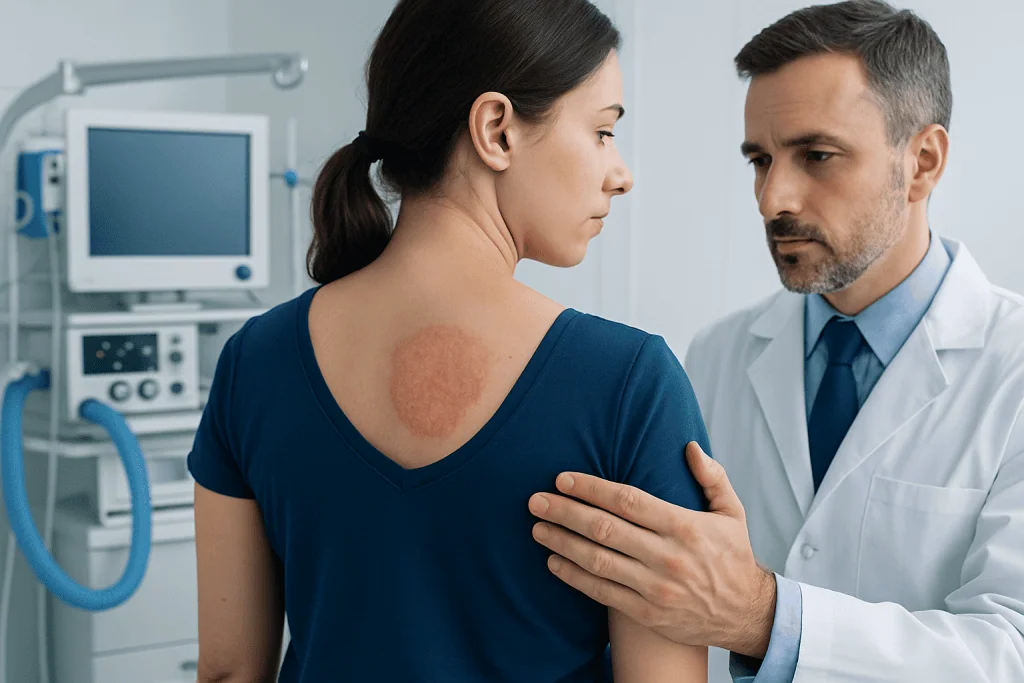
The first sign is often a single round or oval patch with a fine scale, usually on the trunk. This herald patch may be pink, red, tan, or brown depending on a person’s skin tone. After that, a more widespread rash can appear, often following skin lines on the back and creating a pattern sometimes described as a “Christmas tree” distribution.
The spots are usually smaller than the first patch and may be slightly raised with a delicate scale around the edges. In lighter skin tones, the rash may look pink or salmon-colored; in darker skin tones, it may appear violet, gray-brown, or darker than surrounding skin. This variation can make recognition more difficult, which is one reason a professional skin examination can be helpful.
Symptoms vary from person to person. Some people have no itching at all, while others notice mild to moderate itch that becomes worse with heat, sweating, hot showers, or friction from clothing. Less commonly, people report mild fatigue, headache, or upper respiratory symptoms before the rash begins.
- Common sites: chest, back, abdomen, upper arms, and upper thighs
- Common sensations: itching, skin sensitivity, mild dryness
- Less common presentations: rash on the face, scalp, palms, soles, or inside the mouth
Causes and Risk Factors

The exact cause of pityriasis rosea is not fully established. Experts believe it may be linked to an immune reaction, possibly triggered by certain viral infections in some people. However, it is not generally considered highly contagious, and it does not usually spread through ordinary day-to-day contact in the way many infections do.
Several features support the idea of a temporary inflammatory response rather than a chronic disease. The condition often appears once, follows a predictable course, and then resolves. Recurrence can happen, but it is uncommon. In many patients, there is no clear trigger identified.
Risk factors are not always obvious, but p rosea disease is seen more frequently in younger people and sometimes after minor viral illnesses. A rash that looks similar can also be caused by medications, so a doctor may ask about recent antibiotics, anti-inflammatory medicines, blood pressure drugs, or other new treatments. If a medication reaction is suspected, the evaluation may differ from the usual approach to eczema or other inflammatory rashes.
How P Rosea Disease Is Diagnosed
Diagnosis is usually based on the story of how the rash started and the way it looks on examination. A doctor will consider the timing, distribution, amount of scaling, degree of itch, and whether a herald patch was present. In many cases, this clinical picture is enough to diagnose pityriasis rosea without extensive testing.
Even so, diagnosis is not only about naming the rash. It is also about excluding other conditions that may need different treatment. Depending on the patient’s age, symptoms, sexual health history, pregnancy status, medications, or rash appearance, a doctor may recommend tests to rule out fungal infection, secondary syphilis, drug reactions, or other inflammatory skin diseases.
Additional tests are not needed for everyone, but they may include a skin scraping, blood tests, or occasionally a skin biopsy if the presentation is atypical. Dermatology consultation is especially useful when the rash lasts longer than expected, involves unusual body areas, or causes significant uncertainty. In some situations, further assessment with dermatology evaluation helps clarify whether the rash truly fits pityriasis rosea or another diagnosis.
Modern Treatment Approaches
Because p rosea disease often improves on its own, treatment is usually supportive rather than aggressive. The main goals are to reduce itching, calm inflammation, and help the skin remain comfortable while the rash fades. Many people need only gentle skin care and reassurance once the diagnosis is confirmed.
Doctors may recommend fragrance-free moisturizers, mild cleansers, and anti-itch measures such as topical creams or oral antihistamines when symptoms are bothersome. If itch is more significant, a clinician may prescribe medicated topical therapy to reduce inflammation. Keeping showers lukewarm and avoiding overheating can also lessen discomfort.
For selected patients with extensive, severe, or persistent symptoms, a specialist may discuss other options. These can include phototherapy in carefully chosen cases or other dermatologist-guided treatments depending on the clinical picture. If the diagnosis is uncertain or the rash overlaps with a different skin problem, further management may be tailored after skin biopsy or similar evaluation. Treatment decisions are individualized, especially during pregnancy, in children, or when the rash does not follow the usual course.
Importantly, antibiotics are not routinely used unless there is another confirmed reason, and strong treatments are not necessary for most people. The best approach is often confirmation of the diagnosis, symptom control, and follow-up if the rash changes unexpectedly.
Outlook, Recovery, and Self-care
The outlook for p rosea disease is usually very good. Most cases clear within 6 to 12 weeks, though some may last longer. In some people, especially those with darker skin tones, temporary color changes can remain after the rash fades. These changes often improve gradually over time.
During recovery, gentle self-care can make a noticeable difference. Soft clothing, mild soap substitutes, regular moisturizing, and avoiding known itch triggers may help the skin feel calmer. Scratching should be minimized, as it can increase irritation and sometimes leave marks or lead to skin infection.
- Use fragrance-free moisturizers regularly
- Choose lukewarm rather than hot showers
- Avoid heavy sweating or overheating if heat worsens itching
- Wear loose, breathable fabrics
- Follow the treatment plan advised by a qualified doctor
When symptoms are unusual or the diagnosis is uncertain, specialist review can offer reassurance and a clearer plan. Near the end of the care pathway, some international patients may seek multidisciplinary assessment at Acibadem International, where JCI-accredited hospitals evaluate and treat skin conditions with dermatologist-led care.
When to Seek Medical Care
Medical assessment is recommended if a new rash is widespread, persistent, painful, or difficult to identify. Even though pityriasis rosea is often harmless, some look-alike conditions require specific treatment. A doctor can decide whether the rash fits the usual pattern or needs further testing.
Prompt medical advice is especially important if the rash appears during pregnancy, involves the palms, soles, face, or mouth, or is accompanied by fever, severe fatigue, swollen lymph nodes, or significant discomfort. Review is also wise if the person has started a new medicine, has a weakened immune system, or notices blisters, pus, or rapidly worsening symptoms.
If the rash does not begin to improve within the expected timeframe, or if the diagnosis remains unclear, a dermatologist can help refine the diagnosis and discuss next steps. Early review can prevent unnecessary worry and support appropriate treatment when another condition is present.
Frequently asked questions
Is p rosea disease contagious?
P rosea disease is generally not considered highly contagious. Most people do not spread it to family members or coworkers through normal daily contact. Its exact cause is not fully understood, but it does not usually behave like a typical contagious skin infection.
How long does pityriasis rosea last?
In many cases, the rash improves within about 6 to 12 weeks. Some people may have a longer course, and temporary changes in skin color can remain after the rash resolves. If it lasts longer than expected, medical review is a good idea.
Does p rosea disease need treatment?
Many people do not need intensive treatment because the rash often clears on its own. Treatment is usually focused on relieving itching and supporting skin comfort. A doctor may suggest creams, antihistamines, or other measures depending on symptoms.
Can p rosea disease be mistaken for something else?
Yes. It can resemble fungal infections, eczema, psoriasis, drug-related rashes, and certain infectious conditions. That is why a professional diagnosis is helpful, especially if the rash is unusual, severe, or persistent.
Can adults and children both get pityriasis rosea?
Yes, although it is most common in older children, teenagers, and young adults. It can still occur in other age groups. The overall outlook is usually good across ages, but evaluation may differ based on symptoms and medical history.
Should someone with p rosea disease avoid exercise or bathing?
Normal daily activity is usually fine, but heat and sweating can make itching worse for some people. Gentle bathing with lukewarm water is usually preferred over hot showers. If exercise or heat clearly worsens the rash, it may help to reduce triggers temporarily.
References
- American Academy of Dermatology
- National Health Service
- DermNet
- Mayo Clinic
- MedlinePlus
This article is for general information only and is not a substitute for professional medical advice. Please consult a qualified doctor about your individual situation.
Explore treatments in Turkey — costs, top hospitals & a free quote
JCI-accredited · board-certified surgeons · reply within 24h
Add us as a Preferred Source to see more of our trusted health content across Google Search, AI Overviews and Discover.
Check your numbers in seconds
BMI, calories, due date, blood pressure and 30+ more clinical calculators — free, instant, doctor-reviewed ranges.