Paralysis: A Complete Medical Overview

Paralysis can be partial or complete, temporary or permanent, and may affect one limb, one side of the body, the legs, or all four limbs. Common causes include stroke, spinal cord injury, nerve damage, brain disorders, and certain infections or autoimmune conditions.
Key Takeaways
- Paralysis can be partial or complete, temporary or permanent, and may affect one limb, one side of the body, the legs, or all four limbs.
- Common causes include stroke, spinal cord injury, nerve damage, brain disorders, and certain infections or autoimmune conditions.
- Sudden paralysis is a medical emergency and needs urgent assessment, especially if it comes with facial drooping, speech trouble, severe headache, or loss of sensation.
- Diagnosis usually involves a neurological examination and may include imaging, blood tests, and nerve or muscle studies.
- Treatment focuses on the cause and may include medicines, surgery, rehabilitation, mobility aids, and long-term supportive care.
- Prevention is not always possible, but controlling stroke risk factors and reducing injury risk can help.
Paralysis is the loss of voluntary muscle movement in one area or several parts of the body, usually because signals cannot travel normally between the brain, spinal cord, nerves, and muscles. It is a symptom or outcome of many different medical problems, and prompt evaluation is important because treatment depends on the underlying cause.
Overview: What paralysis means
Paralysis means a person cannot voluntarily move a muscle or group of muscles. It happens when the nervous system cannot send movement signals properly from the brain to the spinal cord, peripheral nerves, and muscles. Depending on the cause, paralysis may also be accompanied by numbness, weakness, pain, changes in reflexes, or problems with speech, swallowing, or breathing.
Paralysis is not a single disease. It is a sign or result of an underlying condition such as a stroke, spinal cord injury, nerve disorder, infection, tumor, or autoimmune disease. Some people develop paralysis suddenly, while others notice a gradual decline in strength over time.
Doctors often describe paralysis by its pattern. Monoplegia affects one limb, hemiplegia affects one side of the body, paraplegia affects both legs, and quadriplegia or tetraplegia affects all four limbs. Paralysis may be partial, called paresis, or complete, and it may be temporary or long-lasting.
Symptoms and different types of paralysis
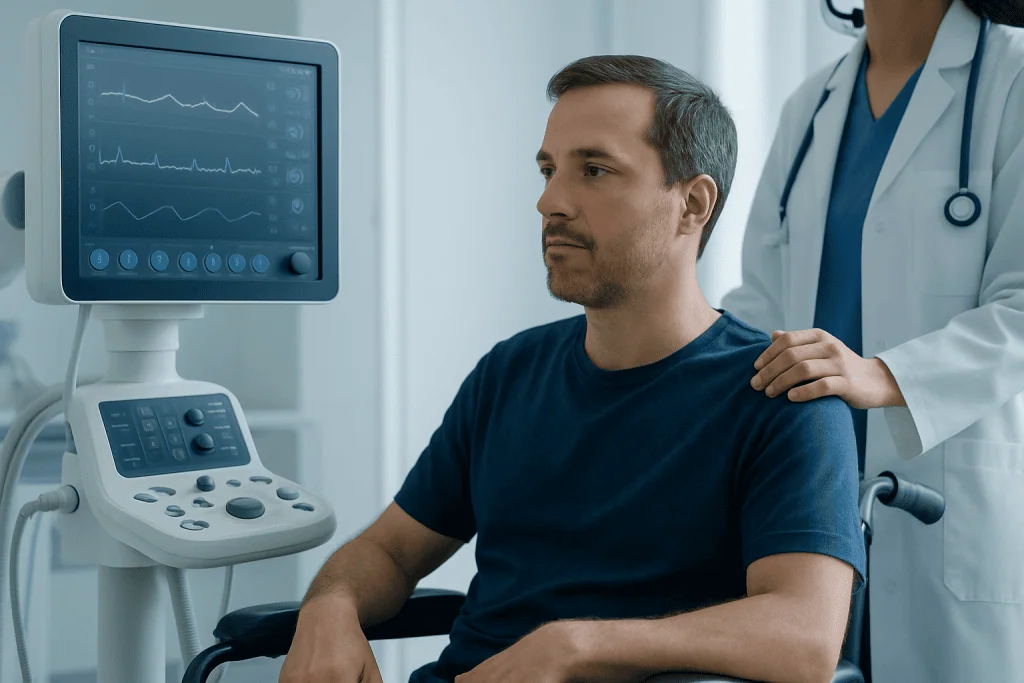
The main symptom of paralysis is loss of movement in a body part. In some cases the affected area feels completely limp, while in others the muscles become stiff or tight. Symptoms depend on which part of the nervous system is affected and how severe the damage is.
Paralysis may appear with other neurological symptoms, including tingling, numbness, reduced sensation, muscle cramps, muscle wasting, twitching, balance problems, or loss of bladder or bowel control. If the face is involved, there may be facial drooping, trouble closing one eye, or difficulty speaking clearly.
Doctors may describe paralysis as:
- Localized paralysis: limited to one area, such as the face, hand, or vocal cords.
- Generalized paralysis: affects a larger body region, such as the legs or all limbs.
- Spastic paralysis: muscles are tight and reflexes may be exaggerated.
- Flaccid paralysis: muscles are soft, weak, and have reduced tone or reflexes.
Symptoms that begin suddenly are especially important because they can signal a stroke or acute spinal cord problem. A related emergency condition is stroke, which can cause one-sided paralysis along with speech or vision changes.
Causes and risk factors

Paralysis can result from damage anywhere along the movement pathway. Brain disorders are a major cause, especially stroke, head injury, brain tumors, and neurological diseases that affect movement centers. Spinal cord injuries can interrupt nerve signals below the level of the injury and may lead to paraplegia or quadriplegia.
Peripheral nerve and muscle conditions can also cause paralysis. Examples include severe nerve compression, Guillain-Barre syndrome, certain inherited neuromuscular conditions, and disorders of the connection between nerves and muscles. Infections such as polio are less common in many countries today, but viral or bacterial infections can still inflame the brain, spinal cord, or nerves and affect movement.
Some causes develop suddenly and require urgent care, while others progress over weeks or months. Possible causes include:
- Stroke or bleeding in the brain
- Spinal cord trauma or compression
- Brain or spinal tumors
- Multiple sclerosis and other autoimmune conditions
- Nerve disorders such as Guillain-Barre syndrome
- Severe disc disease or nerve entrapment
- Infections affecting the nervous system
- Toxins, certain medications, or metabolic disturbances
Risk factors vary with the cause. For example, high blood pressure, diabetes, smoking, high cholesterol, and heart rhythm problems increase the risk of stroke. Falls, traffic accidents, sports injuries, and workplace trauma raise the risk of spinal cord injury. Some people may also have a higher risk because of age, underlying neurological disease, or a family history of certain neuromuscular disorders.
How paralysis is diagnosed
Diagnosis begins with a careful medical history and neurological examination. The doctor asks when the symptoms started, whether they came on suddenly or gradually, and whether there are other problems such as numbness, pain, fever, headache, vision changes, or bladder symptoms. The pattern of weakness often gives important clues about where the problem is located.
During the examination, the doctor checks muscle strength, tone, reflexes, coordination, sensation, speech, and cranial nerve function. This helps determine whether the cause is more likely in the brain, spinal cord, peripheral nerves, or muscles. A complete evaluation is important because different causes can look similar at first.
Tests may include brain or spine imaging such as CT or MRI, blood tests, and electrical studies of nerves and muscles. In selected cases, doctors may recommend a lumbar puncture, vascular imaging, or other specialized testing. When paralysis follows a possible stroke, urgent brain imaging helps guide treatment decisions, and stroke treatment may need to begin quickly.
If the evaluation suggests pressure on the spinal cord or a structural brain problem, referral to specialists is often needed without delay. In more complex cases, rehabilitation doctors, neurologists, neurosurgeons, orthopedic surgeons, and physical therapists may all contribute to the diagnosis and care plan.
Treatment options and rehabilitation
Treatment for paralysis depends on the cause, the severity, and how quickly treatment begins. In some cases, such as stroke, spinal cord compression, certain inflammatory disorders, or infections, early treatment can limit further damage and improve the chance of recovery. In other cases, the goal is to maximize function, prevent complications, and support long-term independence.
Medical treatment may include medicines to dissolve or prevent blood clots, reduce inflammation, treat infection, or manage muscle stiffness and pain. If a structural problem is pressing on the brain or spinal cord, surgery may be needed. For some patients, brain and nerve surgery or spine surgery can help relieve pressure or stabilize injured structures.
Rehabilitation is a central part of care for many people with paralysis. Physical therapy helps maintain joint flexibility, improve strength in unaffected muscles, retrain movement when possible, and reduce the risk of contractures. Occupational therapy focuses on everyday activities such as dressing, bathing, communication, and the use of adaptive equipment. Speech and swallowing therapy may be important when facial or bulbar muscles are involved.
Long-term support may include braces, wheelchairs, mobility aids, skin care, bladder and bowel management, and emotional support. When paralysis is related to a broader neurological condition, treatment may overlap with care pathways used in brain tumor or other nervous system disorders. Near the end of the care journey, some patients also benefit from coordinated assessment in centers where multidisciplinary specialists work together; Acibadem International’s JCI-accredited hospitals provide diagnosis and treatment for international patients with complex neurological and rehabilitation needs.
Daily living, prevention, and self-care
Not all paralysis can be prevented, but some important causes can be reduced through healthy habits and safety measures. Stroke prevention includes managing blood pressure, diabetes, and cholesterol, avoiding smoking, staying physically active, and following treatment plans for heart disease. Wearing seatbelts, using appropriate sports protection, and fall-proofing the home may lower the risk of serious injury.
For people living with paralysis, daily self-care is essential. Regular movement or assisted repositioning helps protect the skin and reduce pressure injuries. Stretching and range-of-motion exercises can help keep joints mobile, while good nutrition and hydration support overall health and healing.
Complication prevention is another key part of care. Depending on the area affected, patients may need support with bladder and bowel routines, breathing exercises, or cough assistance. Mood changes are also common after major neurological illness or injury, so emotional support, counseling, and family education can make a meaningful difference.
Self-care should always follow a clinician’s guidance, especially if there are changes in strength, breathing, swallowing, skin condition, or pain. Any sudden worsening deserves prompt medical review rather than home management alone.
When to seek medical care
Sudden paralysis is an emergency. A person should seek immediate medical care if they suddenly cannot move an arm, leg, or one side of the face, especially if this happens with trouble speaking, confusion, severe headache, vision changes, loss of balance, chest symptoms, or numbness. Fast treatment can be critical.
Urgent medical evaluation is also needed if weakness is rapidly spreading, follows a head or spine injury, or comes with breathing difficulty, swallowing problems, new bladder or bowel loss, fever, or severe back or neck pain. These symptoms can point to conditions that require emergency treatment.
Even gradual or partial paralysis should be assessed by a doctor. New weakness, repeated falls, increasing muscle stiffness, or unexplained changes in walking, hand function, or facial movement are good reasons to arrange a medical appointment. Early diagnosis can help guide treatment and rehabilitation before complications develop.
Frequently asked questions
Can paralysis be temporary?
Yes. Paralysis can be temporary when the underlying cause improves, such as after certain nerve injuries, inflammatory conditions, or some types of stroke treatment and rehabilitation. Recovery varies widely and depends on how severe the damage is and how quickly treatment begins.
What is the difference between paralysis and weakness?
Weakness means a muscle still works but not as strongly as normal. Paralysis means there is a major loss of voluntary movement, ranging from very limited movement to none at all. Doctors may use the term paresis for partial paralysis.
Is sudden paralysis always a stroke?
No, but stroke is one of the most important causes and must be ruled out quickly. Sudden paralysis can also happen with spinal cord compression, seizures, head injury, severe migraine variants, or nerve disorders. Because some of these conditions are emergencies, urgent medical assessment is essential.
Can a pinched nerve cause paralysis?
A pinched nerve usually causes pain, tingling, numbness, or weakness rather than complete paralysis. However, severe nerve compression can sometimes lead to marked loss of function in the affected muscles. A doctor should assess persistent or worsening symptoms to decide whether imaging or specialist treatment is needed.
How is paralysis treated after a spinal cord injury?
Treatment may include emergency stabilization, imaging, medicines, and sometimes surgery if the spinal cord is compressed or the spine is unstable. After the acute phase, rehabilitation is very important and often includes physical therapy, occupational therapy, mobility equipment, and long-term support for bladder, bowel, skin, and daily activities.
Can people with paralysis regain movement?
Some people do regain some movement, especially when the cause is treatable and therapy starts early. Others may have lasting movement loss but still improve greatly in independence through rehabilitation, assistive devices, and adaptive strategies. Recovery is individual and should be discussed with the treating medical team.
This article is for general information only and is not a substitute for professional medical advice. Please consult a qualified doctor about your individual situation.
Joint and spine care in Turkey — expert assessment & treatment
JCI-accredited · board-certified surgeons · reply within 24h
Add us as a Preferred Source to see more of our trusted health content across Google Search, AI Overviews and Discover.
Check your numbers in seconds
BMI, calories, due date, blood pressure and 30+ more clinical calculators — free, instant, doctor-reviewed ranges.

More from the Health Library

Ambien: What Patients Need to Know

Peanut Oil — Explained by Medical Evidence, Not Myths

Nofap: A Complete Medical Overview

Ozempic Hands: A Complete Medical Overview

Probiotics: What Patients Need to Know