Patch of Pimples: A Complete Medical Overview

A patch of pimples is a description, not a diagnosis; common causes include acne, folliculitis, sweat-related irritation, and contact reactions. Clues such as location, itch, pain, pus, and whether all bumps look similar help doctors narrow the cause.
Key Takeaways
- A patch of pimples is a description, not a diagnosis; common causes include acne, folliculitis, sweat-related irritation, and contact reactions.
- Clues such as location, itch, pain, pus, and whether all bumps look similar help doctors narrow the cause.
- Gentle skin care and avoiding squeezing, harsh scrubs, and heavy occlusive products can help many mild cases.
- Medical review is important if the area spreads, becomes very painful, forms deep lumps, drains significantly, or does not improve.
- Treatment depends on the cause and may include skin-care changes, topical medicines, oral treatment, or testing for infection or allergy.
A patch of pimples usually means several small bumps appearing together in one area of skin. It is often related to acne, folliculitis, heat, friction, or irritation, but the exact cause depends on how the bumps look, where they appear, and whether there are symptoms such as pain, itching, or drainage.
What a Patch of Pimples Usually Means
A patch of pimples is a cluster of small inflamed or raised spots that appears in one area rather than being scattered widely over the skin. In many people, this points to a localized skin problem such as acne, irritated hair follicles, sweat and friction, or a reaction to a product or fabric. The term itself does not identify one single disease.
Doctors usually look at the pattern first: whether the bumps are red or skin-colored, itchy or tender, filled with pus or firm, and centered around hair follicles or not. These details matter because several different conditions can look similar at first glance. For example, acne and folliculitis can both cause grouped bumps, but they may need different treatment approaches.
The location also offers useful clues. A patch of pimples on the face or jawline may be linked to acne, cosmetics, or shaving. On the chest, back, buttocks, or thighs, friction, sweat, occlusive clothing, exercise, or inflamed follicles are common contributors. A clinician considers recent skin products, heat exposure, medications, and other symptoms before deciding what the patch is most likely to be.
Common Symptoms and How the Bumps Can Look
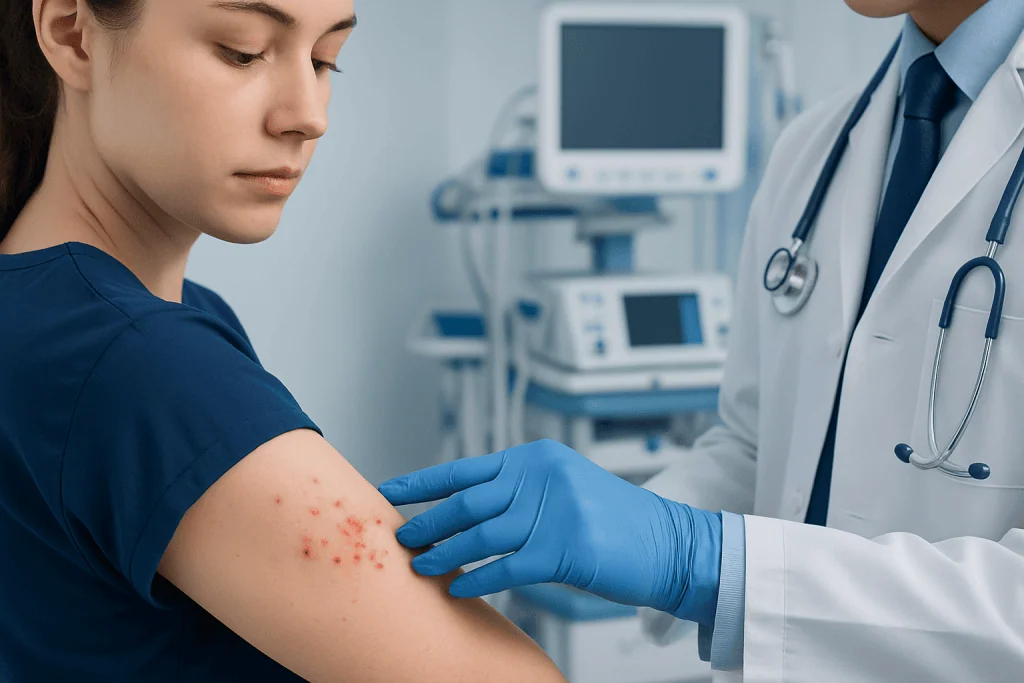
The appearance of a patch of pimples varies from person to person. Some patches contain whiteheads, blackheads, or small red pimples, which often suggests acne. Others consist of many similar-looking tiny pustules around hair follicles, more in keeping with folliculitis. Some patches feel rough and itchy, while others are sore, warm, and more inflamed.
Symptoms that can accompany the bumps include tenderness, itching, burning, swelling, dryness, peeling, or a sensation of tightness in the skin. If the patch is related to blocked pores, oiliness may be noticeable. If it is related to irritation or allergy, the surrounding skin may look red, flaky, or more sharply outlined.
A few practical observations can help describe the problem accurately during a medical visit:
- Whether all bumps look the same or different
- Whether there are blackheads or whiteheads
- Whether the area itches more than it hurts
- Whether pus, crusting, or drainage is present
- Whether the patch appeared suddenly or gradually
- Whether it worsens after sweating, shaving, or using a new product
These details do not replace diagnosis, but they help distinguish acne from infection, irritation, heat rash, or other skin conditions.
Possible Causes of a Patch of Pimples
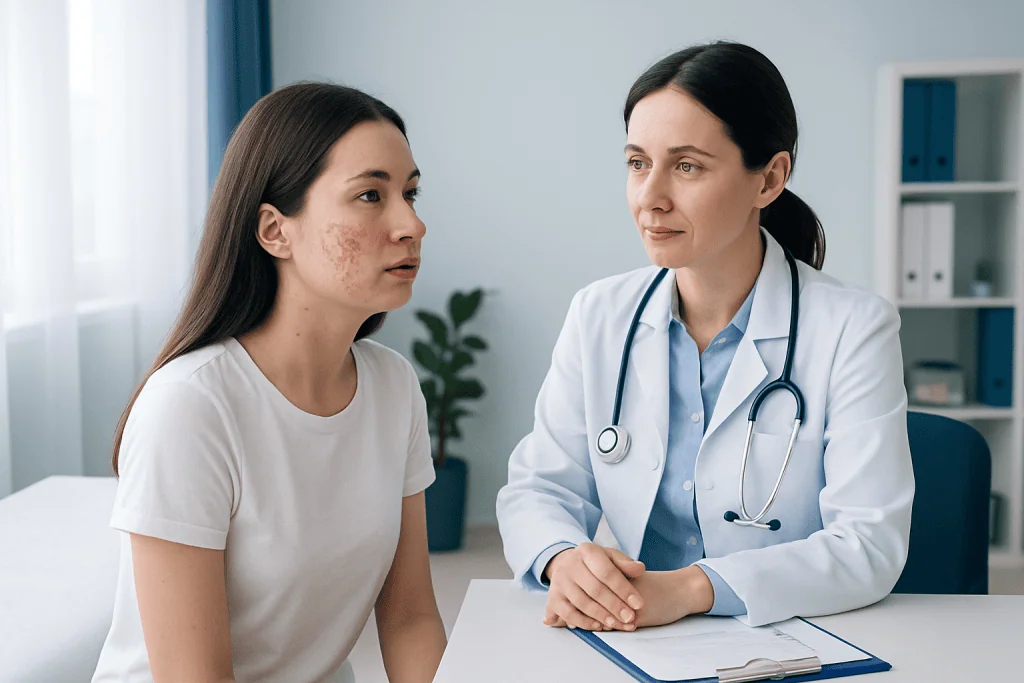
One of the most common causes is acne. Acne develops when pores become blocked with oil, dead skin cells, and inflammation. A patch of pimples may appear on the forehead, chin, jawline, chest, shoulders, or back. Hormonal changes, stress, occlusive products, and genetics can all influence acne flare-ups. In some people, a grouped breakout may be part of broader acne rather than an isolated problem.
Another frequent cause is folliculitis, which is inflammation of the hair follicles. It may result from bacteria, yeast, friction, shaving, tight clothing, or prolonged moisture on the skin. Folliculitis often creates many similar small bumps or pustules in one patch, especially on the neck, scalp, chest, buttocks, or thighs. It can feel itchy, tender, or mildly painful.
Heat, sweating, and friction can also trigger a patch of pimples or pimple-like bumps. This is common under sportswear, backpacks, bra straps, waistbands, or helmets. In these cases, blocked sweat ducts or repeated rubbing may inflame the skin. Some people experience a worsening in hot weather, during exercise, or after long periods in non-breathable clothing.
Other causes include contact dermatitis from cosmetics, hair products, sunscreens, detergents, or topical medications; ingrown hairs after shaving or waxing; and occasionally viral or inflammatory rashes that mimic pimples. Because pimple-like rashes can overlap in appearance, persistent or unusual patches deserve professional evaluation instead of repeated self-treatment with harsh acne products.
Risk Factors That Can Trigger Localized Breakouts
A patch of pimples often develops where skin is exposed to pressure, heat, oil, and repeated irritation. Wearing tight athletic clothing, using heavy creams, shaving frequently, touching the face often, or leaving sweat on the skin after exercise can all contribute. Hair oils and styling products may also play a role when bumps appear near the hairline, forehead, neck, or upper back.
Hormonal changes are another important factor, especially for breakouts concentrated around the jawline, chin, chest, or back. Some medications can also trigger acne-like eruptions or inflamed follicles. In addition, people with naturally oily skin or a history of acne may be more prone to clustered pimples in response to friction or occlusive products.
Risk can increase with certain habits and exposures:
- Using pore-clogging cosmetics, sunscreens, or body lotions
- Shaving against the direction of hair growth
- Wearing damp clothing for long periods
- Using shared hot tubs or poorly maintained pools
- Scrubbing the skin aggressively or picking at bumps
- Living in hot, humid environments
Recognizing these triggers is helpful because treatment often works best when combined with simple changes in skin care and daily routine.
How Doctors Diagnose the Cause
Diagnosis usually begins with a skin examination and a focused history. A doctor asks when the patch started, whether it itches or hurts, what products have been used recently, and whether there has been shaving, sweating, sports equipment, travel, or hot-tub exposure. They also ask about past acne, allergies, medications, and similar episodes.
In many cases, the diagnosis can be made by appearance and location alone. The doctor looks for features such as comedones, pustules centered on hair follicles, signs of eczema or contact irritation, and whether the rash is sharply localized to an area exposed to friction or a product. Sometimes photographs from the start of the eruption can be helpful if the appearance has changed.
If the bumps are severe, recurrent, unusual, or not responding to treatment, additional tests may be needed. A swab or culture may be taken if infection is suspected. Occasionally, a skin scraping, patch testing for allergy, or referral to a dermatologist is recommended. This careful approach helps avoid treating every patch of pimples as routine acne when another cause may be responsible.
Treatment Options and Everyday Skin Care
Treatment depends on the underlying cause. If the patch is due to acne, care may include gentle cleansing, non-comedogenic moisturizers, and topical medications that reduce clogged pores or inflammation. If there are more widespread or stubborn breakouts, a doctor may discuss prescription acne therapies. For some patients, specialist care and structured acne treatment can help when over-the-counter options are not enough.
If folliculitis is suspected, management may focus on reducing friction and moisture, improving hygiene after sweating, and treating bacterial or yeast overgrowth when needed. Shaving technique may need to be adjusted, or hair removal paused while the skin settles. When inflamed follicles become recurrent or more extensive, a dermatologist may consider topical or oral treatment. In selected cases, evaluation through dermatology care can clarify whether the bumps are infectious, inflammatory, or acne-related.
Supportive skin care is important whatever the cause. Patients are usually advised to avoid picking or squeezing, since this can worsen inflammation and raise the risk of marks or scarring. Harsh scrubs, alcohol-based toners, and frequent product switching can irritate the skin barrier and make the patch last longer.
Helpful self-care steps often include:
- Washing gently once or twice daily and after heavy sweating
- Using fragrance-free, non-comedogenic products
- Changing out of tight or damp clothing promptly
- Cleaning razors and avoiding shaving over inflamed areas
- Keeping sports gear, pillowcases, and phone surfaces clean
- Applying treatments exactly as directed rather than layering many products
If the patch leaves dark marks, thickens, or forms deep nodules, doctors may adjust treatment to prevent longer-term skin changes. When procedures are needed for selected skin concerns, they may be planned alongside medical treatment rather than used alone.
Prevention and When to Seek Medical Care
Preventing a patch of pimples often starts with reducing the skin stresses that trigger localized breakouts. Light, breathable clothing, prompt showering after exercise, careful shaving habits, and choosing non-comedogenic skin products can make a meaningful difference. For people who notice repeated breakouts in the same area, identifying one trigger at a time is often more useful than changing everything at once.
It is also sensible to protect the skin barrier. Over-cleansing and over-treating can lead to dryness and irritation that resembles or worsens a breakout. A simple routine is usually best: gentle cleanser, suitable moisturizer, and targeted treatment only where needed. If a product seems to trigger the patch, stopping it and discussing alternatives with a clinician is wise.
Medical care should be sought if a patch of pimples is very painful, rapidly spreading, associated with fever, or producing significant swelling or drainage. Review is also important if the area keeps returning, leaves scars, or does not improve after a few weeks of appropriate self-care. Bumps around the eyes, widespread facial swelling, or signs of a severe allergic reaction need urgent assessment.
For persistent or complex cases, specialist evaluation can help distinguish acne from folliculitis, dermatitis, or other skin conditions and guide treatment safely. Acibadem International’s multidisciplinary specialists and JCI-accredited hospitals diagnose and treat skin conditions for international patients when expert assessment is needed.
Frequently asked questions
Is a patch of pimples always acne?
No. A patch of pimples can be caused by acne, but it may also be due to folliculitis, heat rash, contact irritation, ingrown hairs, or another skin condition. The appearance, location, and associated symptoms help determine the cause.
How can someone tell folliculitis from acne?
Folliculitis often causes many similar-looking small bumps or pustules centered on hair follicles, and it may itch or feel tender. Acne more often includes blackheads, whiteheads, deeper inflamed spots, or recurring breakouts on typical acne-prone areas. Because the two can overlap, a clinician may be needed for a clear diagnosis.
Should a patch of pimples be popped or squeezed?
No. Squeezing can push inflammation deeper into the skin, increase irritation, and raise the chance of scarring or dark marks. Gentle skin care and appropriate treatment are safer than picking at the area.
Can sweat and tight clothing cause a patch of pimples?
Yes. Sweat, heat, and friction can irritate hair follicles and block pores, especially under tight or non-breathable clothing. This is why clustered bumps often appear on the chest, back, thighs, buttocks, or areas under straps and waistbands.
When should a person see a doctor for a patch of pimples?
A doctor should assess the area if it is painful, spreading, draining heavily, associated with fever, or not improving after a few weeks. Medical review is also helpful if the same patch keeps returning or if there is concern about scarring, infection, or allergy.
Can skin-care products cause a patch of pimples?
Yes. Some cosmetics, sunscreens, hair products, and creams can clog pores or irritate the skin, leading to a localized breakout. Fragrances and certain active ingredients may also trigger a contact reaction that looks pimple-like.
References
- American Academy of Dermatology
- National Institute of Arthritis and Musculoskeletal and Skin Diseases
- Mayo Clinic
- National Health Service
- Merck Manual
This article is for general information only and is not a substitute for professional medical advice. Please consult a qualified doctor about your individual situation.
Hair transplant in Turkey — costs, graft counts & a free assessment
JCI-accredited · board-certified surgeons · reply within 24h
Add us as a Preferred Source to see more of our trusted health content across Google Search, AI Overviews and Discover.