Patella Bands — Explained by Medical Evidence, Not Myths

Patella bands may help reduce pain during activity by changing how force is distributed through the patellar tendon. They are most often used for patellar tendon pain, sometimes called jumper’s knee, and may also help selected cases of front knee pain.
Key Takeaways
- Patella bands may help reduce pain during activity by changing how force is distributed through the patellar tendon.
- They are most often used for patellar tendon pain, sometimes called jumper’s knee, and may also help selected cases of front knee pain.
- A patella band should fit snugly below the kneecap without causing numbness, skin irritation, or swelling.
- If knee pain is severe, follows an injury, causes locking or instability, or does not improve, medical assessment is important.
- Long-term improvement usually depends on treating the cause, not only wearing a support strap.
Patella bands are small straps worn just below the kneecap to reduce pressure on the patellar tendon during movement. They can help some people with activity-related front knee pain, but they are not a cure and work best as part of a broader plan that may include exercise, activity changes, and medical evaluation when symptoms persist.
What patella bands are and what they can realistically do
Patella bands are narrow straps worn around the upper shin, just below the kneecap. They are designed to place gentle pressure over the patellar tendon, the strong band of tissue that connects the kneecap to the shinbone. Many people use them during sports, exercise, or repetitive activities such as running, jumping, climbing stairs, or squatting.
Medical evidence suggests that patella bands may reduce symptoms in some people with pain at the front of the knee, especially pain related to the patellar tendon. The most common reason is patellar tendonitis, also called patellar tendinopathy or jumper’s knee. The strap does not heal damaged tissue on its own, but it may improve comfort enough to help a person stay active while also following a treatment plan.
A useful way to think about patella bands is that they are supportive tools, not standalone treatments. They may lessen pain during movement, but they do not replace strengthening exercises, training changes, weight management where relevant, or professional evaluation when symptoms are ongoing. For some people, a strap makes a clear difference; for others, it has little effect.
How patella bands may work
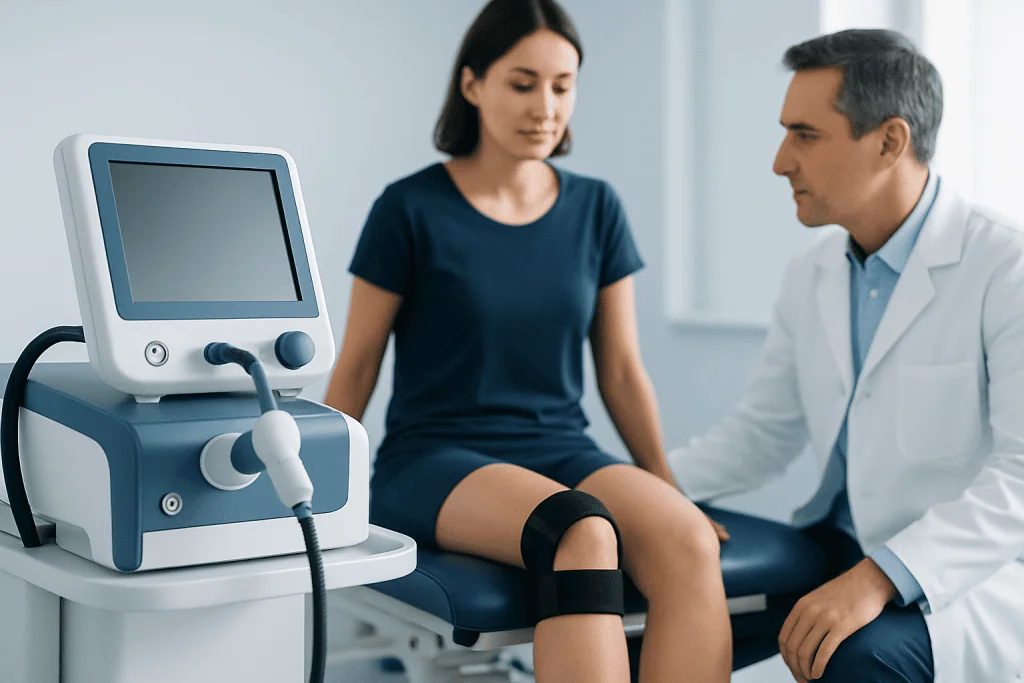
The exact way patella bands help is still being studied, but the main theory is mechanical. By applying targeted pressure over the patellar tendon, the band may slightly change how tension is transmitted through the tendon during knee bending and straightening. This can reduce strain at the painful area, especially during jumping or quick direction changes.
There may also be a sensory effect. Compression around the tendon and skin can improve awareness of knee position and movement, which some people describe as a feeling of better support or control. This does not mean the knee is structurally stronger, but it may make activity feel more comfortable.
Research on braces and straps for front knee pain shows mixed but generally reasonable short-term symptom benefit in selected patients. The best results are usually seen when the strap is combined with a guided rehabilitation approach, such as physical therapy and rehabilitation, rather than used alone for months without reassessment.
Who may benefit most from a patella band

Patella bands are most commonly tried by people with pain just below the kneecap that becomes worse with exercise. This pattern is typical of patellar tendon overload, often seen in runners, basketball players, volleyball players, gym users, and anyone whose activity includes repeated jumping, landing, sprinting, or sudden acceleration.
Some people with general anterior knee pain may also find a strap helpful, especially if symptoms are provoked by stairs, squats, kneeling, or prolonged sitting. However, front knee pain can have several causes. These include overuse, muscle imbalance, poor movement mechanics, cartilage irritation, bursitis, or conditions such as patellofemoral pain syndrome. In these situations, the response to a patella band is less predictable.
Patella bands are less likely to help if the pain comes from inside the joint rather than the tendon, such as a major ligament injury, a meniscus tear, advanced arthritis, or a fracture. They are also not a substitute for proper care after a sudden sports injury. If there is marked swelling, instability, a popping sensation, or inability to bear weight, a doctor should evaluate the knee.
- Often helpful: patellar tendon pain, exercise-related front knee discomfort, jumper’s knee
- Sometimes helpful: selected cases of nonspecific anterior knee pain
- Usually not enough alone: ligament injuries, meniscus tears, significant arthritis, major trauma
How to use a patella band safely and effectively
Placement matters. In most cases, the strap sits just below the kneecap over the patellar tendon, not across the kneecap itself. It should feel firm and supportive but not overly tight. A band that is too loose may not do much, while one that is too tight can irritate the skin or affect circulation.
Patella bands are usually worn during the activities that trigger symptoms rather than all day. Many people use them during training sessions, long walks, gym workouts, or sport and then remove them afterward. If pain worsens while wearing the strap, or if numbness, tingling, swelling below the strap, or skin breakdown occurs, it should be removed and the fit reassessed.
Because front knee pain often reflects overload, using a strap should go together with practical steps such as reducing sudden increases in training, warming up well, improving landing mechanics, and strengthening the quadriceps, hips, and calf muscles. If symptoms are ongoing, structured care such as knee treatment options may be discussed depending on the cause, although replacement surgery is not a treatment for tendon irritation itself.
What patella bands cannot do
A common myth is that a patella band corrects the underlying problem by itself. In reality, it does not repair a torn tendon, rebuild weakened muscles, reverse cartilage wear, or fully correct poor movement patterns. If the source of pain is repetitive overload, symptoms may return whenever activity increases unless the root cause is addressed.
Another misunderstanding is that more support always means better protection. Wearing a strap does not make a person immune to injury, and it should not be used to push through severe pain. Persistent or worsening pain can be a sign that the activity level, training technique, or diagnosis needs review.
Finally, a patella band is different from a hinged knee brace or a compression sleeve. A strap provides focused pressure to the patellar tendon, while other braces are designed for broader support, swelling control, or instability. Choosing the right support depends on the diagnosis, which is why a clinical assessment may be valuable if the knee problem is not clearly improving.
Diagnosis: why the cause of knee pain matters
Doctors diagnose the reason for front knee pain by combining a history, physical examination, and, when needed, imaging. Important clues include exactly where the pain is located, whether it is linked to jumping or stairs, whether the knee swells, and whether there was a sudden injury. Tenderness at the patellar tendon, especially below the kneecap, often points toward patellar tendinopathy.
The examination may assess alignment, flexibility, strength, walking pattern, single-leg control, and tenderness in different structures around the knee. In many overuse conditions, imaging is not always needed at first. However, ultrasound, X-rays, or MRI may be useful when symptoms are prolonged, the diagnosis is uncertain, or a more serious structural problem is suspected.
In selected cases, other conditions need to be ruled out, including tendon tears, bursitis, osteoarthritis, osteochondral injury, or inflammatory causes of joint pain. If symptoms continue despite rest and a well-fitted strap, evaluation by an orthopedic or sports medicine specialist can help guide treatment and prevent ongoing irritation.
Treatment beyond the strap
For many people, the most effective treatment for patellar tendon pain is a structured exercise program. This often focuses on progressive loading of the tendon and strengthening of the quadriceps, hip muscles, and calf muscles. A clinician may also recommend temporary activity modification so that the tendon is challenged in a controlled way rather than repeatedly overloaded.
Other supportive measures can include relative rest, cold packs after provoking activity, footwear review, training adjustments, and attention to flexibility and landing mechanics. If pain has lasted for some time, a supervised rehabilitation plan is often more effective than trial-and-error self-treatment. In some cases, targeted evaluation in orthopedic care helps clarify why the problem is not improving.
Procedures or surgery are not first-line treatment for a typical overuse tendon problem. They may be considered only in selected cases when symptoms are severe, longstanding, or caused by a different structural issue. The treatment choice depends on the diagnosis, the person’s activity goals, and how symptoms respond to conservative care.
When to seek medical care
Medical assessment is recommended if knee pain lasts more than a few weeks, keeps returning, interferes with daily activities, or prevents sport despite rest and a well-fitted patella band. It is also sensible to seek care if there is swelling, warmth, redness, fever, night pain, or pain in more than one joint, as these features may suggest a cause other than simple overuse.
Urgent care is appropriate after a significant fall, twist, or direct blow if the person cannot bear weight, the knee looks deformed, the joint locks, or the knee repeatedly gives way. A sudden popping sensation with rapid swelling may point to a more serious injury that needs prompt evaluation.
For international patients who need assessment and treatment, Acibadem International’s multidisciplinary specialists and JCI-accredited hospitals evaluate knee conditions with imaging, rehabilitation, and orthopedic care when appropriate.
Frequently asked questions
Do patella bands really work?
They can help some people, especially those with pain related to the patellar tendon during activity. Their main benefit is symptom relief, not cure, and results vary from person to person. They tend to work best when combined with exercise-based rehabilitation.
Where should a patella band sit?
A patella band is usually placed just below the kneecap over the patellar tendon. It should feel snug and supportive without causing numbness, skin irritation, or increased pain. If the fit is uncomfortable, it may need adjustment or a different size.
Can a patella band heal patellar tendonitis?
No, a patella band does not heal the tendon by itself. It may reduce discomfort during movement, but recovery usually depends on load management, strengthening, and time. Persistent symptoms should be assessed by a qualified clinician.
Is a patella band the same as a knee brace?
Not exactly. A patella band is a small strap that applies focused pressure to the patellar tendon, while many knee braces offer broader support for instability, swelling, or general compression. The best option depends on the reason for the knee pain.
Should a patella band be worn all day?
Usually not. Most people wear it during activities that trigger symptoms, such as exercise or sport, and remove it afterward. Wearing it continuously is not usually necessary unless a clinician specifically recommends it.
When should someone stop using a patella band and see a doctor?
A doctor should assess the knee if pain is worsening, not improving after a few weeks, or associated with swelling, locking, buckling, or inability to bear weight. Care is also important if there was a sudden injury or if the strap causes numbness or skin problems. Ongoing symptoms may mean the diagnosis needs to be reviewed.
This article is for general information only and is not a substitute for professional medical advice. Please consult a qualified doctor about your individual situation.
Joint and spine care in Turkey — expert assessment & treatment
JCI-accredited · board-certified surgeons · reply within 24h
Add us as a Preferred Source to see more of our trusted health content across Google Search, AI Overviews and Discover.

More from the Health Library

Demodectic Mange: What Patients Need to Know

Ureteral Stent — Explained by Medical Evidence, Not Myths

Retrograde amnesia: Symptoms, Causes, and Treatment — Complete Patient Guide

Fibula Fracture — Explained by Medical Evidence, Not Myths

Leg Weakness: What Patients Need to Know