Patellofemoral Pain Syndrome: Common Causes, Related Conditions, and When to See a Doctor
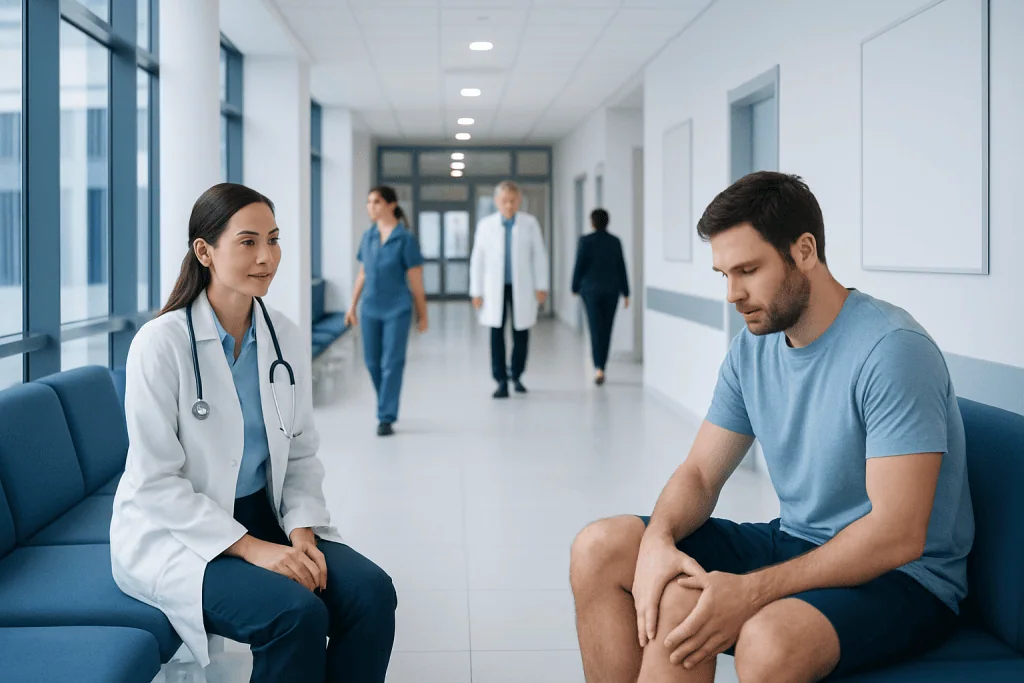
Patellofemoral pain syndrome causes pain around or behind the kneecap, often with activity or prolonged sitting. It commonly develops from overuse, muscle weakness, movement patterns, or alignment factors rather than major structural damage.
Key Takeaways
- Patellofemoral pain syndrome causes pain around or behind the kneecap, often with activity or prolonged sitting.
- It commonly develops from overuse, muscle weakness, movement patterns, or alignment factors rather than major structural damage.
- Diagnosis is usually based on symptoms and a physical exam, with imaging used when another condition is suspected.
- Treatment often includes activity modification, physical therapy, pain relief measures, and a gradual return to sport or exercise.
- Medical review is important if knee pain is persistent, worsening, follows trauma, or comes with swelling, locking, or instability.
Patellofemoral pain syndrome is a common cause of pain around or behind the kneecap, especially during stairs, squatting, running, or long periods of sitting. It is often related to how the kneecap moves, muscle balance, training load, and biomechanics rather than a single injury.
Overview: what patellofemoral pain syndrome means
Patellofemoral pain syndrome is a broad term for pain felt at the front of the knee, usually around or behind the kneecap. Many people know it as “runner’s knee,” but it can affect anyone, including people who do not run. The pain often appears during activities that increase pressure between the kneecap and the thigh bone, such as climbing stairs, squatting, kneeling, jumping, or sitting with bent knees for a long time.
This condition is usually not caused by one dramatic injury. Instead, it often develops when the kneecap does not move as smoothly as it should, or when the tissues around the joint become irritated by repeated stress. Changes in exercise routine, weak hip or thigh muscles, foot mechanics, and training errors can all play a role. For many patients, several small factors combine rather than one single cause.
Patellofemoral pain syndrome is common in adolescents, athletes, and active adults, but it can also occur during periods of lower activity if muscle support has declined. Although the pain can be frustrating, it often improves with a careful rehabilitation plan. Early attention to symptoms may help prevent a cycle of pain, compensation, and reduced activity.
Symptoms and how the pain typically feels
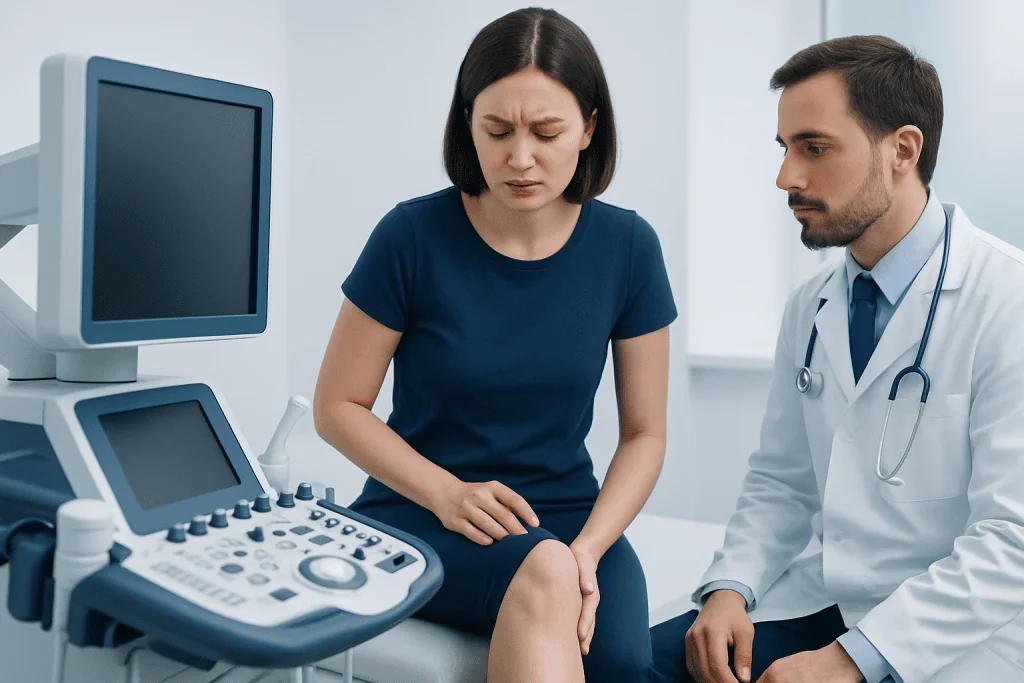
The main symptom is a dull or aching pain at the front of the knee. Some people can point to the area around the kneecap, while others describe discomfort deeper behind it. The pain may come on gradually and may affect one or both knees. It is often worse during or after activities that load the joint repeatedly.
Typical symptom patterns include pain when walking downstairs, squatting, running, lunging, or getting up from a chair. Some people notice discomfort after sitting through a movie, a long drive, or a flight with the knee bent; this is sometimes called the “theater sign.” A mild grinding, clicking, or cracking sensation can occur, though these sounds alone do not always mean damage.
Symptoms can vary in intensity from day to day. Flare-ups are common after sudden increases in exercise intensity, hills, speed work, jumping, or repetitive knee bending. While mild swelling may occasionally occur, marked swelling, true locking, or the knee giving way are less typical and may suggest another problem that should be checked by a doctor.
- Pain around or behind the kneecap
- Worse with stairs, squatting, running, or prolonged sitting
- Possible clicking or grinding without major injury
- Often gradual in onset rather than sudden
Common causes, biomechanics, and related conditions
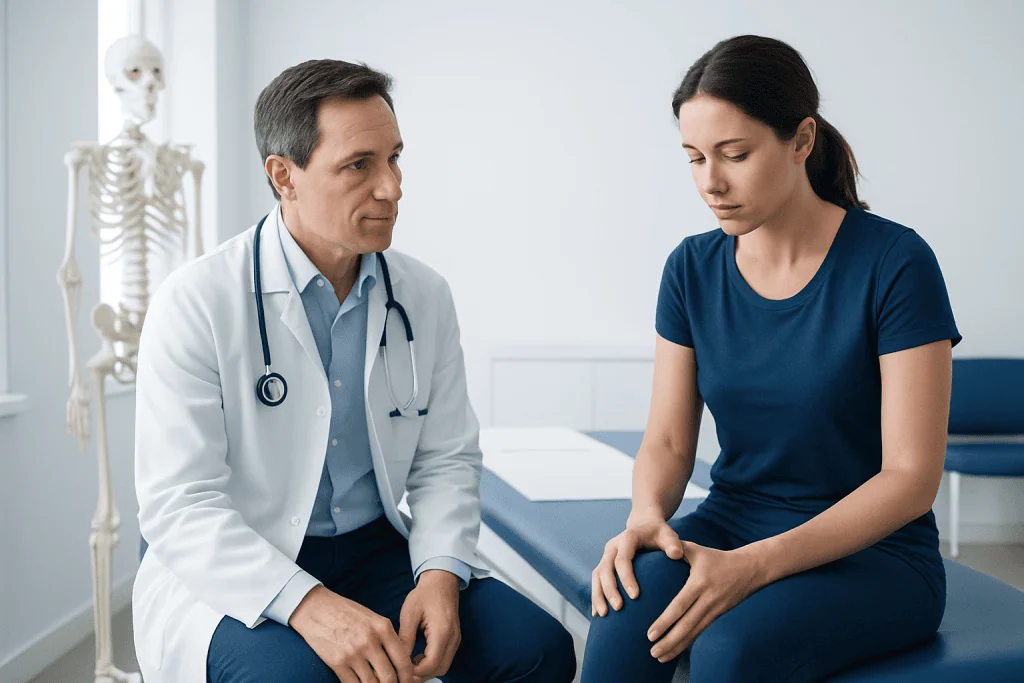
Patellofemoral pain syndrome is best understood as a movement and load-related problem. The kneecap normally glides in a groove at the end of the thigh bone. If the forces acting on the knee are not well balanced, pressure in this joint can increase and irritate the surrounding structures. This may happen if the hip muscles are weak, the quadriceps are not supporting the knee efficiently, or the lower limb moves inward excessively during walking, running, or landing.
Training load is another major factor. A rapid increase in mileage, intensity, hill work, jumping, or sports frequency can overload the joint before the tissues have adapted. Footwear changes, running technique, tight surrounding muscles, and reduced recovery time may also contribute. In growing adolescents, activity demands and temporary changes in flexibility or control can make symptoms more noticeable.
Several related conditions can overlap with or mimic patellofemoral pain syndrome. These include knee pain from overuse syndromes, cartilage irritation under the kneecap, and tendon-related pain. Iliotibial band tightness, hip weakness, and flat or highly arched feet may influence symptoms. In some patients, the pain is connected with sports injuries involving altered movement patterns after a previous ankle, hip, or knee problem.
It is also important to distinguish patellofemoral pain syndrome from other causes of front knee pain, such as patellar tendinopathy, bursitis, plica irritation, osteoarthritis, or instability of the kneecap. Because the front knee can hurt for many reasons, an accurate assessment is useful when symptoms do not improve as expected.
Who is more likely to develop it
Patellofemoral pain syndrome is especially common in teenagers, young adults, runners, cyclists, and people who do sports involving repeated squatting, jumping, cutting, or stair climbing. It may also affect people starting a new fitness program, returning to exercise after a break, or increasing activity too quickly. Jobs or daily routines that involve frequent kneeling or climbing can also add stress to the kneecap joint.
Risk factors can include poor hip and core control, reduced quadriceps strength, tight hamstrings or calf muscles, and differences in lower limb alignment or foot posture. These factors do not guarantee that a person will develop the condition, but they may make the knee less able to handle repeated loads. Previous knee pain can also increase risk if normal movement has not fully returned.
Patellofemoral pain syndrome affects both recreational exercisers and competitive athletes. The condition is not simply a sign of being “out of shape” or having permanent knee damage. In many cases, the issue is that the knee is being asked to do more than the surrounding muscles and movement patterns can currently support. Identifying personal triggers is often a key step in recovery.
How doctors diagnose patellofemoral pain syndrome
Diagnosis usually starts with a detailed history and physical examination. A doctor or physical therapist will ask where the pain is felt, what activities make it worse, whether it began gradually or after an injury, and whether there are warning signs such as swelling, locking, fever, or significant instability. They will also look at walking, balance, flexibility, and the way the hip, knee, and foot move together.
During the exam, the clinician may check kneecap tracking, tenderness, muscle strength, range of motion, and pain with squatting or step-down movements. Patellofemoral pain syndrome is often diagnosed clinically, which means the pattern of symptoms and the exam findings provide enough information without immediate imaging.
X-rays, ultrasound, or MRI are not always necessary at first, but they may be recommended if symptoms are severe, follow trauma, do not improve with treatment, or suggest another diagnosis. Imaging can help rule out fractures, significant cartilage injury, arthritis, or structural problems. If symptoms are persistent or complex, assessment by orthopedic specialists may be helpful to confirm the diagnosis and guide next steps.
Treatment options and recovery
Treatment usually begins with reducing the activities that trigger pain while keeping the person as active as possible. This does not always mean complete rest. Instead, clinicians often advise temporarily lowering running distance, avoiding deep knee bends, or switching to lower-impact exercise such as swimming or cycling with appropriate adjustments. Applying ice after activity and using simple pain-relief measures recommended by a doctor can help during flare-ups.
Physical therapy is the main treatment for many patients. A rehabilitation program often focuses on strengthening the hip, thigh, and core muscles, improving flexibility, and retraining movement patterns that place extra stress on the kneecap. Exercises are typically progressed gradually so the knee can adapt. In some cases, taping, bracing, shoe inserts, or footwear advice may be used to support symptom control while strength and mechanics improve. Structured physical therapy and rehabilitation is often central to lasting improvement.
Recovery is rarely instant, but many people improve with consistency. The timeline depends on how long symptoms have been present, the person’s activity level, and whether contributing factors are addressed. Returning to sport is usually gradual, with attention to pain response, training load, and technique. If pain persists despite appropriate rehabilitation, doctors may reassess for related issues such as arthritis or other knee conditions.
Surgery is not a routine treatment for patellofemoral pain syndrome alone. It may be considered only in selected cases when there is a clearly defined structural problem and non-surgical care has not helped. If needed, further evaluation through knee surgery services can clarify whether any operative option is appropriate.
Prevention and self-care strategies
Prevention focuses on managing load and supporting healthy movement. A gradual training plan is one of the most effective steps, especially when starting a new program or returning after time off. Increases in running distance, speed, hills, or jumping volume are often best made slowly. Warm-ups, recovery days, and attention to early symptoms can reduce the risk of flare-ups.
Strengthening the hips, quadriceps, and core may improve how force is distributed through the leg. Flexibility work for the calves, hamstrings, and hip muscles can also be useful when stiffness is part of the problem. Footwear should be comfortable and appropriate for the activity, and older athletic shoes may need replacement if they no longer provide support.
Self-care should be practical and sustainable. Short-term activity modification, ice after provoking activity, and avoiding repeated deep knee bending during painful periods may help. However, complete avoidance of movement for long periods can sometimes slow recovery. A balanced approach usually works best, ideally with guidance from a qualified clinician if symptoms continue.
When to seek medical care
Patellofemoral pain syndrome often improves with conservative care, but medical review is important if the pain lasts more than a few weeks, keeps returning, or interferes with daily life, work, or sports. A doctor can help confirm the cause, identify contributing factors, and rule out other knee conditions that may need different treatment.
Prompt assessment is especially important if knee pain starts after a fall, twist, or direct blow, or if there is significant swelling, redness, warmth, fever, locking, marked stiffness, or a feeling that the knee may buckle. These features are less typical of patellofemoral pain syndrome and may point to an injury or inflammatory problem needing urgent attention.
People with persistent symptoms may benefit from coordinated care involving orthopedics, sports medicine, and rehabilitation specialists. Acibadem International’s multidisciplinary teams in JCI-accredited hospitals diagnose and treat knee conditions for international patients, including exercise-related anterior knee pain and related musculoskeletal problems.
Frequently asked questions
Is patellofemoral pain syndrome the same as runner’s knee?
Runner’s knee is a common informal name for patellofemoral pain syndrome. The term is often used because running can trigger symptoms, but the condition can also affect non-runners. It refers to pain around or behind the kneecap rather than one single injury.
Can patellofemoral pain syndrome go away on its own?
Mild cases may settle if the knee is not repeatedly overloaded, but symptoms often return if the underlying causes are not addressed. Strengthening, movement retraining, and gradual activity changes usually improve the chance of lasting recovery. Ongoing or recurrent pain should be assessed by a clinician.
Do people with patellofemoral pain syndrome need an MRI?
Not always. Many cases can be diagnosed from the history and physical examination alone. An MRI may be considered if symptoms are severe, follow trauma, fail to improve, or suggest another knee problem.
What exercises help patellofemoral pain syndrome?
Programs often focus on strengthening the hip muscles, quadriceps, and core, along with flexibility and balance work. The best exercises depend on the individual’s pain triggers and movement patterns. A physical therapist can tailor a plan and show how to progress it safely.
Should someone stop running completely if they have patellofemoral pain syndrome?
Not necessarily. Some people can continue running with reduced distance, lower intensity, flatter routes, or cross-training, depending on pain levels. The goal is usually to manage load while correcting contributing factors rather than stopping all activity unless a doctor advises otherwise.
How long does recovery usually take?
Recovery time varies from person to person. Some improve in weeks, while others need several months, especially if symptoms have been present for a long time or activity demands are high. Consistency with rehabilitation and a gradual return to sport are important.
References
- American Academy of Orthopaedic Surgeons
- American Physical Therapy Association
- National Institute of Arthritis and Musculoskeletal and Skin Diseases
- American Academy of Family Physicians
- Mayo Clinic
This article is for general information only and is not a substitute for professional medical advice. Please consult a qualified doctor about your individual situation.
Joint and spine care in Turkey — expert assessment & treatment
JCI-accredited · board-certified surgeons · reply within 24h
Add us as a Preferred Source to see more of our trusted health content across Google Search, AI Overviews and Discover.