Patent Ductus Arteriosus: An Evidence-Based Guide for Patients

Patent ductus arteriosus happens when a normal fetal blood vessel does not close after birth. Small PDAs may cause no symptoms, but larger ones can lead to fast breathing, poor feeding, tiredness, or poor growth.
Key Takeaways
- Patent ductus arteriosus happens when a normal fetal blood vessel does not close after birth.
- Small PDAs may cause no symptoms, but larger ones can lead to fast breathing, poor feeding, tiredness, or poor growth.
- Diagnosis is usually based on a heart murmur, examination, and echocardiography.
- Treatment may include observation, medicines in selected newborns, catheter-based closure, or surgery.
- Regular follow-up with a pediatric cardiologist or cardiologist helps guide timing and type of care.
Patent ductus arteriosus is a heart condition in which a blood vessel that should close after birth remains open. Some cases are small and cause few problems, while larger openings can affect breathing, feeding, growth, and heart function and may need monitoring or treatment.
Overview: what patent ductus arteriosus means
Patent ductus arteriosus is a condition in which the ductus arteriosus, a normal blood vessel used before birth, stays open after delivery. Before birth, this vessel helps blood bypass the lungs because the baby receives oxygen through the placenta. After birth, it usually closes within the first hours or days as the lungs begin working.
When the vessel remains open, blood can flow abnormally between the aorta and the pulmonary artery. This extra flow may increase the workload on the heart and send too much blood to the lungs. The effect depends mainly on how large the opening is and whether the baby was born prematurely or at term.
Some children and adults have a very small PDA and may not notice any symptoms. Others, especially newborns with a larger PDA, can develop feeding difficulty, rapid breathing, or poor weight gain. The condition is treatable, and many people do very well with careful monitoring or closure when needed.
How the ductus arteriosus affects the heart and lungs
To understand patent ductus arteriosus, it helps to know how circulation changes at birth. In the womb, the lungs are not yet used for oxygen exchange, so the ductus arteriosus provides a shortcut for blood flow. Once a baby is born and starts breathing, this shortcut is no longer needed and normally seals shut.
If it stays open, oxygen-rich blood from the aorta can pass back into the pulmonary artery and recirculate through the lungs. This is called a left-to-right shunt. Over time, a larger shunt may stretch the left side of the heart, increase lung blood flow, and in some cases raise pressure in the lung arteries.
The impact can vary widely. A tiny PDA may simply be heard as a murmur during a routine examination. A moderate or large PDA can become part of a broader group of congenital heart disease conditions that require ongoing specialist follow-up to protect heart and lung health.
Symptoms and possible complications

Symptoms of patent ductus arteriosus depend on the size of the opening, the age of the patient, and whether the baby was born early. Small PDAs may cause no visible symptoms. They are often found because a clinician hears a characteristic heart murmur during an exam.
Larger PDAs in infants may cause signs of extra strain on the heart and lungs. Parents may notice fast breathing, sweating during feeds, tiring easily, feeding difficulty, frequent respiratory infections, or slower weight gain. In older children or adults, exercise intolerance, palpitations, or shortness of breath may occur, although many remain symptom-free for years.
If a significant PDA is not treated when treatment is indicated, complications can develop. These may include enlargement of the heart, heart failure symptoms, higher pressure in the lung arteries, or inflammation of the heart lining or valves called endocarditis. Not every PDA leads to complications, which is why individualized evaluation is important.
- Possible symptoms in babies: rapid breathing, poor feeding, sweating, poor growth
- Possible symptoms in older children or adults: fatigue, breathlessness, reduced exercise tolerance
- Possible complications: heart enlargement, pulmonary overcirculation, endocarditis, heart failure symptoms
Causes and risk factors
The exact reason a ductus arteriosus stays open is not always clear. In many cases, no single cause is identified. Doctors do know that the vessel is more likely to remain open in premature babies because their circulatory system is still maturing and the normal signals that trigger closure may be less effective.
Other factors may also play a role. Patent ductus arteriosus is seen more often in some congenital heart conditions, in babies who have had low oxygen levels, and in certain genetic or chromosomal syndromes. It may also be associated with maternal infections during pregnancy, such as rubella, although these situations are less common in settings with good preventive care.
PDA can appear alone or alongside other structural heart differences. When several heart findings are present, the care team may assess for related conditions and overall heart anatomy. In some patients, the open vessel coexists with other problems that affect how blood moves through the heart, which can change management.
How doctors diagnose patent ductus arteriosus
Diagnosis often begins with a physical examination. A clinician may hear a continuous or machinery-like heart murmur and look for signs such as fast breathing, bounding pulses, or poor growth in an infant. However, symptoms and examination findings alone cannot confirm the size or significance of the PDA.
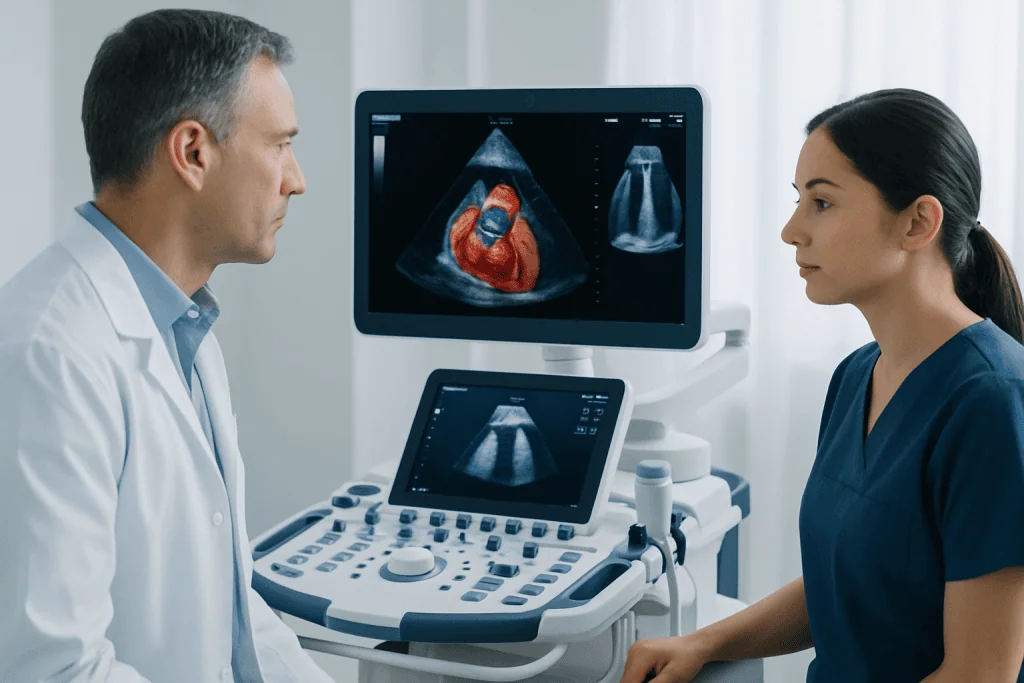
The main test used to confirm the diagnosis is echocardiography, an ultrasound of the heart. This test shows the heart’s structure, the PDA itself, the direction of blood flow, and whether the heart chambers are enlarged. It is painless and is the standard way to assess how important the PDA is clinically.
Other tests may be used depending on age and symptoms. A chest X-ray can show heart enlargement or increased blood flow to the lungs, while an electrocardiogram can look for strain on the heart. In selected cases, advanced assessment by specialists in cardiology care or pediatric cardiology helps guide decisions about observation, timing of closure, and long-term follow-up.
Treatment options and follow-up
Treatment for patent ductus arteriosus is based on the size of the PDA, the patient’s age, symptoms, and whether the heart or lungs are being affected. A very small PDA that causes no enlargement of the heart may only need periodic follow-up. In contrast, a moderate or large PDA often needs closure to prevent future complications.
In premature newborns, doctors may sometimes use medicines that encourage the ductus arteriosus to close. These medicines are generally used in carefully selected hospital patients because the benefits and risks must be weighed closely. If medicines are not suitable or do not work, other approaches may be considered.
For many infants, children, and adults, closure can be performed with a catheter-based procedure. A specialist guides a thin tube through a blood vessel and places a small device or coil to seal the PDA. This is often less invasive than open surgery. Surgical closure may be recommended when catheter closure is not appropriate because of age, body size, anatomy, or other medical factors. Patients with complex anatomy may also be assessed by teams experienced in cardiovascular surgery.
After treatment, follow-up visits check heart function, confirm closure, and monitor recovery. In most cases, children return to normal activities after medical clearance. Long-term outlook is usually very good when a hemodynamically significant PDA is recognized and managed appropriately.
Daily care, prevention, and living with PDA
There is no guaranteed way to prevent every case of patent ductus arteriosus, especially when it relates to prematurity or other factors outside a family’s control. Still, good prenatal care, routine vaccination before pregnancy when appropriate, and management of maternal health conditions support healthy fetal development. Families should not blame themselves if a baby is born with PDA.
Living with PDA depends on whether it is small, monitored, or already treated. Parents may be advised to track feeding, breathing pattern, weight gain, and energy level in infants. Older children and adults should attend scheduled follow-up appointments and ask about exercise, school activities, and whether antibiotics are needed before certain procedures; in many cases they are not, but recommendations can vary.
If symptoms worsen or new concerns appear, medical review is important. For international patients who need evaluation or treatment, Acibadem International’s multidisciplinary specialists at JCI-accredited hospitals diagnose and treat congenital and acquired heart conditions with individualized care planning.
When to seek medical care
Medical advice should be sought promptly if a baby has fast breathing, trouble feeding, sweating with feeds, blue lips, unusual sleepiness, poor weight gain, or frequent chest infections. These signs do not always mean patent ductus arteriosus, but they deserve assessment by a qualified clinician.
Older children and adults should arrange medical review if they develop unexplained breathlessness, easy fatigue, chest discomfort, palpitations, fainting, or reduced exercise tolerance. Anyone with a known PDA should also seek care if symptoms change or if follow-up has been missed for a long time.
Urgent care is appropriate for severe breathing difficulty, bluish discoloration, collapse, or signs of serious illness. Early evaluation helps determine whether symptoms are related to PDA or another condition and allows timely treatment when needed.
Frequently asked questions
Is patent ductus arteriosus serious?
It can be, but seriousness depends on the size of the PDA and its effect on the heart and lungs. A small PDA may cause few or no problems, while a larger one can lead to breathing, feeding, or growth concerns and may need closure.
Can patent ductus arteriosus close on its own?
Yes, some PDAs close on their own, especially in the early period after birth. This is more likely in smaller PDAs, while larger or persistent openings are less likely to close spontaneously and may need treatment.
What are the signs of patent ductus arteriosus in a baby?
Possible signs include rapid breathing, sweating during feeds, tiring easily, poor feeding, and slower weight gain. Some babies have no obvious symptoms and are diagnosed after a doctor hears a heart murmur.
How is patent ductus arteriosus treated?
Treatment may involve observation, medicines in selected premature newborns, catheter-based closure, or surgery. The right approach depends on age, symptoms, the size of the PDA, and whether the heart is under strain.
Can adults have patent ductus arteriosus?
Yes, a small PDA can sometimes remain undetected until adolescence or adulthood. Adults may have no symptoms or may notice breathlessness, fatigue, or a murmur found during a routine examination.
Will a child be able to live normally after PDA treatment?
Many children do very well after successful treatment and can return to normal daily activities once their doctor says it is safe. Follow-up is still important to confirm closure, monitor heart function, and answer questions about activity and long-term care.
This article is for general information only and is not a substitute for professional medical advice. Please consult a qualified doctor about your individual situation.
Explore treatments in Turkey — costs, top hospitals & a free quote
JCI-accredited · board-certified surgeons · reply within 24h
Add us as a Preferred Source to see more of our trusted health content across Google Search, AI Overviews and Discover.

More from the Health Library

Foamy Faeces: An Evidence-Based Guide for Patients

Overnight Oats: What Patients Need to Know

Alzheimer’s Stages — Explained by Medical Evidence, Not Myths

Enterovirus — Explained by Medical Evidence, Not Myths

Coriander Seeds Benefits: A Complete Medical Overview