Pediatric Constipation Treatment: How It Works, Results and What to Expect

Constipation in children is common and is usually functional, meaning there is no underlying structural disease. Treatment may include a bowel cleanout, stool-softening medicine, toilet routines, diet changes, and follow-up.
Key Takeaways
- Constipation in children is common and is usually functional, meaning there is no underlying structural disease.
- Treatment may include a bowel cleanout, stool-softening medicine, toilet routines, diet changes, and follow-up.
- Painful bowel movements can lead children to withhold stool, which can prolong constipation.
- Severe pain, vomiting, abdominal swelling, blood in stool, or poor growth require prompt medical assessment.
- A child should not stop prescribed constipation treatment suddenly without discussing it with their clinician.
Pediatric constipation treatment usually combines clearing retained stool when needed with ongoing measures that make bowel movements softer, more comfortable, and more regular. Most children improve with a structured plan led by a pediatrician, although treatment often needs to continue for weeks or months to prevent symptoms from returning.
Overview: How Pediatric Constipation Treatment Works
Pediatric constipation treatment is designed to break a cycle in which hard or painful stools lead a child to avoid using the toilet, causing stool to become even drier and harder to pass. The plan is individualized according to the child’s age, symptoms, medical history, examination findings, and whether stool has built up in the rectum or colon.
For many children, treatment has two phases. First, a clinician may recommend disimpaction, also called a bowel cleanout, to remove a significant stool buildup. Next comes maintenance treatment, which keeps stools soft and supports regular toilet habits while the bowel gradually returns to normal sensitivity and size.
Most childhood constipation is functional constipation. It commonly develops around toilet training, school routines, changes in diet, illness, travel, or a previous painful bowel movement. Less often, constipation may be linked to another medical condition, medication, anatomy, or a nerve-related bowel problem, so a careful clinical evaluation remains important.
Who May Need Assessment and Treatment?
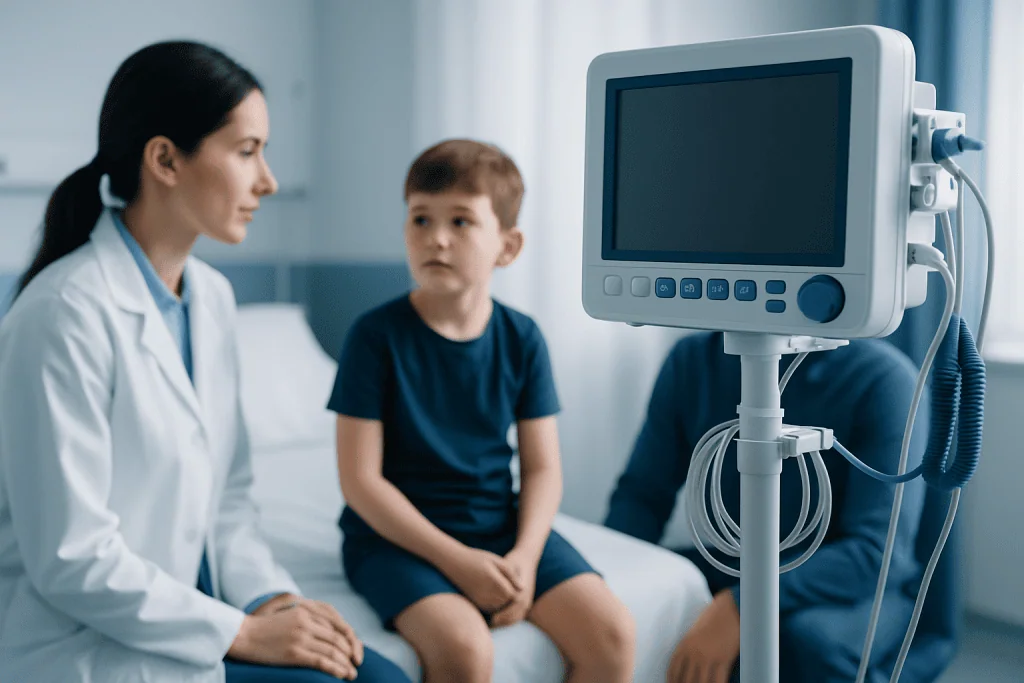
A child may benefit from pediatric assessment when bowel movements are infrequent, hard, painful, unusually large, or associated with stool withholding. Withholding may look like standing on tiptoes, crossing the legs, clenching the buttocks, hiding, or refusing to sit on the toilet. These behaviors can be mistaken for trying to pass stool, but often represent an effort to hold it in.
Children with fecal soiling or leakage in underwear also need assessment. This can occur when loose stool passes around a large retained stool mass; it is not usually deliberate behavior. Families should be reassured that blame and punishment do not help, while consistent, supportive routines do.
Clinicians also consider whether symptoms started very early in life, whether the child is growing as expected, and whether there are warning signs of an underlying disorder. A child with persistent, recurrent, or difficult-to-manage symptoms may be referred to a pediatric gastroenterologist for further evaluation.
What Happens During Pediatric Constipation Treatment?

The first step is a medical history and physical examination. The pediatrician will ask about stool frequency and appearance, pain, toilet behaviors, diet, fluids, medicines, developmental history, and symptoms such as vomiting or abdominal pain. In many children with typical functional constipation, tests are not needed; imaging, blood tests, or other investigations are reserved for selected situations.
If there is fecal impaction, a clinician may recommend an oral bowel cleanout using a medication that draws water into the bowel and softens stool. The exact product, amount, and schedule depend on the child and should be provided by the treating clinician. Rectal treatments are sometimes considered, but they are not appropriate for every child and should not be started without professional guidance.
After stool buildup has cleared, maintenance therapy typically continues with a stool-softening plan and regular toilet sitting. Children are often encouraged to sit on the toilet after meals, when the body’s natural bowel reflex is active. A footstool can help keep the knees above the hips and provide a stable, relaxed position.
Dietary habits support, but do not replace, medical treatment when constipation is established. Age-appropriate fiber-containing foods, adequate fluids, regular physical activity, and unhurried toilet access can all help. Sudden major increases in fiber may cause gas or discomfort, so changes are generally introduced gradually.
Benefits, Recovery Timeline and Possible Risks
The main benefit of treatment is the return of soft stools that pass without pain or fear. Once bowel movements become more comfortable, withholding behaviors often lessen. Improvement after a cleanout may occur within days, but recovery of regular bowel habits can take longer because the rectum may need time to regain its normal tone and sensation.
Maintenance treatment is commonly continued for several months and adjusted by the clinician according to stool consistency, frequency, accidents, and toilet avoidance. Relapse can happen if treatment is stopped too early, during illness or travel, or when a child begins withholding again. Follow-up allows the plan to be adjusted safely.
Possible short-term effects of treatment can include loose stools, cramping, nausea, bloating, or urgency, especially during a bowel cleanout. These effects should be discussed with the prescribing clinician if they are troublesome. Families should seek prompt advice if the child cannot keep fluids down, becomes unusually sleepy, has worsening pain, or develops other concerning symptoms.
In many cases, the benefits of a supervised plan outweigh the discomfort of temporary side effects. The goal is not simply to make a child have a bowel movement once; it is to establish comfortable bowel function and reduce the chance of constipation returning.
How Long Is Too Long for a Child to Be Constipated?
There is no single number of days that applies to every child, because normal bowel frequency varies with age and individual patterns. However, a child should be assessed if they have gone several days without a bowel movement and are uncomfortable, are repeatedly passing hard or painful stools, or have a clear change from their usual pattern.
It is particularly important to contact a clinician when constipation persists for two weeks or more, keeps returning, or is accompanied by stool leakage, poor appetite, urinary symptoms, or toilet refusal. Infants and children with symptoms beginning soon after birth should be assessed promptly rather than treated at home without guidance.
Urgent medical care is appropriate for severe or increasing abdominal pain, a swollen abdomen, repeated vomiting, fever, blood in stool beyond a small streak from a fissure, marked weakness, or inability to pass stool or gas. These symptoms do not always indicate a serious cause, but they need timely evaluation.
What Is the Rule of 3 for Constipation?
The “rule of 3” is a simple screening description sometimes used to identify constipation: fewer than three bowel movements per week, hard or difficult stools, or symptoms present for at least three months. It is not a complete diagnostic rule and is less useful for young children whose normal bowel patterns can vary widely.
In pediatric care, stool consistency, pain, withholding, large stools, and fecal accidents may be more informative than frequency alone. A child can be constipated even if they pass stool most days, particularly if they retain stool and only pass small amounts or have painful, hard bowel movements.
A clinician uses the full picture rather than one rule to decide whether treatment is needed. Keeping a brief diary of bowel movements, stool appearance, pain, accidents, foods, and medicines can help families describe the pattern accurately at an appointment.
How to Tell If Constipation Is Resolved
Constipation is improving when a child passes soft, formed stools comfortably and regularly, without straining, fear, withholding, or stool leakage. The child should be able to use the toilet without significant pain and should not have ongoing abdominal discomfort related to retained stool.
Resolution is usually judged over time rather than after one or two successful bowel movements. A child may feel better quickly after a cleanout, yet still need maintenance treatment while the bowel recovers and toilet habits become established. Families should follow the clinician’s advice about when and how to reduce medication.
Signs that the plan may need adjustment include recurring hard stools, missed bowel movements, new soiling, renewed avoidance of the toilet, or abdominal pain. Early contact with the care team can prevent a small setback from becoming another significant stool buildup.
What Do Pediatricians Do for Severe Constipation?
For severe constipation, pediatricians first check for dehydration, significant impaction, severe abdominal symptoms, and warning signs that may suggest another cause. They may recommend a supervised oral cleanout, review the child’s fluid intake and medicines, and provide a maintenance plan after the stool burden has been addressed.
Testing is not routinely required for typical functional constipation, but it may be appropriate when symptoms are atypical, difficult to treat, or associated with poor growth, delayed passage of first stool after birth, neurological findings, or other red flags. Depending on the findings, care may involve pediatric gastroenterology, nutrition, surgery, or other specialties.
Hospital-based treatment may be needed if a child is very unwell, cannot tolerate oral fluids or medication, has severe impaction that does not respond to outpatient care, or needs investigation for a possible underlying condition. Acibadem International’s multidisciplinary specialists and JCI-accredited hospitals can assess and treat pediatric digestive concerns for international patients.
Frequently asked questions
Can a child become dependent on constipation medicine?
Stool-softening medicines used under pediatric guidance are commonly part of treatment for functional constipation and are not considered to create addiction in the usual sense. Children may need them for an extended period because the bowel requires time to recover. The clinician should guide any reduction or discontinuation.
Should parents use enemas for a constipated child?
Enemas and other rectal treatments may be appropriate in selected cases, but they are not suitable for every child. They can be distressing and may be unsafe in certain situations. A parent should ask a pediatric clinician before using one, especially for an infant or a child with severe symptoms.
Does drinking more water cure constipation in children?
Adequate fluid intake supports overall bowel health, but water alone may not resolve established constipation or stool impaction. Children often need a broader plan that includes toilet routines, dietary measures, and clinician-recommended medicine when appropriate. Excessive fluid intake should not be forced.
Why does my child have stool accidents when constipated?
Large, retained stool can stretch the rectum and reduce the child’s awareness of the urge to pass stool. Softer stool may then leak around the blockage, causing soiling. This is a medical symptom rather than misbehavior, and it usually improves as constipation is treated.
Can diet alone treat pediatric constipation?
Diet changes can help prevent constipation and support recovery, especially by including age-appropriate fiber-containing foods and regular meals. However, diet alone often cannot clear a significant stool buildup or stop established withholding. A pediatrician can advise whether medical treatment is also needed.
When should a child see a doctor urgently for constipation?
Urgent assessment is needed for severe or worsening abdominal pain, a distended abdomen, repeated vomiting, fever, significant blood in stool, unusual drowsiness, or inability to pass stool or gas. Parents should also seek prompt care for constipation in a very young infant or a child who appears seriously unwell.
References
- North American Society for Pediatric Gastroenterology, Hepatology and Nutrition
- European Society for Paediatric Gastroenterology Hepatology and Nutrition
- American Academy of Pediatrics
- National Institute of Diabetes and Digestive and Kidney Diseases
- National Health Service
This article is for general information only and is not a substitute for professional medical advice. Please consult a qualified doctor about your individual situation.
Persistent digestive symptoms? Get evaluated in Turkey
JCI-accredited · board-certified surgeons · reply within 24h
Add us as a Preferred Source to see more of our trusted health content across Google Search, AI Overviews and Discover.