

Pediatric Flat Feet: Normal Development and When Treatment Is Needed

Most children with flat feet have flexible flatfoot, which is usually painless and improves or becomes less noticeable with growth. A visible arch may not fully develop until later childhood, and some healthy adults naturally have low arches.
Key Takeaways
- Most children with flat feet have flexible flatfoot, which is usually painless and improves or becomes less noticeable with growth.
- A visible arch may not fully develop until later childhood, and some healthy adults naturally have low arches.
- Pain, stiffness, one-sided flatfoot, frequent tripping, or difficulty with sports should be assessed by a qualified doctor.
- Diagnosis is mainly based on physical examination, gait assessment, and checking whether the foot is flexible or rigid.
- Treatment may include observation, supportive shoes, stretching, physiotherapy, or orthotics for symptoms; surgery is rarely needed.
Pediatric flat feet are common in babies, toddlers, and young children, and in many cases they are part of normal development. Treatment is usually needed only when flat feet cause pain, stiffness, walking problems, or are linked to another medical condition.
Overview
Pediatric flat feet, also called pediatric flatfoot or pes planus, means the arch on the inside of a child’s foot appears low or absent when the child is standing. In many children, the heel may lean slightly outward and the whole sole may seem to touch the ground. This appearance can worry parents, but flat feet are very common during childhood.
Most pediatric flat feet are flexible. This means the arch may be visible when the child is sitting, standing on tiptoes, or not bearing weight, but it flattens when the child stands normally. Flexible flatfoot is usually painless and often represents a variation of normal growth rather than a disease.
The main goal in evaluating a child with flat feet is to distinguish normal developmental flatfoot from the smaller group of children who need medical attention. A child who runs, plays, and walks comfortably usually needs reassurance and monitoring rather than active treatment. When symptoms are present, a pediatric orthopedic assessment can identify the cause and guide safe care.
Normal Foot Development in Children
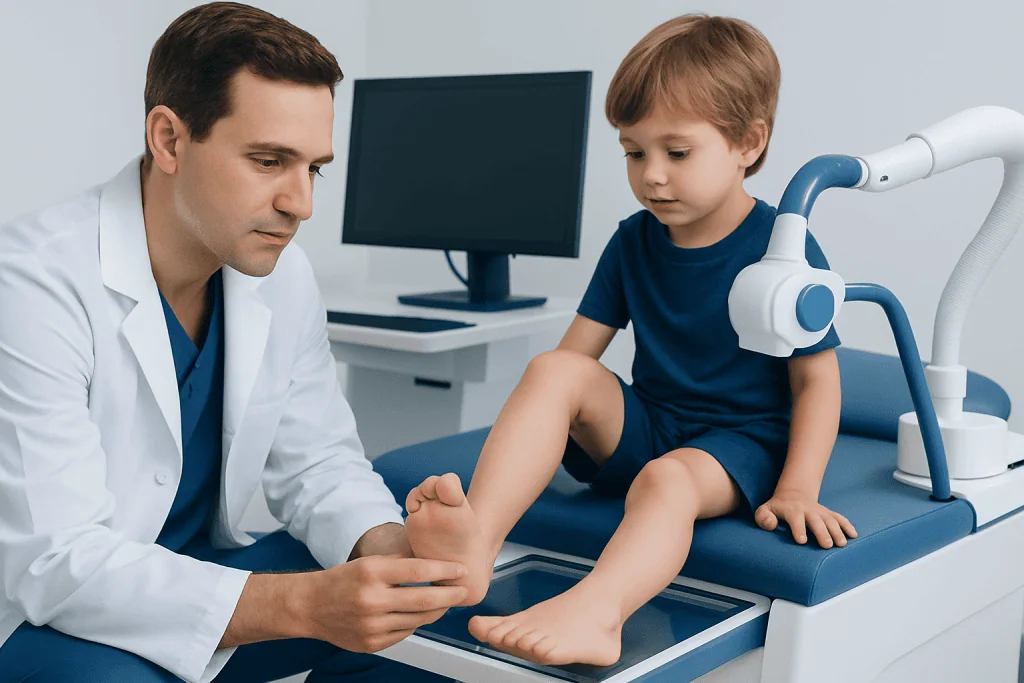
Babies are not born with strong, visible arches. Their feet are naturally soft and rounded, and a normal pad of fat under the arch can make the foot look flat. As children begin to stand, walk, and develop stronger muscles and ligaments, the shape of the foot gradually changes.
For many children, the arch becomes more noticeable through early and middle childhood. However, the timing is variable. Some children develop a clear arch by school age, while others continue to have low arches into adolescence or adulthood without pain or disability.
Parents may notice that the arch appears when the child sits or stands on tiptoes but disappears during normal standing. This pattern strongly suggests flexible flatfoot. It is also common for both feet to look similar, although small differences between the two sides can occur.
Foot posture is influenced by genetics, body build, ligament flexibility, and growth. A low arch alone does not mean that the foot is weak, damaged, or destined to cause problems. Doctors consider the child’s age, symptoms, flexibility, walking pattern, and overall development before deciding whether any treatment is needed.
Symptoms and Signs That May Matter
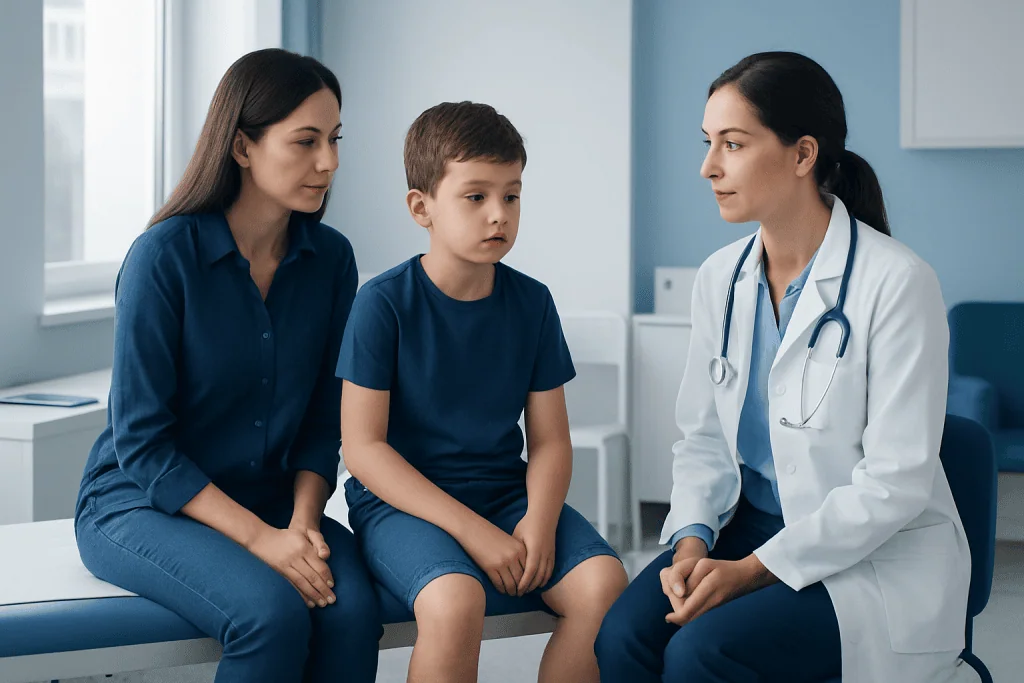
Most children with flexible flat feet have no symptoms. They can walk, run, climb stairs, and take part in play or sports without discomfort. In these cases, the flat appearance of the foot is often the only finding.
When symptoms do occur, children may describe aching in the feet, ankles, calves, knees, or legs, especially after long walks or sports. Some children may avoid physical activity, ask to be carried more often than expected for their age, or tire earlier than peers. Parents may also notice uneven shoe wear, inward rolling of the feet, or a gait that seems awkward.
Certain signs are more important because they may suggest a less typical form of flatfoot or an associated condition. These include:
- Flatfoot that is painful or worsening over time
- Stiffness or limited movement in the foot or ankle
- Flatfoot that affects only one foot or is clearly more severe on one side
- Frequent tripping, limping, or difficulty keeping up with activities
- Heel cord tightness, toe walking, or pain around the inner ankle
- Swelling, redness, or a history of injury
A child may not always describe pain clearly. Instead, the child may change activity habits, complain of tired legs, or become reluctant to wear certain shoes. These patterns are useful for parents to share with the doctor.
Causes and Risk Factors
Flexible flatfoot in children often has no single cause. It can be related to normal ligament looseness, inherited foot shape, or the natural way a child’s bones and soft tissues develop. Many children with flat feet have a parent or close relative with similar feet.
Some children have increased joint flexibility throughout the body, sometimes called generalized ligamentous laxity. Their feet may flatten more when standing because the ligaments allow more motion. This is often harmless, but if the child has pain or instability, strengthening and support may help.
Other factors can contribute to symptoms. A tight Achilles tendon or calf muscle can increase strain through the arch and heel. Higher body weight may place additional load on the feet. Footwear that is unsupportive or worn out may make discomfort more noticeable, although shoes do not usually cause flat feet by themselves.
Less commonly, pediatric flatfoot may be associated with conditions that require more careful evaluation. These include tarsal coalition, where two or more bones in the foot are joined abnormally; accessory navicular, an extra bone near the arch; neuromuscular conditions such as cerebral palsy; inflammatory arthritis; trauma; or congenital differences in foot structure. These causes are more likely when the foot is rigid, painful, asymmetric, or associated with other medical signs.
Diagnosis
Diagnosis begins with a careful history. The doctor may ask when the flatfoot was first noticed, whether it is painful, what activities trigger symptoms, whether the child trips or tires easily, and whether there is a family history of flat feet or joint flexibility. Information about footwear, sports, previous injuries, and developmental milestones can also be helpful.
The physical examination usually includes looking at the feet from the front, side, and back while the child is standing and walking. The doctor checks whether the heel leans outward, whether the arch reappears when the child stands on tiptoes, and how the foot moves when it is not bearing weight. Range of motion in the ankle, subtalar joint, and toes is assessed, along with calf tightness and general joint flexibility.
A key part of the examination is determining whether the flatfoot is flexible or rigid. Flexible flatfoot moves easily and the arch can appear with tiptoe standing or when the big toe is lifted. Rigid flatfoot has limited movement and may stay flat in all positions. Rigid flatfoot is less common and more likely to need further evaluation.
Imaging is not necessary for every child with flat feet. X-rays may be recommended if the child has pain, stiffness, a significant difference between feet, suspected bone abnormality, or symptoms that do not improve with conservative care. In selected cases, advanced imaging such as CT or MRI may be used to assess tarsal coalition, soft tissue problems, or other structural concerns.
Treatment Options
Treatment depends on the child’s symptoms, age, flexibility, and underlying cause. For a child with painless flexible flatfoot, the most appropriate approach is often observation and reassurance. Routine follow-up may be suggested if the child is very young or if the family is concerned about changes over time.
Supportive shoes can improve comfort for some children. A well-fitting shoe with a stable heel counter, adequate width, and a flexible but not overly flimsy sole is usually preferred. There is no evidence that special shoes can permanently create an arch in a normally developing child, but comfortable footwear can reduce strain during activity.
Orthotic inserts may be considered when a child has pain, fatigue, or functional difficulty. Over-the-counter arch supports may help mild symptoms, while custom orthotics may be considered for more complex foot shapes or persistent discomfort. Orthotics are used to improve alignment and comfort; they are not usually expected to permanently reshape a child’s foot.
Physiotherapy can be useful when symptoms are related to tight calf muscles, weak foot and ankle muscles, balance issues, or activity-related pain. Exercises may include calf stretching, heel cord stretching, strengthening of the foot and ankle muscles, balance training, and gradual return to activity. Anti-inflammatory medicines or pain relievers should only be used according to medical advice. Surgery is rarely needed and is generally reserved for severe, persistent pain or structural problems that do not respond to appropriate non-surgical treatment.
Prevention, Self-care, and When to See a Doctor
Parents cannot always prevent pediatric flat feet, especially when foot shape is inherited or part of normal development. However, they can support healthy foot function. Encouraging regular age-appropriate physical activity helps children build strength, coordination, and balance. Walking, running, climbing, swimming, and play all contribute to normal musculoskeletal development.
At home, parents can monitor comfort rather than focusing only on the appearance of the arch. It is reasonable to check whether the child can keep up with peers, whether shoes wear out unusually fast, and whether pain occurs after activity. Shoes should fit properly, leave enough room for the toes, and be replaced when they become too small or lose support.
A medical evaluation is recommended if flat feet are painful, stiff, one-sided, rapidly worsening, or associated with limping, swelling, frequent falls, toe walking, or difficulty with sports. Parents should also seek advice if a child has a known neuromuscular condition, inflammatory disease, previous foot injury, or developmental concerns.
Pediatricians, pediatric orthopedists, physiotherapists, and podiatrists may all play a role depending on the child’s needs. Acibadem International’s multidisciplinary specialists and JCI-accredited hospitals diagnose and treat pediatric orthopedic conditions, including symptomatic flat feet, for international patients. Families should consult a qualified doctor for an individualized assessment and treatment plan.
Frequently asked questions
Are flat feet normal in toddlers?
Yes. Flat feet are very common in toddlers because the arch is still developing and a normal fat pad can make the foot look flat. If the child walks and plays comfortably, this is usually part of normal development.
At what age should a child's arch appear?
There is no exact age that applies to every child. Many arches become more visible during early and middle childhood, while some healthy children and adults naturally have low arches. Doctors focus more on pain, stiffness, and function than on appearance alone.
Do children with flat feet need special shoes?
Most children with painless flexible flat feet do not need special shoes. Comfortable, well-fitting, supportive shoes may help if the child has fatigue or discomfort. Special shoes do not usually create a permanent arch.
Can orthotics cure pediatric flat feet?
Orthotics can improve comfort and alignment in some symptomatic children, but they usually do not permanently change the structure of a flexible flatfoot. They are most useful when flat feet are associated with pain, fatigue, or activity limitations. A clinician can advise whether an insert is appropriate.
When is flatfoot in a child concerning?
Flatfoot is more concerning when it is painful, stiff, affects only one foot, worsens quickly, or causes limping and difficulty with activity. Swelling, injury, toe walking, or limited foot movement should also be evaluated. These signs may require examination and sometimes imaging.
Is surgery ever needed for pediatric flat feet?
Surgery is rarely needed for children with flat feet. It may be considered only when there is significant, persistent pain or a structural problem that does not improve with appropriate non-surgical treatment. The decision should be made by a pediatric orthopedic specialist after a detailed evaluation.
References
- American Academy of Orthopaedic Surgeons
- American Academy of Pediatrics
- Pediatric Orthopaedic Society of North America
- Royal College of Paediatrics and Child Health
- National Institute for Health and Care Excellence
This article is for general information only and is not a substitute for professional medical advice. Please consult a qualified doctor about your individual situation.
Explore treatments in Turkey — costs, top hospitals & a free quote
JCI-accredited · board-certified surgeons · reply within 24h
Add us as a Preferred Source to see more of our trusted health content across Google Search, AI Overviews and Discover.

Orthopedics & Spine
Care for bones, joints and the musculoskeletal system, including joint replacement, sports injuries and trauma.
125 specialists in this unitMore from the Health Library



Related Specialists

Dr. Mehmet Can Şahin
Inpatient Clinic Physicians Clinical Service
Dr. Nilgün Çavdar
Physical Medicine & Rehabilitation
Dr. Nevra Gülhan Görgülü
Anesthesiology
Dr. Orçun Can
Medical Oncology