Pediatric Health Checkups: What Gets Monitored as Children Grow

Pediatric health checkups follow a regular schedule from birth through the teenage years. Doctors monitor growth, development, nutrition, behavior, sleep, and emotional health.
Key Takeaways
- Pediatric health checkups follow a regular schedule from birth through the teenage years.
- Doctors monitor growth, development, nutrition, behavior, sleep, and emotional health.
- Screenings and physical exams can detect concerns early, often before symptoms are obvious.
- Vaccinations, hearing and vision checks, and safety guidance are important parts of preventive care.
- Parents should bring questions about feeding, sleep, school, behavior, and any new symptoms to each visit.
Pediatric health checkups are routine visits that track a child’s growth, development, and overall well-being from infancy through adolescence. These appointments also help identify concerns early, keep vaccinations up to date, and support parents with age-appropriate guidance.
Overview of pediatric health checkups
Pediatric health checkups, often called well-child visits, are routine appointments designed to support a child’s health at every stage of growth. These visits begin soon after birth and continue regularly through childhood and adolescence. Their purpose is not only to assess whether a child is healthy today, but also to monitor whether development is progressing as expected over time.
During these appointments, the pediatrician or family doctor reviews growth, physical health, emotional well-being, learning, and behavior. The visit may include measurements such as height and weight, a physical examination, developmental screening, and discussions about nutrition, sleep, exercise, and safety. Vaccinations and age-appropriate screening tests are also commonly reviewed or given.
Regular checkups are valuable because many childhood concerns develop gradually. A child may seem generally well while subtle issues with hearing, vision, speech, growth, or learning are just beginning. Routine monitoring helps identify these concerns early, when support and treatment can often be most effective.
What doctors monitor as children grow

One of the main goals of pediatric health checkups is to follow a child’s growth pattern over time. Doctors measure weight, length or height, and head circumference in infants and young children, then compare these findings with standard growth charts. This helps show whether the child is growing steadily and proportionally, rather than focusing on a single number alone.
Development is another major focus. Pediatricians ask about milestones such as smiling, rolling, sitting, walking, talking, social interaction, and school readiness. In older children, they may discuss attention, learning, friendships, emotions, and independence. These conversations help determine whether a child’s physical, cognitive, language, and social development is on track for their age.
Checkups also monitor everyday health habits and body systems. Common areas reviewed include:
- Feeding, appetite, and nutrition
- Sleep patterns and routines
- Physical activity and screen time
- Toilet habits and bowel or bladder concerns
- Dental health and oral hygiene
- Hearing and vision
- Puberty and menstrual health in adolescents
- Behavior, mood, and mental well-being
The doctor may also review family history, medications, allergies, and any changes at home or school. This broader view helps place a child’s health in context and supports care that is tailored to their age, needs, and environment.
Physical exams, screenings, and vaccinations
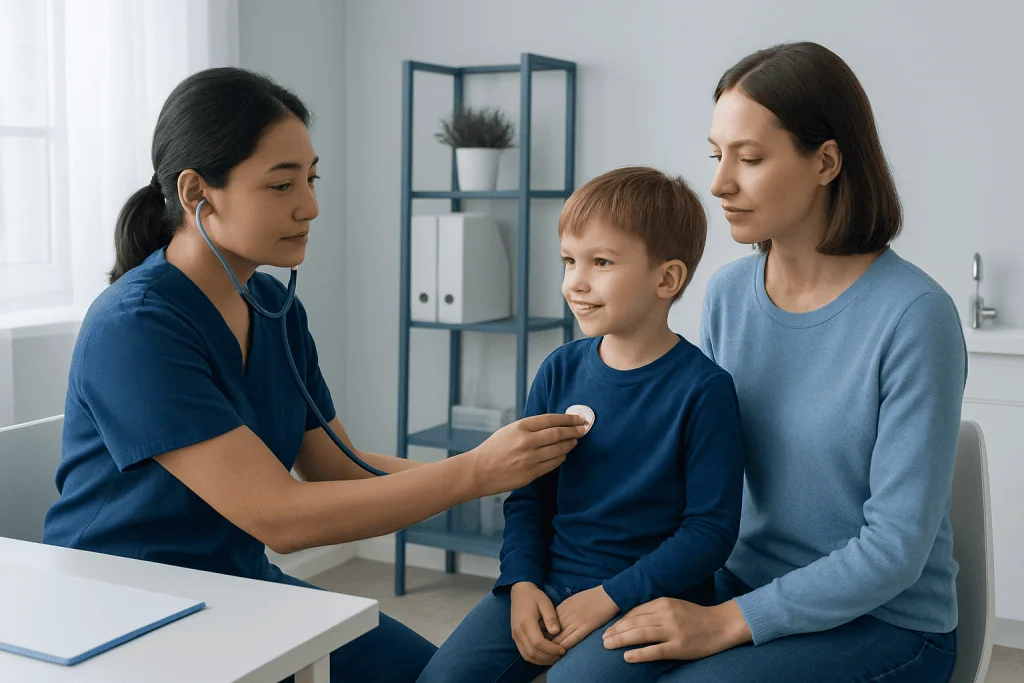
A pediatric checkup usually includes a general physical examination. The doctor may listen to the heart and lungs, examine the abdomen, check the skin, look at the ears, nose, and throat, and assess muscles, joints, posture, and movement. In infants, they may look at head shape, fontanelles, hip stability, and reflexes. In older children and teens, the exam may include blood pressure checks and discussion of pubertal development.
Screening tests are often performed based on age, symptoms, and risk factors. These may include hearing and vision tests, anemia screening, lead screening in some settings, blood pressure measurement, and developmental or behavioral questionnaires. Some children may also need screening for sleep problems, emotional concerns, obesity-related risks, or specific inherited conditions depending on personal and family history.
Vaccinations are a central part of preventive pediatric care. Immunizations help protect children from serious infectious diseases and also reduce spread within the community. At each visit, the doctor reviews the child’s vaccine schedule, checks whether any doses are due, and answers parental questions about benefits and possible side effects.
For some children, an abnormal screening result leads to additional testing or referral to a specialist. For example, a child with repeated hearing concerns may need more formal audiology evaluation, while persistent vision problems may require a detailed eye assessment. The goal is careful follow-up rather than alarm, so that any issue is clarified and managed appropriately.
How checkups change by age
The content of pediatric health checkups changes as children grow. In infancy, visits are frequent because babies develop rapidly. Doctors focus on feeding, weight gain, sleep, bowel habits, early milestones, newborn screening results, and vaccination timing. Parents are often guided on safe sleep, breastfeeding or formula feeding, colic, fever, and when to seek urgent medical care.
In toddlers and preschool children, checkups emphasize language development, motor skills, social behavior, toilet training, sleep routines, nutrition, and safety at home. This is also a common time for screening of speech delay, hearing, vision, and behavioral concerns. The doctor may advise parents on handling tantrums, encouraging active play, and setting healthy daily routines.
For school-age children, visits often include growth monitoring, school performance, attention, peer relationships, and physical activity. Hearing and vision remain important because problems in these areas can affect learning. Doctors may also discuss headaches, abdominal pain, allergies, and recurring infections if these issues arise.
Adolescent checkups usually include more discussion about puberty, menstrual cycles, emotional health, sleep, body image, nutrition, sports participation, and risk behaviors. Teenagers may be given time to speak privately with the doctor, which can support honest conversations about stress, relationships, or sensitive health topics. This stage of care helps young people gradually take more responsibility for their own health.
Common concerns that may be picked up early
Routine checkups can help detect a wide range of childhood concerns before they become more noticeable. Growth problems may appear as weight gain that is too slow, growth that is too rapid, or height that falls away from the child’s usual pattern. Nutritional problems, feeding difficulties, or chronic conditions may sometimes first appear through changes on the growth chart.
Developmental and learning concerns can also emerge gradually. A child may have delayed speech, limited eye contact, coordination difficulties, trouble focusing, or challenges with school skills. Early recognition makes it easier to arrange supportive services, therapy, or educational assessment when needed. Depending on symptoms, a doctor may investigate conditions such as autism or other developmental differences.
Physical health issues may also be noticed during preventive visits, even when the child seems otherwise well. Examples include vision changes, hearing loss, asthma symptoms, anemia, skin conditions, posture problems, enlarged tonsils, or dental concerns. Some children may need further evaluation for repeated infections, chronic constipation, sleep-disordered breathing, or weight-related health risks.
When concerns are identified, the pediatrician may recommend observation, repeat review, tests, or referral for specialized care. In some cases, this could include pediatric cardiology evaluation for a heart murmur, pediatric endocrinology care for growth or puberty concerns, or pediatric neurology assessment when developmental or neurological symptoms need further study.
How parents can prepare for a well-child visit
Parents can help make the most of a pediatric health checkup by coming prepared with observations and questions. It can be useful to note changes in appetite, sleep, mood, school performance, behavior, toilet habits, or physical symptoms such as cough, rash, headaches, or stomach pain. Bringing vaccination records, medication lists, and reports from school or therapists can also be helpful when relevant.
Many families find it useful to write questions down before the appointment. Topics often include feeding, picky eating, delayed speech, screen time, sleep difficulties, allergies, growth, toilet training, puberty, or emotional changes. No concern is too small to mention, especially if it has persisted or is affecting daily life.
Children, especially older ones, can also be involved in the visit. Encouraging them to describe symptoms, ask questions, or talk about school and activities helps build confidence and health awareness. Teenagers in particular may benefit from respectful, age-appropriate involvement in their own care decisions.
If a child is anxious about the appointment, simple preparation can help. Explaining that the visit is meant to keep them healthy, and that some parts may feel unfamiliar but are usually quick, often reduces fear. A favorite toy, comfort item, or calm explanation can make the experience easier for younger children.
Prevention, self-care, and healthy habits between visits
Good health between checkups is supported by everyday habits at home. A balanced diet, regular physical activity, enough sleep, and limited screen time all play a role in healthy growth and development. Dental brushing, handwashing, and staying up to date with vaccinations are also important parts of routine prevention.
Safety guidance changes with age but remains a core part of child health. Parents are commonly advised about car seats and seat belts, safe sleep, burn prevention, water safety, helmet use, safe storage of medicines, and reducing choking risks. For older children and teens, online safety, bullying, substance exposure, and sports injury prevention may also be discussed.
Emotional well-being deserves as much attention as physical health. Children benefit from supportive relationships, consistent routines, time for play, and opportunities to talk about worries. If a child seems unusually withdrawn, persistently anxious, frequently irritable, or is struggling at school, parents should feel comfortable raising these concerns even between scheduled checkups.
Families who need specialist assessment or coordinated pediatric services may seek care in centers with multidisciplinary expertise. Acibadem International’s JCI-accredited hospitals support international patients with pediatric diagnosis and treatment across a range of childhood conditions, including access to services such as pediatric check-up programs when appropriate.
When to see a doctor sooner than the next scheduled checkup
Although routine well-child visits are important, parents should not wait for the next checkup if a child develops concerning symptoms. Medical advice should be sought sooner for persistent fever, breathing difficulty, dehydration, severe pain, repeated vomiting, poor feeding, unusual sleepiness, seizure-like activity, or any sudden change in behavior or responsiveness. These symptoms need prompt assessment.
It is also wise to book an earlier appointment for ongoing but less urgent concerns. Examples include poor weight gain, delayed milestones, speech delay, snoring, recurring ear infections, chronic constipation, frequent headaches, school difficulties, or persistent low mood. Even if the issue is mild, timely review can provide reassurance and practical next steps.
Parents know their child best, and it is appropriate to seek medical advice whenever something does not seem right. Pediatric care is most effective when families and healthcare professionals work together over time. Regular checkups, combined with attention to new symptoms between visits, give children the best support for healthy development.
Frequently asked questions
How often should children have pediatric health checkups?
Children usually have more frequent checkups during infancy and early childhood, then yearly visits as they get older. The exact schedule can vary by country, age, and individual health needs. A pediatrician can advise the most appropriate timing for each child.
What is the difference between a sick visit and a well-child visit?
A well-child visit is a preventive appointment focused on growth, development, vaccinations, and general health guidance. A sick visit is arranged to assess symptoms such as fever, cough, rash, or pain. Both are important, but they serve different purposes.
What should parents bring to a pediatric checkup?
It helps to bring the child’s vaccination record, a list of medications, and notes about symptoms or concerns. If relevant, parents may also bring school reports, previous test results, or information from therapists. Having questions written down can make the visit more productive.
Do healthy children still need regular checkups?
Yes. Pediatric health checkups are not only for illness; they are also for monitoring growth, development, behavior, and prevention. Many concerns such as vision problems, hearing issues, or delayed milestones may be easier to detect during routine visits than at home.
Are vaccinations usually given during pediatric health checkups?
Often, yes. Many vaccines are scheduled to be given during routine well-child visits, depending on the child’s age and previous immunizations. The doctor will review the schedule and explain what is due and why it is recommended.
When should parents worry about growth or development?
Parents should speak to a doctor if a child seems to lose skills, misses several milestones, has poor weight gain, or shows a marked change in growth pattern. Concerns about speech, movement, social interaction, or learning also deserve attention. Early evaluation can provide reassurance or identify support if needed.
References
- World Health Organization
- American Academy of Pediatrics
- Centers for Disease Control and Prevention
- UNICEF
- National Institute for Health and Care Excellence
This article is for general information only and is not a substitute for professional medical advice. Please consult a qualified doctor about your individual situation.
Explore treatments in Turkey — costs, top hospitals & a free quote
JCI-accredited · board-certified surgeons · reply within 24h
Add us as a Preferred Source to see more of our trusted health content across Google Search, AI Overviews and Discover.
Check your numbers in seconds
BMI, calories, due date, blood pressure and 30+ more clinical calculators — free, instant, doctor-reviewed ranges.

Pediatrics
Complete healthcare for infants, children and adolescents across all sub-specialties.
232 specialists in this unitMore from the Health Library



Related Specialists

Prof. Dr. Ahmet Kaya Bilge
Cardiology
Dt. Beril Karakaya Gökçimen
Oral & Dental Health
Dt. Serpil Terzioğlu
Oral & Dental Health
Burcu Kocabey
Physical Medicine & Rehabilitation