Pediatric Lymphedema Treatment: How It Works, Results and What to Expect
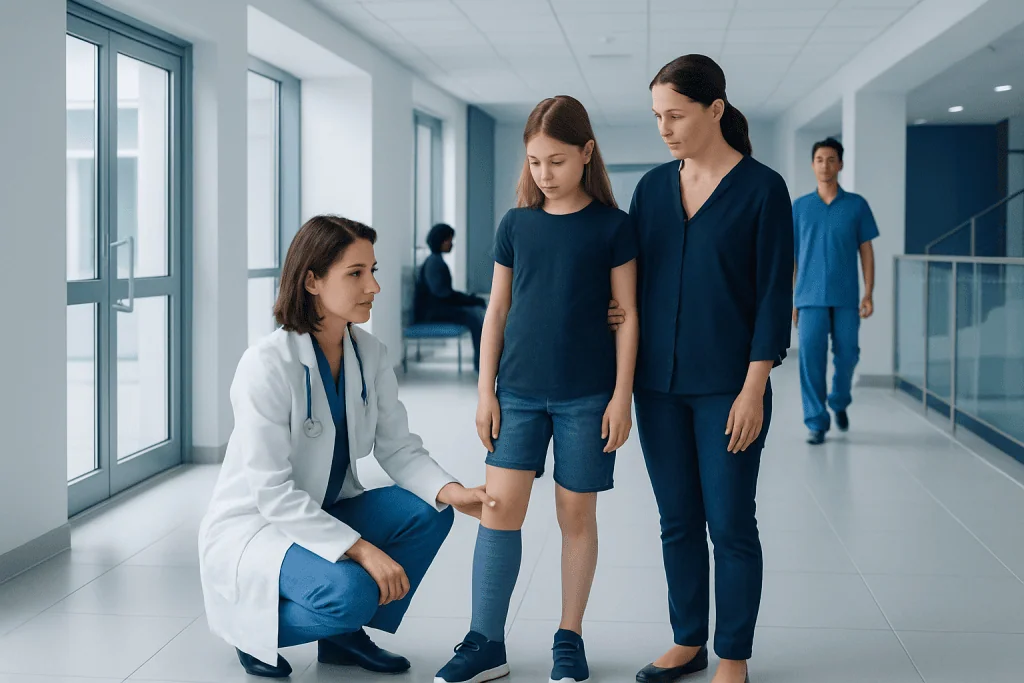
Pediatric lymphedema is a long-term condition, but early, consistent care can limit swelling and skin complications. Treatment commonly combines compression, exercise, skin care and manual lymphatic drainage when appropriate.
Key Takeaways
- Pediatric lymphedema is a long-term condition, but early, consistent care can limit swelling and skin complications.
- Treatment commonly combines compression, exercise, skin care and manual lymphatic drainage when appropriate.
- Families and children are taught practical routines that support school, play, travel and daily activities.
- Surgery is not needed for every child and is considered only after detailed assessment by an experienced multidisciplinary team.
- New or rapidly worsening swelling, redness, pain or fever needs timely medical review.
Pediatric lymphedema treatment is individualized care that helps manage swelling caused by reduced lymph fluid drainage. Most children benefit from specialist-led skin care, movement, compression and manual techniques, while surgery may be considered for selected cases that do not respond adequately to conservative care.
Overview: How Pediatric Lymphedema Treatment Works
Pediatric lymphedema treatment helps reduce swelling, maintain comfortable movement, protect the skin and support a child’s everyday life. It works by improving the return of lymph fluid from a limb or another affected area, while reducing the factors that can worsen fluid buildup. Treatment is usually long term, but the plan changes as a child grows, becomes more active and develops new needs.
Lymphedema occurs when the lymphatic system cannot transport lymph fluid effectively. It may be primary, meaning it results from differences in lymphatic development, or secondary, meaning it develops after infection, injury, surgery, radiation therapy or another medical condition. A child may have swelling in one or both legs, an arm, the genital area, face or another body area.
Care is best coordinated by professionals with experience in children, including a pediatrician, lymphoedema therapist, physiotherapist or occupational therapist, and sometimes vascular, plastic and reconstructive, genetics, dermatology or rehabilitation specialists. The aim is not simply to make a limb smaller; it is to help the child remain healthy, mobile, confident and able to take part in family life, education and play.
What Treatment May Include
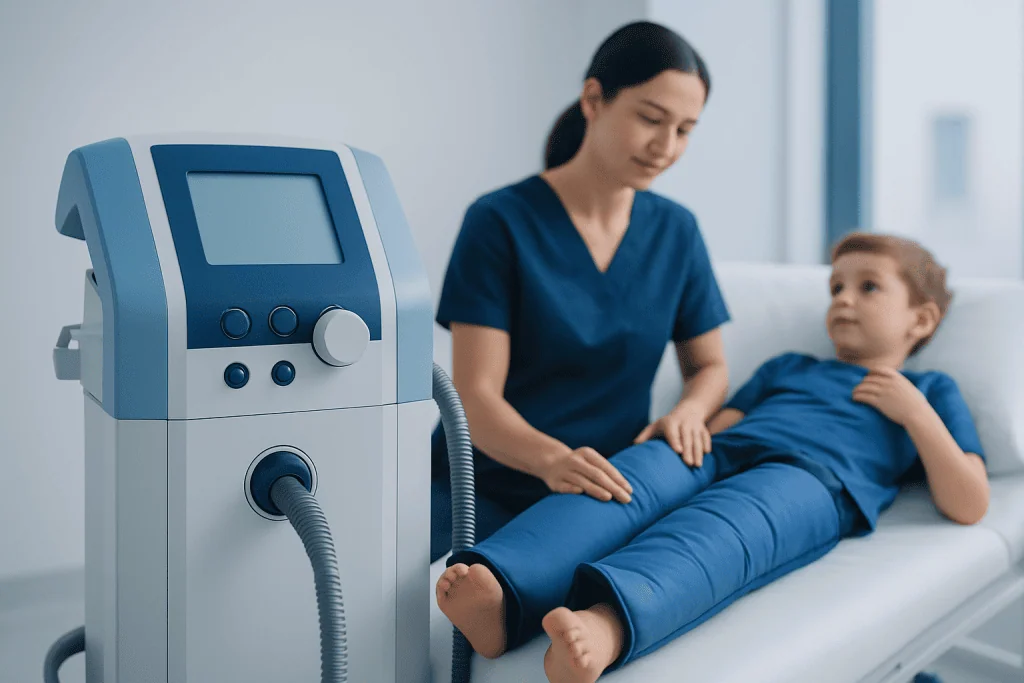
The foundation of treatment is often called complete or complex decongestive therapy. This is a tailored approach rather than a single procedure. It can include skin care, compression, exercise and, for some children, manual lymphatic drainage. The exact combination depends on the cause of lymphedema, the location and severity of swelling, skin condition, age and the child’s ability to participate safely.
Compression may involve a professionally fitted garment, such as a sleeve, stocking or wrap. It applies gentle, graduated pressure that supports fluid movement and helps limit further accumulation. Garments need regular review because children grow quickly, and a poorly fitting garment may be uncomfortable or ineffective. Some children use compression during the day; others may also need nighttime options prescribed by their clinical team.
Manual lymphatic drainage is a gentle, specialized massage technique intended to direct fluid toward areas with functioning lymph vessels and nodes. It is not the same as deep-tissue massage and should be taught or performed by a trained therapist. Parents or caregivers may learn simplified techniques when they are appropriate, safe and included in the child’s plan.
Movement is also important. Walking, swimming, cycling, stretching and play can activate muscle pumps that assist lymph flow. A therapist can recommend suitable activities and may suggest targeted exercises. Most children can remain active, but activities should be adapted if there is pain, skin injury, poorly controlled swelling or another health concern.
Who May Be a Candidate for Specialist Care or Surgery

Every child with suspected or confirmed lymphedema should have a medical assessment, especially when swelling is persistent, affects function or has no clear explanation. A specialist team considers whether swelling is due to lymphedema or another cause, such as venous problems, infection, inflammation, kidney or heart conditions, medication effects or injury. Identifying the cause guides treatment and helps avoid unnecessary procedures.
Conservative treatment is suitable for most children and is usually the first approach. It may be particularly helpful for mild or moderate swelling, early disease, or situations in which the child is still being evaluated. The team also considers practical factors, including the child’s age, sensory needs, school routines, family support and ability to use compression safely.
Surgical options may be discussed when swelling remains troublesome despite well-supported conservative care, when recurrent skin infections occur, or when imaging shows anatomy that may be suitable for reconstruction. Procedures can include lymphaticovenous bypass, also called lymphovenous anastomosis, which connects small lymphatic vessels to nearby veins, or vascularized lymph node transfer in selected situations. Liposuction may occasionally be considered for chronic, fat-dominant swelling in carefully selected patients, generally alongside continued compression.
Surgery is not a cure for every form of lymphedema and does not eliminate the need for follow-up. Children being considered for an operation need careful imaging, realistic discussion of goals and a team experienced in pediatric anesthesia, microsurgery and lymphedema rehabilitation.
Assessment and the Step-by-Step Treatment Process
Evaluation usually begins with a detailed history and physical examination. Clinicians ask when swelling began, whether it changes during the day, whether there have been infections or injuries, and whether relatives have similar symptoms. They assess skin quality, limb shape, tissue firmness, mobility and how swelling affects clothing, footwear, sleep, school and activities.
Measurements may be taken at regular points on the limb, and photographs or three-dimensional volume tools may be used to monitor change over time. Ultrasound, magnetic resonance imaging, lymphoscintigraphy or indocyanine green lymphatic imaging can be used in selected cases. Genetic evaluation may be offered when primary lymphedema is suspected, particularly if there are other physical findings or a family history.
For conservative care, the therapist explains the plan, fits compression when indicated and teaches the child and caregivers how to look after the skin, use garments and build movement into normal routines. During an initial intensive phase, some children need more frequent therapy visits or short-stretch bandaging. This is followed by a maintenance phase using garments, self-management techniques and scheduled reviews.
If surgery is planned, the team first confirms that it is appropriate and discusses anesthesia, scars, expected recovery and the need for ongoing compression or therapy. On the day of surgery, the child receives anesthesia and the surgeon performs the planned reconstructive technique. Afterward, follow-up focuses on wound healing, swelling measurements, safe return to activity and adjustment of the long-term lymphedema plan.
Benefits, Limits and Possible Risks
With consistent treatment, many children have less heaviness, tightness and swelling, improved comfort in shoes or clothing, better movement and fewer skin-related problems. Effective self-management can also support confidence and independence as a child gets older. Results vary because lymphedema has different causes and may change over time.
Compression can cause itching, warmth, pressure marks or discomfort if a garment does not fit correctly. Dry skin, eczema or sensitivity to materials may require adjustments. Families should not alter a prescribed compression plan without advice, especially if there is pain, numbness, color change in the fingers or toes, or a known circulation problem.
All surgery carries risks, including bleeding, infection, wound healing problems, scarring, anesthesia-related complications and a result that is less than hoped. Microsurgical procedures may not improve swelling equally in every child, and benefit can take time to become clear. The care team explains the procedure-specific risks, likely recovery needs and alternatives before a decision is made.
Emotional well-being is also an important part of care. Visible swelling and daily treatments can feel challenging for children and families. Age-appropriate education, support at school and, when needed, psychological support can help children take part in care without feeling defined by their condition.
Recovery, Daily Care and Prevention of Complications
Recovery from non-surgical treatment is usually gradual. Families may notice change in limb softness, comfort or measurements over weeks to months, particularly when compression and activity are used consistently. Follow-up appointments are important because garments, bandages and exercises may need to change as the child grows or as swelling improves.
After lymphedema surgery, the recovery timeline depends on the procedure and the child’s overall health. Hospital stay may be brief or longer depending on the operation and monitoring needs. The surgical team gives specific instructions about dressings, bathing, pain relief, activity, school return and when compression can be restarted or adjusted. Follow-up may continue for months because outcomes are assessed over time.
Daily skin care helps lower the risk of infection. This includes gentle washing, careful drying between toes or skin folds, moisturizing dry areas and prompt attention to cuts, insect bites, rashes or cracked skin. Well-fitting shoes and protective clothing may reduce minor injuries during sports and outdoor play.
There is no guaranteed way to prevent primary lymphedema, but regular management can reduce complications. Maintaining a healthy growth pattern, staying active, avoiding tight or restrictive clothing when it worsens symptoms and following the individualized compression plan are practical measures. Vaccinations, blood tests and blood pressure checks are usually possible, but families should ask the child’s team for advice tailored to the affected area and diagnosis.
When to Seek Medical Care
A child should be assessed promptly for new, unexplained or persistent swelling, especially if it affects only one limb or gradually increases. Medical review is also important if a child already diagnosed with lymphedema develops a clear change in limb size, skin texture, discomfort or ability to walk, use an arm or wear usual clothing and footwear.
Urgent medical care is needed for redness, warmth, tenderness, rapidly increasing swelling, fever, chills or feeling unwell. These symptoms may indicate cellulitis, a bacterial skin infection that requires timely treatment. Sudden swelling with breathing difficulty, chest pain or fainting requires emergency assessment.
Families should contact the treating team if compression causes pain, tingling, numbness, bluish or pale fingers or toes, skin breakdown, or new sores. A specialist can check garment fit and rule out other problems. Acibadem International’s multidisciplinary specialists and JCI-accredited hospitals support diagnosis and treatment planning for children with lymphedema and international patients.
Frequently asked questions
Can pediatric lymphedema be cured?
Some causes of swelling can be treated directly, but primary lymphedema is commonly a long-term condition that needs ongoing management. Treatment can often reduce symptoms, protect the skin and support normal activities. A child’s plan should be reviewed regularly as they grow.
Will a child need to wear compression garments forever?
The need for compression varies according to the cause, severity and response to treatment. Some children use garments daily, while others use them at particular times, such as during activity or travel. A lymphedema specialist should decide when garments are needed and ensure they are correctly fitted.
Is exercise safe for children with lymphedema?
In most cases, exercise and active play are encouraged because muscle movement can support lymph flow and overall health. The activity plan may need adjustment if swelling is uncontrolled, the skin is injured or the child has pain. Swimming and other low-impact activities may be suitable for many children, with guidance from their clinical team.
When is surgery considered for pediatric lymphedema?
Surgery may be considered when a child has persistent symptoms or complications despite appropriate conservative treatment, and imaging suggests a procedure may be helpful. The decision depends on the type of lymphedema, the child’s anatomy, health and family goals. Surgery is usually part of a wider treatment plan rather than a replacement for all ongoing care.
How can parents help their child manage lymphedema at school?
Parents can share a simple care plan with relevant school staff, including garment needs, skin protection and whom to contact if symptoms change. Comfortable access to movement breaks, hydration, changing facilities and suitable sports participation can be helpful. Involving the child in age-appropriate choices supports confidence and independence.
What is the difference between lymphedema and ordinary swelling?
Ordinary swelling can occur temporarily after a minor injury, heat exposure or prolonged sitting, while lymphedema reflects impaired lymph drainage and often persists or gradually worsens. It may cause heaviness, tightness, skin changes or repeated infections. Only a qualified clinician can determine the cause of swelling in a child.
References
- International Society of Lymphology
- American Academy of Pediatrics
- National Health Service
- Lymphatic Education & Research Network
This article is for general information only and is not a substitute for professional medical advice. Please consult a qualified doctor about your individual situation.
Explore treatments in Turkey — costs, top hospitals & a free quote
JCI-accredited · board-certified surgeons · reply within 24h
Add us as a Preferred Source to see more of our trusted health content across Google Search, AI Overviews and Discover.