Pediatric Neurology Evaluation: What Parents Can Expect at the First Visit
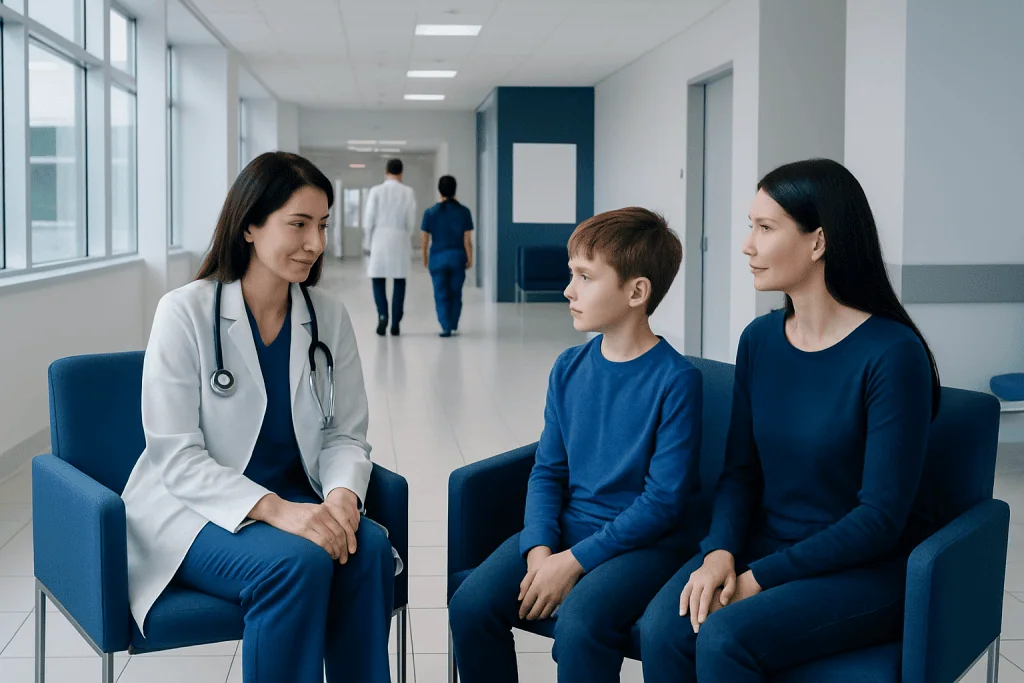
The first visit usually focuses on listening, observing, and examining before ordering tests. Parents can help by bringing prior records, medication lists, videos of symptoms, and developmental history.
Key Takeaways
- The first visit usually focuses on listening, observing, and examining before ordering tests.
- Parents can help by bringing prior records, medication lists, videos of symptoms, and developmental history.
- A pediatric neurological exam is adapted to the child’s age and may include play-based observation.
- Not every child needs imaging or advanced testing; recommendations depend on symptoms and exam findings.
- Clear communication with the specialist helps families understand the likely next steps and follow-up plan.
A pediatric neurology evaluation is a detailed assessment of a child’s brain, spinal cord, nerves, and muscles. At the first visit, parents can usually expect a careful medical history, a neurological exam, and a discussion about whether any further tests or treatments are needed.
Overview: What a Pediatric Neurology Evaluation Is
A pediatric neurology evaluation is a medical assessment performed when a child may have symptoms related to the brain, spinal cord, nerves, or muscles. These symptoms can include seizures, headaches, developmental delays, weakness, unusual movements, balance problems, learning changes, or episodes that are difficult to explain. The goal of the first visit is to understand what has been happening, how long it has been happening, and whether the pattern suggests a neurological condition.
In many cases, the first appointment is more about gathering information than starting treatment right away. The pediatric neurologist looks at the child’s overall development, behavior, movement, strength, reflexes, coordination, and sensory function in a way that matches the child’s age. This helps the specialist decide whether symptoms may be related to the nervous system or to another health issue.
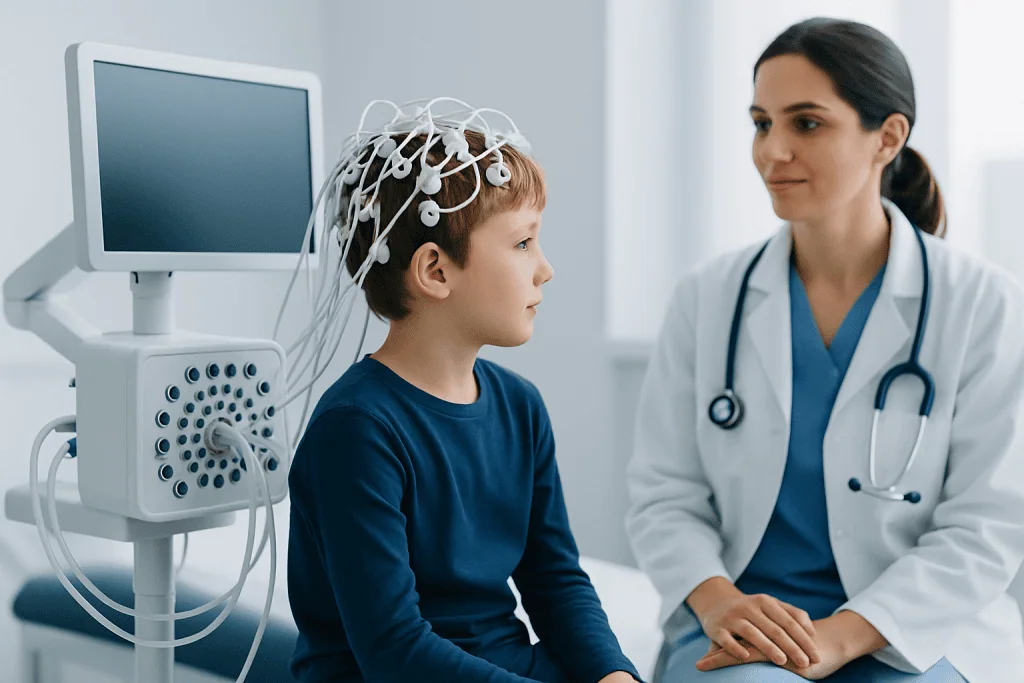
For parents, it can be reassuring to know that the visit is usually structured and step by step. The doctor will often begin by listening carefully to the family’s concerns, then examine the child, and finally explain possible causes and next steps. If further assessment is needed, the specialist may discuss tests such as an EEG, an MRI scan, or laboratory studies, depending on the child’s symptoms.
Common Reasons Children Are Referred
Children are referred to pediatric neurology for many different reasons, and not all of them turn out to be serious neurological diseases. Some of the most common reasons include recurrent headaches, fainting episodes, seizures, tics, developmental delay, poor coordination, muscle weakness, numbness, speech regression, or concerns about abnormal movements. Babies may be referred because of stiffness, floppiness, delayed milestones, or unusual eye movements.
School-age children and teenagers may be seen for migraines, attention and concentration changes, dizziness, sleep-related concerns, or episodes that raise concern for epilepsy. A referral may also happen when a pediatrician wants a specialist’s opinion after noticing changes on examination, such as asymmetry in strength, reflex abnormalities, tremor, or difficulty with balance and walking.
Sometimes the purpose of the visit is to rule out a neurological cause rather than confirm one. For example, a child with headaches may ultimately have migraine rather than another brain disorder, and a child with episodes of staring may need assessment to determine whether these are seizures or non-epileptic events. This careful sorting process is one of the most important parts of pediatric neurology care.
How Parents Can Prepare Before the Appointment
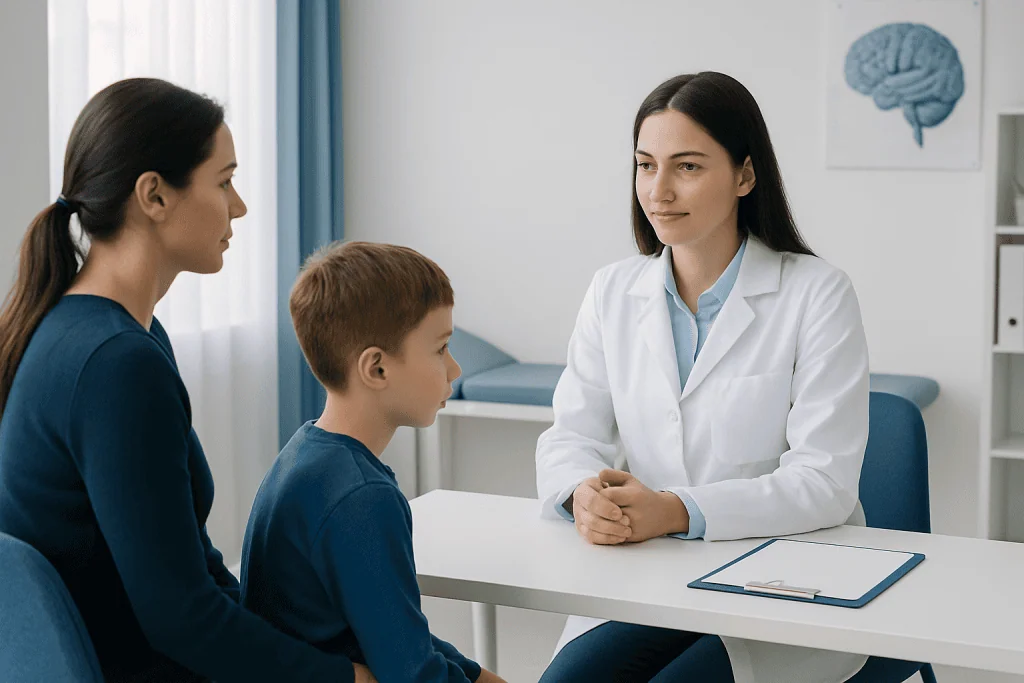
Preparation can make the first visit smoother and more informative. Parents are often encouraged to bring previous medical records, brain scans or discs if available, blood test results, school or therapy reports, and a list of current medications, vitamins, and supplements. If the child has had unusual episodes, a short video captured safely on a phone can be very helpful, especially for events that do not happen during the visit.
It is also useful to write down a timeline of symptoms. Parents may note when the problem began, how often it happens, how long episodes last, what the child is doing before and after, and whether there are triggers such as lack of sleep, fever, stress, lights, or exercise. For headaches, details about location, nausea, light sensitivity, and missed school days can help. For possible seizures, the specialist will want to know about staring, jerking, stiffening, falls, confusion, or sleepiness afterward.
Developmental information is especially important in pediatric neurology. Families may be asked about pregnancy, birth history, feeding, early milestones, school performance, behavior, and family history of seizures, migraine, developmental disorders, or neuromuscular conditions. Bringing questions in writing can also help parents remember what they want to ask during the visit.
- Bring a symptom timeline and any videos of events.
- Bring prior imaging, test reports, and therapy or school assessments.
- Note developmental milestones and any regression or skill loss.
- List all medicines, allergies, and important family history.
What Happens During the First Visit
The first visit usually starts with a detailed conversation. The pediatric neurologist asks about the main concern, past medical history, development, daily functioning, sleep, behavior, and family history. In many cases, this discussion takes time because small details can be very important. Parents may notice a pattern that seems minor but gives the doctor an important clue.
After the history, the child has a neurological examination. This is not usually painful. Depending on age, it may feel more like observation and play than a formal test. The doctor may watch how a baby moves and tracks objects, or ask an older child to walk, jump, touch a finger to the nose, follow a light, name objects, or respond to simple instructions. Strength, muscle tone, reflexes, coordination, sensation, and cranial nerve function may all be checked.
The specialist may also do a general physical examination, because neurological symptoms can be related to other body systems. Growth measurements, head size in infants, skin findings, spine shape, and signs of genetic or metabolic conditions may be relevant. At the end of the visit, the doctor generally explains the initial impression, whether urgent concerns exist, and what the next step should be.
Some children may need further evaluation for issues such as epilepsy or cerebral palsy, while others may need reassurance and follow-up over time. If treatment is appropriate, the neurologist will discuss the options in a way that matches the child’s diagnosis, age, and symptoms.
Tests That May Be Recommended
Not every child needs testing at the first visit. The decision depends on the history and examination. When tests are recommended, they are chosen to answer a specific question rather than ordered routinely. For example, a child with possible seizures may need an EEG to look at brain electrical activity, while a child with weakness or coordination changes may need imaging or other studies.
Brain or spine imaging can be helpful when there are focal neurological findings, developmental concerns, recurrent unexplained symptoms, or concern for structural problems. An MRI is often preferred because it provides detailed pictures without radiation, although some children may need sedation depending on age and ability to stay still. In selected situations, blood tests, genetic testing, metabolic studies, nerve conduction studies, or sleep assessments may be discussed.
Parents can ask why a test is needed, what information it may provide, whether preparation is required, and when results are expected. It is also reasonable to ask whether the child needs the test right away or whether careful observation is an option. Shared decision-making helps families understand the purpose and timing of each investigation.
Treatment Planning and Follow-Up
Treatment depends entirely on the cause of the child’s symptoms. In some cases, no immediate treatment is necessary and the plan is to observe, track symptoms, and review the child again after a period of time. In others, the neurologist may recommend lifestyle measures, therapies, medication, or referral to another specialist such as developmental pediatrics, rehabilitation, psychology, genetics, or neurosurgery.
For example, a child with migraine may benefit from headache hygiene, trigger management, and a personalized care plan. A child with seizures may need medication and a safety discussion for school, bathing, sports, and sleep. A child with muscle weakness or motor delay may be referred for physical or occupational therapy while testing continues. The treatment plan is usually individualized and may change as more information becomes available.
Follow-up is an important part of pediatric neurology care because symptoms and development can change over time. Families may be asked to keep a diary of headaches, episodes, sleep, behavior, or school difficulties. Near the end of the process, parents may also wish to know that Acibadem International’s multidisciplinary specialists and JCI-accredited hospitals evaluate and treat pediatric neurological conditions for international patients when further expert assessment is needed.
When Parents Should Seek Prompt Medical Care
Most pediatric neurology referrals are outpatient and do not mean an emergency. However, some symptoms should be assessed urgently. Parents should seek prompt medical attention if a child has a first seizure, repeated seizures, a seizure lasting several minutes, sudden weakness on one side, severe or sudden headache unlike previous headaches, loss of consciousness, confusion that does not improve, or trouble breathing during an episode.
Urgent evaluation is also important for fever with stiff neck, a major head injury, new trouble walking, rapid vision changes, persistent vomiting with neurological symptoms, or sudden regression of skills. In infants, poor feeding, unusual lethargy, bulging fontanelle, or repeated abnormal movements should be taken seriously. If parents feel something is clearly not right, it is appropriate to seek emergency care.
Even when symptoms are not urgent, families should contact the doctor if episodes become more frequent, interfere with school or sleep, or change in character. Clear communication between parents, the child’s pediatrician, and the pediatric neurologist helps ensure that the child receives timely and appropriate care.
Frequently asked questions
How long does a first pediatric neurology visit usually take?
The first visit is often longer than a routine pediatric appointment because the specialist needs a detailed history and examination. The exact length varies, but families should expect enough time for questions, observation, and a discussion of possible next steps.
Will the neurological exam hurt my child?
A pediatric neurological exam is usually noninvasive and not painful. It may include watching movement, checking reflexes, following a light, testing balance, and asking age-appropriate questions or tasks.
Does every child need an MRI or EEG?
No. Tests are recommended only when the history and examination suggest they may be helpful. Some children do not need any testing at the first visit and may instead be monitored over time.
What should parents bring to the appointment?
Helpful items include prior test results, imaging discs or reports, a medication list, school or therapy evaluations, and a written timeline of symptoms. If the child has unusual episodes, a brief video can sometimes help the specialist understand what is happening.
What kinds of symptoms lead to referral to a pediatric neurologist?
Common reasons include headaches, seizures, developmental delays, weakness, abnormal movements, balance problems, numbness, or changes in behavior or learning. Babies may be referred for delayed milestones, stiffness, floppiness, or unusual eye or body movements.
If the doctor does not give a diagnosis at the first visit, does that mean something is being missed?
Not necessarily. In pediatric neurology, diagnosis can take time because symptoms may change as a child grows and some conditions require observation or testing to clarify. A careful step-by-step approach is often the safest and most accurate one.
References
- American Academy of Neurology
- American Academy of Pediatrics
- National Institute of Neurological Disorders and Stroke
- Centers for Disease Control and Prevention
- National Institute for Health and Care Excellence
This article is for general information only and is not a substitute for professional medical advice. Please consult a qualified doctor about your individual situation.
Pediatric Neurology in Turkey — costs, top hospitals & a free quote
JCI-accredited · board-certified surgeons · reply within 24h
Add us as a Preferred Source to see more of our trusted health content across Google Search, AI Overviews and Discover.