Pelvic Organ Prolapse: Vaginal Bulge, Pressure, and Treatment Choices

Pelvic organ prolapse is common, especially after childbirth and around or after menopause, and it is not usually dangerous. Typical symptoms include a vaginal bulge, heaviness, pelvic pressure, urinary leakage, difficulty emptying the bladder, or bowel changes.
Key Takeaways
- Pelvic organ prolapse is common, especially after childbirth and around or after menopause, and it is not usually dangerous.
- Typical symptoms include a vaginal bulge, heaviness, pelvic pressure, urinary leakage, difficulty emptying the bladder, or bowel changes.
- Diagnosis is usually made with a pelvic examination, often while the patient bears down, and additional tests are used only when needed.
- Treatment depends on symptoms, prolapse severity, overall health, sexual activity, and personal preferences.
- Options include observation, pelvic floor physical therapy, lifestyle changes, a vaginal pessary, and several types of reconstructive or closure surgery.
Pelvic organ prolapse occurs when the pelvic floor no longer fully supports the uterus, bladder, rectum, or top of the vagina, leading to a bulge or pressure sensation. Many women improve with pelvic floor care, a pessary, or surgery when symptoms affect daily life.
Overview
Pelvic organ prolapse is a condition in which one or more pelvic organs move downward because the muscles and connective tissues of the pelvic floor have weakened or stretched. The organs most often involved are the bladder, uterus, rectum, small bowel, or the top of the vagina in women who have had a hysterectomy. When these structures descend, they may press into the vaginal wall and create a feeling of bulging, heaviness, or pressure.
Prolapse can affect women of different ages, but it becomes more common after vaginal childbirth and after menopause. Some women notice only mild pressure at the end of the day, while others feel a visible or touchable vaginal bulge. The condition is usually not life-threatening, and treatment can often be planned according to comfort, function, and personal goals rather than urgency.
Different types of prolapse are named according to the area involved. Anterior vaginal wall prolapse often involves the bladder, uterine prolapse involves descent of the uterus, posterior vaginal wall prolapse may involve the rectum, and vaginal vault prolapse can occur after hysterectomy. Many women have more than one type at the same time, which is why a complete pelvic assessment is important.
Symptoms of Pelvic Organ Prolapse
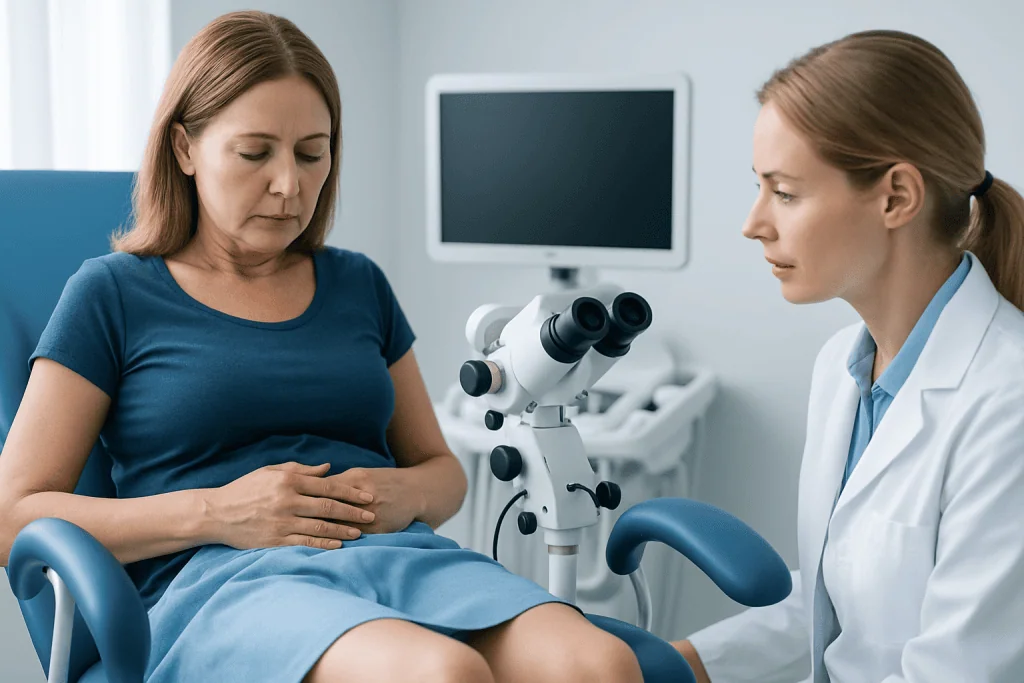
The most recognized symptom is a vaginal bulge. Some women describe it as a small ball, fullness, or tissue that comes down toward or outside the vaginal opening. Symptoms may be more noticeable after standing, walking, lifting, coughing, or straining, and they often improve when lying down.
Pelvic organ prolapse may also affect bladder, bowel, and sexual function. Symptoms vary depending on which organs are involved and how advanced the prolapse is. Mild prolapse can be found during an examination even when a woman has few or no symptoms.
- A feeling of pelvic pressure, dragging, or heaviness
- A visible or touchable bulge in the vagina
- Urinary leakage, urgency, frequent urination, or difficulty emptying the bladder
- Recurrent urinary tract infections related to incomplete emptying in some cases
- Constipation, difficulty passing stool, or the need to press on the vagina to empty the bowel
- Discomfort during sexual intercourse or a change in vaginal sensation
- Lower back ache or discomfort that worsens with prolonged standing
Symptoms do not always match the stage of prolapse. A small prolapse may feel bothersome, while a larger one may cause surprisingly little discomfort. The best treatment decision considers both the physical findings and how much the symptoms interfere with daily life.
Causes and Risk Factors
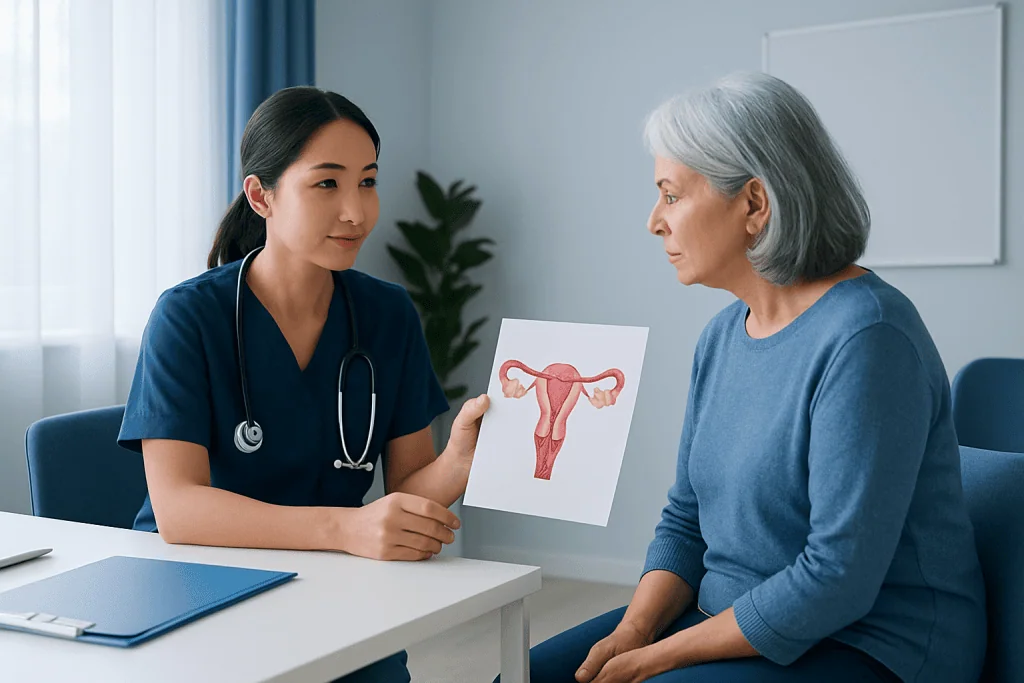
Pelvic organ prolapse develops when the support system of the pelvis is weakened. This support system includes pelvic floor muscles, ligaments, fascia, and connective tissue. Pregnancy and vaginal delivery can stretch or injure these tissues, especially after a difficult birth, a large baby, forceps or vacuum delivery, or multiple deliveries.
Menopause also plays a role because lower estrogen levels can contribute to thinner, less elastic vaginal and pelvic tissues. Aging itself can reduce muscle tone and connective tissue strength. However, prolapse is not simply a normal part of aging, and many women remain symptom-free throughout life.
Other factors can increase pressure on the pelvic floor over time. These include chronic constipation and straining, chronic cough, heavy lifting, high-impact physical work, obesity, and a family tendency toward weaker connective tissue. Previous pelvic surgery, including hysterectomy, can also change pelvic support in some women.
Having risk factors does not mean a woman will definitely develop prolapse. Likewise, prolapse can occur even when no clear risk factor is present. Understanding the contributing factors helps guide prevention, symptom control, and decisions about long-term management.
Diagnosis and Evaluation
Pelvic organ prolapse is usually diagnosed during a pelvic examination. The clinician asks about symptoms, childbirth history, urinary and bowel habits, sexual function, prior surgeries, medical conditions, and personal goals. Because symptoms may change during the day, it can be helpful for the patient to describe when the bulge appears, what makes it worse, and what improves it.
During the examination, the patient may be asked to cough or bear down as if having a bowel movement. This helps the doctor see how far the pelvic organs descend. A standardized system, often called the Pelvic Organ Prolapse Quantification system, may be used to describe the stage and location of prolapse in a consistent way.
Additional tests are not always needed. If urinary leakage, difficulty emptying the bladder, frequent infections, or complex symptoms are present, the clinician may recommend urine testing, measurement of residual urine after voiding, bladder function testing, ultrasound, or other imaging. These tests are selected based on the individual situation rather than used routinely for everyone.
A careful diagnosis also checks for other causes of pelvic pressure or vaginal symptoms, such as vaginal atrophy, cysts, fibroids, or urinary and bowel conditions. This is important because treating prolapse alone may not resolve symptoms that come from another source.
Treatment Options
Treatment for pelvic organ prolapse is personalized. If symptoms are mild and not bothersome, observation may be appropriate. Regular follow-up, avoiding constipation, maintaining a healthy weight, and learning proper pelvic floor exercises may be enough for many women. The goal is not always to make the anatomy look perfect, but to improve comfort, function, and quality of life.
Pelvic floor physical therapy can strengthen and coordinate the muscles that support the bladder, uterus, vagina, and rectum. A trained therapist can teach correct muscle activation, breathing techniques, posture, and strategies to reduce straining. Exercises are most helpful for mild to moderate symptoms and may also support recovery before or after surgery.
A vaginal pessary is a removable medical device placed inside the vagina to support prolapsed organs. Pessaries come in different shapes and sizes, and fitting is done by a trained clinician. Many women choose a pessary because it is non-surgical, reversible, and can be used long term with proper follow-up, cleaning, and monitoring of vaginal tissue.
Surgery may be considered when symptoms are significant, conservative treatments do not provide enough relief, or the patient prefers a more definitive repair. Surgical choices include repairing the vaginal walls with the patient’s own tissues, suspending the top of the vagina or uterus, sacrocolpopexy, hysterectomy in selected cases, uterine-sparing repair in others, or colpocleisis for women who no longer desire vaginal intercourse. The choice depends on prolapse type, medical health, sexual activity, recurrence risk, and patient preference. Mesh use is limited to specific procedures and should be discussed carefully with a specialist, including benefits, risks, and alternatives.
Prevention and Self-care
Not all cases of pelvic organ prolapse can be prevented, especially when genetics, pregnancy, and childbirth have contributed. However, several self-care steps may reduce pelvic floor strain and help control symptoms. These measures are also useful after treatment to support long-term results.
Constipation management is particularly important. Regular fiber intake, adequate fluids, physical activity, and responding promptly to the urge to have a bowel movement can reduce straining. Some women may need medical guidance for chronic constipation, especially if symptoms have been present for a long time.
- Practice pelvic floor exercises correctly and consistently, ideally after instruction from a qualified professional.
- Avoid repeated heavy lifting when possible, and exhale during effort rather than holding the breath.
- Treat chronic cough, allergies, or lung conditions that increase downward pressure on the pelvic floor.
- Maintain a weight that is healthy for the individual, as excess abdominal pressure can worsen symptoms.
- Use vaginal estrogen if prescribed after menopause to improve vaginal tissue comfort, especially when using a pessary.
Self-care should be gentle and realistic. Women should avoid blaming themselves for prolapse; it is a medical condition influenced by many factors. A clinician or pelvic floor physiotherapist can help create a plan that fits the patient’s body, lifestyle, and treatment goals.
When to See a Doctor
A woman should consider seeing a doctor if she notices a vaginal bulge, persistent pelvic pressure, difficulty emptying the bladder or bowel, urinary leakage, recurrent urinary infections, or discomfort with sexual activity. Evaluation is also helpful when symptoms interfere with exercise, work, travel, sleep, or confidence in daily activities.
Prompt assessment is recommended if the prolapsed tissue becomes irritated, bleeds, develops sores, or if there is new pelvic pain, fever, inability to urinate, or sudden bowel problems. These situations do not always indicate a serious condition, but they should be checked to prevent discomfort and complications.
Before an appointment, it may help to write down symptoms, childbirth and surgery history, medications, bowel habits, bladder symptoms, and questions about sexual activity or future treatment preferences. Patients should feel comfortable discussing sensitive concerns; pelvic floor disorders are common, and clinicians who treat them are accustomed to these conversations.
International patients seeking evaluation may access multidisciplinary women’s health, urogynecology, urology, colorectal, physiotherapy, and imaging services at Acibadem International’s JCI-accredited hospitals. A qualified doctor can explain the diagnosis, compare conservative and surgical options, and help choose a plan that aligns with the patient’s health needs and personal priorities.
Frequently asked questions
Is pelvic organ prolapse dangerous?
Pelvic organ prolapse is usually not dangerous or life-threatening. It can, however, cause discomfort and affect bladder, bowel, or sexual function. Treatment is based on symptoms, examination findings, and the patient’s preferences.
Can pelvic organ prolapse go away on its own?
Prolapse usually does not fully reverse on its own, especially when the supporting tissues have stretched significantly. Mild symptoms may improve with pelvic floor exercises, reduced straining, constipation management, and weight control. Some women choose monitoring if symptoms are not bothersome.
What does a pessary feel like?
A well-fitted pessary should usually feel comfortable or barely noticeable. It may take more than one fitting to find the right size and shape. Regular follow-up is important to check comfort, hygiene, and vaginal tissue health.
Will pelvic floor exercises fix prolapse?
Pelvic floor exercises may reduce pressure, improve support, and help bladder control, especially in mild to moderate prolapse. They may not make a larger bulge disappear completely. Correct technique is important, so guidance from a pelvic floor physiotherapist can be very helpful.
Is surgery always needed for pelvic organ prolapse?
No. Many women manage prolapse with observation, lifestyle changes, pelvic floor therapy, or a pessary. Surgery is considered when symptoms remain bothersome despite conservative care or when the patient prefers surgical correction after discussing risks and benefits.
Can prolapse come back after treatment?
Yes, prolapse can recur after any treatment, including surgery, because the pelvic floor remains exposed to pressure and tissue changes over time. The risk depends on factors such as prolapse type, tissue quality, constipation, coughing, weight, and activity patterns. Long-term pelvic floor care and follow-up can help support treatment results.
References
- American College of Obstetricians and Gynecologists
- American Urogynecologic Society
- International Urogynecological Association
- National Institute for Health and Care Excellence
- NHS
This article is for general information only and is not a substitute for professional medical advice. Please consult a qualified doctor about your individual situation.
Pelvic Organ Prolapse in Turkey — costs, top hospitals & a free quote
JCI-accredited · board-certified surgeons · reply within 24h
Add us as a Preferred Source to see more of our trusted health content across Google Search, AI Overviews and Discover.

Gynecology & Obstetrics
Women’s health across pregnancy, gynecologic surgery and high-risk pregnancy care.
187 specialists in this unit