Pepitas vs Pumpkin Seeds: Key Differences and How Doctors Tell Them Apart

Pepitas are the hulled inner kernels; pumpkin seeds often means the whole seed with the shell. Doctors usually tell them apart by history, packaging, appearance, and any symptoms after eating them.
Key Takeaways
- Pepitas are the hulled inner kernels; pumpkin seeds often means the whole seed with the shell.
- Doctors usually tell them apart by history, packaging, appearance, and any symptoms after eating them.
- Both can be nutritious, but the shell can affect texture, digestion, and tolerance.
- Medical care may be needed for choking, severe abdominal pain, or signs of an allergic reaction.
- People with digestive conditions may tolerate pepitas better than whole pumpkin seeds.
Pepitas and pumpkin seeds come from pumpkins, but they are not exactly the same in everyday use. Pepitas are the green inner seed kernels without the shell, while pumpkin seeds usually refers to the whole seed with its outer hull still attached.
Overview: pepitas vs pumpkin seeds at a glance
Pepitas vs pumpkin seeds is mostly a question of form, not two entirely different foods. In common use, pepitas are the flat, green seed kernels after the outer white shell has been removed, while pumpkin seeds usually means the whole seed, including the hull. Both come from pumpkins or related squash varieties, but they differ in texture, appearance, and sometimes how easy they are to digest.
For most people, this is a food and nutrition distinction rather than a medical diagnosis. However, doctors may be asked to help when someone has symptoms after eating seeds, such as bloating, stomach pain, trouble swallowing, or an allergic reaction. In that setting, knowing whether the person ate shelled pepitas or whole pumpkin seeds can be clinically useful.
The side-by-side comparison below answers the basic question quickly.
- Appearance: Pepitas are green and shell-free; pumpkin seeds are often cream or white on the outside because the hull is still present.
- Texture: Pepitas are softer and easier to chew; whole pumpkin seeds are firmer and more fibrous.
- Fiber: Whole pumpkin seeds usually provide more insoluble fiber because of the shell.
- Digestibility: Pepitas may be easier for some people to tolerate, especially if they have digestive sensitivity.
- Culinary use: Pepitas are often added to salads, yogurt, or baking; whole pumpkin seeds are commonly roasted and eaten as a snack.
- Medical relevance: The shell matters in choking risk, bowel tolerance, and symptom assessment.
What is the real difference between pepitas and pumpkin seeds?

Botanically, pepitas and pumpkin seeds are closely related because pepitas are the edible kernel from inside a pumpkin seed. In everyday language, though, the terms are not always used carefully. Some food labels call shelled seeds “pepitas,” while others use “pumpkin seeds” for both hulled and unhulled versions, so reading the package description may be more helpful than the front label alone.
The main practical difference is the outer hull. Whole pumpkin seeds keep their fibrous shell, which gives a crunchier texture and more roughage. Pepitas have had this shell removed, leaving the softer green center that many people find easier to chew and digest.
This distinction can matter in healthcare conversations. If a patient reports symptoms after eating “pumpkin seeds,” a clinician may ask whether the seeds were shelled, roasted, salted, flavored, or eaten in large amounts. Sometimes the issue is not the seed itself, but portion size, added seasonings, or the harder shell.
People also sometimes confuse food intolerance, mechanical irritation, and allergy. A rough seed shell may cause throat discomfort or stomach upset without any immune reaction. By contrast, a true seed allergy can involve hives, swelling, wheezing, or other symptoms that need prompt medical attention.
How a clinician tells them apart
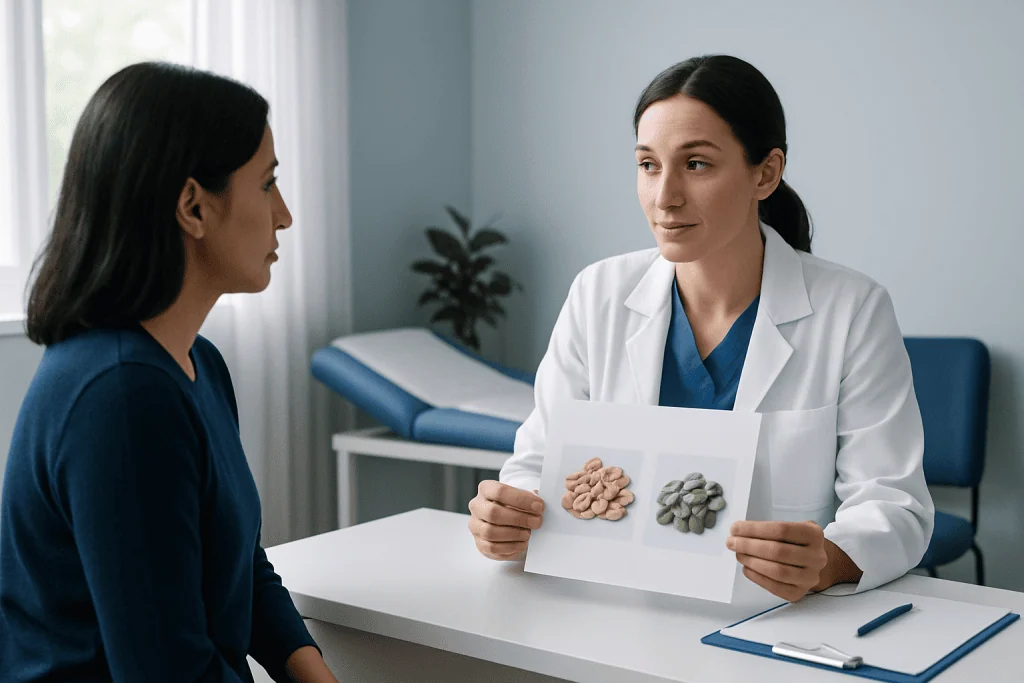
Doctors do not usually need a special test to distinguish pepitas from whole pumpkin seeds. They begin with a simple clinical history: what was eaten, how it was prepared, how much was consumed, and what symptoms followed. If possible, they may ask the patient to show the packaging or describe the food’s color, size, and texture.
Appearance offers important clues. Pepitas are typically dark green, flat, and smooth because the hull has been removed. Whole pumpkin seeds are usually off-white, pale yellow, or tan on the outside, and they have a thicker, more rigid shell. This shell often explains why one form feels easier to chew or swallow than the other.
A clinician also considers the symptom pattern. Trouble swallowing immediately after eating may suggest a poorly chewed shell or food impaction rather than intolerance. Bloating or mild abdominal discomfort after a large portion may point to the fiber load or fat content. Itching of the mouth, hives, facial swelling, vomiting, wheezing, or dizziness can raise concern for a food allergy, including a reaction that may overlap with other seed allergies.
When symptoms are recurrent or severe, a doctor may look beyond the seed itself. Underlying digestive conditions such as irritable bowel syndrome can affect tolerance to high-fiber foods, and swallowing difficulties may call for further evaluation. The goal is not only to identify the food, but also to understand why it caused symptoms in that particular person.
Why the distinction can matter for symptoms
From a medical perspective, the shell is often the most meaningful difference. Whole pumpkin seeds have a tougher outer layer that may be harder to chew thoroughly, especially for children, older adults, or people with dental problems. If swallowed in large pieces, they can irritate the throat, feel uncomfortable going down, or occasionally contribute to choking.
In the digestive tract, the hull adds more coarse fiber. For many people, this is not harmful and may even be helpful as part of a balanced diet. But in some individuals, especially those prone to bloating, constipation, or abdominal discomfort, large amounts of whole seeds can be harder to tolerate than pepitas.
Pepitas are still nutrient-dense and can also cause symptoms if eaten in excess. Because they are rich and easy to snack on, some people may eat large portions quickly, leading to fullness, nausea, or digestive upset. Added salt, spice blends, sugar coatings, or roasting oils can also influence how a person feels afterward.
Clinicians also think about allergy and cross-reactivity. Although pumpkin seed allergy is uncommon compared with some other food allergies, it can happen. Any history of reactions to seeds, nuts, or unexplained episodes of hives or breathing symptoms after eating should be discussed with a qualified doctor, and in some cases an allergy specialist may recommend further evaluation such as allergy tests.
What to do if the issue is digestion, swallowing, or allergy
The right next step depends on the kind of problem. If symptoms are mild and digestive, such as bloating or a heavy feeling after eating whole pumpkin seeds, it may help to reduce portion size, chew thoroughly, drink water, and choose shelled pepitas next time. Some people do better with plain, unsalted seeds and smaller servings spread across meals rather than eaten all at once.
If swallowing was uncomfortable, the focus is on safety. The person should stop eating, avoid forcing down more food, and seek urgent care if there is ongoing choking, inability to swallow saliva, severe chest discomfort, or breathing trouble. Repeated difficulty swallowing hard foods may need a medical review and sometimes endoscopy to look for narrowing, irritation, or another cause.
If the main concern is allergy, the food should be avoided until a doctor gives guidance. A clinician may recommend careful dietary review, supervised reintroduction only if appropriate, or referral to an allergy specialist. Emergency care is important if symptoms include wheezing, throat tightness, faintness, facial swelling, or widespread hives.
For persistent stomach pain, ongoing constipation, or bowel changes after eating seeds, a broader digestive assessment may be useful. In some cases, doctors consider other explanations such as food sensitivity, hemorrhoids, fissures, or gastrointestinal conditions that deserve separate care, including constipation or other bowel disorders.
Nutrition and tolerance: does one form have advantages?
Both pepitas and whole pumpkin seeds can fit into a healthy diet. They generally provide beneficial fats, plant protein, minerals, and fiber, though the exact nutrition profile varies by variety and preparation method. The shell adds extra bulk and fiber, while pepitas concentrate the inner kernel and are often more convenient to eat.
Neither form is automatically “better” for everyone. People who prefer a softer texture, have braces or dental sensitivity, or notice stomach discomfort with very fibrous foods may find pepitas easier to tolerate. Those who enjoy the crunch and tolerate higher-fiber snacks well may prefer whole pumpkin seeds.
Preparation matters too. Dry-roasted seeds can be easier for some people to digest than heavily seasoned or sugar-coated versions, and lower-salt options may be preferable for those watching sodium intake. Freshness also matters because rancid seeds can taste bitter and may cause stomach upset.
Because responses vary, clinicians usually recommend practical observation rather than strict avoidance unless there is a proven allergy or a specific digestive reason. A food diary can help link symptoms to the seed type, serving size, and other foods eaten at the same time.
When to seek medical care
Medical care is appropriate if symptoms are severe, repeated, or difficult to explain. Urgent attention is needed for choking, trouble breathing, swelling of the lips or throat, faintness, persistent vomiting, or severe chest or abdominal pain after eating seeds. These symptoms may signal an emergency rather than a simple food sensitivity.
Non-urgent medical review is also sensible if a person regularly develops pain, marked bloating, constipation, or swallowing discomfort after eating seeds or other high-fiber foods. A clinician can help determine whether the issue is portion size, food preparation, allergy, or an underlying digestive problem.
Children, older adults, and people with known swallowing disorders deserve extra caution because hard seed shells may pose more risk. In these groups, using shelled pepitas, offering small amounts, and encouraging slow eating may reduce problems.
When specialist assessment is needed, multidisciplinary teams can evaluate digestive, allergy, and swallowing concerns. Acibadem International’s JCI-accredited hospitals care for international patients and can assess related symptoms with appropriate imaging, endoscopic evaluation, and specialist review when indicated.
Practical self-care and buying tips
For someone trying to choose between pepitas and pumpkin seeds, the simplest approach is to match the form to tolerance and intended use. Pepitas work well in meals where a softer bite is preferred, while whole pumpkin seeds are often chosen as a snack. Reading labels carefully helps because product names are not always used consistently.
Chewing well is one of the most useful self-care steps. It improves comfort, lowers the chance of swallowing large shell fragments, and can make digestion easier. Eating moderate portions and drinking enough fluids may also reduce discomfort, especially with high-fiber snacks.
If a person suspects a reaction, it can help to note the exact product, ingredients, and timing of symptoms. Seasonings, preservatives, and cross-contact with other foods may matter as much as the seed itself. This information can make a medical appointment more productive.
In summary, pepitas are usually the green, shell-free kernels, while pumpkin seeds often means the whole seed with the hull. The difference is simple, but in a clinical setting it can help doctors understand symptoms and guide the safest next steps.
Frequently asked questions
Are pepitas and pumpkin seeds the same thing?
They come from the same general source, but the terms usually describe different forms. Pepitas are the green inner kernels with the shell removed, while pumpkin seeds often means the whole seed with the outer hull still attached.
Why do some people feel better eating pepitas than whole pumpkin seeds?
Pepitas are softer and contain no tough outer shell, so they may be easier to chew and digest. Whole pumpkin seeds have more coarse fiber from the hull, which can bother some people if eaten in large amounts.
Can pumpkin seeds cause stomach pain or constipation?
They can contribute to discomfort in some people, especially if eaten in large portions or without enough fluids. The shell on whole pumpkin seeds may be harder to tolerate for people who are sensitive to high-fiber foods.
How do doctors know whether symptoms are from the seed itself or from an allergy?
Doctors look at the timing and type of symptoms as well as the exact food eaten. Digestive discomfort alone may reflect portion size or the shell, while hives, swelling, wheezing, or dizziness raise concern for an allergic reaction.
Are pepitas safer for children or older adults?
They may be easier for some children and older adults because they are softer and have no hull. Even so, seeds should be offered in age-appropriate forms and eaten slowly to reduce choking risk.
Should a person avoid all seeds if they react to pumpkin seeds?
Not necessarily, because reactions can vary from person to person. A qualified doctor or allergy specialist can help determine whether the reaction was to pumpkin seed specifically, to another ingredient, or to a broader seed allergy pattern.
References
- U.S. Food and Drug Administration
- American Academy of Allergy, Asthma & Immunology
- National Institute of Diabetes and Digestive and Kidney Diseases
- Academy of Nutrition and Dietetics
This article is for general information only and is not a substitute for professional medical advice. Please consult a qualified doctor about your individual situation.
Explore treatments in Turkey — costs, top hospitals & a free quote
JCI-accredited · board-certified surgeons · reply within 24h
Add us as a Preferred Source to see more of our trusted health content across Google Search, AI Overviews and Discover.

More from the Health Library



Related Specialists

Prof. Dr. Ayşe Yenigün
Pediatric Allergy
Embriyolog Hasan Benli
Vitro Fertilization and Reproductive Medicine Center
Dr. Nihan Özcan
Gynecology & Obstetrics
Dr. Burak Güler
Gynecology & Obstetrics