Periodontal Disease Explained: Causes, Management, and When to See a Doctor

Periodontal disease begins with plaque buildup and gum inflammation, and it can worsen if not treated. Early signs may include bleeding gums, bad breath, gum tenderness, and gums pulling away from the teeth.
Key Takeaways
- Periodontal disease begins with plaque buildup and gum inflammation, and it can worsen if not treated.
- Early signs may include bleeding gums, bad breath, gum tenderness, and gums pulling away from the teeth.
- Treatment depends on severity and may include professional cleaning, deep cleaning, medications, and sometimes surgery.
- Daily brushing, flossing, and routine dental visits are central to prevention and long-term control.
- People who smoke, have diabetes, or have reduced immune defenses may have a higher risk of severe disease.
Periodontal disease is a common inflammatory infection of the gums and the tissues that support the teeth. It often starts as gingivitis and can progress to periodontitis, but early diagnosis, professional treatment, and consistent home care can help protect oral health.
Overview: what periodontal disease means
Periodontal disease is an infection and inflammation of the gums and the structures that hold the teeth in place. In simple terms, it is a form of gum disease caused mainly by bacterial plaque that builds up around the teeth and along the gumline. When caught early, it may be reversed or controlled; when ignored, it can damage gum tissue, bone, and eventually tooth support.
The condition usually develops in stages. The earliest stage is gingivitis, which causes red, swollen, or bleeding gums without permanent damage to the deeper supporting tissues. If inflammation continues, it can progress to periodontitis. At that stage, the inner layer of the gum and bone begin to pull away from the teeth, creating spaces called pockets where bacteria can collect.
Periodontal disease is common and often develops gradually, which is why many people do not realize they have it at first. It does not always cause pain in the early stages. Because of this, regular dental checkups are important even when the mouth seems to feel normal.
How it develops and why it matters

The process usually starts with plaque, a sticky film of bacteria that forms on teeth every day. If plaque is not removed well with brushing and flossing, it can harden into tartar. Tartar cannot be removed by routine brushing at home and creates a rough surface that encourages more bacterial growth near and below the gums.
As the body reacts to these bacteria, the gums become inflamed. Over time, chronic inflammation can damage the ligament and bone that keep the teeth stable. This is why periodontal disease is more than a cosmetic concern. It may affect chewing, comfort, and long-term tooth retention.
Periodontal disease can also interact with general health. For example, gum inflammation may be more difficult to control in people with certain conditions such as diabetes. In turn, poor oral health can make overall disease management more challenging, which is one reason dental care is considered part of whole-person health.
Symptoms and signs to watch for
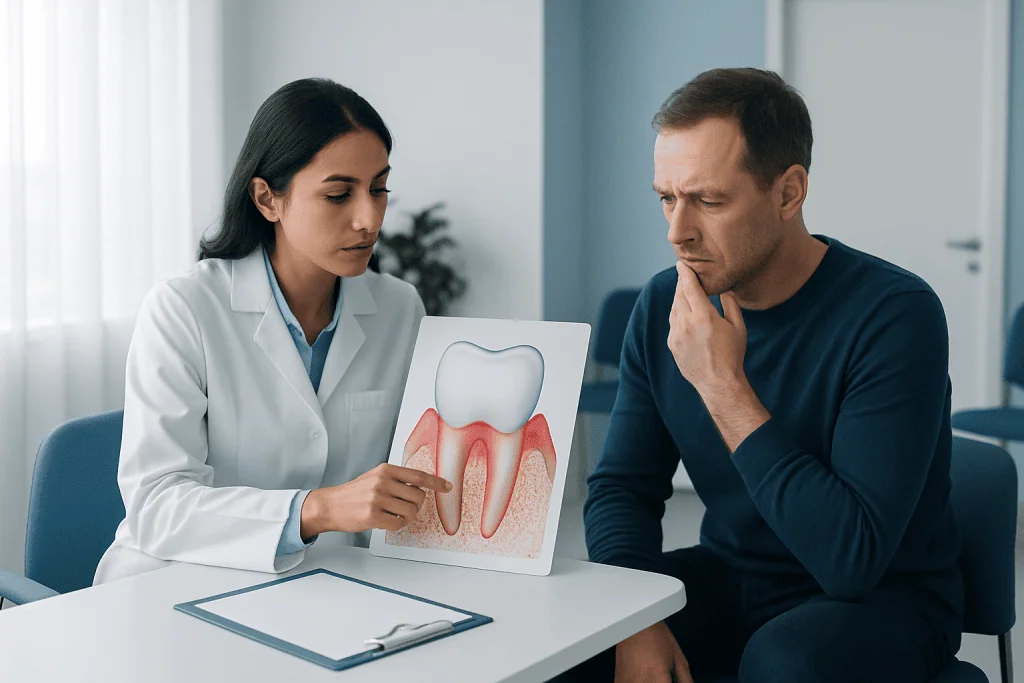
Symptoms can vary from mild to more advanced. In the earliest phase, a person may simply notice that the gums bleed when brushing or flossing. Some people also develop persistent bad breath or a bad taste in the mouth. These signs are easy to dismiss, but they should not be ignored.
As the disease progresses, the gums may become red, swollen, tender, or start to pull away from the teeth. Teeth may look longer because of gum recession. Some people notice sensitivity, discomfort when chewing, or spaces developing between teeth that were not there before.
In more advanced periodontitis, teeth can loosen because the supporting tissues and bone have been damaged. A dentist may also find deep periodontal pockets even before teeth become mobile. Common signs include:
- Bleeding during brushing, flossing, or eating
- Red, puffy, or sore gums
- Gum recession or teeth appearing longer
- Persistent bad breath
- Loose teeth or a change in the bite
- Pus or drainage around the gums in severe cases
Causes and risk factors
The main cause of periodontal disease is bacterial plaque that is not removed effectively over time. However, the condition is influenced by many factors, which means two people with similar oral hygiene habits may not develop disease in the same way. The body’s inflammatory response, lifestyle, and general health all play a role.
Smoking is one of the strongest risk factors. It reduces blood flow to the gums, affects healing, and can make treatment less effective. Diabetes, especially when blood sugar is not well controlled, is another important risk factor because it can increase inflammation and susceptibility to infection. Hormonal changes, some medications, dry mouth, genetic predisposition, stress, and reduced immunity may also contribute.
Other factors that may increase risk include crowded teeth, faulty dental restorations that trap plaque, and clenching or grinding that adds stress to supporting tissues. If gum problems are linked with advanced tooth damage, a dental team may evaluate whether restorative care such as dental implants is needed after the infection is brought under control.
How dentists diagnose periodontal disease
Diagnosis is based on a dental examination, a review of symptoms, and imaging when needed. A dentist or periodontist checks the gums for redness, swelling, bleeding, recession, and signs of plaque or tartar buildup. One of the most important parts of the exam is measuring the depth of the spaces between the teeth and gums with a small instrument called a periodontal probe.
Healthy gums usually fit snugly around the teeth. When periodontal disease is present, pockets may deepen, showing that the supporting structures have been affected. The dentist also looks for tooth movement, changes in the bite, and areas where the gums have pulled away from the teeth.
Dental X-rays can help show whether bone loss has occurred. This helps determine the stage and severity of disease and guides treatment planning. In some cases, a patient may be referred for more specialized care if disease is advanced, recurrent, or affecting multiple areas of the mouth.
Treatment and long-term management
Treatment aims to remove bacterial deposits, reduce inflammation, stop disease progression, and preserve the teeth whenever possible. The best approach depends on how advanced the disease is. In mild cases, a professional dental cleaning combined with improved brushing and flossing habits may be enough to reverse gingivitis.
For periodontitis, a deeper cleaning called scaling and root planing is often recommended. This procedure removes plaque and tartar from below the gumline and smooths root surfaces so gums can reattach more easily. Some patients may also need localized medications or antiseptic therapies as part of treatment. Ongoing maintenance visits are important because periodontal disease can return if plaque builds up again.
When tissue or bone damage is significant, surgical procedures may be considered. These can include pocket reduction procedures, gum grafting for recession, or regenerative approaches to support healing in selected cases. If missing or unsalvageable teeth affect function, a dentist may later discuss options such as All-on-4 dental implants or comprehensive smile rehabilitation, but active gum infection should first be properly treated and stabilized.
Long-term management is often the most important part of care. Periodontal disease is usually controlled rather than cured in a one-time visit. Patients do best when professional treatment is combined with consistent home hygiene, tobacco avoidance, and management of contributing health conditions.
Prevention, self-care, and when to seek medical care
Prevention centers on daily plaque control and regular professional care. Most people benefit from brushing twice a day with a fluoride toothpaste, cleaning between the teeth once a day with floss or interdental tools, and attending routine dental checkups and cleanings. A dentist may suggest a personalized schedule based on risk factors and previous gum disease history.
Healthy lifestyle habits also matter. Not smoking, controlling diabetes, eating a balanced diet, and staying hydrated can support gum health. If a person notices dry mouth, bleeding gums, or ongoing bad breath, it is sensible to discuss this with a dentist rather than trying to manage it alone. Some symptoms may reflect gum disease, while others may point to different oral health issues.
Medical or dental care should be sought if there is persistent gum bleeding, swelling that does not improve, pain when chewing, gum recession, loose teeth, or pus around the gums. Prompt care is especially important for people with diabetes, those who smoke, or anyone with a weakened immune system, because periodontal disease may progress more quickly in these groups.
For patients needing coordinated evaluation and treatment, Acibadem International’s multidisciplinary specialists in JCI-accredited hospitals diagnose and manage periodontal and restorative dental problems for international patients. A qualified dental professional can recommend the most suitable plan based on the severity of gum disease and overall oral health.
Frequently asked questions
Is periodontal disease the same as gingivitis?
Not exactly. Gingivitis is the earliest stage of gum disease and mainly involves inflammation of the gums without deeper tissue damage. Periodontitis is a more advanced stage in which the bone and supporting structures around the teeth begin to break down.
Can periodontal disease be reversed?
Gingivitis can often be reversed with professional cleaning and good home oral care. Once periodontitis causes loss of bone or attachment, that damage is not always fully reversible, but the disease can often be controlled and stabilized with proper treatment.
Does periodontal disease always cause pain?
No. Many people have early or even moderate periodontal disease with little or no pain. Bleeding gums, bad breath, and gum recession may appear before discomfort becomes noticeable, which is why regular dental visits are important.
Who is most at risk for periodontal disease?
People who smoke, have diabetes, have poor oral hygiene, or have a family history of gum disease may be at higher risk. Certain medications, dry mouth, hormonal changes, and immune problems can also make gum disease more likely or more severe.
How is periodontal disease treated?
Treatment depends on severity. It may include professional cleaning, deep cleaning below the gums, medications in selected cases, and sometimes surgery to reduce pockets or repair damaged tissue. Long-term maintenance visits and daily oral hygiene are essential after treatment.
When should someone see a dentist about bleeding gums?
A dentist should be consulted if bleeding happens repeatedly, especially along with swelling, bad breath, gum recession, or loose teeth. Occasional irritation can occur, but persistent bleeding is a common warning sign of gum inflammation or periodontal disease.
References
- American Dental Association
- Centers for Disease Control and Prevention
- National Institute of Dental and Craniofacial Research
- American Academy of Periodontology
This article is for general information only and is not a substitute for professional medical advice. Please consult a qualified doctor about your individual situation.
Explore treatments in Turkey — costs, top hospitals & a free quote
JCI-accredited · board-certified surgeons · reply within 24h
Add us as a Preferred Source to see more of our trusted health content across Google Search, AI Overviews and Discover.