Petroleum Jelly: A Complete Medical Overview

Petroleum jelly works mainly by sealing moisture into the skin rather than adding moisture by itself. It can help with dry skin, chapped lips, minor friction, and protection of superficial healing skin when the area is clean.
Key Takeaways
- Petroleum jelly works mainly by sealing moisture into the skin rather than adding moisture by itself.
- It can help with dry skin, chapped lips, minor friction, and protection of superficial healing skin when the area is clean.
- It should not be applied deep inside the nose, on infected wounds, or on skin that has not been properly cleaned.
- People with acne-prone skin, certain sensitivities, or persistent rashes may need tailored advice from a doctor.
- Medical care is important if skin symptoms are severe, spreading, painful, or not improving.
Petroleum jelly is a semi-solid skin protectant that helps lock in moisture, reduce water loss, and shield irritated skin from friction and minor external damage. When used appropriately on clean skin, it is generally safe, effective, and widely recommended for dryness, chafing, and support of the skin barrier.
Overview: What Petroleum Jelly Is and What It Does
Petroleum jelly is a purified, semi-solid mixture of mineral oils and waxes used as a skin protectant. In practical terms, its main role is to form a barrier over the skin. That barrier helps reduce transepidermal water loss, meaning it keeps existing moisture from escaping too quickly. This is why it is often recommended for dry, rough, or cracked skin.
Unlike creams that may contain water, humectants, or active ingredients, petroleum jelly is best understood as an occlusive product. It does not hydrate the skin by itself. Instead, it helps the skin hold onto moisture that is already present, especially when applied after washing or bathing while the skin is still slightly damp.
Because it is simple and generally well tolerated, petroleum jelly is commonly used in everyday skin care and in medical settings. It may support the skin barrier in people with dry skin, mild irritation, friction-related discomfort, and some superficial wounds after proper cleaning. It is also frequently used as part of routine care for conditions linked to barrier damage, including eczema.
Common Uses and Benefits

One of the most common uses of petroleum jelly is treatment of dry skin. Areas such as the hands, elbows, knees, heels, and lips often lose moisture easily, especially in cold weather, low-humidity environments, or with frequent handwashing. Applying a thin layer can soften rough patches and reduce cracking over time.
It is also often used to reduce friction and chafing. This may be helpful for skin folds, inner thighs, feet, or areas rubbed by clothing or footwear. By creating a protective film, petroleum jelly can lower irritation caused by repeated rubbing.
In some cases, petroleum jelly is used after minor skin injury once the area has been gently cleaned. Keeping superficial wounds slightly moist and protected can support normal healing and may reduce scab formation. It can also be used after selected dermatologic procedures when a doctor advises barrier protection, sometimes alongside dermatology care.
Potential benefits include:
- Helping retain skin moisture
- Protecting cracked or irritated skin from further drying
- Reducing friction and chafing
- Supporting the outer skin barrier during healing
- Providing a simple, fragrance-free option for sensitive skin in many cases
How to Use Petroleum Jelly Correctly
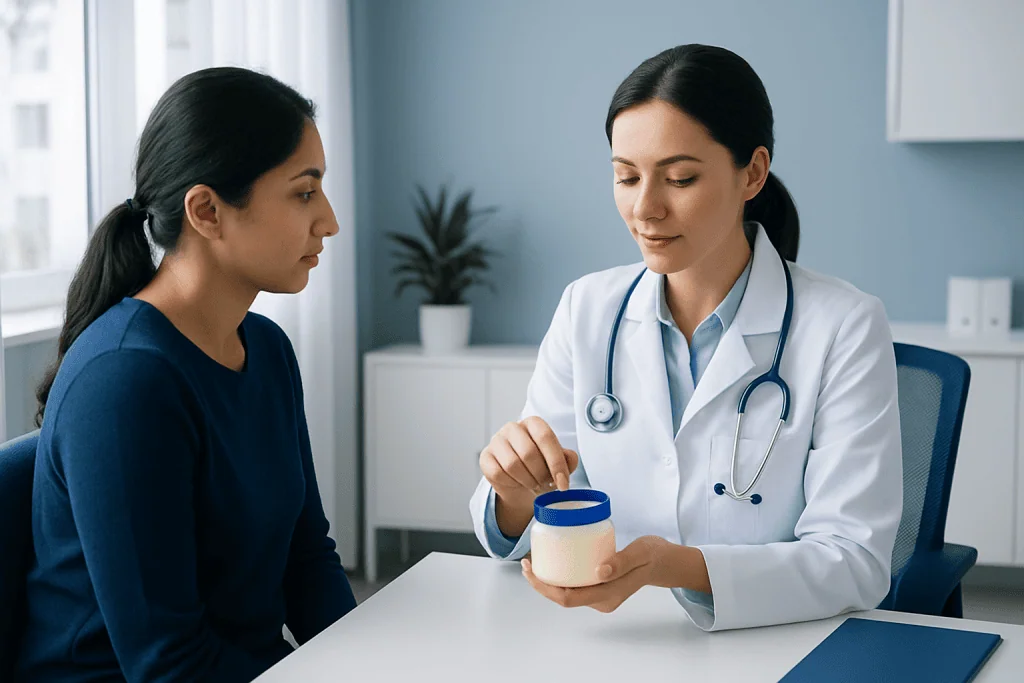
Petroleum jelly usually works best when applied to clean, slightly damp skin. After bathing, washing hands, or gently cleansing a dry area, a thin layer can be spread over the skin to lock in moisture. Using too much is not usually necessary; a small amount often provides adequate coverage.
For very dry hands or feet, it may be applied before bed and covered with cotton gloves or socks if comfortable. On the lips, a light layer can help reduce moisture loss in dry or windy conditions. For friction-prone areas, it can be applied before walking, exercise, or wearing shoes that tend to rub.
It is important to use petroleum jelly on skin that has been properly cleaned. Applying it over dirt, sweat, or bacteria may trap unwanted material against the skin. It should also be used externally unless a doctor specifically recommends otherwise. Some people ask about use around the eyes or nose; while small amounts on the outer skin may be acceptable, deep intranasal use is generally not advised without medical guidance.
Safety, Side Effects, and Situations to Avoid
For most people, petroleum jelly is considered safe for external use. It is widely used because it contains relatively few ingredients and is less likely to cause stinging than many fragranced or active skin products. Still, any topical product can occasionally cause irritation, especially if the skin is already inflamed or if another ingredient has been mixed into the product.
It is best not to apply petroleum jelly to infected skin, heavily draining wounds, or burns unless a healthcare professional has advised this. If the area is red, hot, increasingly painful, swollen, or producing pus, the priority is medical assessment rather than simply covering it with an occlusive barrier. Persistent facial rashes, severe dryness, or itchy plaques may also need evaluation because conditions such as psoriasis or contact dermatitis can resemble simple dry skin.
People with acne-prone skin often wonder if petroleum jelly causes breakouts. It is not a treatment for acne, and its heavy occlusive nature may not suit everyone, especially if layered over cosmetics, oils, or inadequately cleansed skin. For those with recurrent acne, individualized advice through specialist skin assessment may be more helpful.
Another practical caution is flammability on fabrics. Products containing petroleum can leave residue on bandages, clothing, or bedding, and these materials should be kept away from open flames and high heat sources. This is a general safety measure rather than a reason to avoid appropriate skin use.
Petroleum Jelly in Wound Care and Healing Skin
Petroleum jelly is often discussed in relation to cuts, scrapes, and healing skin. For minor superficial wounds, many clinicians recommend gentle cleaning with water, followed by a thin layer of plain petroleum jelly and a clean bandage if needed. The goal is to protect the wound surface and maintain a moist healing environment rather than allowing the area to dry out excessively.
It is important to distinguish a small, clean scrape from a more serious injury. Deep wounds, animal bites, puncture wounds, significant burns, or wounds with embedded debris need medical evaluation. In these situations, petroleum jelly should not replace proper wound assessment, infection prevention, or tetanus guidance.
After some procedures, clinicians may suggest petroleum jelly as part of aftercare to protect healing skin. This can be relevant after selected minor dermatologic treatments or certain surgeries, depending on the location and type of wound. When more advanced repair or closure is needed, a doctor may advise another approach, including evaluation in plastic surgery or another suitable specialty.
Who May Benefit Most and What Alternatives Exist
Petroleum jelly can be especially useful for people with very dry skin, older adults with a weakened skin barrier, and those exposed to frequent washing, harsh weather, or friction. It may also help children and adults with sensitive skin when used as a simple protective layer, provided a clinician has confirmed that no infection or specific allergy is present.
However, it is not the best choice for every situation. Some people prefer lighter moisturizers for daytime use or on oily skin. In skin conditions driven by inflammation, infection, or allergy, barrier protection alone may not be enough. For example, persistent itching, scaling, or recurrent rash may require diagnosis and targeted treatment rather than repeated self-treatment.
Alternatives depend on the goal. Creams and ointments with ceramides may help repair the skin barrier. Fragrance-free emollients can be easier to spread over larger areas. If symptoms suggest an underlying disorder, evaluation in dermatology can help clarify whether moisturizers, prescription anti-inflammatory creams, or other treatments are needed.
When to Seek Medical Care
Most dry skin and minor chafing can be managed at home, but medical care is important when symptoms are more than mild or do not improve. A doctor should assess skin that is worsening despite regular moisturization, especially if there is persistent itching, cracking, bleeding, or sleep disturbance. Medical review is also sensible when symptoms affect a child, an older adult, or a person with diabetes or poor circulation.
Prompt evaluation is needed if there are signs of infection such as increasing redness, warmth, swelling, tenderness, pus, fever, or red streaking from the area. A healthcare professional should also examine deep wounds, burns, punctures, animal bites, or any lesion that does not heal as expected. Ongoing facial rash, widespread irritation, or recurrent hand dermatitis may need diagnosis to rule out eczema, psoriasis, fungal infection, or contact allergy.
For international patients who need specialist input, Acibadem International’s multidisciplinary teams in JCI-accredited hospitals diagnose and treat a broad range of skin concerns, including dry skin disorders, inflammatory conditions, and wound-related issues, when appropriate specialist care is needed.
Frequently asked questions
What is petroleum jelly used for?
Petroleum jelly is mainly used to protect the skin and reduce moisture loss. It is commonly applied to dry skin, chapped lips, friction-prone areas, and some minor superficial wounds after cleaning.
Is petroleum jelly safe for daily use?
For most people, plain petroleum jelly is safe for regular external use. It is often well tolerated because it is simple and does not usually contain fragrance or many additives, but individual reactions are still possible.
Does petroleum jelly moisturize the skin?
Petroleum jelly helps the skin stay moisturized by sealing in existing water. It does not add hydration on its own, so it is usually most effective when applied after washing or bathing while the skin is still slightly damp.
Can petroleum jelly help wounds heal faster?
It can support healing of minor, clean, superficial wounds by keeping the surface protected and preventing excessive drying. However, it is not suitable as a substitute for medical care in deep, infected, or serious wounds.
Can petroleum jelly clog pores or worsen acne?
Some people with acne-prone skin find heavy occlusive products less suitable, especially if applied over poorly cleansed skin or layered with other oily products. It is not an acne treatment, so persistent breakouts should be discussed with a doctor.
Can petroleum jelly be used inside the nose?
Routine deep intranasal use is generally not recommended unless a clinician advises it. If nasal dryness is ongoing, it is better to ask a healthcare professional about safer options based on the cause.
This article is for general information only and is not a substitute for professional medical advice. Please consult a qualified doctor about your individual situation.
Explore treatments in Turkey — costs, top hospitals & a free quote
JCI-accredited · board-certified surgeons · reply within 24h
Add us as a Preferred Source to see more of our trusted health content across Google Search, AI Overviews and Discover.

More from the Health Library

Levothyroxine: An Evidence-Based Guide for Patients

Greek Yogurt: An Evidence-Based Guide for Patients

Deciduous Teeth: A Complete Medical Overview

Paralytic: An Evidence-Based Guide for Patients

Male Reproductive System — Explained by Medical Evidence, Not Myths