Peyronie’s Disease: Penile Curvature, Pain, and Treatment Choices

Peyronie’s disease is caused by fibrous plaque in the tunica albuginea, the firm tissue that helps the penis become erect. Typical symptoms include a bend or curve during erection, a palpable lump, pain, penile shortening, or erectile difficulties.
Key Takeaways
- Peyronie’s disease is caused by fibrous plaque in the tunica albuginea, the firm tissue that helps the penis become erect.
- Typical symptoms include a bend or curve during erection, a palpable lump, pain, penile shortening, or erectile difficulties.
- The condition often has an active phase, when pain and curvature may change, and a stable phase, when symptoms remain relatively unchanged.
- Treatment is individualized and may include observation, pain control, traction therapy, injectable medicines, or surgery.
- A urologist should evaluate new penile curvature, painful erections, or sexual difficulties, especially if symptoms interfere with intercourse or quality of life.
Peyronie’s disease is a condition in which scar-like tissue, called plaque, forms inside the penis and can cause curvature, pain, shortening, or difficulty with erections. Many cases can be managed with monitoring, medicines, injections, devices, or surgery, depending on symptoms and how much sexual function is affected.
Overview
Peyronie’s disease is a non-cancerous condition that affects the penis. It occurs when fibrous scar-like tissue, often called plaque, develops within the tunica albuginea, the strong elastic layer that surrounds the erectile chambers. During an erection, this plaque does not stretch normally, which can pull the penis into a curve or create a narrowing, indentation, or hinge-like area.
The condition can feel physically and emotionally distressing, but it is a recognized urological problem and treatment choices are available. Peyronie’s disease is not caused by poor hygiene, is not a sexually transmitted infection, and does not mean a person has cancer. It may affect sexual confidence, comfort, and relationships, so compassionate medical evaluation is important.
Peyronie’s disease is often described in two stages. In the active phase, pain may be present and the curvature or deformity can change over time. In the stable phase, pain often improves and the curve remains relatively unchanged for several months. The stage of the condition helps guide whether monitoring, non-surgical treatment, or surgery is most appropriate.
Symptoms and How Peyronie’s Disease Can Affect Daily Life
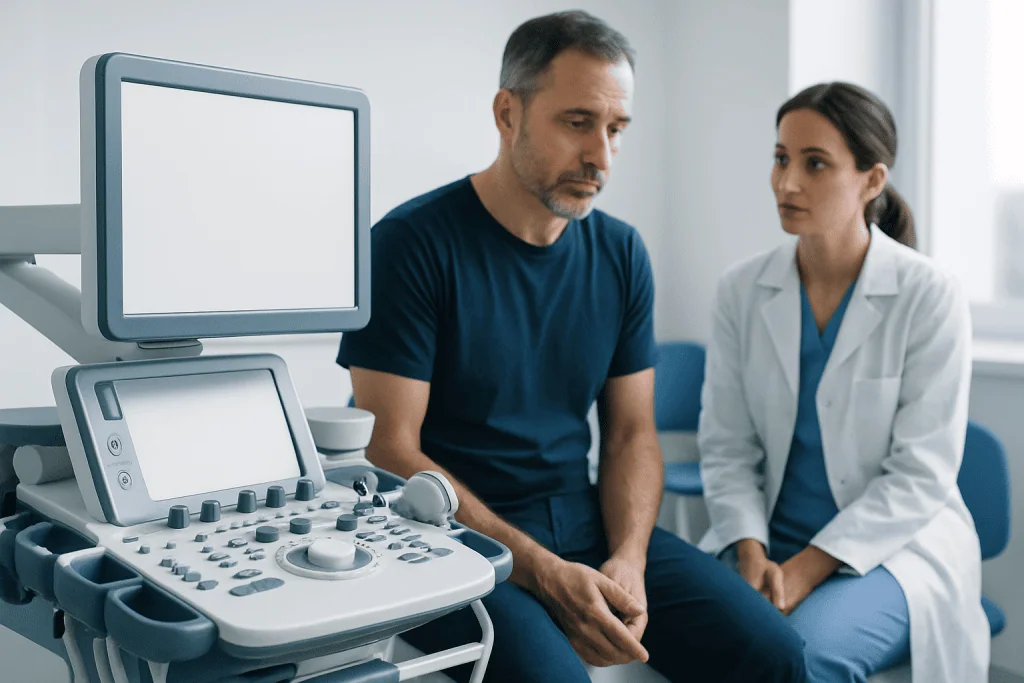
The most noticeable symptom is usually penile curvature during erection. The penis may bend upward, downward, or to one side. Some people also develop an hourglass shape, a narrowing band, or a hinge effect that makes intercourse difficult. The plaque may sometimes be felt as a firm lump or flat band under the skin, usually along the shaft.
Pain is common in the earlier phase, especially with erections, although discomfort can also occur when the penis is not erect. Over time, pain often decreases, but the curvature may remain. Some people notice penile shortening, reduced rigidity, or difficulty maintaining an erection firm enough for intercourse.
Symptoms can vary widely. A mild curve may not interfere with sexual activity, while a more pronounced deformity can make penetration uncomfortable or impossible. Emotional effects are also common, including embarrassment, anxiety, avoidance of intimacy, or concerns about body image. These reactions are understandable, and addressing them is an important part of care.
- Penile curve or bend during erection
- Firm plaque or lump in the penis
- Painful erections, especially early in the condition
- Penile shortening, indentation, or hourglass shape
- Erectile dysfunction or reduced sexual confidence
Causes and Risk Factors

The exact cause of Peyronie’s disease is not always clear. In many cases, it is thought to begin after repeated minor injury to the penis, often during sexual activity, sports, or an accident. The injury may be so small that the person does not remember it. As the tissue heals, the body may form excessive scar tissue in the tunica albuginea, leading to plaque.
Genetics and connective tissue healing appear to play a role. Some people with Peyronie’s disease also have Dupuytren’s contracture, a condition in which the fingers bend due to scar-like tissue in the palm. This suggests that certain individuals may be more prone to forming fibrous plaques after tissue stress or injury.
Risk may be higher in people with erectile dysfunction, because a less rigid erection can be more vulnerable to bending injury. Other possible risk factors include increasing age, diabetes, smoking, pelvic or prostate surgery, and a family history of Peyronie’s disease or related connective tissue conditions. However, the condition can also occur in people without obvious risk factors.
It is important to understand that Peyronie’s disease is not the result of normal sexual activity alone, and it is not a sign of personal failure. The condition reflects how tissue heals, and a urologist can help identify the best management plan based on anatomy, symptoms, and sexual goals.
Diagnosis
Diagnosis usually begins with a careful medical history and physical examination by a urologist. The doctor may ask when the symptoms started, whether pain is present, whether the curve is changing, and how symptoms affect erections or intercourse. It is helpful for the patient to describe the direction and degree of curvature and any changes in length, shape, or rigidity.
During examination, the doctor may gently feel the penis for plaques or areas of thickening. In some cases, the patient may be asked to bring photographs of the erect penis taken from different angles in a private setting. These images can help the urologist understand the curvature without requiring an induced erection during the first visit.
Penile ultrasound may be recommended when more detail is needed. Ultrasound can show plaque location, calcification, blood flow, and erectile function. In selected cases, a medication may be used in the clinic to create an erection so the curvature can be measured accurately. This information is especially useful before injections or surgery.
The evaluation may also include questions about urinary symptoms, hormone health, cardiovascular risk factors, and relationship or psychological concerns. Erectile dysfunction and Peyronie’s disease can influence each other, so a complete assessment helps the doctor treat the whole problem rather than the curve alone.
Treatment Options
Treatment depends on the stage of Peyronie’s disease, the severity of curvature, pain, erectile function, and the patient’s priorities. Mild cases that do not interfere with sexual activity may only require observation and follow-up. During the active phase, treatment often focuses on pain control, monitoring changes, and preserving sexual function.
Oral medicines have been studied, but no tablet works reliably for every patient. Doctors may recommend pain relievers when discomfort is present, and they may treat erectile dysfunction with appropriate medicines if suitable for the patient’s overall health. Patients should avoid taking supplements or online treatments that promise to dissolve plaque, because benefits may be unproven and safety can vary.
Non-surgical approaches may include penile traction therapy or vacuum erection devices, usually under medical guidance. Traction therapy uses a device that gently stretches the penis over time and may help selected patients with curvature or length concerns. Results depend on correct use, patient consistency, and whether the condition is active or stable.
Injectable treatments may be considered for certain plaques and curvature patterns. These medicines are placed directly into the plaque by a trained clinician, often as part of a series of treatments, and may be combined with penile modeling exercises. Not every patient is a candidate, and possible risks include bruising, swelling, pain, or rare tissue injury.
Surgery is usually reserved for stable Peyronie’s disease when curvature prevents intercourse or causes significant distress. Options include plication procedures to straighten the penis, plaque incision or grafting for more complex deformities, and penile implant surgery when significant erectile dysfunction is also present. Each approach has advantages and trade-offs, such as effects on length, sensation, rigidity, and recovery time, so shared decision-making with an experienced urologist is essential.
Prevention, Self-Care, and Sexual Wellbeing
There is no guaranteed way to prevent Peyronie’s disease, because tissue-healing patterns and genetic factors cannot always be controlled. However, reducing penile injury may help. Using adequate lubrication, avoiding forceful bending during intercourse, and addressing erection problems early can reduce stress on penile tissues.
General health habits also matter. Smoking cessation, diabetes control, regular physical activity, and management of cardiovascular risk factors can support blood flow and erectile function. Because erections depend on vascular, hormonal, neurological, and psychological health, improving overall wellbeing may help patients cope better with the condition and its treatment.
Open communication with a partner can reduce anxiety and help couples adapt while treatment decisions are being made. Some couples benefit from sexual counseling, especially if avoidance, fear of pain, or performance anxiety has developed. A mental health professional or sex therapist can work alongside the urologist when emotional strain is affecting intimacy.
Patients should avoid trying to manually force the penis straight without medical advice, as aggressive manipulation may worsen injury. Any device-based therapy should be discussed with a qualified clinician to ensure correct technique and to reduce the risk of bruising or pain.
When to See a Doctor
A person should see a urologist if they notice a new penile curve, a firm lump, pain with erections, shortening, indentation, or difficulty having intercourse. Early evaluation is helpful because the doctor can confirm the diagnosis, identify whether the condition is active or stable, and discuss safe options before symptoms become more disruptive.
Medical attention is especially important if the curvature is worsening, erections are painful, or erectile dysfunction is present. Sudden severe pain, swelling, bruising, or a popping sensation during sex should be assessed urgently, because these symptoms may suggest a penile fracture or other injury rather than typical Peyronie’s disease.
Patients should also seek care if the condition is causing distress, relationship strain, or avoidance of intimacy. Peyronie’s disease affects more than anatomy; it can influence self-esteem and quality of life. A supportive clinical conversation can help patients understand realistic choices and reduce unnecessary worry.
Acibadem International’s multidisciplinary specialists and JCI-accredited hospitals diagnose and treat Peyronie’s disease and related men’s health concerns for international patients. As with any medical condition, the most appropriate plan should be based on an individual assessment by a qualified doctor.
Frequently asked questions
Is Peyronie’s disease dangerous?
Peyronie’s disease is not cancer and is not life-threatening. It can, however, affect erections, comfort, sexual activity, and emotional wellbeing. A urologist can confirm the diagnosis and help decide whether observation or treatment is needed.
Can Peyronie’s disease go away on its own?
Pain may improve over time, especially after the active phase. The curvature may improve in some people, but it often stays the same or may worsen before stabilizing. Because the course is unpredictable, medical evaluation is recommended.
Does every penile curve mean Peyronie’s disease?
No. Some men have a lifelong natural curvature that has always been present and does not cause pain or change over time. Peyronie’s disease is more likely when a new curve, plaque, pain, shortening, or erectile difficulty develops.
Can a person have sex with Peyronie’s disease?
Many people can continue sexual activity if pain is manageable and the curvature does not prevent intercourse. If sex is painful, difficult, or causes anxiety, a urologist can discuss treatment options and ways to reduce further injury. Partners may also benefit from open communication and, when needed, counseling.
Are injections better than surgery for Peyronie’s disease?
Neither option is best for everyone. Injections may help selected patients with certain plaque and curvature patterns, while surgery is usually considered when the condition is stable and deformity prevents intercourse. The choice depends on curvature severity, erectile function, plaque features, and patient goals.
Can Peyronie’s disease cause erectile dysfunction?
Yes. Peyronie’s disease may make erections less firm due to pain, anxiety, altered penile mechanics, or underlying blood-flow problems. Treating erectile dysfunction can be an important part of the overall care plan, even if the curvature is also being treated.
References
- American Urological Association
- European Association of Urology
- Urology Care Foundation
- Mayo Clinic
- National Institute of Diabetes and Digestive and Kidney Diseases
This article is for general information only and is not a substitute for professional medical advice. Please consult a qualified doctor about your individual situation.
Explore treatments in Turkey — costs, top hospitals & a free quote
JCI-accredited · board-certified surgeons · reply within 24h
Add us as a Preferred Source to see more of our trusted health content across Google Search, AI Overviews and Discover.

More from the Health Library



Related Specialists

Prof. Dr. G. Ertuğrul Mirza
Ophthalmology
Dr. Tülay Tekin
Acibadem Life Clinical Service
Prof. Dr. Ece Aydoğ
Physical Medicine & Rehabilitation
Asst. Prof. Dr. Zeynep Tuğçe Sarıkaya
Intensive Care